Mercado San Camilo and Traditional Picanterías Guide in Arequipa
Plan your culinary walking route through Arequipa at Mercado San Camilo and historic picanterías across Sachaca, Yanahuara, and the historic centre.
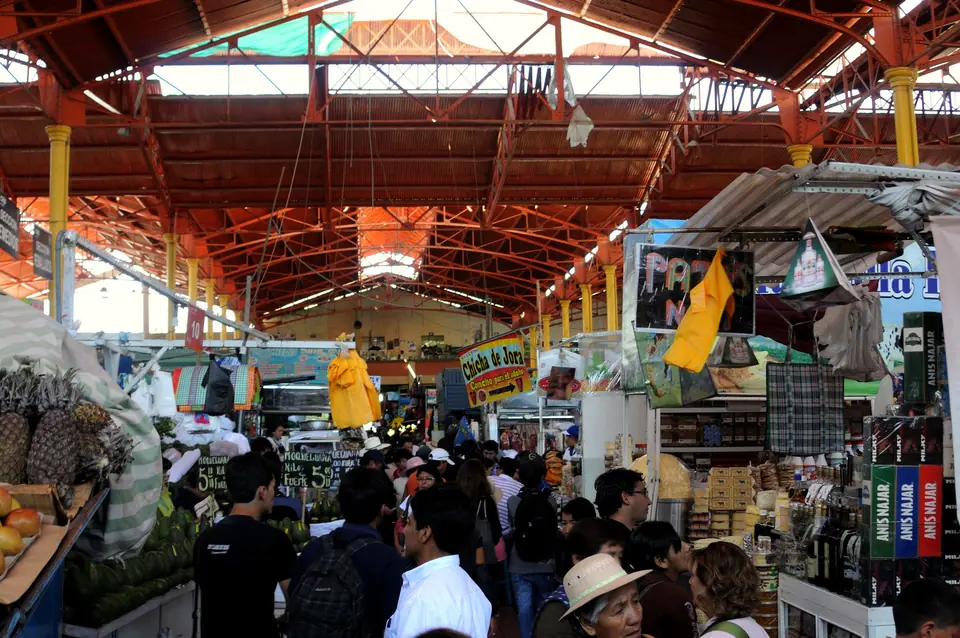
Arequipa earned UNESCO recognition as a Creative City of Gastronomy in 2019, reflecting centuries of distinct culinary heritage rooted in volcanic soil. The culture of the traditional picantería arequipeña carries official status as Cultural Heritage of Peru. To understand this living food tradition, travellers start their morning under the historic metal rafters of Mercado San Camilo before heading across the city for a substantial wood-fired midday meal.
Architecture and History of Mercado San Camilo
Located four blocks south of the Plaza de Armas, Basílica Catedral & Iglesia de la Compañía between Calle San Camilo and Calle Perú, Mercado San Camilo occupies sacred ground. The site previously held the Church of the Camillian Fathers, which suffered total collapse during the catastrophic 1868 earthquake. City authorities opened the municipal market in 1881 to centralise regional produce trade.
Between 1910 and 1938, engineers erected a sweeping prefabricated iron roof structure designed in the Parisian workshops of Gustave Eiffel. Declared a Historical Monument of Peru in 1987, the building combines industrial nineteenth-century European engineering with Andean market trade. Slender cast columns support high ventilation skylights that illuminate dozens of distinct merchant aisles below.
Juice Aisles, Cheeses, and Regional Staples
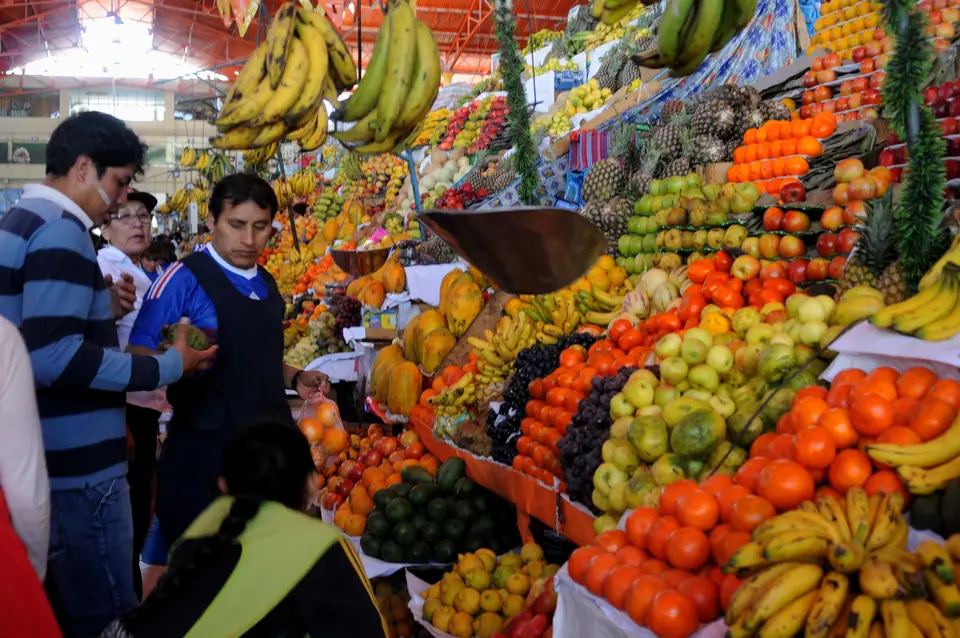
The interior layout follows strict product divisions maintained by families across generations. The juice row presents blenders processing mountain fruits grown in microclimates between the Pacific coast and high volcanic valleys. Vendors peel papayita arequipeña, a fragrant highland papaya cultivated exclusively in sheltered regional canyons. Shoppers order smoothies featuring tart tumbo, rich lúcuma, purple corn reductions, and sweet chirimoya, routinely receiving an extra portion poured straight into their glass.
Dairy counters showcase stacked wheels of semi-hard queso paria beside braided varieties from Chuquibamba. Across the pathway, bakers stack oversized loaves of pan de tres puntas, the triangular crusty roll essential for local breakfast and soup broths. In the upper sections, vendors turn wooden barrels packed with ice and rock salt to churn queso helado, a spiced dessert of condensed milk, coconut, and cinnamon described in detail within our guide on what to eat in Arequipa.
Heritage of the Picantería Arequipeña
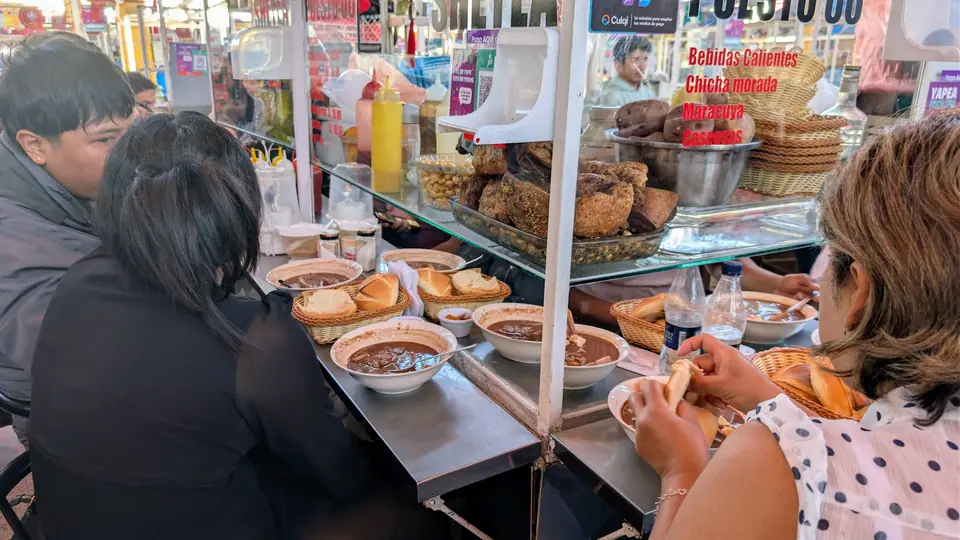
In 2014, Peru declared the picantería arequipeña an official element of National Cultural Heritage. Overseen by the Sociedad Picantera de Arequipa, these establishments preserve cooking techniques established across colonial centuries. Traditional venues cook exclusively over a fogón de leña, an open hearth fuelled by aromatic eucalyptus timber. Earthy clay pots retain steady radiant heat, allowing thick stews and broths to simmer slowly without burning.
Matriarch chefs, known as picanteras, direct the kitchen operations according to strict rural standards. A red fabric flag hoisted beside the main entrance gate signals that fresh fermented corn beverage, known as chicha de guiñapo, has completed fermentation and the hearths are ready for lunch service. These kitchens operate around midday, preparing daily rotational specials that sell out before the late afternoon.
Historic Culinary Districts and Traditional Houses
Culinary geography divides between agricultural countryside villages and historic urban districts. Travellers incorporating dining into a broader 3 days in Arequipa itinerary travel across various riverbanks to reach original hearths.
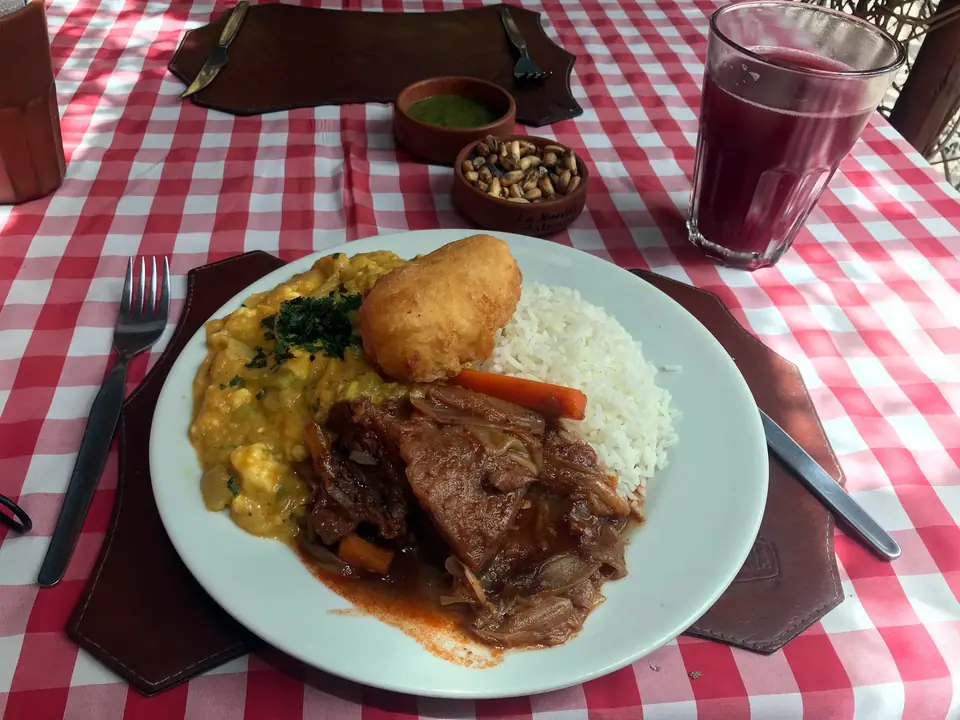
- Sachaca and Tiabaya: These southern agricultural districts preserve century-old rural traditions. La Lucila in Sachaca, established over a century ago by Doña Lucila Salas, cooks whole guinea pigs, stuffed peppers, and braised beef ribs over open wood sparks. La Maruja preserves rustic outdoor courtyard seating framed by stone walls.
- Yanahuara and Cayma: North of the Chili River, Yanahuara hosts La Nueva Palomino on Calle Leoncio Prado 122, renowned for extensive mixed lunch platters known as americanos. Nearby Sol de Mayo has operated continuously since 1897, serving classic river shrimp soups beneath open garden awnings.
- Historic Centre: Urban institutions such as La Capitana and La Cau Cau occupy rustic sillar rooms within walking distance of the central plaza, catering to workers and families seeking daily offal stews and fried pork.
Comparing Essential Arequipa Culinary Establishments
| Establishment | District Location | Speciality Dishes | Atmosphere Type |
|---|---|---|---|
| Mercado San Camilo | Historic Centre | Fruit juices, queso helado, pan de tres puntas | Municipal trading hall under historic Eiffel iron roof |
| La Lucila | Sachaca | Cuy chactado, rocoto relleno, chicha de guiñapo | Rural country estate cooking over eucalyptus timber |
| La Nueva Palomino | Yanahuara | Americano platters, ocopa arequipeña, celador | Large colonial dining halls managed by family matriarchs |
| Sol de Mayo | Yanahuara | Chupe de camarones, malaya frita, costillar | Historic garden courtyard dining founded in 1897 |
| La Capitana | Historic Centre | Rotational daily soups, caldo blanco, sarzas | Neighbourhood lunch tavern with communal wooden tables |
Market Etiquette and Dining Logistics
Mercado San Camilo operates on high volume and cash transactions. Smaller denominations of Peruvian soles prevent delays at crowded cheese and juice stalls. Keep bags zipped and worn towards the front of your chest while navigating narrow produce corridors, as tight corners create opportunities for pickpockets. Drink stalls supply peeled fruit prepared with purified ice upon request, though travellers with delicate digestion often begin with cooked preparations or pure bottled water.
Historic picanterías serve their main trade during lunch. Arrive early in the midday window to secure coveted garden seating and ensure the kitchen has not exhausted daily pots of signature stews. Taxis connect the historic centre to Sachaca and Yanahuara easily, providing an affordable transit option for group excursions before sunset.
Seasonal Weather and Dining Comfort
Arequipa sits at an altitude of 2,325 metres, delivering intense equatorial sun and rapid evening cooling throughout the year. Climate records between 2015 and 2024 highlight very stable daytime temperatures across all twelve months. Average maximum temperatures hover comfortably between 21.7°C in February and 23°C in October.
The dry winter period from May to October sees virtually zero millimetres of rainfall and zero wet days. During these months, minimum overnight temperatures drop to 6.8°C in July and 7.1°C in June, making shaded indoor market corridors chilly before midday. Conversely, afternoon courtyards in Yanahuara warm rapidly beneath clear skies. The wet season arrives between January and March, peaking in February with 42 millimetres of precipitation across six wet days. Afternoon downpours during these summer months make covered picantería dining rooms and the shelter of Eiffel's iron market structure exceptionally practical retreats.
Where it is
- 1Arequipa
- Rodríguez Ballón International Airport (AQP) · about 8 km from Arequipa in a straight line
- Directions in Google Maps
Stations and taxi ranks: OpenStreetMap. Airports: OurAirports. Distances are in a straight line.
Traveller tips
Real advice from people who have been to Arequipa. Every tip is read by our team before it goes live.
No tips yet. Been here? Yours could be the first.
Thank you! Your tip will appear here after a quick review.
More in Arequipa
Continue exploring Arequipa with related neighbourhood, food, and planning guides
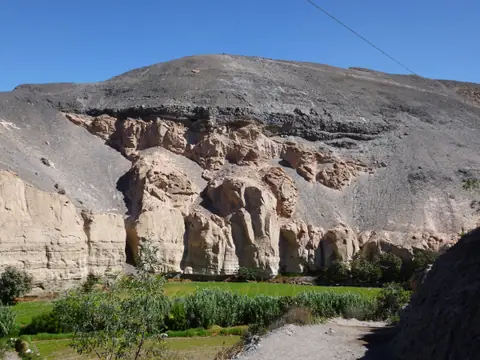
Ruta del Sillar Guide: Añashuayco Quarries & Culebrillas Slot Canyon, Arequipa
Arequipa, Peru

Colca Canyon, Cruz del Cóndor & Chivay Guide: Condors, Terraces & Hot Springs
Arequipa, Peru
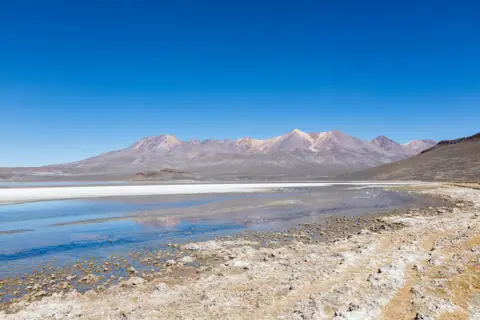
Laguna de Salinas, Volcán Misti and Nevado Chachani Field Guide
Arequipa, Peru
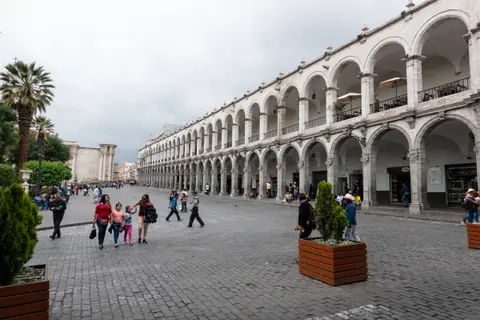
Arequipa: White City Architecture, High Volcanoes and Colca Valley
Arequipa, Peru
