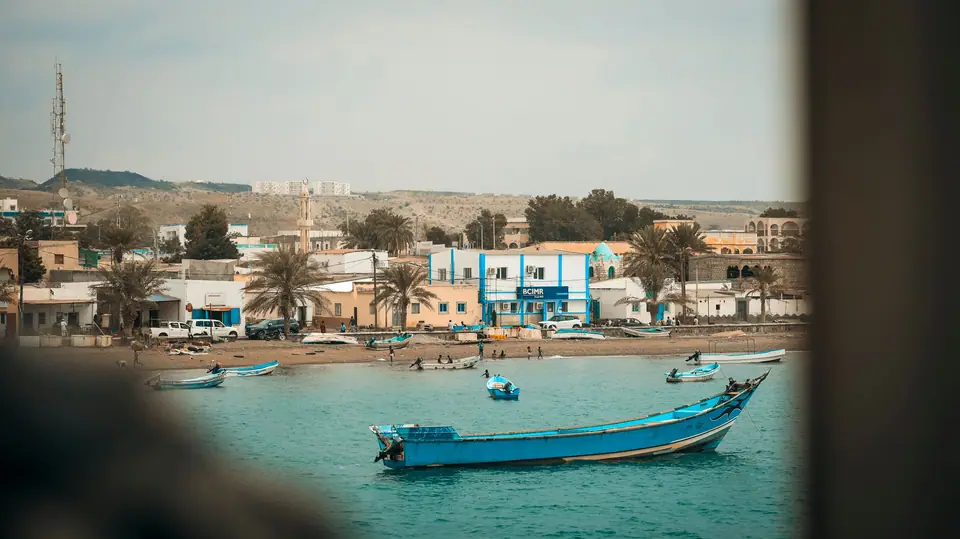
Whale Sharks, Moucha Island, Khor Ambado and Red Sea Food
Winter whale shark encounters, Moucha Island coral reefs, Khor Ambado bay and Yemeni-Djiboutian seafood.
Djibouti’s Gulf of Tadjoura brings together two very different days on the water: a seasonal search for whale sharks and a visit to the protected islands of Moucha and Maskali. Both require respect for local rules and marine life. The whale-shark activity is controlled by a national decree, while the islands are designated marine protected areas where tourism is allowed under regulation. Back in Djibouti City, food offers another way to understand the country’s connections across the Horn of Africa and the Red Sea. Our arrival guide and city markets guide cover the urban side of the trip.
Plan around the whale-shark season, not a guaranteed sighting
The Djiboutian tourism agency describes whale sharks in the country’s waters during a seasonal period. Decree No. 2023-362 sets the usual tourism season from 15 October to 15 March, while allowing the period to be adjusted or extended because of climate variation. This is a regulatory window, not a promise that a whale shark will appear on a particular outing. Wildlife moves, and a responsible trip should be worthwhile even if the encounter does not happen.
Ask any operator how it follows the current access calendar and which authority controls entry to the observation area. The decree places access under the National Tourism Agency in collaboration with the Djiboutian Coast Guard. It also regulates vessel access and conduct around the animals. Choose an operator that explains those rules before departure and is prepared to cancel or change a route when conditions require it. We do not recommend a named company without reliable evidence about its current practice.
The law prohibits touching, hunting, harassing or riding whale sharks. These rules protect the animal and give visitors a clear standard to follow. Listen to the crew before entering the water, keep the required distance and do not chase an animal that changes direction. If several boats are present, follow the authorised vessel’s instructions rather than approaching independently. A close photograph is not a reason to break the rules or crowd the animal.
Choose the right kind of water day
A whale-shark outing is a seasonal wildlife experience. A trip to Moucha and Maskali is a different choice, centred on protected islands and coastal scenery. The law establishing Djibouti’s marine protected areas names both islands and permits ecotourism under regulation. It also prohibits collecting coral and shells and spearfishing in protected marine areas. Visitors should leave natural objects where they are and ask their guide which activities are permitted at the day’s landing point.
Do not assume that a trip to the islands automatically includes snorkelling, diving, wildlife viewing or a particular beach. Ask what the operator plans to do, where the boat can land and which rules apply. If swimming or snorkelling is part of the plan, bring suitable sun protection and follow local guidance on currents, reef conditions and entry points. People who do not want to enter the water can still make the day about the boat ride and the island landscape.
For a shorter stay, choose one marine day rather than trying to combine the whale-shark area and the islands in a rushed itinerary. For a longer visit, leave a separate day for each experience and keep one flexible block for weather or changes in access. Travel over water depends on conditions, and the legal calendar may differ from the wildlife pattern. Check the current notices with the National Tourism Agency and your authorised operator shortly before departure.
Follow wildlife rules from the boat to the water
Responsible viewing begins before anyone enters the sea. The decree sets controls on how vessels use the observation area, including limits on the number of boats and approach distances. Ask the crew to explain the rules in plain language. If the briefing is vague, or the plan involves touching, feeding or blocking an animal, do not join that activity. The national rules are a baseline, and a good guide should make them easy to follow.
In the water, move calmly and let the animal set the direction. Do not grab a fin, climb onto the animal or position yourself in its path. Keep other swimmers in view and return to the boat when instructed. The same low-impact approach applies at coral areas around the islands. Avoid standing on reef, collecting shells or disturbing wildlife. A guide can point out what is safe to observe without encouraging contact.
Explore Djibouti’s food through a few distinct dishes
The National Tourism Agency describes Djiboutian cuisine as a meeting of African, Asian and European influences. It highlights meat, rice, fish, spices and flatbreads. Instead of looking for a single meal that represents the whole country, try dishes from different parts of that mix. Skoudehkaris is spiced rice cooked with meat. Fah-fah is a meat soup or stew. Lahoh and sabayad are flatbreads that can appear at breakfast or beside other foods, while Red Sea fish offers a coastal contrast.
Ask what is available that day and how a dish is prepared. Restaurant menus and ingredients change, so do not assume every place serves the same version. If you have dietary needs, explain them clearly and ask about the broth, spice mixture and cooking method. A dish that sounds simple may include meat stock or ingredients that are not obvious from its name. The safest approach is to ask before ordering rather than make assumptions from a translation.
Central Djibouti City is a practical base for trying local food because the capital has markets and restaurants. The tourism agency’s food guidance covers broader culinary influences, but it does not guarantee that a particular dish will be available at a particular stall. Use the market as a place to observe ingredients and ask questions, then choose a meal where the menu and preparation are explained. Avoid presenting one neighbourhood or vendor as the definitive place to eat without a current source.
Make the meal part of the day, not a checklist
After a water excursion, a relaxed meal can be a better plan than squeezing in several city stops. If suitable for your group, share a selection of local dishes. Rice, bread, fish and spices appear in different forms across the meal, though each kitchen has its own approach.
For a quick introduction, try a rice dish with bread or soup, then ask what is local to the kitchen. Use our Djibouti things to do guide and city travel guide. Dietary preferences and preparation vary, so ask directly.
Check the current rules before booking
Wildlife access, marine-protected-area rules and boat arrangements are operational details. Confirm them close to your visit through the National Tourism Agency and the authorised operator. Follow any local instructions on access, distance, swimming and protected areas. For a responsible visit, leave coral and shells in place, do not feed or touch wildlife, and accept a change of plan when authorities or the crew require it.
Plan around what the sea can safely offer, not a guaranteed animal encounter. Leave coral and shells where they are and listen to local guides.
Where it is
- 1Whale Sharks, Moucha Island, Khor Ambado and Red Sea Food
- Djibouti-Ambouli Airport (JIB) · about 19 km from here in a straight line
- Directions in Google Maps
Stations and taxi ranks: OpenStreetMap. Airports: OurAirports. Distances are in a straight line.
Traveller tips
Real advice from people who have been to Djibouti City. Every tip is read by our team before it goes live.
No tips yet. Been here? Yours could be the first.
Thank you! Your tip will appear here after a quick review.
More in Djibouti City
Continue exploring Djibouti City with related neighbourhood, food, and planning guides
Place Ménélik, Hamoudi Mosque and the Historic Quarters
Djibouti City, Djibouti
Lake Assal, the Goubet and Rift Valley Craters
Djibouti City, Djibouti
Where to Stay in Djibouti City: Coastal Peninsulas vs Centre
Djibouti City, Djibouti
Djibouti City 3-Day Itinerary: Old Quarters, Islands and Lake Assal
Djibouti City, Djibouti
