Photo: Japplemedia · CC BY-SA 4.0
Rail Arrivals, Trams, and Driving Rules in Ghent
Arriving in Ghent is straightforward when you understand the rail terminals, urban tram system, and local driving regulations.
Rail Arrivals and Airport Connections
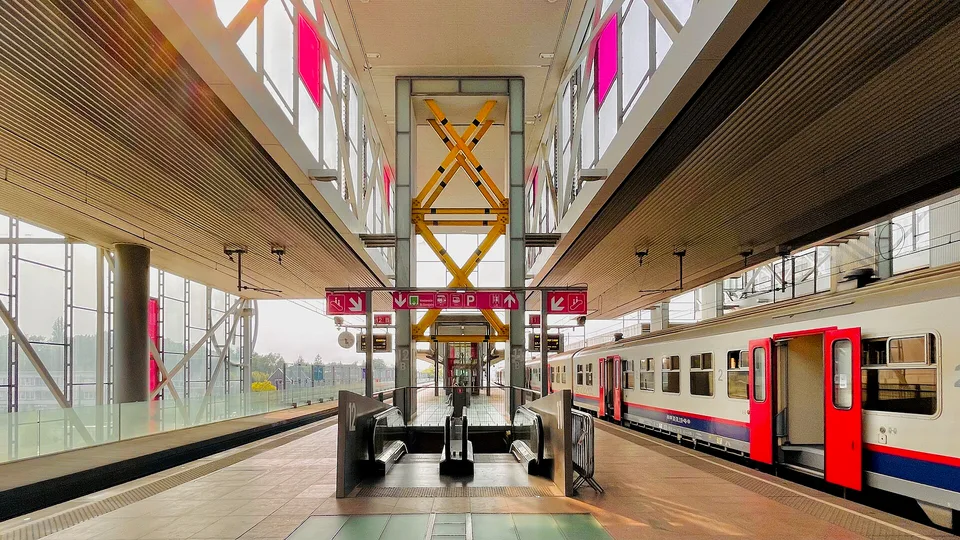
Gent-Sint-Pieters functions as the primary rail gateway for travellers heading into East Flanders. Direct Intercity services connect Brussels Airport-Zaventem to Gent-Sint-Pieters in 45 to 60 minutes. The standard NMBS journey takes 55 to 60 minutes with the Diabolo transit fee included.
Travellers flying into Brussels South Charleroi sit roughly 70 minutes away by road. Twelve daily Flibco coach departures run straight between Charleroi terminal and the main rail hub.
- Gent-Sint-Pieters sits 20 to 30 minutes on foot south of Korenmarkt, while Gent-Dampoort sits 15 minutes northeast.
- De Lijn trams and buses accept contactless cards directly at white onboard terminals for 60-minute transfer windows.
- Non-Belgian and non-Dutch number plates require free online registration at lez.stad.gent within 24 hours of arrival.
Domestic rail journeys link Ghent smoothly with the rest of Belgium. Direct Intercity trains cover the 50 km distance to Brussels-Midi in 28 to 37 minutes. Taking the train 38 km west to Bruges takes 25 to 30 minutes on frequent departures.
Services to Antwerp run across 51 km in 50 to 60 minutes. These regular connections allow straightforward regional transit across Flanders without changing carriages.
Reaching central historic quarters requires only a short transfer or an easy stroll. Walking from Gent-Sint-Pieters to Korenmarkt takes between 20 and 30 minutes at a steady pace.
Gent-Dampoort station sits closer to the northeastern edge of the historic quarter. Walking from Gent-Dampoort to Korenmarkt takes 15 minutes on foot. Alternatively, local bus lines 10, 11, 12a, or 12b make this station connection in 5 minutes.
Navigating Ghent by Tram and Bus
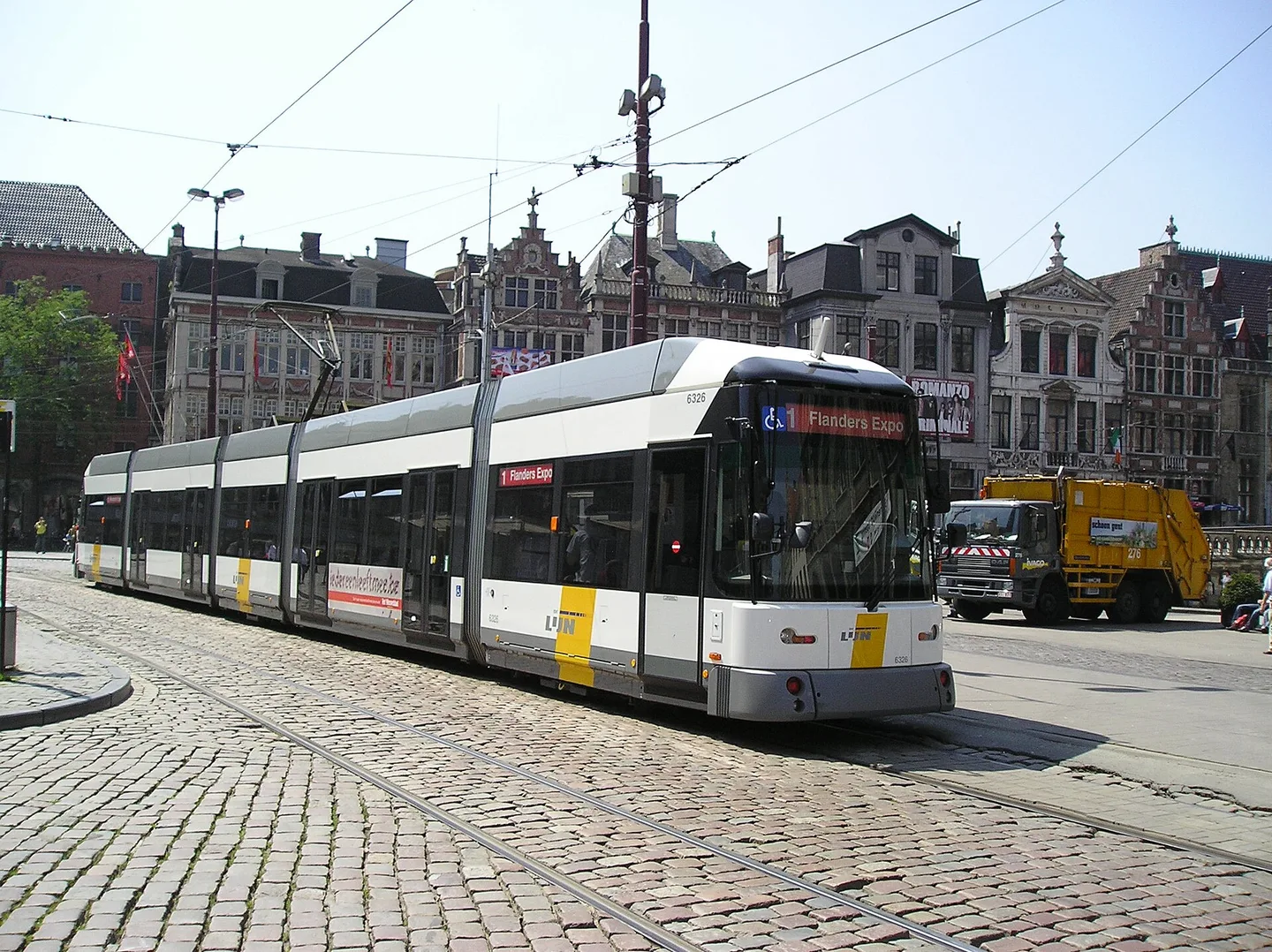
Public transport throughout Ghent is operated by the regional network De Lijn. In 2026, engineering works redirect Tram T1 between Gent-Sint-Pieters and Gentbrugge via Kouter and Gent Zuid. These ongoing track works bypass Korenmarkt entirely for the duration of the project. Tram T3 remains suspended during this period, while route T4 runs along a shortened alignment. Checking updated electronic departure boards helps passengers navigate these temporary network changes.
Paying for single journeys is straightforward on all De Lijn trams and buses. Passengers tap a contactless debit card, smartphone, or smartwatch against the white electronic terminal. Each tap grants a 60-minute travel window with free transfers between lines. A single bank card can validate fares for up to 5 passengers within 2 minutes. Keep the payment method handy in case roving ticket inspectors board your carriage.
Families and longer-stay visitors have additional ticketing options at hand. Children under 6 travel free when accompanied by a paying passenger aged 12 or older. Passengers can buy 24-hour day tickets and 10-journey Lijnkaart passes at Lijnwinkel offices, machines, or the app. The two main Lijnwinkel counters operate at Gent-Sint-Pieters station and Korenmarkt. Visitors holding a CityCard Gent receive unlimited travel on De Lijn vehicles for 48 or 72 hours. Cardholders must write their start date on the reverse side before boarding.
Driving Regulations and Low Emission Zones
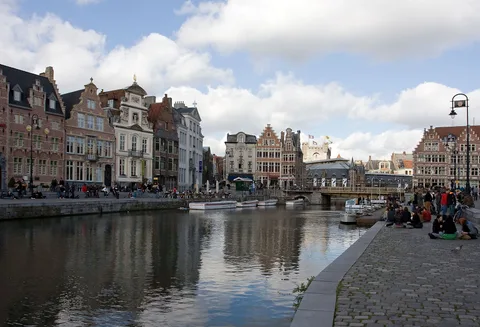
Navigating the historic quarter by private vehicle is deliberately restricted for visitors. Ghent introduced a Circulation Plan in 2017 to remove through traffic from residential streets. The city centre is divided into distinct sectors connected solely via the R40 inner ring road. Drivers cannot cross directly between inner sectors without returning outward to the R40 ring. Central trips stay simpler on foot or tram using canals, guildhalls, and medieval castles.
The entire area inside the R40 ring operates as a Low Emission Zone monitored by ANPR cameras. The municipal authority does not issue paper windscreen stickers for environmental compliance. Free peripheral park-and-ride lots beyond the R40 provide convenient parking with direct tram links. Leaving your car in an outer parking lot avoids central navigation delays. Choosing sensible lodging outside restricted sectors simplifies vehicle logistics across central canal districts and quiet outer quarters.
Regional Flanders emissions rules permit Euro 5 diesel and Euro 2 petrol engines within Ghent. These standards differ from the stricter diesel restrictions enforced in Brussels. However, foreign visitors must take mandatory administrative action before driving inside the R40 boundary. All vehicles with non-Belgian and non-Dutch number plates must register online within 24 hours of arrival. Drivers should complete this free procedure solely at lez.stad.gent. Unofficial third-party portals charge unnecessary processing fees for this standard municipal registration.
Seasonal Weather and Summer Festival Crowds
Weather conditions in Ghent reflect maritime Flanders patterns throughout the changing seasons. Historical climate records from Open-Meteo across 2015 to 2024 show cool winters and mild summers. January temperatures range from an average low of 1.8°C to a high of 6.8°C. January also records 78 mm of rainfall distributed across 14 wet days. Spring conditions gradually improve, with April registering 49 mm of rain across about 12 wet days. April represents the driest month of the calendar year.
Midsummer brings the warmest temperatures alongside frequent passing showers. August daily averages fluctuate between 14.6°C at night and 23.4°C during peak afternoon warmth. Rainfall during August averages 70 mm over around 12 wet days. Packing a waterproof jacket remains advisable during summer excursions along the canals. These summer temperatures create pleasant conditions for exploring outdoor historic sites across central Ghent.
Crowd density peaks noticeably in midsummer due to major cultural programming. Every July, the 10-day Gentse Feesten festival transforms central plazas into outdoor concert stages. Free music performances and street theatre fill historic squares, raising local hotel occupancy significantly. Street density intensifies during these festive summer days as large crowds gather. Travellers seeking quiet sightseeing should schedule their railway journeys outside this intense festival period.
Official prices and opening hours
- De Lijn City Tram & Bus Single TicketOfficial site ↗
- CityCard Gent (48-Hour Sightseeing & Transit Pass)Official site ↗
- St Bavo's Cathedral (Main Nave)Official site ↗
Where it is
- 1Ghent
- Brussels Airport (BRU) · about 56 km from Ghent in a straight line
- Directions in Google Maps
Stations and taxi ranks: OpenStreetMap. Airports: OurAirports. Distances are in a straight line.
Traveller tips
Real advice from people who have been to Ghent. Every tip is read by our team before it goes live.
No tips yet. Been here? Yours could be the first.
Thank you! Your tip will appear here after a quick review.
More in Ghent
Continue exploring Ghent with related neighbourhood, food, and planning guides