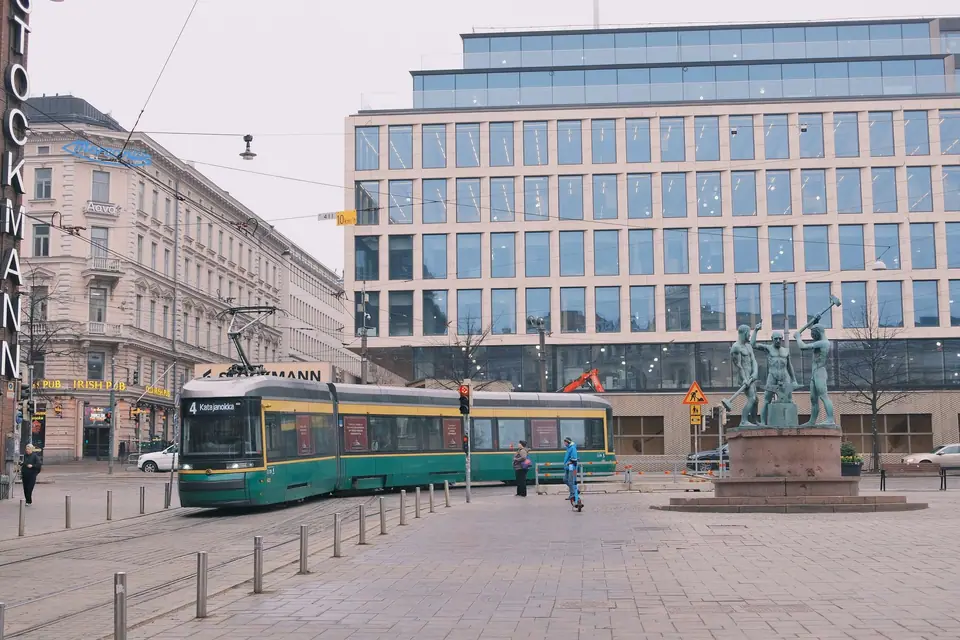
Helsinki Public Transport: HSL Zones, Airport Trains, Ferry Terminals and Scenic Trams
Navigate Helsinki like a local with our guide to HSL travel zones, airport commuter trains, harbour tram connections, and the iconic scenic tram 2 and 3 route.
Greater Helsinki operates one of the most punctual and coherent transit networks in Europe. Overseen by the regional transport authority, HSL (Helsingin seudun liikenne), the unified system combines green-and-yellow trams, the bright orange metro line, commuter rail links, local buses, and municipal island ferries under a single ticket. Understanding how the concentric fare zones work ensures seamless journeys from your arrival at the airport to quiet archipelago walks.
Helsinki HSL Zone System: Selecting AB or ABC Tickets
HSL divides the metropolitan area into four concentric lettered rings: Zones A, B, C, and D. You will never purchase a single-zone ticket because HSL rules require tickets to cover at least two adjacent zones. For visitors, picking the correct option comes down to one simple geographical boundary.
- Zone AB: This ticket covers almost everything within Helsinki proper. It includes every city tram, the metro line, inner suburbs, and passenger ferry harbours. It also covers the municipal boat to the sea fortress, which you can read about in our guide to Suomenlinna. If your daily sightseeing focuses on central sights, museums, and urban waterfronts, an AB ticket is all you need.
- Zone ABC: You only need this three-zone ticket when crossing into Zone C. The most common reason is travelling between the city centre and Helsinki-Vantaa Airport (HEL). You will also need an ABC ticket when planning wilderness excursions, such as the trails outlined in our Porvoo and Nuuksio day trips guide.
- Zone ABCD: This covers the outermost perimeter of Greater Helsinki into Zone D. Casual city breaks rarely require this expansive tier.
Helsinki Airport to City Centre: The Ring Rail Line
The transit connection from Helsinki-Vantaa Airport (HEL) to the urban core ranks among the simplest in Scandinavia. An underground railway terminal sits directly beneath the airport terminals, connected by escalators and lifts. Trains run along the circular Ring Rail Line straight to Helsinki Central Railway Station (Rautatientori).
Two commuter services serve this underground station: the I train and the P train. Because the line operates in a continuous loop, both services depart the airport and terminate at the central station in roughly 30 minutes. The I train travels counter-clockwise via Tikkurila, while the P train travels clockwise via Huopalahti. Board whichever train arrives first on the platform, as both require an ABC zone ticket. Be sure to buy your ticket via the official smartphone app or station vending machines before descending to the tracks.
Key Transfer Routes Across Helsinki
Whether arriving from overseas flights, regional Baltic ferries, or international rail links, public transit connects all primary arrival hubs to central districts. The following table outlines standard routes across Greater Helsinki.
| Route Name | Departure Point | Arrival Destination | Transit Mode and Line | Zone Required |
|---|---|---|---|---|
| Airport City Link | Helsinki-Vantaa Airport (HEL) | Helsinki Central Station | Commuter train (I or P line) | Zone ABC |
| Tallinn Ferry Connection | Helsinki Central Station | West Terminal 2 (Länsiterminaali 2) | City Tram 7 or Tram 9 | Zone AB |
| Stockholm Silja Connection | Central Railway Station | Olympia Terminal (South Harbour) | City Tram 2 or Tram 3 | Zone AB |
| Viking Line Connection | Central Railway Station | Katajanokka Terminal | City Tram 4 | Zone AB |
| Summer Cruise Link | Kamppi Bus Station area | Hernesaari Cruise Quays | Bus 14 or seasonal shuttle | Zone AB |
Helsinki Airport to Ferry and Cruise Terminals
Many travellers land at Helsinki-Vantaa Airport on their way to catch Baltic Sea ferries to neighbouring capitals. Moving between the airport and the passenger quays requires an easy transfer at Helsinki Central Railway Station.
Board either the I train or P train from the airport underground station to Central Station using an ABC ticket. From the central station square, your onward journey to the maritime berths takes place entirely within Zone A, so your initial ABC ticket remains valid throughout your transfer window. If you are catching vessels across the Gulf of Finland, consult our Tallinn ferry day trip guide for terminal procedures.
- West Terminal 2 (Länsiterminaali 2): Catches high-speed catamarans and ferries to Tallinn. Board Tram 7 or Tram 9 directly outside the central station for a ride of roughly 15 to 20 minutes.
- Katajanokka Terminal: Handles Viking Line departures to Stockholm and Tallinn. Tram 4 picks up on Aleksanterinkatu just south of the main rail station and drops passengers outside the check-in hall.
- Olympia Terminal: Serves Silja Line ships sailing to Sweden. Board Tram 2 or Tram 3 to reach this terminal at the southern tip of the South Harbour.
- Hernesaari Cruise Quays: Used by seasonal international cruise liners. Take city Bus 14 or dedicated port shuttles from central stops near Kamppi.
Arriving from Regional Nordic and Baltic Hubs
International travellers frequently combine Finland with visits to nearby capitals. If you want to know how to get to Helsinki from Stockholm, daily overnight cruise ferries dock directly at Olympia Terminal or Katajanokka, while frequent flights connect Arlanda Airport to Helsinki-Vantaa in one hour. If you are planning how to get to Helsinki from Tallinn, multiple daily car ferries make the maritime crossing in roughly two hours, docking at West Terminal 2 or Katajanokka.
For journeys exploring how to get to Helsinki from Copenhagen, regular direct commercial flights link Kastrup to Vantaa in about one hour and 40 minutes. Overland travellers can combine regional rail networks across Sweden before catching an overnight passenger ferry from Stockholm across the Baltic archipelago. (Please note: this guide covers the capital of Finland; travellers researching Jasper should note that Jasper, Texas is an American municipality with entirely separate transport systems.)
DIY Sightseeing: Trams 2, 3 and 4
You do not need dedicated private sightseeing tours to view Helsinki from street level. The municipal tram fleet operates entirely within Zone A, making an ordinary AB ticket your pass to historic architecture and seaside promenades.
Trams 2 and 3 trace an interconnected figure-eight loop through central neighbourhoods. Tram 2 winds past Market Square, Aleksanterinkatu, Central Station, the Töölönlahti cultural quarter, and the Olympic Stadium. At the northern junction, the display changes to Tram 3, which curves through the bohemian district of Kallio, crosses Hakaniemi bridge, and explores southern residential quarters. Tram 4 runs east-west, providing an easy hop between Katajanokka, the historic Senate precinct, and central shopping streets.
Ticket Purchases and Fare Validation
Helsinki uses a proof-of-payment system. Drivers on trams, trains, and the metro do not sell tickets. You must purchase and activate your fare before stepping on board or entering the metro fare gates. The easiest method is downloading the free HSL smartphone application, which lets you link a payment card to buy single fares or multi-day passes. Alternatively, use contactless payment cards or buy paper passes at platform vending machines. Unannounced ticket inspectors patrol the network, and riding without an activated ticket results in a standard penalty fee.
Where it is
- 1Helsinki
- Helsinki Vantaa Airport (HEL) · about 17 km from Helsinki in a straight line
- Directions in Google Maps
Stations and taxi ranks: OpenStreetMap. Airports: OurAirports. Distances are in a straight line.
Traveller tips
Real advice from people who have been to Helsinki. Every tip is read by our team before it goes live.
No tips yet. Been here? Yours could be the first.
Thank you! Your tip will appear here after a quick review.
More in Helsinki
Continue exploring Helsinki with related neighbourhood, food, and planning guides
Helsinki Design District: Punavuori, Ullanlinna and Jugendstil Streets
Helsinki, Finland
Kallio and Vallila: Bohemian Cafés, Vintage Shops and Puu-Vallila
Helsinki, Finland
Helsinki Market Halls & Finnish Food: Salmon Soup, Karelian Pasties & Historic Cafés
Helsinki, Finland
Seurasaari Open-Air Museum, Sibelius Monument and Café Regatta
Helsinki, Finland
