What to Wear in Hong Kong: Steep Hills, Air Conditioning and Walking Shoes
Pack smart for Hong Kong with footwear recommendations for steep granite hills, breathable fabrics for tropical humidity, and indoor air conditioning layers.
Even if you never step onto a country park trail, a normal day of sightseeing in Hong Kong involves thousands of steps up hillside lanes, granite staircases, pedestrian footbridges and transit concourses. What you wear on your feet and keep inside your daypack matters far more than formal dress codes. Hong Kong is an energetic vertical city where daily walking combines steep topography, high tropical humidity and fiercely chilled indoor spaces.
Footwear for Steep Granite Steps and Wet Streets
On Hong Kong Island, side streets intersecting the Central to Mid-Levels escalator in Soho and Sheung Wan climb at steep gradients. Historic Pottinger Street, also known as Stone Slabs Street, features uneven granite blocks that turn remarkably slick after a brief tropical shower. Smooth leather soles, flimsy flat sandals and thin flip-flops offer no purchase on wet stone ramps.
Pack cushioned trainers or trail-running shoes fitted with deep rubber lugs. These shoes provide the necessary traction when exploring the markets of Kowloon or descending damp outdoor steps after rain. A sturdy pair of walking shoes handles city pavements as easily as the coastal ridge on the Dragon's Back trail. If you plan to spend full days exploring on foot, choose shoes with adequate arch support to cushion your joints against hard concrete.
Managing the Contrast Between Street Heat and Indoor Cooling
Between April and October, Hong Kong experiences high temperatures and relentless humidity. June reaches an average high of 31.1°C with 460 millimetres of rainfall across 16.5 wet days. July records average highs of 31.8°C, while August averages 31.6°C with 430 millimetres of rain. Perspiration is inevitable when walking outside during these months.
However, indoor environments present the opposite challenge. Mass Transit Railway carriages, modern shopping malls, public buses, ferries and restaurants operate air conditioning systems at very cold settings. Moving directly from muggy street humidity into an air-conditioned concourse damp with sweat cools your skin rapidly. We recommend carrying a light cotton overshirt, thin cardigan or packable windbreaker in your daypack. Pulling on a dry second layer prevents you from feeling uncomfortably cold while riding trains or lingering over lunch.
Seasonal Packing Guide by Month
Hong Kong passes through distinct climate transitions throughout the year. Reviewing historic climate patterns helps determine which fabrics and outerwear to pack before arriving at Hong Kong International Airport.
| Season and Months | Climate Conditions | Essential Clothing Items | Key Accessories |
|---|---|---|---|
| Winter (December to February) | Cool, dry; highs of 19.1 to 20.6 C, lows of 14.8 to 16.1 C | Long trousers, merino wool jumpers, light down jacket, long-sleeved shirts | Compact windproof umbrella, warm scarf for harbour winds |
| Spring (March to April) | Rising humidity, fog; highs of 22.3 to 25.8 C, lows of 18.0 to 21.4 C | Breathable cotton tops, quick-dry trousers, water-resistant outer jacket | Waterproof shoes, folding umbrella |
| Summer (May to September) | Tropical heat, heavy rain; highs of 29.2 to 31.8 C, 290 to 460 mm rain monthly | Loose linen shirts, lightweight shorts, moisture-wicking technical t-shirts | Air conditioning layer, mini travel towel, sturdy umbrella, sunhat |
| Autumn (October to November) | Clear skies, moderate breeze; highs of 24.6 to 28.2 C, lows of 20.1 to 23.8 C | Short-sleeved shirts, lightweight chinos, casual dresses, light cardigan | Comfortable walking trainers, sunglasses |
Winter Layering for Victoria Peak and the Harbour
Winter in Hong Kong remains mild compared to northern climates, with January averaging a daytime high of 19.1°C and a low of 14.8°C across 30 millimetres of precipitation. February remains similar, with highs of 19.8°C and lows of 15.6°C. Despite the lack of freezing conditions, maritime air and steady coastal breezes make the temperature feel cooler than the thermometer suggests.
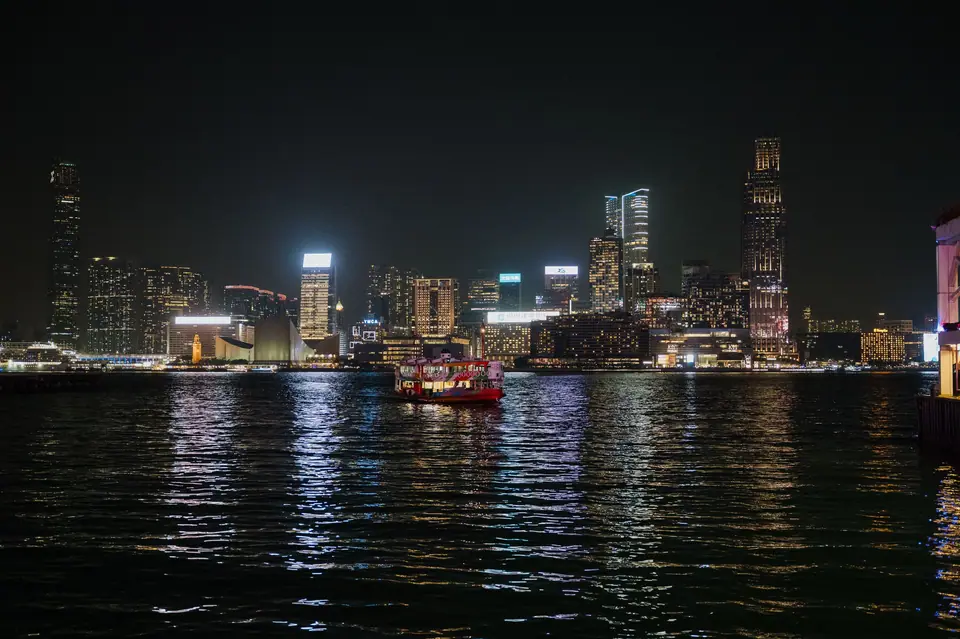
When riding the upper deck of the Star Ferry across Victoria Harbour or standing on the outdoor viewing terraces of Victoria Peak after sunset, the wind can feel surprisingly brisk. A packable down jacket, fleece pullover or lined trench coat worn over long trousers keeps you comfortable during evening outings. Indoor heating is rare in southern China, meaning cafes and shops can feel cool on cloudy winter afternoons.
Fabric Choices for Tropical Summer Rain
Packing for summer requires garments that dry quickly and allow air to circulate freely. Heavy denim and thick synthetic materials trap moisture against your body, leading to chafing during steep urban climbs. Instead, choose loose linen button-downs, open-weave cottons and technical hiking garments.
May brings 290 millimetres of rainfall over 12.8 wet days, while September still records 320 millimetres across 11.8 wet days. Downpours arrive suddenly and can soak clothing within minutes. Pack quick-drying travel trousers or lightweight shorts rather than heavy jeans. Carrying a small, absorbent handkerchief or travel towel lets you wipe away sweat and rainwater before entering air-conditioned restaurants.
Dress Codes for Temples, Dining and Rooftop Lounges
Daily attire across Hong Kong leans practical and informal. Temples such as Man Mo Temple on Hollywood Road, Wong Tai Sin in Kowloon and Po Lin Monastery on Lantau Island do not enforce rigid dress codes or demand temple sarongs. Nevertheless, dressing respectfully by covering shoulders and thighs shows consideration for worshippers attending active altars.
Dining culture covers a wide spectrum. Traditional tea restaurants, cooked food centres and neighbourhood dim sum halls welcome casual street attire, including trainers and t-shirts, as shown across our guide to Kowloon markets and dim sum. Conversely, high-end hotel afternoon teas, private member clubs, fine dining establishments and cocktail terraces in Central, Admiralty and Tsim Sha Tsui often enforce smart-casual standards. For these venues, pack tailored trousers, a collared shirt or an understated dress, and avoid athletic singlets, distressed shorts or plastic beach flip-flops.
Trail Footwear and Country Park Gear
Hong Kong contains extensive country park acreage just outside its dense urban core. Paved trails can quickly transition into rough dirt footpaths, exposed roots and steep granite steps. When hiking towards the Big Buddha or climbing coastal ridges, leave lightweight lifestyle sneakers behind. Choose trail footwear with sticky rubber outsoles that grip damp rocks securely.
Pair your trail shoes with synthetic wool-blend socks that prevent friction blisters in humid conditions. A compact daypack holding water, a light rain shell and sun protection allows you to transition seamlessly from urban streets into the rugged country parks that surround the harbour.
Weather by month
Hong Kong is warmest in July, with average highs around 32°C, and coldest in January, when nights drop to about 15°C. June is the wettest month by rainfall (460 mm), with rain on about 17 days. For mild weather with fewer rainy days, aim for January, February, March, November and December.
| Month | Low | Range | High | Rain | Rainy days |
|---|---|---|---|---|---|
| Jan | 15°C | 19°C | 30 mm | 4 d | |
| Feb | 16°C | 20°C | 42 mm | 5 d | |
| Mar | 18°C | 22°C | 75 mm | 7 d | |
| Apr | 21°C | 26°C | 155 mm | 9 d | |
| May | 25°C | 29°C | 290 mm | 13 d | |
| Jun | 27°C | 31°C | 460 mm | 17 d | |
| Jul | 27°C | 32°C | 385 mm | 16 d | |
| Aug | 27°C | 32°C | 430 mm | 16 d | |
| Sep | 26°C | 31°C | 320 mm | 12 d | |
| Oct | 24°C | 28°C | 115 mm | 6 d | |
| Nov | 20°C | 25°C | 38 mm | 4 d | |
| Dec | 16°C | 21°C | 28 mm | 3 d |
Averages of daily values from 2015 to 2024. Rainy days are days with at least 1 mm of rain. Source: Open-Meteo · Compare destinations by month.
Where it is
- 1Hong Kong
- Hong Kong International Airport (HKG) · about 26 km from Hong Kong in a straight line
- Directions in Google Maps
Stations and taxi ranks: OpenStreetMap. Airports: OurAirports. Distances are in a straight line.
Traveller tips
Real advice from people who have been to Hong Kong. Every tip is read by our team before it goes live.
No tips yet. Been here? Yours could be the first.
Thank you! Your tip will appear here after a quick review.
More in Hong Kong
Continue exploring Hong Kong with related neighbourhood, food, and planning guides
Kowloon Markets, Dim Sum, Roast Goose and Cha Chaan Teng Cafes
Hong Kong, China
Lantau Island, Tian Tan Big Buddha, Tai O and the Dragon's Back Hike
Hong Kong, China
Where to Stay in Hong Kong: Kowloon vs Hong Kong Island
Hong Kong, China
Hong Kong 3-Day Itinerary: Harbour, Peak, Markets and Lantau
Hong Kong, China
