Photo: Oilstreet · CC BY 2.5
Kenroku-en Garden and the Higashi Chaya Teahouse Quarter
Kenroku-en Garden and Higashi Chaya link feudal Maeda landscape engineering with preserved wooden teahouse streets across an easy downhill walk.
Feudal Engineering and Landscape Principles at Kenroku-en
Kenroku-en began in 1676 when the fifth Kaga lord, Maeda Tsunanori, built the Renchitei villa opposite Kanazawa Castle. The grounds expanded over successive generations to encompass between 11.4 and 11.7 hectares before opening to the public in 1874. The design reflects the classic Chinese concept of the Garden of Six Sublimities. It balances spaciousness, seclusion, human artifice, ancient patina, elevated panoramas, and abundant flowing water.
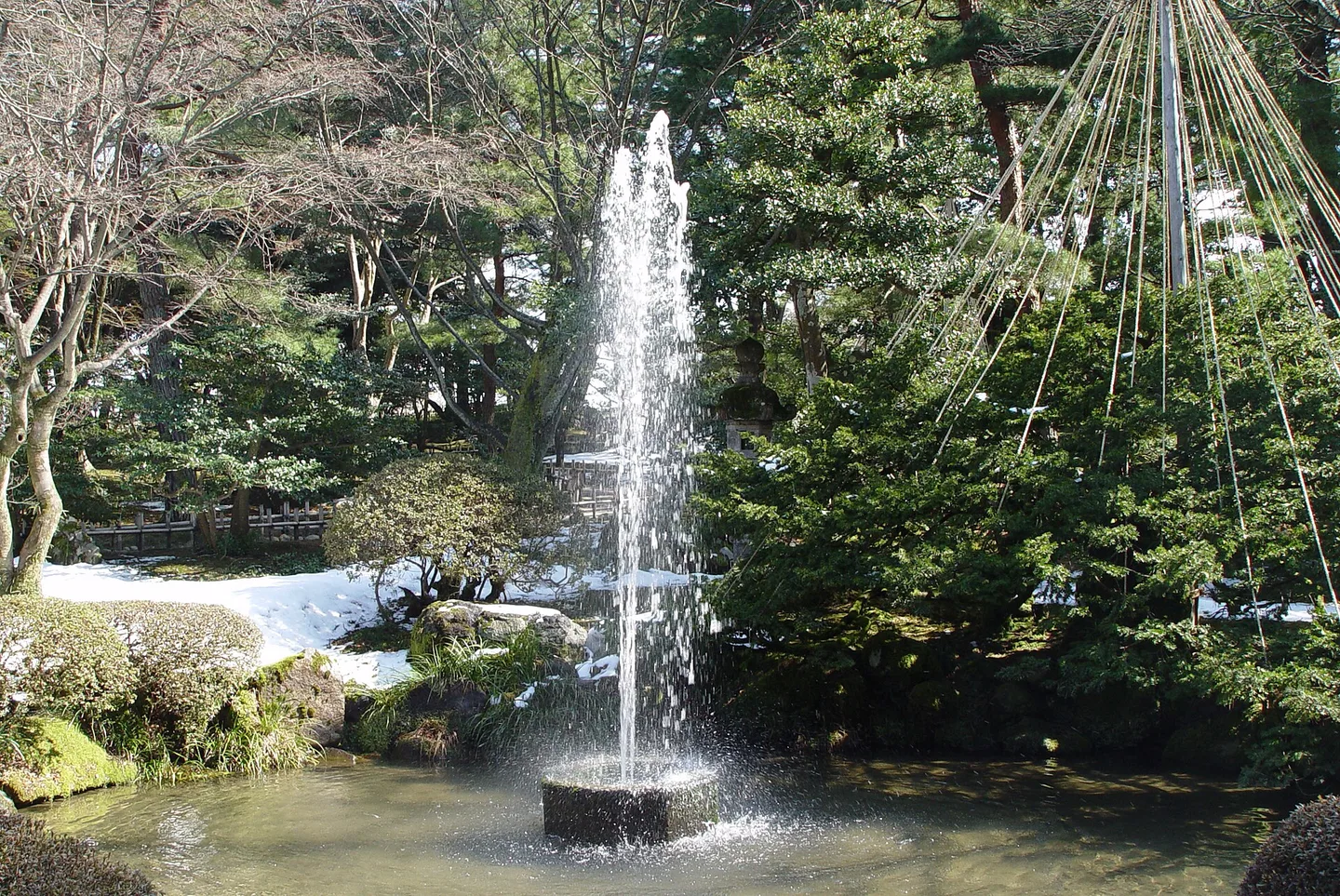
These winding streams depend on the historic Tatsumi Canal. Workers constructed the channel in 1632 to draw water from the upper Sai River. Initially running 11 km, builders later lengthened the canal beyond 16 km to safeguard the castle supply. Natural elevation drops along this watercourse power gravity-fed fountains without mechanical pumps, marking early Japanese hydraulic achievement. For broader planning across the city, explore our gardens, samurai lanes, and museums.
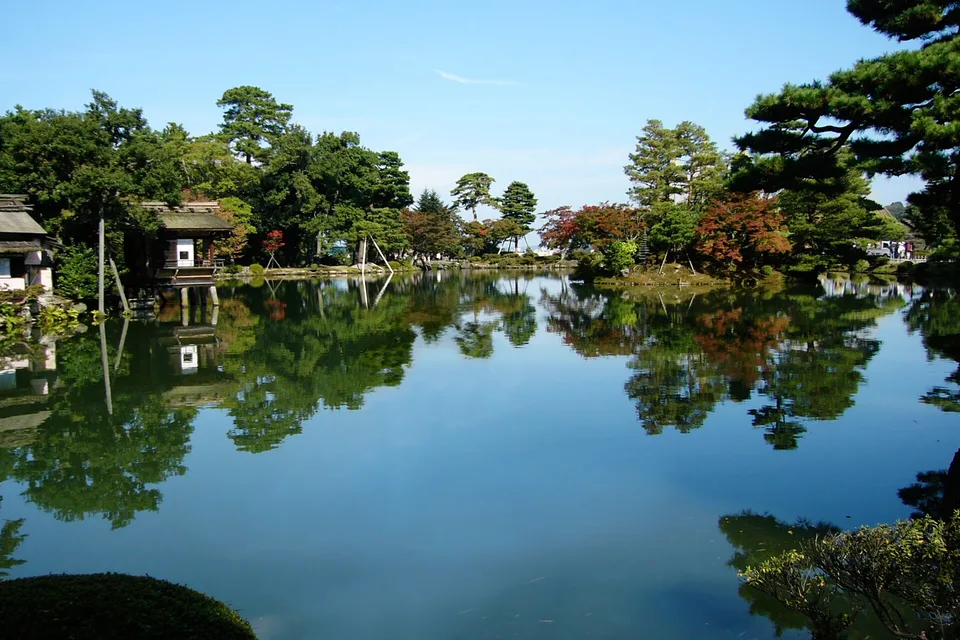
At the physical and visual centre of the park rests Kasumigaike Pond. Stone walking paths guide travellers around its perimeter toward the two-legged Kotoji-toro stone lantern and the Karasaki-matsu pine. Nearby, the historic Shigure-tei wooden pavilion overlooks peaceful gravel clearings and stone embankments.
Seasonal Rhythms and Visiting Rules Across the Grounds
Kenroku-en welcomes walking visitors across all four seasons of the year. Early risers enter free through the Renchimon and Zuishinzaka gates before regular daytime admission begins. All morning guests using this privilege must exit 15 minutes before daytime operations start unless they purchase entry. Seniors aged 65 and older receive free access throughout the day upon showing identification.
On the southern border sits Seisonkaku Villa, built as a quiet retirement retreat for the Maeda family. The villa closes on Wednesdays, shifting to Thursday if Wednesday is a public holiday, and shuts from 29 December to 2 January. Travellers mapping transport can follow our Kanazawa practical guide.
Garden routines shift with seasonal weather patterns recorded between 2015 and 2024. Spring blossoms appear in April, bringing average daytime highs of 16.4°C, overnight lows of 7.2°C, and 159 mm of rain. May offers mild walking conditions with 21.6°C daytime highs, about 12 wet days, and 135 mm of rainfall. Autumn colours crest across November, which averages 15.3°C highs, 7.6°C lows, and 174 mm of rain.
Winter brings heavy coastal precipitation, recording 229 mm across around 24 wet days in December and 196 mm across about 25 wet days in January. To prevent limb damage from wet snowfall, teams erect conical yukitsuri rope pyramids over the pines each 1 November.
Historic Quarters Across the Asano River
Leaving Kenroku-en via Katsurazaka Gate brings you to the bridge facing the 1788 Ishikawa-mon Gate of the castle grounds. From here, a downhill walk takes roughly 15 minutes north to Hashiba-cho and the riverbank. Alternatively, passengers can board the Left Loop Bus for one stop to cross the water quickly.
Across the Asano-gawa Ohashi Bridge sits Higashi Chaya, founded in 1820 by the Kaga Domain. Feudal administrators organised teahouse establishments into three designated geiko districts: Higashi Chaya, Kazuemachi, and Nishi Chaya. This deliberate planning preserved traditional timber architecture along wide flagstone streets.
- Kasumigaike Pond and Kotoji-toro lantern: linked directly to Tatsumi Canal water flows along stone embankments.
- Higashi Chaya: ground-floor kimusuko lattices and second-storey banquet rooms dating from 1820.
- Ochaya Shima: preserved historical layout open for public walkthroughs.
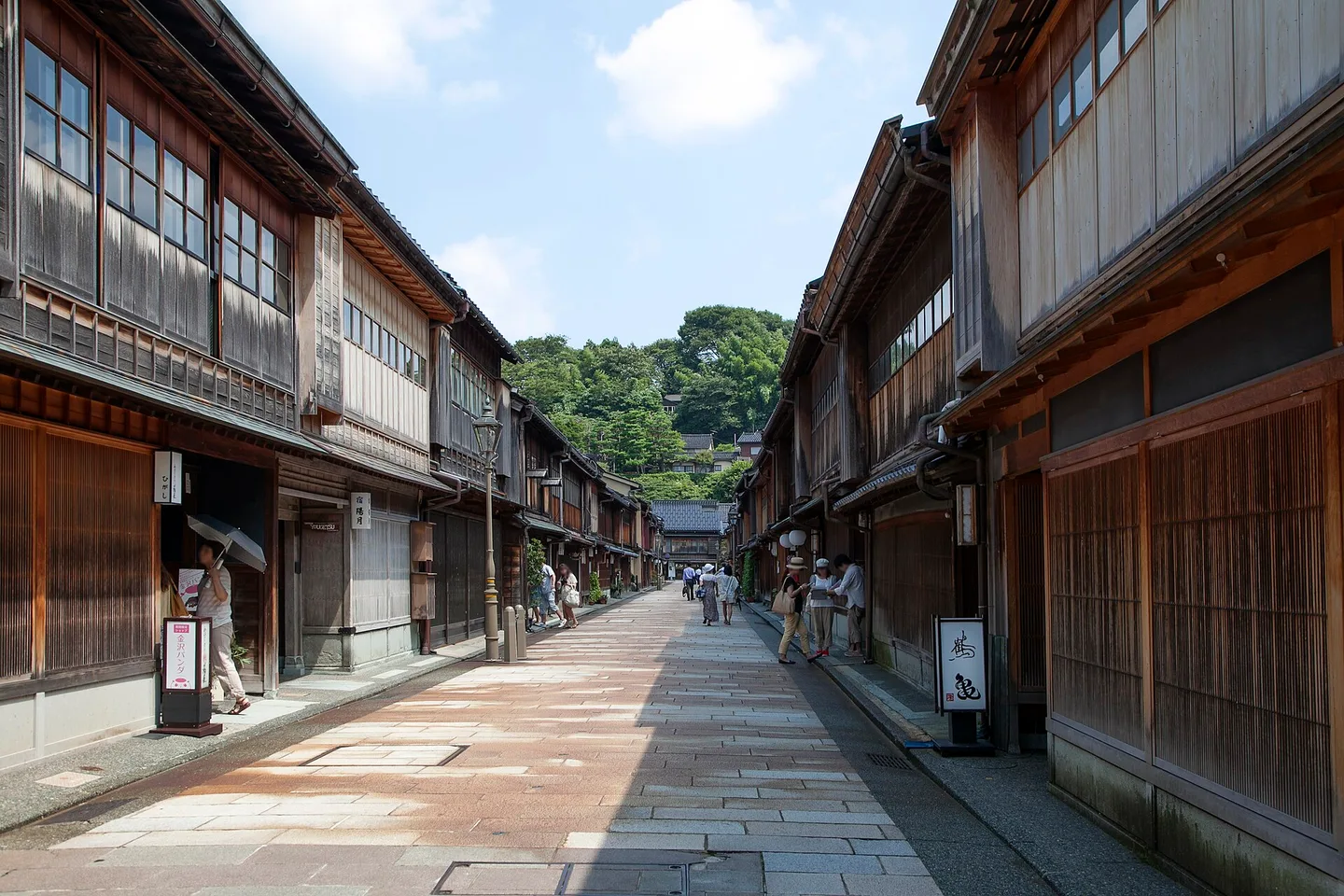
The two-storey wooden townhouses feature ground-floor kimusuko timber lattices, which offer daytime privacy while allowing indoor light. Upper levels house formal tatami banquet rooms where performing arts flourished. Ochaya Shima remains preserved in its original 1820 layout, opening daily for public walkthroughs of its reception rooms. The nearby Kaikaro teahouse maintains irregular closing days throughout the year.
Gold Leaf Crafts and Evening Lanes in Kazuemachi
Higashi Chaya serves as the main centre for Japanese gold leaf craftsmanship, known as kinpaku. Kanazawa ateliers produce 99 percent of the country's leaf through centuries of hammering techniques. Modern shops along the central lane run interactive gilding workshops, beside cafes serving powdered green tea and gold-dusted ice cream.
Because Higashi Chaya continues to host working geiko entertainment behind closed doors, travellers must maintain respectful conduct in every alley. Keep to public paths, do not touch delicate window lattices, and never photograph performing artists without permission. Those following our 2-day Kanazawa itinerary can schedule artisan visits during the early afternoon.
For a quieter detour, step across the river to Kazuemachi along the stone embankment promenade. Stone stairs at Kuragari-zaka lead uphill past dark cedar facades, offering atmospheric evening strolls as paper lanterns illuminate the riverfront. In addition, travellers continuing onward to Kanazawa central district can connect with regional rail. For domestic routes, Kyoto is located 190 km away and takes around 2 hours via the Hokuriku Shinkansen Tsurugi to Tsuruga followed by the JR Limited Express Thunderbird.
Official prices and opening hours
- Kenroku-en GardenOfficial site ↗
- Seisonkaku VillaOfficial site ↗
- Ochaya Shima Teahouse (Higashi Chaya)Official site ↗
- Kaikaro Teahouse (Higashi Chaya)Official site ↗
Where it is
- 1Kenroku-en Garden and the Higashi Chaya Teahouse Quarter
- Komatsu Airport / JASDF Komatsu Air Base (KMQ) · about 30 km from here in a straight line
- Directions in Google Maps
Stations and taxi ranks: OpenStreetMap. Airports: OurAirports. Distances are in a straight line.
Traveller tips
Real advice from people who have been to Kanazawa. Every tip is read by our team before it goes live.
No tips yet. Been here? Yours could be the first.
Thank you! Your tip will appear here after a quick review.
More in Kanazawa
Continue exploring Kanazawa with related neighbourhood, food, and planning guides
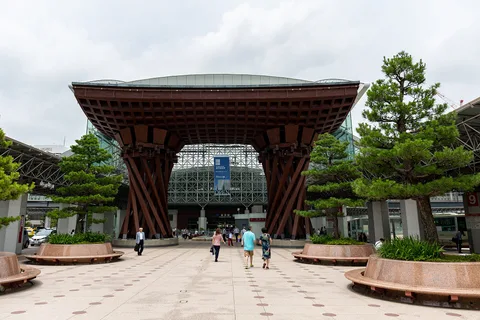
Arriving by Shinkansen, Navigating Loop Buses, and Sea of Japan Weather in Kanazawa
Kanazawa, Japan
Museums, Samurai Lanes and Temple Craft in Kanazawa
Kanazawa, Japan
Choosing a Base in Kanazawa: Station Convenience to Historic Teahouse Quarters
Kanazawa, Japan
Forty-Eight Hours Across Kanazawa's Gardens, Castle and River Quarters
Kanazawa, Japan
