Best Time to Visit Maseru
Choosing between clear autumn trekking skies, summer green pastures and crisp winter snows.
Lying in the Southern Hemisphere at 1,600 metres (with nearby passes climbing past 2,800 metres), Maseru enjoys more than 300 days of sunshine a year alongside sharp seasonal contrasts between warm, thundery summers and dry, freezing winters. For the best combination of crystal-clear mountain horizons, comfortable daytime hiking temperatures and dry roads, aim for autumn (March to May) or spring (September to November).
Autumn (March, April and May) is widely considered the sweet spot across western Lesotho and the Maloti foothills. The late-summer rains have filled the rivers so that Maletsunyane Falls in Semonkong still thunders down its basalt amphitheatre in full force, the grass across Thaba Bosiu and the Berea plateau glows golden-green, and afternoon skies turn deep cobalt blue without afternoon storm clouds. Daytime temperatures hover around a pleasant 20°C to 25°C in Maseru, while evenings call for a light wool jumper.
Spring (September, October and November) brings peach blossoms to the village orchards around Roma, Morija and Ha Kome, warming days after the winter freeze and quiet trails before the December school holidays. Late October and November mark the return of the early summer showers.
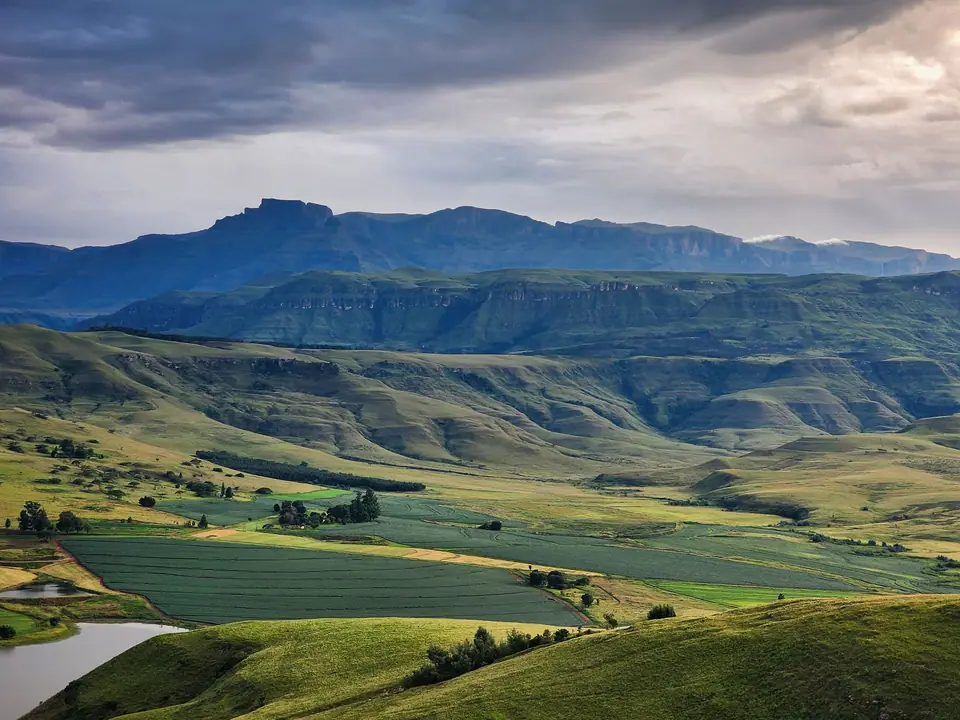
Summer (December to February) is the warmest and wettest season. Around 85 percent of Lesotho's annual rainfall arrives between October and March, mostly as dramatic late-afternoon electrical thunderstorms that wash the red sandstone cliffs clean and turn the highland valleys emerald green. Set out early in the morning for hikes onto Thaba Bosiu or Lancer's Gap so you are back indoors before the afternoon clouds build.
Winter (June to August) is dry, sunny by day and bitterly cold overnight. While central Kingsway warms to around 15°C in the midday sun, night-time temperatures in Maseru regularly dip below freezing and heavy snowfalls blanket the higher Maloti passes toward Semonkong, Katse and Afriski in the northern mountains. Even when snow closes high passes for a day or two, lowland roads around Maseru and Morija remain dry and bright under crisp winter sunshine. Pack serious thermal layers using our packing checklist.
Weather by month
Maseru is warmest in January, with average highs around 28°C, and coldest in June, when nights drop to about 0°C. January is the wettest month by rainfall (115 mm), with rain on about 11 days. For mild weather with fewer rainy days, aim for April, May, August and September.
| Month | Low | Range | High | Rain | Rainy days |
|---|---|---|---|---|---|
| Jan | 14°C | 28°C | 115 mm | 11 d | |
| Feb | 14°C | 27°C | 95 mm | 10 d | |
| Mar | 12°C | 25°C | 85 mm | 9 d | |
| Apr | 8°C | 21°C | 50 mm | 6 d | |
| May | 3°C | 18°C | 22 mm | 3 d | |
| Jun | 0°C | 15°C | 12 mm | 2 d | |
| Jul | 0°C | 16°C | 10 mm | 1 d | |
| Aug | 3°C | 19°C | 15 mm | 2 d | |
| Sep | 7°C | 23°C | 25 mm | 3 d | |
| Oct | 11°C | 25°C | 65 mm | 7 d | |
| Nov | 12°C | 26°C | 85 mm | 9 d | |
| Dec | 14°C | 28°C | 100 mm | 10 d |
Averages of daily values from 2015 to 2024. Rainy days are days with at least 1 mm of rain. Source: Open-Meteo · Compare destinations by month.
Where it is
- 1Maseru
- Moshoeshoe I International Airport (MSU) · about 17 km from Maseru in a straight line
- Directions in Google Maps
Stations and taxi ranks: OpenStreetMap. Airports: OurAirports. Distances are in a straight line.
Traveller tips
Real advice from people who have been to Maseru. Every tip is read by our team before it goes live.
No tips yet. Been here? Yours could be the first.
Thank you! Your tip will appear here after a quick review.
More in Maseru
Continue exploring Maseru with related neighbourhood, food, and planning guides