Photo: Wikimedia Commons · CC BY-SA 4.0
Melbourne
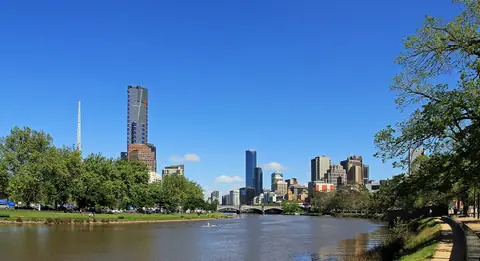
Laid out in 1837 along the north bank of the Yarra River at the head of Port Phillip Bay, Melbourne pairs the world's largest urban tram network and 19th-century gold-rush arcades with bluestone espresso laneways, UNESCO-listed Carlton Gardens, the 100,024-seat Melbourne Cricket Ground, and day trips to the Twelve Apostles.
Quick decisions
How many days?
Allow 4 to 5 days: three full days for the Hoddle Grid laneways, Carlton Gardens, Southbank arts spine, the MCG, Fitzroy, and St Kilda, plus one or two days for the Great Ocean Road, Phillip Island Penguin Parade, or Yarra Valley.
Where should I stay?
Base yourself inside the Free Tram Zone along the Paris End of Collins Street and Flinders Lane for walkable arcades and dining, in Southbank for Yarra River views, or in Fitzroy for Victorian terrace streets.
Do I need a car?
Not within the city: the Free Tram Zone covers the entire central grid and Docklands, while a reusable myki smartcard links trams and trains to Fitzroy, Carlton, and St Kilda; hire a car or book a coach only for the Great Ocean Road.
Best for
Specialty third-wave coffee and bluestone laneway dining, Victorian shopping arcades, major galleries and libraries, Test cricket and Grand Slam tennis, and coastal limestone formations.
Before you go
Pack three adaptable layers and SPF 50+ sun protection for Melbourne's rapid cool changes across Port Phillip Bay, and buy a myki card before boarding trams heading outside the CBD.
Getting around
Ride any tram free of charge inside the CBD Free Tram Zone (including the heritage W-class Route 35 City Circle Tram), and tap on with a physical myki card or Android Mobile myki when travelling into inner suburbs.
Continue your trip
Pair Victoria's capital with Sydney via domestic flight or the XPT rail line, or fly across the Tasman Sea to Auckland and Queenstown.
Overview
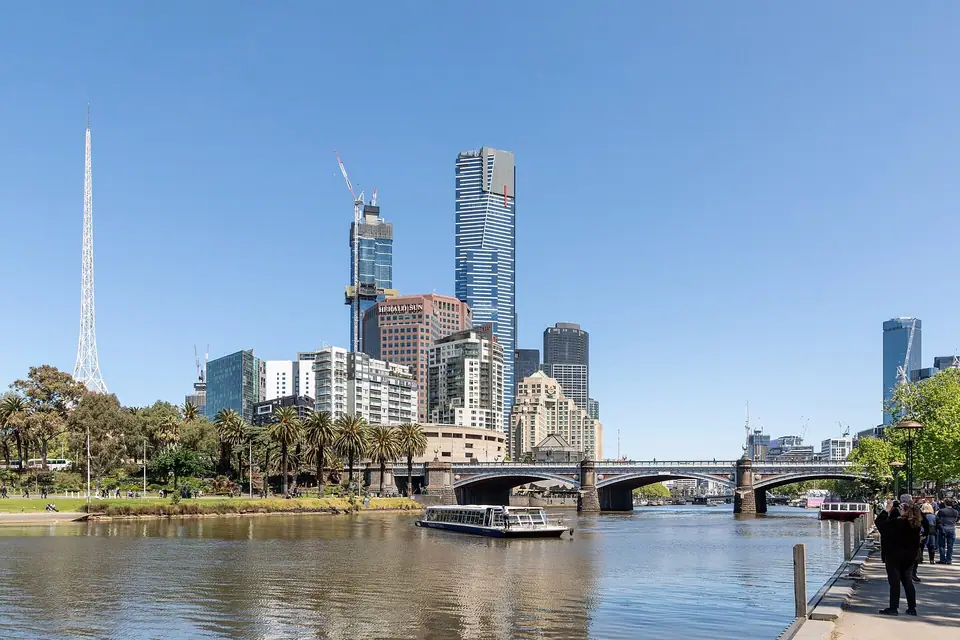
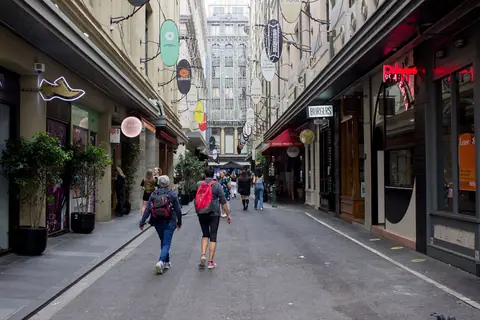
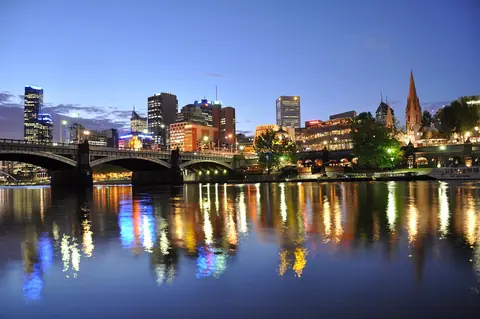
Standing on the traditional lands of the Wurundjeri Woi-wurrung and Bunurong Boon Wurrung peoples of the Eastern Kulin Nation, Melbourne curves around the northern apex of Port Phillip Bay where the Yarra River meets the coast of Victoria. Founded by European settlers in 1835 and surveyed by Robert Hoddle in 1837, the settlement exploded in wealth during the Victorian gold rush of the 1850s, transforming into the nineteenth-century metropolis known as "Marvellous Melbourne" and serving as the seat of the first Australian Parliament from Federation in 1901 until 1927. That gold-rush legacy endures across the central Hoddle Grid, where thirty-metre boulevards alternate with ten-metre "Little" streets and more than forty bluestone pedestrian laneways. Behind sandstone banking facades sit the 1870 Royal Arcade and 1892 Block Arcade, the 1913 octagonal reading dome of State Library Victoria, and the 1880 UNESCO World Heritage Royal Exhibition Building in Carlton Gardens. Directly across the 1888 Princes Bridge from Flinders Street Station and Federation Square, the cultural and sporting precincts take over: NGV International, the 162-metre Arts Centre Melbourne spire, the Shrine of Remembrance, and the 38-hectare Royal Botanic Gardens anchor the south bank, while the 100,024-capacity Melbourne Cricket Ground (MCG) and Melbourne Park rise beside the river to the east.
Getting there
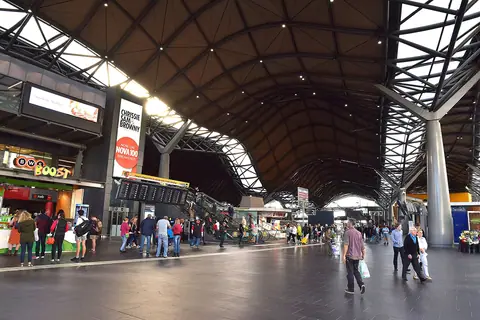
Fly into Melbourne Airport (MEL, Tullamarine) 23 kilometres northwest of the city centre and ride the direct SkyBus Melbourne City Express coach in 30 minutes to Southern Cross Station on Spencer Street, or connect via domestic flights into Avalon Airport (AVV) 55 kilometres southwest.
Where to stay
Stay inside the CBD Free Tram Zone along the Paris End of Collins Street and Flinders Lane for heritage architecture and laneway wine bars, along the Southbank Promenade for river views and arts access, in Fitzroy or Carlton for Victorian iron-lacework terraces, or by the bay in St Kilda.
Things to do
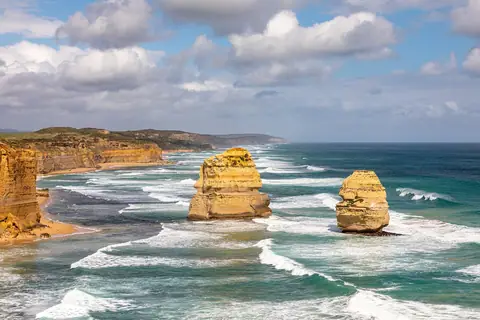
Walk from the clocks of Flinders Street Station through Federation Square, Hosier Lane, and Degraves Street, trace the mosaic floors of the Block and Royal arcades to State Library Victoria, tour the Royal Exhibition Building and Melbourne Museum, admire Leonard French's stained-glass ceiling at NGV International and walk the Royal Botanic Gardens, tour the MCG, ride Route 96 from Fitzroy to St Kilda Pier, and drive the Great Ocean Road to the Twelve Apostles.
Food and drink
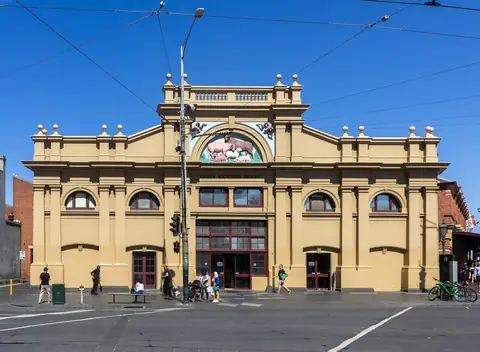
Order a flat white or double-ristretto magic in a bluestone laneway, queue for hot jam doughnuts and baked borek at the 1878 Queen Victoria Market, taste steamed dim sims (invented in Melbourne in 1945) at South Melbourne Market, and pair Lygon Street pasta or Little Bourke Street dumplings with Yarra Valley Pinot Noir.
Culture
Designated a UNESCO City of Literature in 2008 and home to Australia's oldest public art gallery (1861), oldest continuous Chinatown in the Western world (1851), and the birthplace of Test cricket (1877) and Australian Rules Football (1859), Melbourne blends Kulin Nation heritage with post-war Italian, Greek, and Asian cultural traditions.
Weather by month
Melbourne is warmest in January, with average highs around 27°C, and coldest in July, when nights drop to about 7°C. July is the wettest month by rainfall (70 mm), with rain on about 10 days. For mild weather with fewer rainy days, aim for January, February, March, April and December.
| Month | Low | Range | High | Rain | Rainy days |
|---|---|---|---|---|---|
| Jan | 16°C | 27°C | 42 mm | 6 d | |
| Feb | 16°C | 27°C | 35 mm | 5 d | |
| Mar | 14°C | 24°C | 42 mm | 6 d | |
| Apr | 12°C | 21°C | 49 mm | 7 d | |
| May | 10°C | 17°C | 56 mm | 8 d | |
| Jun | 8°C | 15°C | 63 mm | 9 d | |
| Jul | 7°C | 14°C | 70 mm | 10 d | |
| Aug | 8°C | 15°C | 70 mm | 10 d | |
| Sep | 9°C | 18°C | 63 mm | 9 d | |
| Oct | 11°C | 20°C | 63 mm | 9 d | |
| Nov | 13°C | 23°C | 56 mm | 8 d | |
| Dec | 14°C | 25°C | 49 mm | 7 d |
Averages of daily values from 2015 to 2024. Rainy days are days with at least 1 mm of rain. Source: Open-Meteo · Compare destinations by month.
Melbourne on the map
Every place we cover in Melbourne. Tap a category or pin to explore.
In-depth Melbourne guides
Browse the guides grouped by topic: sights, neighbourhoods, food, transport, day trips and trip planning.
Sights, Landmarks & Parks
Key monuments, viewpoints, museums and nature trails.
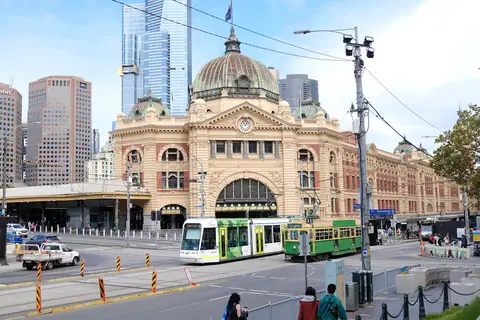 Best Things to Do in Melbourne: Laneways, Arcades, Galleries, MCG & Coastal Day TripsExplore the essential experiences in Melbourne, from Victorian shopping arcades, State Library Victoria, and UNESCO Carlton Gardens to NGV International, the MCG, St Kilda penguins, and the Twelve Apostles.
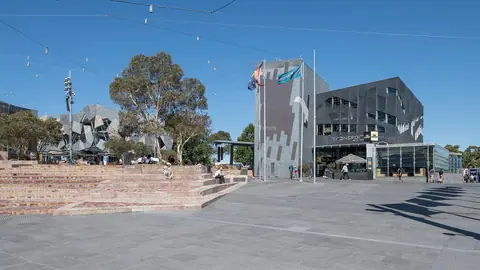 Federation Square, Flinders Street Station, St Paul's Cathedral & Hosier Lane WalkWalk Melbourne's busiest intersection from the 9 clocks of the 1910 Flinders Street Station dome and 1891 St Paul's Cathedral through Federation Square (NGV Australia and ACMI) to Hosier Lane and Degraves Street.
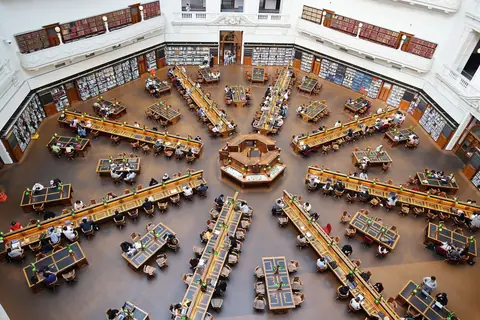 Block Arcade, Royal Arcade, Bourke Street Mall, Chinatown & State Library WalkTrace Melbourne's 19th-century gold-rush wealth from the 1892 Block Arcade and 1870 Royal Arcade across Bourke Street Mall and 1851 Chinatown to the octagonal dome of State Library Victoria.
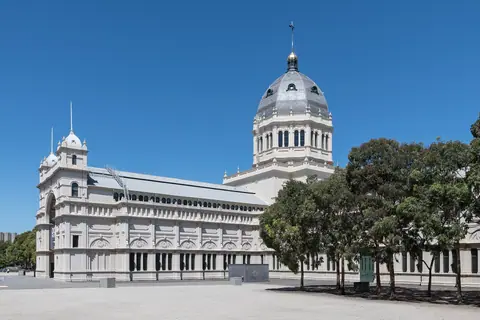 Royal Exhibition Building, UNESCO Carlton Gardens, Melbourne Museum & Lygon StreetExplore Australia's first UNESCO World Heritage building (1880 Royal Exhibition Building), the 26-hectare Carlton Gardens, Melbourne Museum (Bunjilaka, Phar Lap, and Triceratops), and Lygon Street.
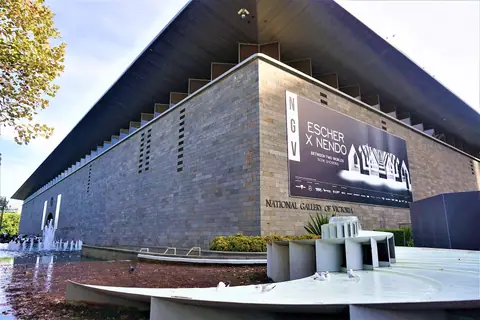 NGV International, Southbank Arts Precinct, Shrine of Remembrance & Botanic GardensCross Princes Bridge over the Yarra River to explore Arts Centre Melbourne's 162m spire, Leonard French's stained-glass ceiling at NGV International, the 1934 Shrine of Remembrance, and the 38-hectare Royal Botanic Gardens.
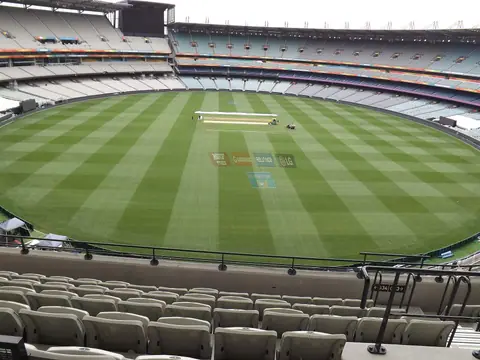 Melbourne Cricket Ground (MCG), Melbourne Park, Fitzroy Gardens & Yarra River TrailWalk east from Federation Square along Birrarung Marr to the Australian Open courts of Rod Laver Arena, the 100,024-capacity Melbourne Cricket Ground (MCG), AAMI Park, and historic Fitzroy Gardens.
Neighbourhoods & Where to Stay
Districts, historic quarters and the best bases for your stay.
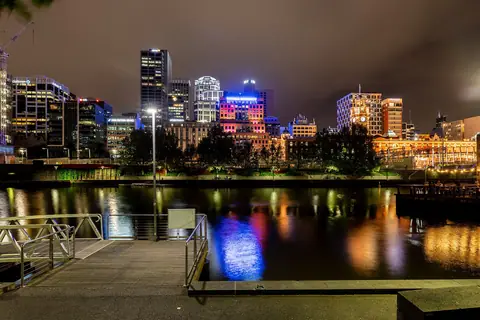 Where to Stay in Melbourne: CBD Paris End, Laneways, Southbank, Fitzroy & St KildaCompare the best neighbourhoods to stay in Melbourne, from the Paris End of Collins Street and Flinders Lane inside the Free Tram Zone to Southbank, bohemian Fitzroy, and beachfront St Kilda.
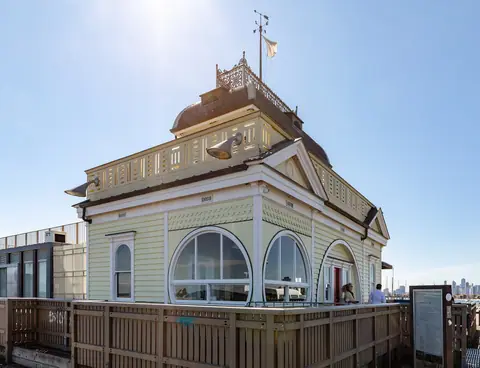 Fitzroy, Collingwood, Brunswick Street, St Kilda Pier & Brighton Bathing Boxes GuideRide Light Rail Route 96 from the Victorian iron-lacework terraces and galleries of Fitzroy and Collingwood across the CBD to St Kilda's 1912 Luna Park, Little Penguin pier, and the 82 Brighton Bathing Boxes.
Food & Drink
Local dishes, markets, cafés and dining districts.
Getting Around & Arrival
Airport transfers, public transit, passes and driving rules.
Day Trips & Excursions
Easy half-day and full-day trips from the city.
Trip Planning & Itineraries
When to visit, what to pack and day-by-day routes.
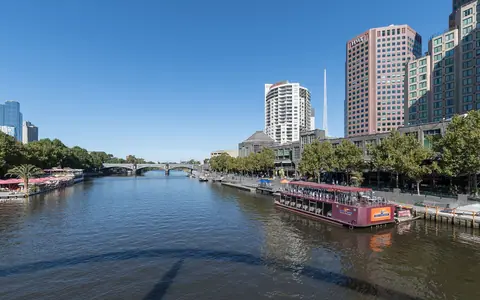 Melbourne Orientation: The 1837 Hoddle Grid, Laneways, Trams & Six Core PrecinctsUnderstand how Melbourne is organised around the 1837 Hoddle Grid, the Yarra River, the Free Tram Zone, and six distinct inner-city precincts from Carlton and Fitzroy to Southbank and St Kilda.
 Best Time to Visit Melbourne: BoM Climate Normals, Four Seasons & Major EventsPlan your trip around Melbourne's official 1991-2020 BoM climate normals, the famous 'four seasons in one day' cool change, golden autumn parks, and the Grand Slam and festival calendar.
 What to Wear in Melbourne: Layering for Cool Changes, High UV & Laneway StylePack smart for Melbourne with our three-layer rule for rapid 10 to 15°C cool changes, SunSmart SPF 50+ UV advice, Melbourne's signature black aesthetic, and Great Ocean Road wind protection.
 Melbourne 3-Day Itinerary: Hoddle Grid Laneways, Southbank Arts, MCG & Great Ocean RoadFollow our step-by-step 3-day Melbourne itinerary covering Flinders Street Station, the Victorian arcades, State Library Victoria, Carlton Gardens, NGV, the MCG, Fitzroy, St Kilda, and the Twelve Apostles.
Upcoming events in and near Melbourne
Concerts, festivals and tours with their own guide on JourneyCities. Check dates with the organiser before you book.
Need your embassy or consulate in Australia? See embassies and consulates in Australia.
Reviews
Log in to write a review.
No reviews yet.