Best Time to Visit Whistler: Ski Season, Alpine Trails and Autumn Deals
Discover the best time to visit Whistler, Canada. Compare winter powder months, summer alpine hiking trails and autumn shoulder season dining deals.
Whistler operates across two distinct peak periods: the winter ski season and the summer alpine hiking window. Two quiet, low-priced shoulder intervals separate them in spring and autumn. Because Whistler Village sits on the valley floor at 675 metres while the mountain summits reach 2,284 metres, weather changes dramatically with elevation. You can easily encounter two microclimates on the same afternoon. Selecting the best time to visit Whistler Canada depends directly on whether you pursue deep coastal powder, high-altitude alpine trails, or quiet village dining.
Winter Ski and Snowboard Season (Late November to May)
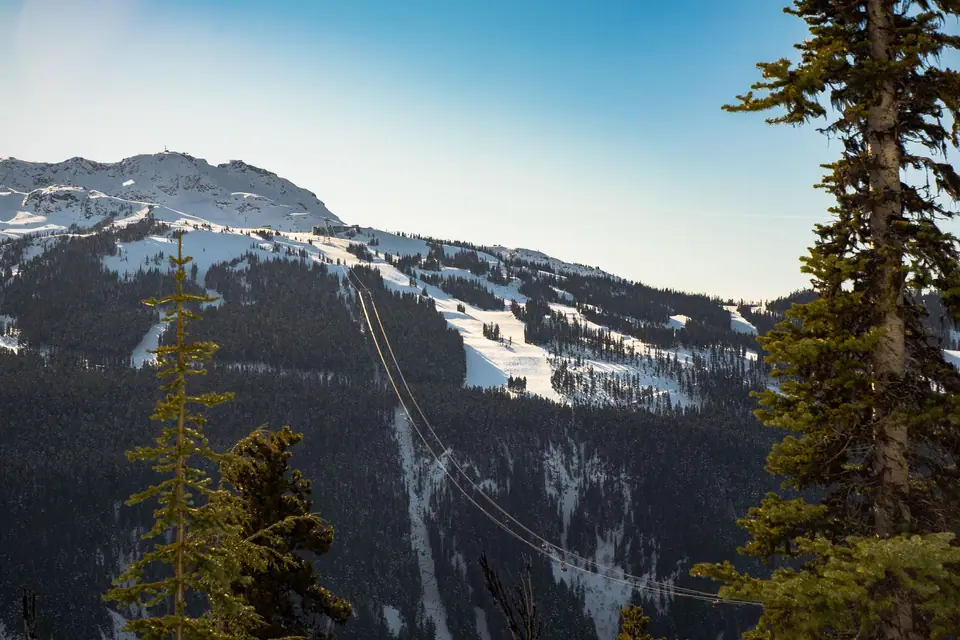
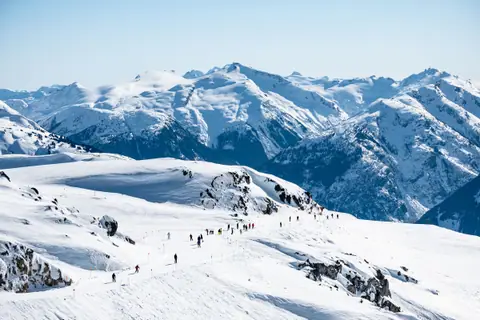
Winter sports anchor the resort calendar. Whistler and Blackcomb mountains were developed independently before being joined by a continuous ropeway lift. Today, skiing and snowboarding Whistler Blackcomb encompasses more than 8,200 acres of patrolled terrain served by thirty lifts, including seven gondolas and fourteen detachable chairlifts. The resort municipality maintains 53,000 guest beds, filling rapidly during major winter holidays.
January, February, and March offer the most reliable powder conditions. Open-Meteo climate records from 2015 to 2024 show January averages a daytime high of 0.4°C and an overnight low of -5.6°C across 14.8 wet days, generating substantial snow on the upper peaks. February posts averages of 2.8°C high and -4.4°C low across 11.6 precipitation days, while March brings highs of 6.4°C and lows of -2.1°C with 112 millimetres of moisture. Upper bowls regularly sit between -8°C and -12°C during midwinter storms. Heavy snowfall covers all sixteen alpine bowls, offering excellent tree runs and groomed pistes.
April and early May present a distinct spring skiing window. Daytime valley temperatures rise to an average high of 11.4°C in April and 17.2°C in May. Sunshine softens the upper mountain pack into forgiving corn snow. Visitors often ski the alpine in the morning before cycling the cleared Valley Trail in the afternoon. Hotel rates decrease after Easter, making late spring attractive for budget-conscious skiers.
Summer Alpine Hiking, Bike Park and Lake Season (June to Mid-September)
Summer transforms the Olympic host resort into an outdoor recreation hub. Mid-June to early July marks the unique snow walls period. Heavy equipment carves paths through remaining summit drifts, allowing pedestrians to walk between towering five-metre ploughed snow banks near the Peak Express Chairlift. Meanwhile, valley temperatures rise toward 20.8°C in June across only eight wet days.
The prime hiking window runs from mid-July through September. High alpine snowpack clears from elevated routes, unlocking paths like the High Note Trail, Half Note Trail, and Overlord Trail. Summer is also prime time for trekking Garibaldi Provincial Park and Joffre Lakes, where turquoise glacial waters draw hikers from across the globe. July and August stand as the driest, warmest months of the year. July averages a high of 25.1°C with 34 millimetres of rainfall over 5.4 wet days. August records a high of 25.2°C with 38 millimetres of rain over 5.8 wet days. Valley water warms enough for swimming at Lost Lake and Alta Lake, while mountain bikers ride downhill tracks in the valley.
September retains pleasant conditions with an average high of 19.6°C and a low of 7.6°C. Rainfall increases moderately to 64 millimetres across 7.8 wet days. Alpine vegetation shifts into brilliant red and amber hues, creating exceptional conditions for photography before autumn storms roll into British Columbia.
Whistler Seasons at a Glance
Elevation variance between the village and mountain peaks dictates mountain access. The following climate records draw from Open-Meteo data recorded between 2015 and 2024 on the valley floor.
| Season | Months | Valley Climate Averages | Mountain Conditions | Primary Outdoor Focus |
|---|---|---|---|---|
| Peak Winter | Dec to Mar | High 0.2°C to 6.4°C, Low -5.6°C to -2.1°C | Deep snowpack across 8,200 acres | Downhill skiing, snowboarding, Nordic trails |
| Spring Transition | Apr to May | High 11.4°C to 17.2°C, Low 1.2°C to 5.4°C | Corn snow alpine, clear valley floor | Spring skiing mornings, valley cycling afternoons |
| Peak Summer | Jul to Aug | High 25.1°C to 25.2°C, Low 11.0°C to 11.2°C | Snow-free peaks, open hiking routes | Alpine trekking, lake swimming, mountain biking |
| Autumn Shoulder | Oct to Nov | High 4.2°C to 11.6°C, Low -1.8°C to 3.1°C | First summit dustings, wet trails | Spa visits, culinary tasting menus, valley walks |
Autumn Shoulder Season and October Activities
Visit Whistler in October and the village turns noticeably quieter and calmer. October marks the transition from autumn foliage to early winter snow flurries. Valley temperatures reach an average high of 11.6°C and dip to 3.1°C, with 146 millimetres of precipitation over 12.6 wet days. November is the wettest month of the year, recording 188 millimetres of precipitation over 15.2 wet days as freezing levels drop toward the village base.
October is an ideal month for quiet cultural sightseeing and relaxed culinary exploration. Top dining rooms frequently run multi-course local tasting menus at reduced rates before winter crowds arrive. Visitors spend rainy afternoons touring indoor exhibitions or relaxing at hydrotherapy baths. Outdoor activities remain viable along paved valley routes. The forest floor displays rich fungi and damp mosses characteristic of coastal British Columbia flora, detailed in botanical records such as Collin Varner's regional field studies. Because the PEAK 2 PEAK Gondola closes for scheduled maintenance between mid-September and late November, visitors should verify lift dates on the official operator website before planning mountain sightseeing.
Packing Strategy for High-Elevation Climate Shifts
Preparing for Whistler requires accounting for rapid elevation shifts. The summit terminals stand more than 1,500 vertical metres above the pedestrian village, which routinely causes temperatures to drop by eight to twelve degrees. Checking what to wear in Whistler helps you assemble versatile technical layers for every month. Waterproof outerwear remains essential throughout autumn and winter, while breathable layers and sturdy footwear helps keep comfort on rocky summer trails.
Weather by month
Whistler is warmest in August, with average highs around 25°C, and coldest in January, when nights drop to about -6°C. November is the wettest month by rainfall (188 mm), with rain on about 15 days. For mild weather with fewer rainy days, aim for May, June, July, August and September.
| Month | Low | Range | High | Rain | Rainy days |
|---|---|---|---|---|---|
| Jan | -6°C | 0°C | 168 mm | 15 d | |
| Feb | -4°C | 3°C | 114 mm | 12 d | |
| Mar | -2°C | 6°C | 112 mm | 12 d | |
| Apr | 1°C | 11°C | 78 mm | 10 d | |
| May | 5°C | 17°C | 58 mm | 9 d | |
| Jun | 9°C | 21°C | 52 mm | 8 d | |
| Jul | 11°C | 25°C | 34 mm | 5 d | |
| Aug | 11°C | 25°C | 38 mm | 6 d | |
| Sep | 8°C | 20°C | 64 mm | 8 d | |
| Oct | 3°C | 12°C | 146 mm | 13 d | |
| Nov | -2°C | 4°C | 188 mm | 15 d | |
| Dec | -5°C | 0°C | 176 mm | 15 d |
Averages of daily values from 2015 to 2024. Rainy days are days with at least 1 mm of rain. Source: Open-Meteo · Compare destinations by month.
Where it is
- 1Whistler
- Vancouver International Airport (YVR) · about 104 km from Whistler in a straight line
- Directions in Google Maps
Stations and taxi ranks: OpenStreetMap. Airports: OurAirports. Distances are in a straight line.
Traveller tips
Real advice from people who have been to Whistler. Every tip is read by our team before it goes live.
No tips yet. Been here? Yours could be the first.
Thank you! Your tip will appear here after a quick review.
More in Whistler
Continue exploring Whistler with related neighbourhood, food, and planning guides
Where to Stay in Whistler: Village, Upper Village and Creekside
Whistler, Canada
What to Wear in Whistler: The 12°C Gondola Drop Rule, Gore-Tex Ski Gear & Trail Shoes
Whistler, Canada
3 to 4 Days in Whistler: PEAK 2 PEAK Gondola, Valley Trail Lakes, Sea-to-Sky & Garibaldi
Whistler, Canada
25 Minutes North of Whistler: Nairn Falls, Pemberton Valley Farms & Mount Currie
Whistler, Canada
