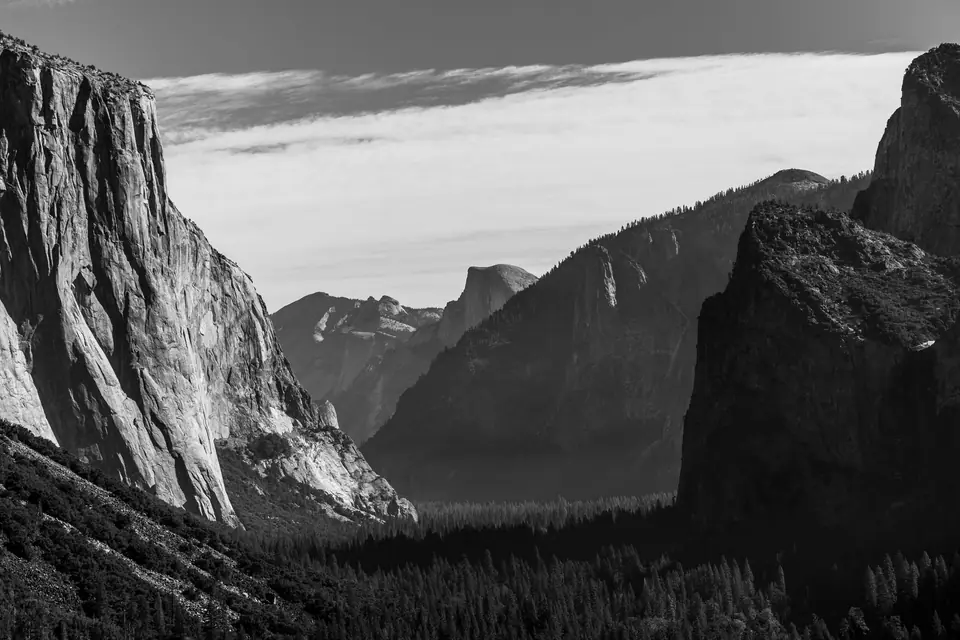
What to Wear in Yosemite: Mist Trail Rain Gear, Grippy Granite Shoes & High-Country Layers
Why the Mist Trail soaks you like a rainstorm in May and June, and why sticky rubber soles are essential on glacially polished granite.
In Yosemite, what you wear on your feet and in your daypack is determined by two forces of nature: glacially polished Sierra granite (which is slick when wet or dusted with pine needles) and thundering spring waterfall spray.
Five Practical Packing Rules for Yosemite
- Pack a Hooded Waterproof Rain Jacket & Quick-Dry Shorts or Trousers for the 'Mist Trail' (April to July): on a cloudless 26°C (78°F) May or June day, the 600 granite steps climbing beside Vernal Fall on the Mist Trail, as well as the footbridge at Bridalveil Fall and Lower Yosemite Fall, are blasted by a continuous, soaking curtain of cold glacial waterfall spray. Wear a hooded waterproof shell and quick-dry nylon shorts or hiking trousers (never heavy cotton jeans), and put a waterproof cover over your rucksack.
- Broken-In Trail Runners or Hiking Boots with Sticky Rubber Grip: whether you are climbing the wet steps of the Mist Trail, walking out onto the smooth granite dome of Sentinel Dome or Olmsted Point, or ascending the sub-dome of Half Dome, smooth-soled fashion trainers slip dangerously whenever granite has a dusting of sand or pine needles.
- Dress in Layers for the 1,800-Metre Elevation Jump to Glacier Point & Tioga Pass: while Yosemite Valley sits at 1,200m, driving up to Glacier Point (2,199m) or Tioga Pass (3,031m) lifts you nearly 2,000 metres higher, where the air is 10°C to 14°C cooler and windy. Keep a warm fleece pullover and windbreaker in the car for sunset at Glacier Point or Taft Point.
- Swimsuit & Water Sandals (For the Merced River & Tenaya Lake in Summer) + A Headlamp: in July and August, keep a swimsuit and strapped water sandals in your bag for dipping into Sentinel Beach or Tenaya Lake, and carry a small LED headlamp if watching sunset at Taft Point or Tunnel View.
- Visiting Between November and March? Bring Microspikes + Tyre Chains in the Boot: in winter, shady trails on the south side of Yosemite Valley stay covered in ice; pack slip-on microspikes for your boots and legally required tyre chains for your car. Check seasonal weather.
Weather by month
Yosemite is warmest in July, with average highs around 32°C, and coldest in December, when nights drop to about -2°C. January is the wettest month by rainfall (168 mm), with rain on about 9 days. For mild weather with fewer rainy days, aim for May and October.
| Month | Low | Range | High | Rain | Rainy days |
|---|---|---|---|---|---|
| Jan | -2°C | 9°C | 168 mm | 9 d | |
| Feb | -1°C | 11°C | 148 mm | 9 d | |
| Mar | 1°C | 14°C | 128 mm | 9 d | |
| Apr | 4°C | 18°C | 68 mm | 6 d | |
| May | 8°C | 23°C | 36 mm | 4 d | |
| Jun | 12°C | 28°C | 12 mm | 2 d | |
| Jul | 15°C | 32°C | 6 mm | 1 d | |
| Aug | 15°C | 32°C | 4 mm | 1 d | |
| Sep | 11°C | 28°C | 12 mm | 1 d | |
| Oct | 6°C | 21°C | 48 mm | 4 d | |
| Nov | 1°C | 14°C | 96 mm | 6 d | |
| Dec | -2°C | 9°C | 162 mm | 9 d |
Averages of daily values from 2015 to 2024. Rainy days are days with at least 1 mm of rain. Source: Open-Meteo · Compare destinations by month.
Where it is
- 1Yosemite
- Fresno Yosemite International Airport (FAT) · about 108 km from Yosemite in a straight line
- Directions in Google Maps
Stations and taxi ranks: OpenStreetMap. Airports: OurAirports. Distances are in a straight line.
Traveller tips
Real advice from people who have been to Yosemite. Every tip is read by our team before it goes live.
No tips yet. Been here? Yours could be the first.
Thank you! Your tip will appear here after a quick review.
More in Yosemite
Continue exploring Yosemite with related neighbourhood, food, and planning guides
The Mariposa Grove of Giant Sequoias: Grizzly Giant, California Tunnel Tree & Shuttle Guide
Yosemite, United States
Cycling the 19km Yosemite Valley Bike Paths & Walking to Mirror Lake (Half Dome Reflection)
Yosemite, United States
Driving Tioga Road (Highway 120 East): Olmsted Point, Tenaya Lake & Tuolumne Meadows
Yosemite, United States
Yosemite Village: The Historic 1927 Ahwahnee Hotel, Ansel Adams Gallery & Museum
Yosemite, United States
