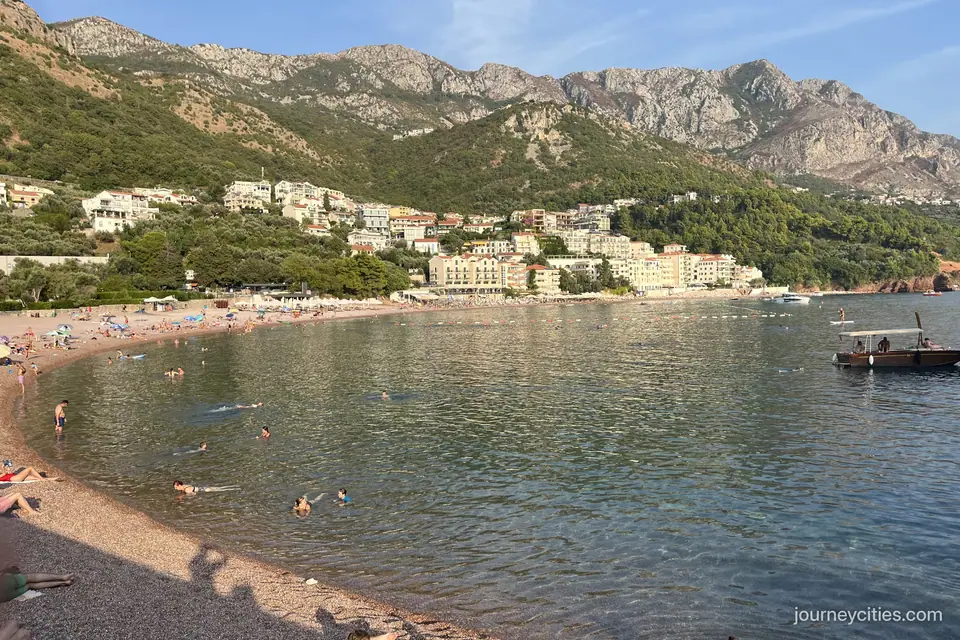
Photo: JourneyCities
Best Time to Visit Montenegro: Seasons, Climate, and Crowd Strategies
Plan your trip to Montenegro using verified climate records, sea temperature patterns, cruise crowd timings, and seasonal regional transport advice across the Adriatic coast.
Choosing when to travel across the 294 kilometres of Montenegrin coastline depends on your tolerance for summer heat, mountain rainfall, and visitor volume. The coast encompasses six distinct municipalities: Bar, Budva, Herceg Novi, Kotor, Tivat, and Ulcinj. Each coastal town experiences a Mediterranean rhythm shaped by maritime air and the dramatic limestone walls of the Bay of Kotor, where surrounding peaks rise straight out of the water up to 1,000 metres high.
The Shoulder Season Sweet Spot: June and September
June and September provide the most balanced conditions for exploring coastal Montenegro. In June, average daytime highs reach 27°C with evening lows settling near 20.6°C. Rainfall remains modest at 82 millimetres spread across nine wet days. Sea temperatures become comfortable for open-water swimming, daylight hours remain long, and historic harbours stay manageable for walking tours.
September delivers comparable weather with average highs of 25.6°C and nighttime lows of 19.5°C. The Adriatic retains heat absorbed over peak summer, creating optimal swimming conditions. Precipitation rises to 175 millimetres across eleven wet days, typically arriving in brief, intense coastal squalls rather than persistent grey skies. Both months allow you to walk stone alleys in comfort, follow an active Montenegro 4-Day Itinerary, and secure tables at waterfront konobas without long delays.
Peak Summer Realities: July and August
July and August represent the peak tourist season along the Adriatic highway. July records average highs of 30.4°C and lows of 23.5°C, matched by August with highs of 30.5°C and lows of 23.7°C. These are the driest months of the year, logging 45 millimetres over five rain days in July and 68 millimetres over seven rain days in August.
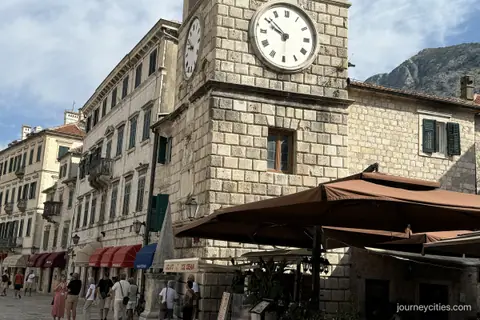
During these eight weeks, vehicle traffic on the main coastal corridor through Budva slows to a crawl during late afternoons. Public beaches fill by mid-morning, and parking near historic centres becomes scarce. If you visit in midsummer, complete physical ascents like the fortress stairs in Kotor Old Town early in the morning before limestone walls radiate intense heat. Reserve afternoons for swimming or boat excursions on the water.
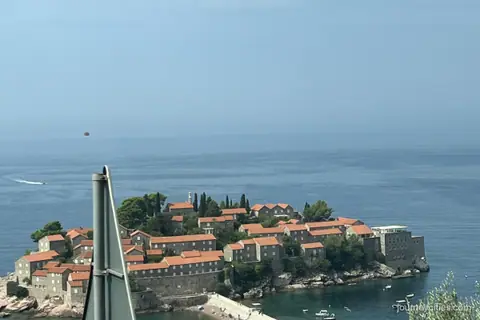
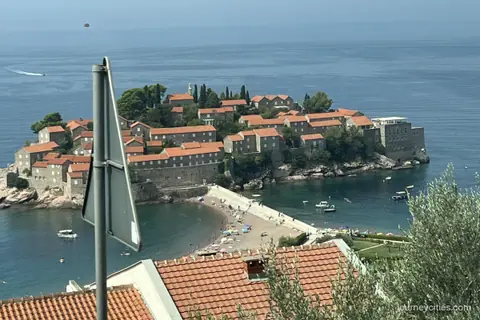
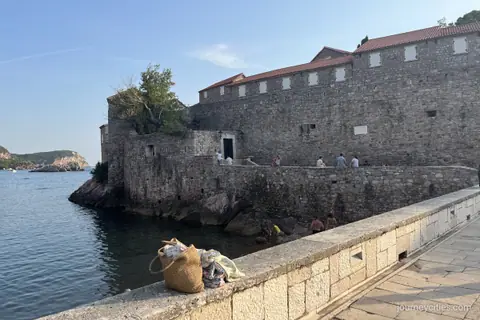
At the islet of Sveti Stefan, midsummer draws dense crowds to the public beach strip beside the causeway. The private resort areas on the island operate at full capacity during July and August. Independent travellers using the public pebbled shoreline should arrive in the morning to claim towel space before parking fills along the access roads.
Montenegro Climate and Seasonal Travel Conditions
| Month | Average High / Low | Rainfall & Wet Days | Seasonal Travel Profile |
|---|---|---|---|
| January | 11.0°C / 5.1°C | 244 mm (13 days) | Quiet stone towns, shuttered beach venues, heavy bay rainfall. |
| April | 18.0°C / 11.4°C | 148 mm (12 days) | Spring greening, cooler water, ideal for quiet road trips. |
| May | 22.1°C / 15.8°C | 172 mm (14 days) | Mild touring weather, flowering hills, maritime services resuming. |
| June | 27.0°C / 20.6°C | 82 mm (9 days) | Prime swimming, long daylight, moderate visitor volumes. |
| July | 30.4°C / 23.5°C | 45 mm (5 days) | Peak sunshine, warmest sea, heavy coastal road congestion. |
| August | 30.5°C / 23.7°C | 68 mm (7 days) | High heat, full nightlife, busy public beaches and harbours. |
| September | 25.6°C / 19.5°C | 175 mm (11 days) | Warm sea, easing crowds, excellent conditions for touring. |
| October | 21.3°C / 15.4°C | 225 mm (11 days) | Pleasant daytime walking, seasonal closures starting late in the month. |
| November | 17.1°C / 11.5°C | 373 mm (14 days) | Wettest period, strong coastal fronts, low visitor numbers. |
Spring and Autumn Walking Months: May and October
May and October suit travellers prioritising architectural photography, culture, and outdoor hiking over beach sunbathing. May brings daytime highs of 22.1°C and lows of 15.8°C across 172 millimetres of rain. Sea temperatures remain brisk, but hillside wildflowers bloom and seasonal restaurants reopen their terraces.
October maintains pleasant walking conditions with average highs of 21.3°C and lows of 15.4°C. Rainfall rises to 225 millimetres across eleven wet days. Coastal businesses begin winding down operations during late October, and sunbed concessions leave the sand. These months offer comfortable exploration of historical settlements like Perast, Lake Skadar nature reserves, and coastal fortifications without summer tour groups.
Managing Cruise Ship Volumes in the Bay of Kotor
The cruise port in Kotor operates heavily between April and late October, welcoming mega-ships into the narrow bay. On days when multiple vessels dock simultaneously, thousands of passengers disembark between late morning and mid-afternoon, filling the pedestrian gates and narrow squares. The municipal port authority publishes arrival schedules online in advance. Check these ship calendars before planning day visits to Kotor.
If your itinerary coincides with a crowded cruise date, enter the town walls shortly after daybreak to view Romanesque churches in quiet surroundings. When tour groups arrive at mid-day, catch an open-air water taxi out to the baroque palaces of Perast and Our Lady of the Rocks where maritime breezes keep conditions pleasant.
Winter Realities and Mountain Rainfall
Winter along the coast is quiet, humid, and starkly scenic. January records average daytime highs of 11°C and lows of 5.1°C with 244 millimetres of precipitation. November serves as the wettest month of the year, generating 373 millimetres of rain across 14 wet days. December follows closely with 277 millimetres across 12 days.
Maritime weather fronts hitting the coastal mountains produce torrential downpours across the inner bay. Many boutique hotels and beach clubs close between November and March. However, old town centres remain populated by local residents. Winter visitors will find empty alleys, working fishing harbours, and authentic domestic life, provided they carry waterproof layers and sturdy footwear for slick limestone pavements.
Seasonal Packing and Transit Logistics
Packing requirements shift noticeably between seasons due to coastal topography. Summer demands light linen, sun protection, and slip-resistant water shoes for stony beaches. Spring and autumn require thermal layers for breezy evenings, walking boots for ancient stone staircases, and modest garments for Orthodox and Catholic religious monuments. Review our comprehensive packing advice in What to Wear in Montenegro to prepare for varying mountain and maritime microclimates.
Regional transit times fluctuate according to season. Between late June and August, single-lane roads around Budva and Kotor experience long vehicle queues. Buses run behind schedule due to holiday traffic. In spring and autumn, driving conditions clear substantially, making rental cars an efficient choice for exploring the coast. Consult our transit logistics guide in How to Get to Montenegro to plan flights, border crossings, and ferry connections across the Adriatic rim.
Where it is
- 1Montenegro
- Tirana International Airport Mother Teresa (TIA) · about 129 km from Montenegro in a straight line
- Directions in Google Maps
Stations and taxi ranks: OpenStreetMap. Airports: OurAirports. Distances are in a straight line.
Traveller tips
Real advice from people who have been to Montenegro. Every tip is read by our team before it goes live.
No tips yet. Been here? Yours could be the first.
Thank you! Your tip will appear here after a quick review.
More in Montenegro
Continue exploring Montenegro with related neighbourhood, food, and planning guides