Best Time to Visit Prague: Seasons, Crowds and Planning
Plan your trip to Prague with verified monthly weather averages, crowd patterns across four distinct seasons, and advice for regional rail itineraries.
Prague experiences a temperate continental climate marked by cold winters, warm summers, and mild transitional shoulder seasons. Deciding when to travel depends on your tolerance for walking crowds, outdoor sightseeing goals, and regional rail connections across Central Europe. For optimal walking conditions and manageable queue lines at historic sights, the two most balanced windows run from late April to early June and from September to mid-October.
Spring Blossoms and the Prague Shoulder Season
Spring begins in April as city gardens reopen and orchard slopes burst into bloom across Petřín Hill. Average daily highs climb from 14.9°C in April to 19.5°C in May, accompanied by lows ranging between 4.3°C and 9.2°C. Easter brings seasonal craft stalls to the historic centre, while the renowned Prague Spring international music festival commences each year on 12 May with Bedřich Smetana's Má vlast.
May brings 67 millimetres of precipitation over roughly twelve wet days, which makes carrying a compact umbrella sensible. The historic courtyards at Prague Castle and Malá Strana become steadily busier towards late May, but morning queues remain far more relaxed than during midsummer. Pack structured layers, light sweaters, and comfortable walking shoes built for wet stone cobbles.
Summer Warmth, Crowds and Evening Atmosphere
July and August bring the warmest weather of the year, with daytime highs averaging 26.2°C in July and 26.0°C in August. Summer afternoons occasionally climb well above 30°C, and heavy convective rainstorms make August the wettest month on record with 81 millimetres of rainfall. Historic corridors between the Old Town and the Vltava riverfront fill with international tour groups, while castle ticket counters experience their peak annual footfall.
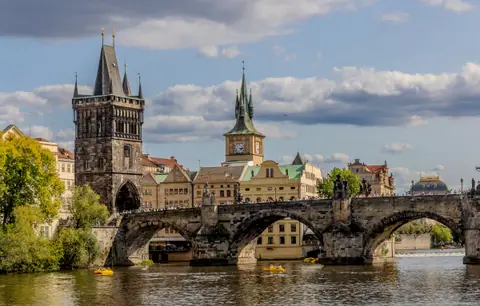
Summer rewards travellers who shift their active sightseeing to the early morning hours. Dawn walks across Charles Bridge provide clear sightlines before groups arrive. In the afternoon, escape the heat by visiting shaded green spaces, touring underground stone cellars, or boarding an evening tram towards open beer terraces in Letná and Vinohrady. Long daylight hours allow comfortable dining outdoors late into the evening.
Autumn Colour and Stable September Weather
Autumn is one of the most rewarding periods to explore the Czech capital. September maintains an agreeable average high of 21.1°C with only 56 millimetres of rain spread across eight wet days, providing crisp, dry walking conditions. Tourism numbers decline noticeably following the start of the school term, giving visitors breathing room through Old Town alleys.
October sees daytime temperatures drop to an average high of 15.3°C, while park canopies turn copper and gold across the riverbanks. Mid-October welcomes the Signal light festival, which projects digital art displays onto historic municipal architecture after dark. While November turns noticeably cooler with average highs of 8.5°C, historic monuments remain uncrowded, making it an excellent time to inspect art galleries and indoor monuments without queues.
Winter Chill, Festive Markets and Low-Season Solitude
Winter brings cold continental air, with January posting an average high of 3.9°C and an average night low of -1.8°C. December records average highs of 5.3°C and night lows hovering near 0.1°C. While heavy snowfall across the city roofs is never guaranteed, sub-zero days create atmospheric frost across Gothic church spires.
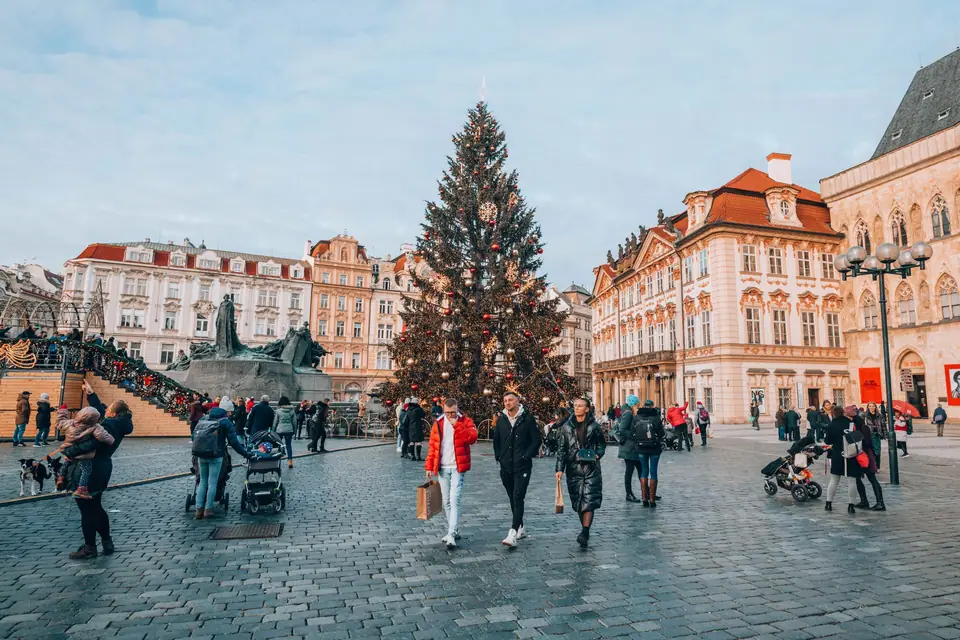
From late November into early January, holiday markets set up on the Old Town Square and Wenceslas Square. Stalls serve hot spiced mulled wine, roast chestnuts, and grilled sausages beneath a large decorated evergreen tree. Once the markets close in January, tourist traffic drops to its lowest annual level. January, February, and March offer rock-bottom hotel rates, quiet museum galleries, and unobstructed views of historic architecture, provided you pack thermal base layers and windproof outerwear.
Central European Regional Travel and Combined Itineraries
Many overseas visitors plan multi-city routes connecting Prague, Vienna, and Budapest. These three capitals sit along historic rail corridors operated by České dráhy and Austrian federal rail lines, making combined journeys straightforward without domestic flights. The best period to complete a combined Prague, Vienna, and Budapest itinerary is from May to early June or from September to mid-October. During these shoulder weeks, all three cities enjoy comfortable walking weather without the humid heatwaves that frequently affect the Hungarian basin in July.
Travellers visiting specific city attractions like Prague Zoo should aim for May, June, or September. The zoo occupies expansive, hilly terrain in the Troja basin north of the centre. Clear autumn or late spring days allow visitors to navigate outdoor walking trails comfortably, avoiding both the midday heat of July and slippery winter frost on pedestrian inclines.
| Season Window | Average Temperature Range | Precipitation Pattern | Crowd Level | Ideal Focus Activities |
|---|---|---|---|---|
| April to May | 4.3°C to 19.5°C | 40 to 67 mm across 9 to 12 wet days | Moderate; builds gradually towards late May | Palace gardens, Petřín blossoms, classical music concerts |
| June to August | 14.2°C to 26.2°C | 61 to 81 mm; frequent summer showers | Peak international visitor numbers | Sunrise bridge walks, riverfront cafes, open-air beer gardens |
| September to October | 7.2°C to 21.1°C | 53 to 56 mm across 8 to 11 wet days | Moderate; sharp decline after mid-October | Walking tours, autumn photography, Signal light festival |
| November to March | -1.8°C to 10.3°C | 37 to 45 mm; occasional winter snow | Low; temporary weekend surge in December | Christmas markets, art museums, historic synagogue interiors |
Practical Timing Advice for Czech Rail Excursions
Prague acts as the primary transport gateway for the Czech Republic, serviced by Václav Havel Airport Prague and direct rail connections from Praha hlavní nádraží. If you intend to add regional train excursions to your stay, plan around seasonal transport timetables. Popular day trips to regional hubs such as Plzeň, Brno, and Ostrava operate year-round via frequent České dráhy express trains.
However, rural branch lines and castle preservation sites outside the capital often scale down public tour schedules between November and March. For countryside trips that combine castle visits with forest hikes, schedule your stay between May and September. For city-focused sightseeing centred around music venues, cafes, and historic architecture, Prague remains thoroughly functional and appealing in every month of the year.
Weather by month
Prague is warmest in July, with average highs around 26°C, and coldest in January, when nights drop to about -2°C. August is the wettest month by rainfall (81 mm), with rain on about 11 days. For mild weather with fewer rainy days, aim for September.
| Month | Low | Range | High | Rain | Rainy days |
|---|---|---|---|---|---|
| Jan | -2°C | 4°C | 40 mm | 12 d | |
| Feb | -1°C | 7°C | 41 mm | 10 d | |
| Mar | 1°C | 10°C | 37 mm | 10 d | |
| Apr | 4°C | 15°C | 40 mm | 9 d | |
| May | 9°C | 20°C | 67 mm | 12 d | |
| Jun | 14°C | 25°C | 75 mm | 12 d | |
| Jul | 16°C | 26°C | 61 mm | 11 d | |
| Aug | 16°C | 26°C | 81 mm | 11 d | |
| Sep | 11°C | 21°C | 56 mm | 8 d | |
| Oct | 7°C | 15°C | 53 mm | 11 d | |
| Nov | 2°C | 9°C | 44 mm | 10 d | |
| Dec | 0°C | 5°C | 45 mm | 10 d |
Averages of daily values from 2015 to 2024. Rainy days are days with at least 1 mm of rain. Source: Open-Meteo · Compare destinations by month.
Where it is
- 1Prague
- Václav Havel Airport Prague (PRG) · about 13 km from Prague in a straight line
- Directions in Google Maps
Stations and taxi ranks: OpenStreetMap. Airports: OurAirports. Distances are in a straight line.
Traveller tips
Real advice from people who have been to Prague. Every tip is read by our team before it goes live.
No tips yet. Been here? Yours could be the first.
Thank you! Your tip will appear here after a quick review.
More in Prague
Continue exploring Prague with related neighbourhood, food, and planning guides