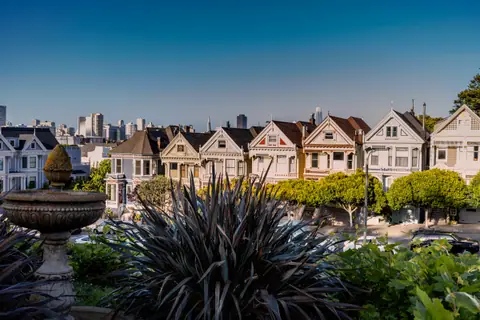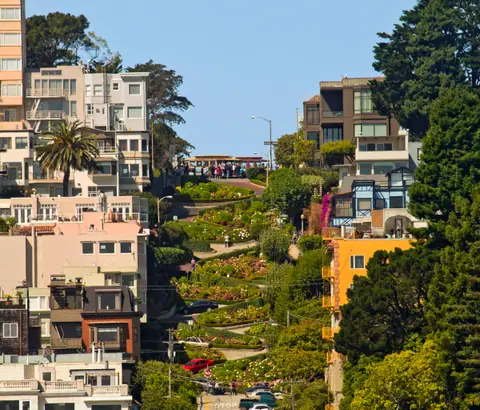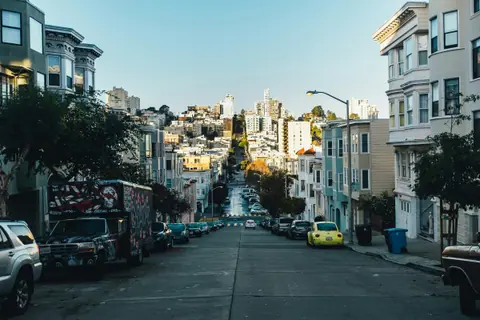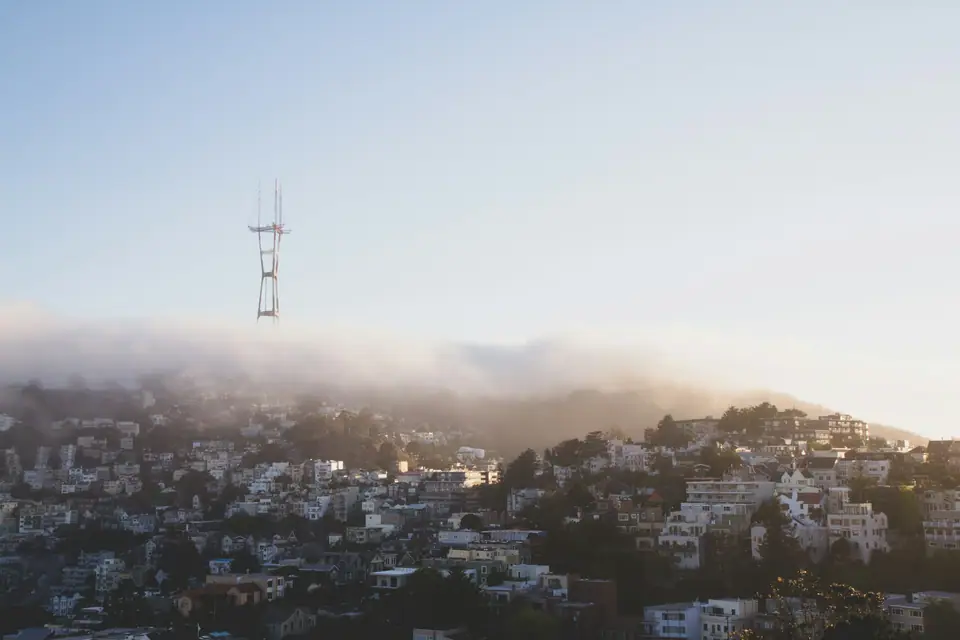
Photo by Andreas Strandman on Unsplash
Best Time to Visit San Francisco
Why September is San Francisco's warmest month, why July feels cool, when the rain falls, and how the 2026 Alcatraz closure affects autumn plans.
Short answer: September and October are the warmest months, with average highs around 21°C (70°F) and almost no rain. Summer is often cool and grey, with July highs near 19°C (66°F). Winter is mild but wet, and January and February bring most of the rain. Spring falls between the two.
What the numbers say
NOAA's 1991 to 2020 normals for downtown San Francisco show a climate that runs against most visitors' expectations. The warmest average high comes in September, not July. Rain falls mainly in winter, and summer is almost dry.
- January: high about 14.3°C (57.8°F), low about 8.1°C (46.6°F), and 112 mm (4.40 in) of rain.
- February: 111 mm (4.37 in) of rain, almost as wet as January.
- April: high about 17.2°C (63.0°F), low about 9.8°C (49.7°F).
- July: high about 19.1°C (66.3°F), low about 12.4°C (54.4°F), and almost no rain at 0.01 in.
- September: high about 21.2°C (70.2°F), low about 13.1°C (55.6°F).
- October: high about 21.0°C (69.8°F), low about 12.4°C (54.4°F).
Over a full year, the city receives about 581 mm (22.89 in) of rain. San Francisco Travel names December to February as the wettest months, with rain returning in late October and November.
Autumn: the warm season
September has the warmest average high of the year, and October is close behind. Skies are often clearer, which suits the Golden Gate Bridge viewpoints, the cliff walk at Lands End and a ferry across the bay. If you can choose any dates, aim for these two months.
In 2026, keep one change in mind. Alcatraz closed on 26 October for dock repairs expected to finish by 18 November. If your trip falls in that window, check the park alerts, and see our Alcatraz guide for alternatives such as a bay cruise.
Summer: cool and grey
July's average high is about 19°C, cooler than September, and San Francisco Travel notes that a July visitor usually needs a jacket more than a December visitor. Fog is most noticeable in summer, and evening fog often pours in through the Golden Gate. The Mission, further from the ocean, is often sunnier, as San Francisco Travel notes.
Summer is still a fine time for the city if you dress for it. Plan indoor sights such as the Exploratorium and the California Academy of Sciences for the greyest hours, and keep the bridge for a clearer moment. Our what to wear guide explains the layers.
Winter: mild and wet
January highs average about 14°C and lows about 8°C, so the city rarely feels harsh. Rain is the issue. January and February each bring around 111 to 112 mm, and wet paths on the cliff trails call for care. Pack a waterproof jacket and keep a museum day in reserve.
Winter has its rewards. Lunar New Year celebrations fill Chinatown with parades and fireworks each February. Bridge and park sidewalks are quieter. The Cable Car Museum stays open every day apart from Thanksgiving, Christmas Day and New Year's Day.
Spring: green and changeable
By April, highs average about 17°C and lows about 10°C. The rains ease as the season goes on, and the parks turn green. It is a pleasant season for Golden Gate Park, Muir Woods and Angel Island. Ferry service to Angel Island is limited on winter weekdays, so spring is easier for that trip.
Fire season and earthquakes
Dry months bring wildfire risk to canyons, hills and forests across California. If you plan to head into the hills or to Yosemite, follow CAL FIRE updates and local media, and obey any evacuation orders. Earthquakes, by contrast, have no season: they can strike without warning at any time of year. Our practical briefing covers what to do.
Booking around closures and changes
- Alcatraz: closed from 26 October 2026, with repairs expected to finish by 18 November 2026.
- Bridge parking: in 2026 the visitor lots were closed on weekends and holidays from late May to mid-October.
- Sunset Dunes: its future was on the November 2026 ballot as Proposition G.
- Muir Woods: parking and shuttle seats must be reserved in every season.
- Yosemite: no timed vehicle reservations in 2026, but weekends and holidays are busy.
Choosing by what you want
- Warmth and clear views: September or October.
- Lunar New Year: February, with rain gear.
- Green parks and fewer storms: April and May.
- Long days for walking: June to August, with a jacket for the fog.
Check the forecast each day
San Francisco's weather can change within a few kilometres and a few hours. Look at the forecast for the specific neighbourhood you plan to visit, not just for the city as a whole. Then follow our three-day route, which keeps a flexible day for the bridge in case the morning is grey.
Why the coast is cooler than inland California
The National Park Service explains that California's mountains and valleys create microclimates along the coast. Gaps in the coastal ranges let ocean fog push inland, bringing moisture and cooling in summer, while the mountains leave drier valleys inland. Summer drought on the coast can last up to seven months. That is why a cool, grey afternoon in the city and a hot one inland can fall on the same day.
Seasonal timings to know
- Bridge sidewalk: the east sidewalk stays open later in the evening during daylight saving time, from early March to early November.
- Ferry Plaza Farmers Market: Tuesdays, Thursdays and Saturdays, all year.
- Lunar New Year: parades and fireworks in Chinatown each February.
- Angel Island: limited weekday ferry service in winter.
- Exploratorium: After Dark Thursdays for adults all year.
Microclimates in practice
San Francisco Travel says neighbourhoods a few blocks apart can feel about ten degrees Fahrenheit different, and that a July visitor usually needs a jacket more than a December visitor. In practice, that means the Mission can feel warm while the bridge is grey and windy on the same afternoon. Plan sunny outdoor sights for the clearer districts, keep museums for grey hours, and always carry a layer, whatever the month and whatever the morning looks like.
Weather by month
San Francisco is warmest in September, with average highs around 21°C, and coldest in January, when nights drop to about 8°C. December is the wettest month by rainfall (129 mm), with rain on about 10 days. For mild weather with fewer rainy days, aim for May, June, July, August, September and October.
| Month | Low | Range | High | Rain | Rainy days |
|---|---|---|---|---|---|
| Jan | 8°C | 14°C | 124 mm | 11 d | |
| Feb | 8°C | 15°C | 89 mm | 8 d | |
| Mar | 9°C | 15°C | 94 mm | 10 d | |
| Apr | 10°C | 16°C | 34 mm | 5 d | |
| May | 11°C | 17°C | 17 mm | 2 d | |
| Jun | 13°C | 19°C | 1 mm | 0 d | |
| Jul | 13°C | 19°C | 1 mm | 0 d | |
| Aug | 14°C | 20°C | 1 mm | 0 d | |
| Sep | 14°C | 21°C | 3 mm | 1 d | |
| Oct | 13°C | 21°C | 29 mm | 3 d | |
| Nov | 10°C | 16°C | 59 mm | 7 d | |
| Dec | 8°C | 14°C | 129 mm | 10 d |
Averages of daily values from 2015 to 2024. Rainy days are days with at least 1 mm of rain. Source: Open-Meteo · Compare destinations by month.
Where it is
- 1San Francisco
- San Francisco International Airport (SFO) · about 18 km from San Francisco in a straight line
- Directions in Google Maps
Stations and taxi ranks: OpenStreetMap. Airports: OurAirports. Distances are in a straight line.
Traveller tips
Real advice from people who have been to San Francisco. Every tip is read by our team before it goes live.
No tips yet. Been here? Yours could be the first.
Thank you! Your tip will appear here after a quick review.
More in San Francisco
Continue exploring San Francisco with related neighbourhood, food, and planning guides