Best Time to Visit Sucre: Seasons, Mountain Climate and Cultural Festivals
Discover the best time to visit Sucre with verified seasonal climate data, optimal trekking windows, dry season benefits, and major cultural festivals across the year.
Unlike the harsh winds of the high Altiplano or the heavy humidity of the Amazon basin, Sucre sits comfortably at 2,790 metres (9,153 feet) above sea level. This position inside a sheltered subtropical highland valley (classified as Köppen Cwb) blesses Bolivia's constitutional capital with stable conditions across the calendar. Daytime maximum temperatures remain remarkably uniform from month to month, ranging between 20.6°C in July and 23.1°C in October according to long-term meteorological records. However, precipitation patterns split the year into two starkly distinct periods: a crisp, arid winter and a greener, rainier summer.
April to October: The High-Altitude Dry Season
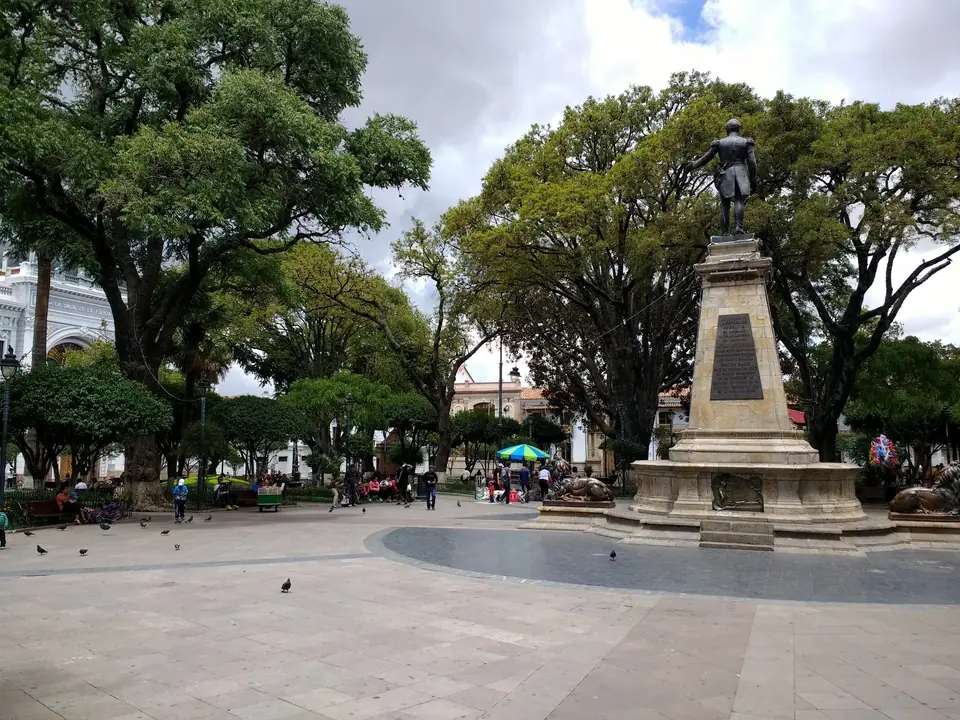
For seven consecutive months between April and October, the department of Chuquisaca experiences steady sunshine under cobalt-blue skies. This period forms the optimal window for exploring the historic urban core on foot, climbing bell towers, and embarking on regional treks.
- Mid-Winter Core (May to August): Rainfall drops to near-zero levels during these months, recording merely 7 to 14 millimetres and between 1 and 2 wet days per month. Daytime temperatures remain pleasant at 20.6°C to 21.8°C, but clear skies allow radiant heat to escape rapidly once darkness falls. Nighttime lows drop to between 4.0°C and 6.2°C. Travellers should pack warm layers for evening dinners. This dry spell is ideal for stepping onto the quarry floor at Cal Orck'o Cretaceous Park or photographing the brilliant white arcades atop the rooftops of San Felipe de Neri.
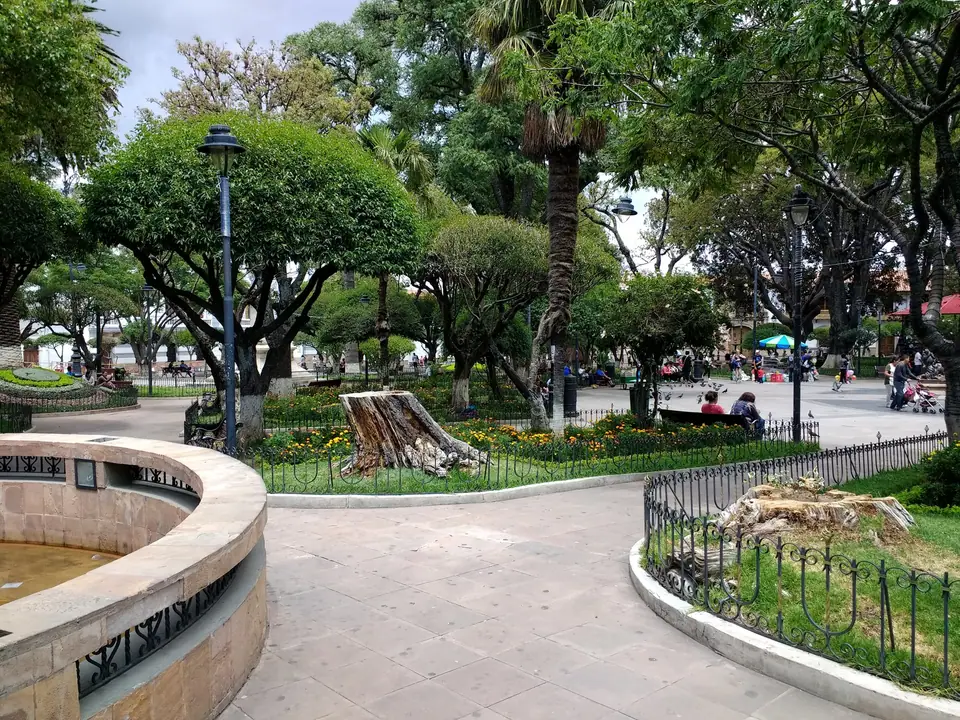
- Shoulder Transition Months (April, September and October): These months feature slightly milder overnight minimums (7.8°C to 9.6°C) while maintaining dry trail conditions. September and October yield the warmest daytime temperatures of the year, frequently exceeding 22.6°C to 23.1°C. Lilac jacaranda trees come into full blossom around Parque Simón Bolívar during this period.
November to March: Summer Rains and Verdant Landscapes
Summer brings seasonal moisture from the eastern lowlands, delivering heavier cloud cover and intermittent downpours. Precipitation peaks between December and February, with monthly accumulations ranging between 91 and 105 millimetres across 13 to 15 wet days. Despite the frequent cloud bursts, total downpours rarely last all day. Rain commonly arrives in concentrated late-afternoon thunderstorms, leaving mornings bright and suitable for city strolls.
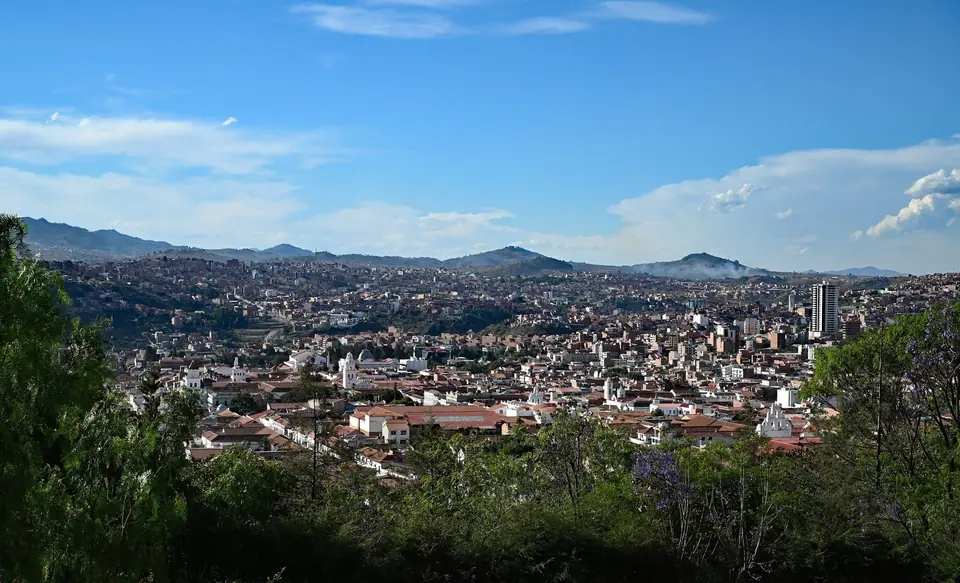
The surrounding dry valleys transform rapidly into emerald hillsides during summer. Nighttime temperatures during these months remain comfortably mild, averaging between 10.0°C and 10.7°C. Travellers visiting during this cycle should carry reliable waterproof jackets and maintain flexible itineraries, as heavy rains can occasionally generate mud on unpaved highland roads.
Sucre Seasonal Climate and Rainfall Breakdown
| Season Period | Average High / Low | Monthly Rainfall | Typical Conditions |
|---|---|---|---|
| May to August (Peak Dry Season) | 20.6°C to 21.8°C / 4.0°C to 6.2°C | 7 mm to 14 mm | Cloudless skies, strong ultraviolet sun, cold clear nights |
| September and October (Spring Transition) | 22.6°C to 23.1°C / 7.8°C to 9.6°C | 28 mm to 49 mm | Warmest daytime temperatures, blooming trees, light showers |
| November to March (Summer Wet Season) | 21.2°C to 23.0°C / 10.0°C to 10.7°C | 70 mm to 105 mm | Afternoon thunderstorms, green valley slopes, mild nights |
| April (Autumn Transition) | 21.8°C / 8.8°C | 28 mm | Rapidly clearing skies, diminishing rain, crisp evenings |
Major Cultural Festivals Across the Chuquisaca Calendar
Timing a journey around regional civic and religious events provides deep insight into indigenous Yampara heritage and republican history:
- Pujllay de Tarabuco (Third Sunday of March): Celebrated in the mountain town of Tarabuco, this lively gathering commemorates the local victory over Spanish forces at the 1816 Battle of Jumbate. Inscribed on the UNESCO Intangible Cultural Heritage list, the festival showcases heavy wooden spur-sandals, ornate woven ponchos, and hypnotic musical rounds. Travellers planning a day excursion should read our dedicated Tarabuco Sunday Yampara market guide for regional logistics.
- Primer Grito Libertario (24 and 25 May): Sucre honours the historic 25 May 1809 independence uprising with civic torchlight parades, classical concerts, and student processions converging on the central square. Because historic venues fill quickly, visitors should reserve rooms in advance around recommended colonial hotels.
- Fiesta de la Virgen de Guadalupe (Early to Mid-September): Sucre's largest patronal celebration brings tens of thousands of costumed dancers and brass bands through the historic streets for the grand folkloric parade. The energetic procession winds upward toward the cathedral over several consecutive days, filling the city with music and dance.
Seasonal Advice for Treks and Outdoor Excursions
Planning outdoor excursions around Sucre requires careful attention to seasonal ground conditions. Hikers tackling the paved pre-Hispanic stones of the Chataquila Inca Trail and Maragua Crater will encounter dry, secure footing from May through October. Conversely, summer rain between December and February can make exposed rock slabs slick and cause stream crossings inside the crater basin to swell rapidly.
Solar radiation remains intense at 2,790 metres throughout every month of the year. Visitors must wear wide-brimmed hats and high-factor sunscreen even during the cooler winter months of June and July. If you intend to take multi-day trips across southern Bolivia, coordinate your route with our practical advice on how to get to Sucre to ensure smooth connections across highway passes.
Weather by month
Sucre is warmest in October, with average highs around 23°C, and coldest in July, when nights drop to about 4°C. January is the wettest month by rainfall (105 mm), with rain on about 15 days. For mild weather with fewer rainy days, aim for April, May, June, July, August and September.
| Month | Low | Range | High | Rain | Rainy days |
|---|---|---|---|---|---|
| Jan | 11°C | 21°C | 105 mm | 15 d | |
| Feb | 10°C | 21°C | 91 mm | 13 d | |
| Mar | 10°C | 22°C | 70 mm | 10 d | |
| Apr | 9°C | 22°C | 28 mm | 4 d | |
| May | 6°C | 22°C | 7 mm | 1 d | |
| Jun | 4°C | 21°C | 7 mm | 1 d | |
| Jul | 4°C | 21°C | 7 mm | 1 d | |
| Aug | 6°C | 22°C | 14 mm | 2 d | |
| Sep | 8°C | 23°C | 28 mm | 4 d | |
| Oct | 10°C | 23°C | 49 mm | 7 d | |
| Nov | 10°C | 23°C | 63 mm | 9 d | |
| Dec | 11°C | 22°C | 91 mm | 13 d |
Averages of daily values from 2015 to 2024. Rainy days are days with at least 1 mm of rain. Source: Open-Meteo · Compare destinations by month.
Where it is
- 1Sucre
- Alcantarí International Airport (SRE) · about 25 km from Sucre in a straight line
- Directions in Google Maps
Stations and taxi ranks: OpenStreetMap. Airports: OurAirports. Distances are in a straight line.
Traveller tips
Real advice from people who have been to Sucre. Every tip is read by our team before it goes live.
No tips yet. Been here? Yours could be the first.
Thank you! Your tip will appear here after a quick review.
More in Sucre
Continue exploring Sucre with related neighbourhood, food, and planning guides
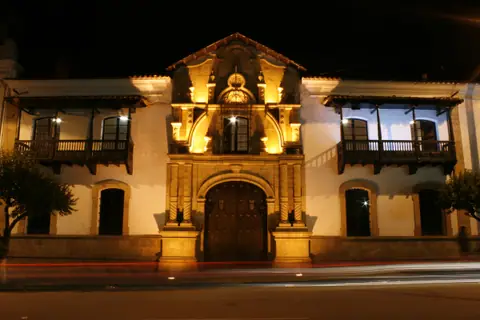
3 Days in Sucre Itinerary: UNESCO White City, Cal Orck'o & Maragua or Tarabuco
Sucre, Bolivia
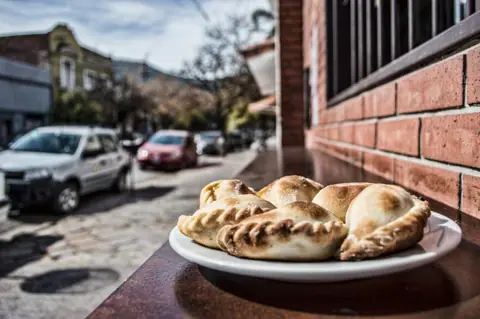
What to Eat in Sucre: Chorizos Chuquisaqueños, Mondongo, Salteñas & Chocolates
Sucre, Bolivia
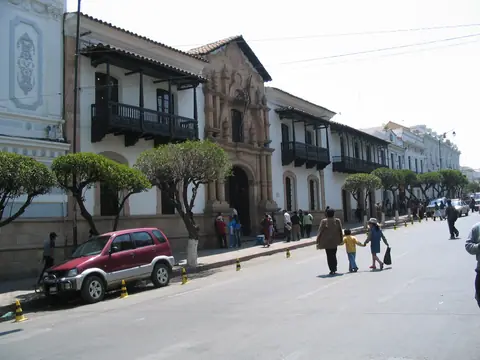
Plaza 25 de Mayo, Casa de la Libertad & Metropolitan Cathedral Guide
Sucre, Bolivia
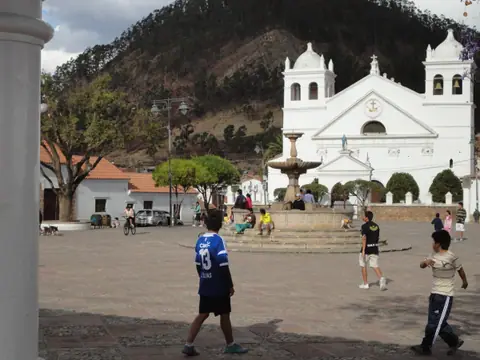
La Recoleta Mirador, 1601 Franciscan Monastery & Museo ASUR Textiles Guide
Sucre, Bolivia
