Cerro Alegre and Cerro Concepción Guide: Street Art, Paseos and Mansions
Walk through Valparaíso's UNESCO-listed Cerro Alegre and Cerro Concepción with our guide to panoramic paseos, mural alleys, historic mansions, and cliffside funiculars.
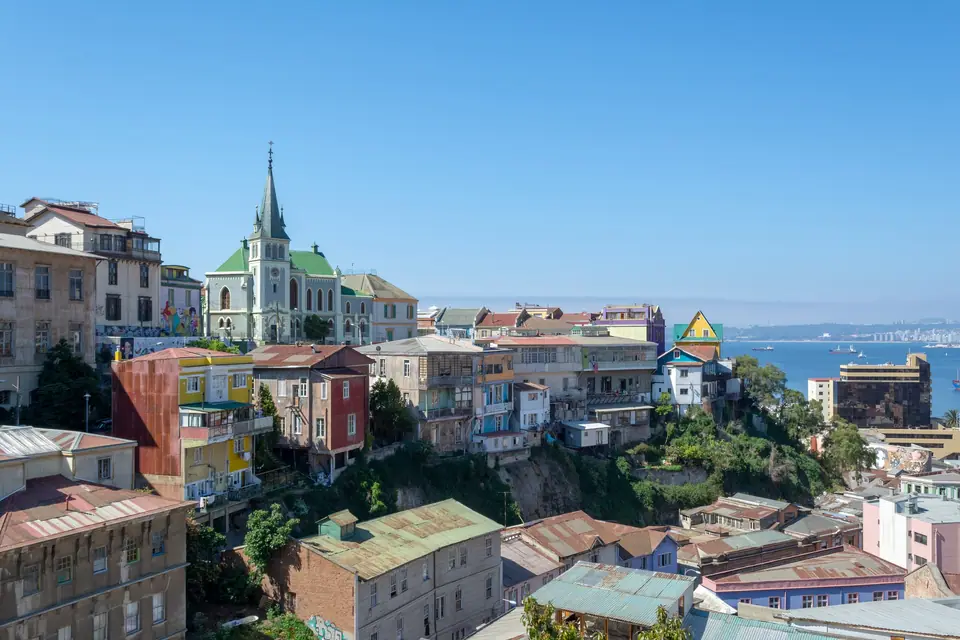
Rising side by side behind Plaza Sotomayor, Barrio Puerto and harbour boat tours and Plaza Aníbal Pinto, Cerro Alegre and Cerro Concepción form the core of the UNESCO World Heritage area designated in 2003. Beginning in the 1820s, British, German, and French shipping merchants and marine engineers built residences along the upper cliff edges to escape the damp port flatlands. They constructed timbered gables, flower-filled balconies, and corrugated iron villas, creating cliffside promenades known as paseos. Today, these two adjoining hills contain Chile's most famous urban murals and historic Protestant landmarks.
Paseo Yugoslavo, Palacio Baburizza and Pasaje Bavestrello on Cerro Alegre
Most visitors begin their exploration by ascending from Plaza Justicia. You can ride the 1902 Ascensor El Peral fifty-two metres up the vertical rock face to arrive directly at Paseo Yugoslavo. This wide stone terrace provides uninterrupted sightlines across the commercial docks, naval vessels, and the Pacific coastline towards Viña del Mar.
Paseo Yugoslavo is dominated by Palacio Baburizza, completed in 1916. Italian architects Arnaldo Barison and Renato Schiavon designed this mansion using a combination of Art Nouveau and Art Deco styles. Pascual Baburizza, an immigrant who made a fortune in northern nitrate mining and shipping, acquired the property in 1925. Declared a National Historical Monument in 1979, the mansion now houses the Museo Municipal de Bellas Artes. Its galleries display nineteenth-century maritime paintings by Thomas Somerscales and works by influential Chilean painters. Consult the official museum site for current exhibitions and admission details.
From Paseo Yugoslavo, you can walk through Pasaje Bavestrello. This vaulted brick passage tunnels directly through the foundations of a residential apartment building. The passage links upper alleyways to Calle Urriola and Calle Almirante Montt, where the rainbow steps of Escalera Colores feature murals produced by local artists, including the collective Un Kolor Distinto.
Paseo Gervasoni, Casa Mirador de Lukas and Pasaje Gálvez
A short stroll eastwards across the shallow ravine between the hills brings you into Cerro Concepción. Paseo Gervasoni hugs the cliff above the lower port, accessible from the base via the 1869 Ascensor Concepción, the oldest public funicular system in the city. Historic street lamps, timber benches, and cast-iron railings line this terrace, framing views of the container terminal below.
Paseo Gervasoni contains Casa Mirador de Lukas, the restored residence of caricaturist and illustrator Renzo Pecchenino, known professionally as Lukas. His drawings captured the daily eccentricities, steep staircases, and maritime commerce of twentieth-century Valparaíso. Continue through Pasaje Gálvez to experience one of the densest mural corridors in the quarter. This narrow cobblestone lane features painted doorways, tiled mosaics, and multi-storey portraits executed on weathered timber and corrugated iron sidings.

Paseo Atkinson, Historic Protestant Churches and Musical Stairways
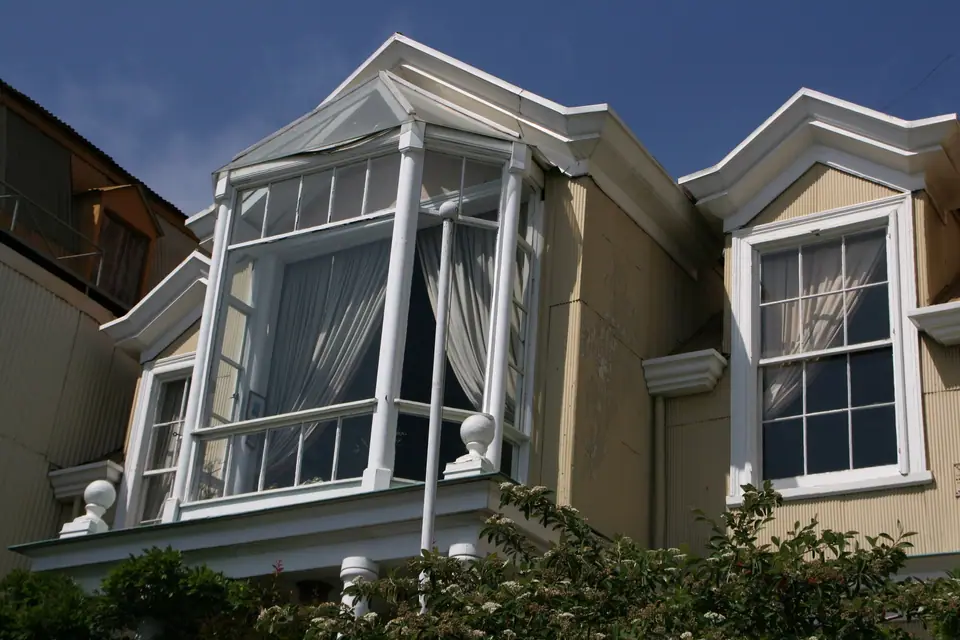
Paseo Atkinson sits slightly further inland, offering an intact terrace of nineteenth-century English-style clapboard row houses painted in contrasting pastel hues. Each residence features small front gardens enclosed by picket fences, reflecting the domestic habits of early British immigrants.
Two significant religious landmarks define the skyline of Cerro Concepción:
- Iglesia Anglicana Saint Paul: Built in 1858, this neo-Gothic sanctuary received National Monument status in 1979. During the nineteenth century, Chilean law prohibited non-Catholic congregations from displaying external crosses or ringing bells. Saint Paul was therefore designed without a street-facing bell tower, relying on subtle brick buttresses and pipe-organ concerts to anchor British communal life.
- Iglesia Luterana de la Santa Cruz: Inaugurated in 1897 on a commanding ridge, this red-roofed church served the local German community. It achieved historic significance as one of the first Protestant churches in Chile permitted to construct a prominent external steeple and bell tower.
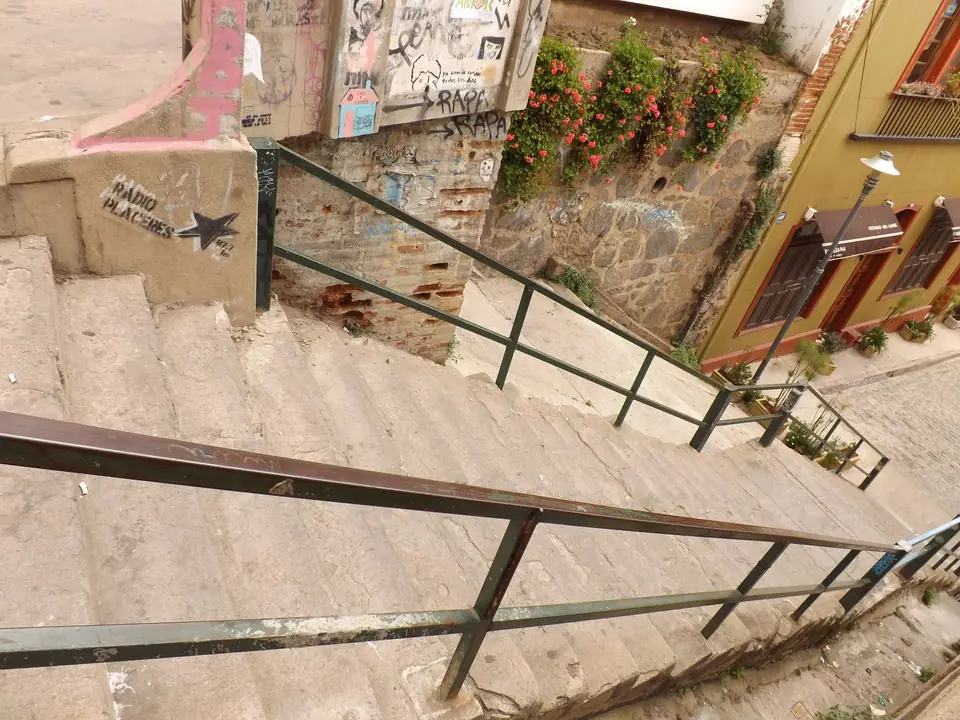
Between these religious sites run the famous pedestrian stairways of the hill. Escalera Piano, located along Pasaje Beethoven, features steps painted as black and white keyboard keys. Further uphill, Calle Templeman displays dynamic street art, small artisan studios, and restored Victorian townhouses that house independent cafes.
Key Architectural and Cultural Landmarks Comparison
The following table outlines the principal landmarks across both hills, their construction eras, and primary architectural styles.
| Landmark | Location | Establishment Year | Architectural Style | Notable Significance |
|---|---|---|---|---|
| Palacio Baburizza | Paseo Yugoslavo, Cerro Alegre | 1916 | Art Nouveau and Art Deco | Houses Museo Municipal de Bellas Artes |
| Iglesia Anglicana Saint Paul | Calle Pilcomayo, Cerro Concepción | 1858 | Neo-Gothic | First Anglican church built without an external bell tower |
| Iglesia Luterana de la Santa Cruz | Calle Condell ridge, Cerro Concepción | 1897 | German Neo-Gothic | First Protestant sanctuary in Chile permitted a bell tower |
| Ascensor El Peral | Plaza Justicia to Paseo Yugoslavo | 1902 | Funicular railway | Links administrative flatlands directly to upper Cerro Alegre |
| Casa Mirador de Lukas | Paseo Gervasoni, Cerro Concepción | 19th Century | Traditional Porteño residential | Museum dedicated to illustrator Renzo Pecchenino |
Practical Walking Strategies and Coastal Weather Planning
Exploring both hills requires climbing irregular stone steps and uneven flagstones. Wear sturdy footwear with slip-resistant soles, as polished stones and painted steps become slippery when ocean fog rolls over the bay. To combine these walks with historic transport, review our Valparaíso Funiculars and 1952 Pullman Trolleybuses Guide to plan your routes between the lower port and upper cliffs.
Valparaíso enjoys an arid coastal climate influenced by the cool Humboldt Current. Between December and February, summer afternoons remain pleasant and clear. High temperatures average 21.6°C in January and 21.5°C in February, with overnight lows around 13.5°C and 0 millimetres of rainfall. Autumn brings mild conditions, with April recording highs of 18.5°C, lows of 10.9°C, and only 14 millimetres of rain across 2 wet days.
Winter months see frequent morning fog known as camanchaca. July is the coldest month, experiencing average daily highs of 14.9°C, lows of 8.2°C, and 49 millimetres of precipitation across 7 wet days. Spring sees temperatures climb, reaching 17.8°C in October and 19.5°C in November with merely 7 millimetres of rain. If you want to integrate these hill walks into a broader multi-day journey, consult our 3 Days in Valparaíso Itinerary for seamless transitions between hillside neighbourhoods, coastal reserves, and port districts.
Where it is
- 1Cerro Alegre and Cerro Concepción
- Comodoro Arturo Merino Benítez International Airport (SCL) · about 87 km from here in a straight line
- Directions in Google Maps
Stations and taxi ranks: OpenStreetMap. Airports: OurAirports. Distances are in a straight line.
Traveller tips
Real advice from people who have been to Valparaíso. Every tip is read by our team before it goes live.
No tips yet. Been here? Yours could be the first.
Thank you! Your tip will appear here after a quick review.
More in Valparaíso
Continue exploring Valparaíso with related neighbourhood, food, and planning guides
Plaza Sotomayor, Barrio Puerto & Muelle Prat Harbour Boat Tours Guide
Valparaíso, Chile
Viña del Mar, Museo Fonck (Easter Island Moai) & Concón Dunes Guide
Valparaíso, Chile
Casablanca Valley Cool Climate Wine Route and Isla Negra Guide
Valparaíso, Chile

Paseo 21 de Mayo, Cerro Artillería & Museo Marítimo Nacional Guide
Valparaíso, Chile
