Best Time to Visit Auckland: Seasonal Climate, Wildlife Calendars and Travel Months
Plan your trip to Auckland with official climate normals, summer sailing conditions, autumn volcano hiking windows, and seasonal gannet nesting dates.
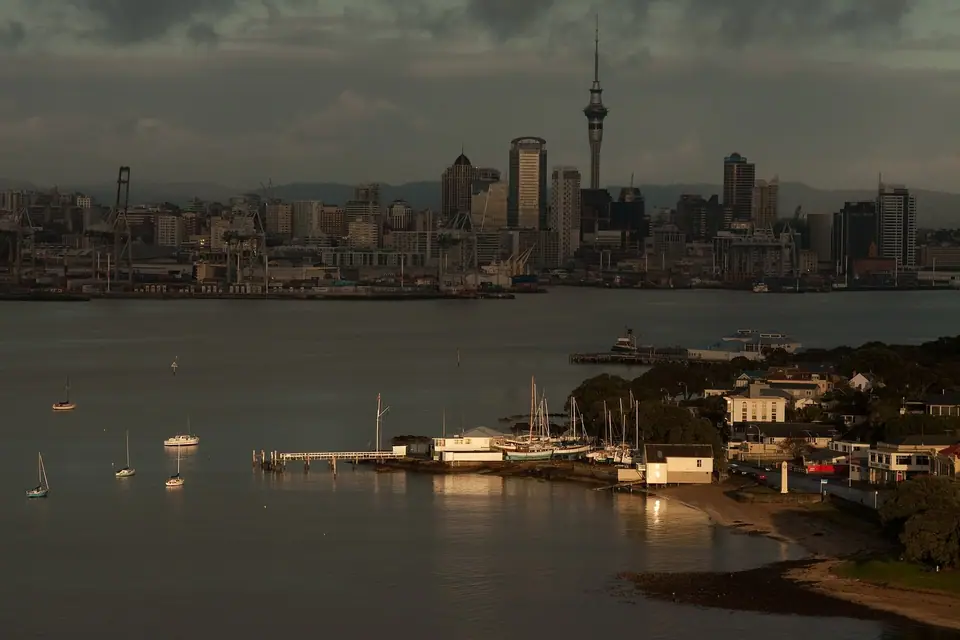
Auckland sits at latitude 36°50' South on a narrow isthmus between the Tasman Sea and the Pacific Ocean. Because the city lies in the Southern Hemisphere, its seasons reverse the calendar observed across Europe and North America. Official meteorological records show Auckland experiences a warm-temperate, maritime climate without sea-level snow or hard frost. Deciding when to arrive depends on whether your priority is ocean swimming, vineyard harvesting on the islands, or hiking across exposed volcanic cones under temperate skies.
Summer from December to February: Warm Waters, Coastlines and Island Ferries
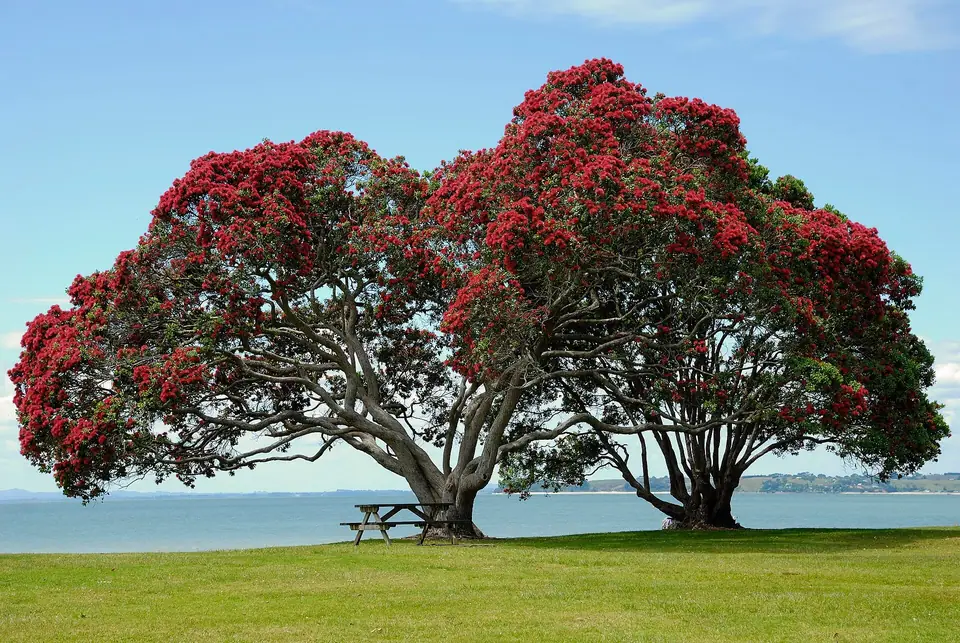
Summer brings long daylight hours, moderate humidity, and the driest conditions of the year. Daily highs average 22°C in December and reach 24°C across January and February, while overnight lows hover near 16°C. Rainfall drops to its lowest annual totals, averaging between 49 and 56 millimetres over seven to eight wet days per month. In December, crimson flowers cover native pōhutukawa trees along the shoreline, earning the plant its reputation as New Zealand's Christmas tree.
January and February offer the most reliable conditions for open-water activities and maritime day trips across the Hauraki Gulf. Sea temperatures peak around 21°C in February, drawing swimmers to the sheltered sandy bays of the eastern suburbs. Passenger catamarans running to Waiheke Island operate at full frequency, connecting day trippers to cellar doors, olive groves, and coastal beaches like Onetangi. Travellers should prepare for intense Southern Hemisphere solar radiation during these months by wearing protective sun hats and high-factor sunscreen.
Autumn from March to May: Wine Harvests and Clear Walking Trails
Autumn is considered by many experienced travellers to be Auckland's most balanced season. March maintains summer warmth with daytime highs of 23°C and night temperatures around 15°C across nine wet days. Conditions remain settled as vineyards complete their annual grape harvest. April transitions into crisp, pleasant hiking weather with highs of 20°C and lows of 12°C. May brings cooler days averaging 17°C, overnight lows of 10°C, and increased precipitation totalling 84 millimetres across twelve wet days.
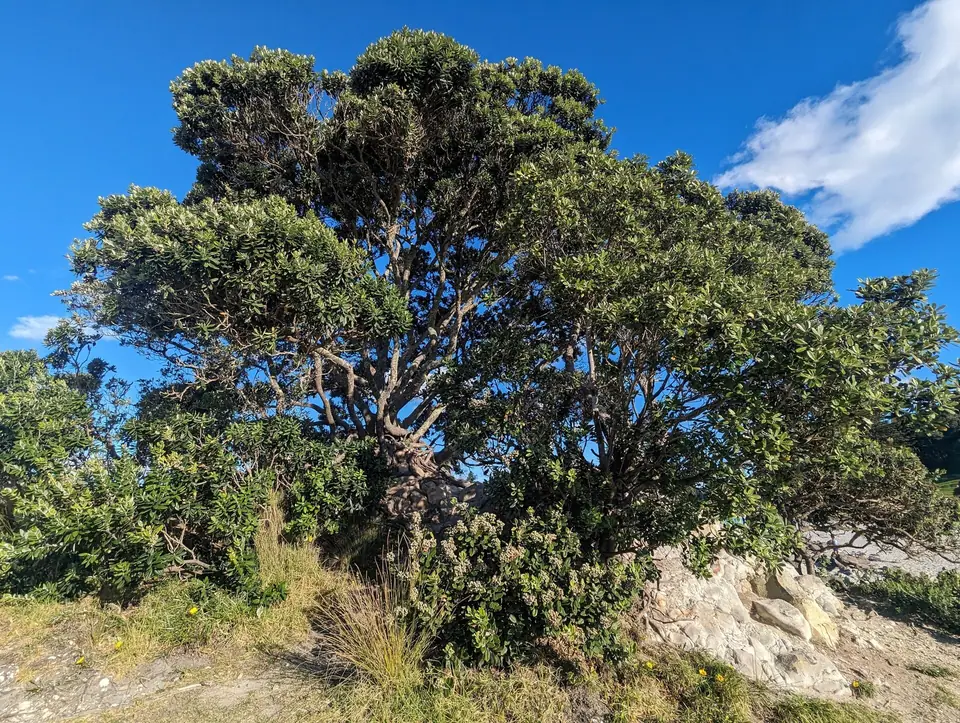
Exposed volcanic landscapes become far more comfortable to explore once intense midsummer heat subsides. Black scoria lava paths on Rangitoto Island radiate substantial heat in January, but April offers cooler conditions for walking to the crater rim. Autumn is equally suitable for trekking the 16-kilometre Coast to Coast Walkway between the Waitematā and Manukau harbours. Coastal winds increase late in the season, making a windproof outer layer practical for open ridgeline walks.
| Month | Average High (°C) | Average Low (°C) | Mean Rainfall (mm) | Rain Days | Seasonal Highlights |
|---|---|---|---|---|---|
| January | 24 | 16 | 56 | 8 | Beach swimming, long daylight hours, offshore ferry trips |
| April | 20 | 12 | 70 | 10 | Comfortable volcano summits, calm autumn foliage, thinning crowds |
| July | 14 | 7 | 105 | 15 | Crisp clear days between showers, cultural galleries, dining |
| October | 18 | 11 | 77 | 11 | Spring park blossoms, active gannet colonies, moderate trail temperatures |
Winter from June to August: Maritime Rains and Urban Cultural Spaces
Winter brings the wettest and coolest conditions of the year to the Auckland isthmus. July is the coldest month, averaging daytime highs of 14°C and lows of 7°C. August records daytime highs of 15°C and lows of 8°C. Both months register approximately 105 millimetres of rainfall spread across fifteen wet days. Oceanic low-pressure systems frequently push swift showers across the city from the Tasman Sea, alternating with hours of crisp sunshine.
While winter brings frequent rain, temperatures remain mild enough for outdoor exploration between weather fronts. Urban walking tracks and sheltered cultural attractions provide dependable rainy-day itineraries. Travellers can spend wet afternoons touring the galleries of the Auckland War Memorial Museum in Pukekawa Domain or studying historical collections in the central city. Sturdy waterproof footwear and a seam-sealed rain jacket are necessary items during these months, as sudden squalls can arrive rapidly from the southwest.
Spring from September to November: Rebounding Temperatures and Seabird Colonies
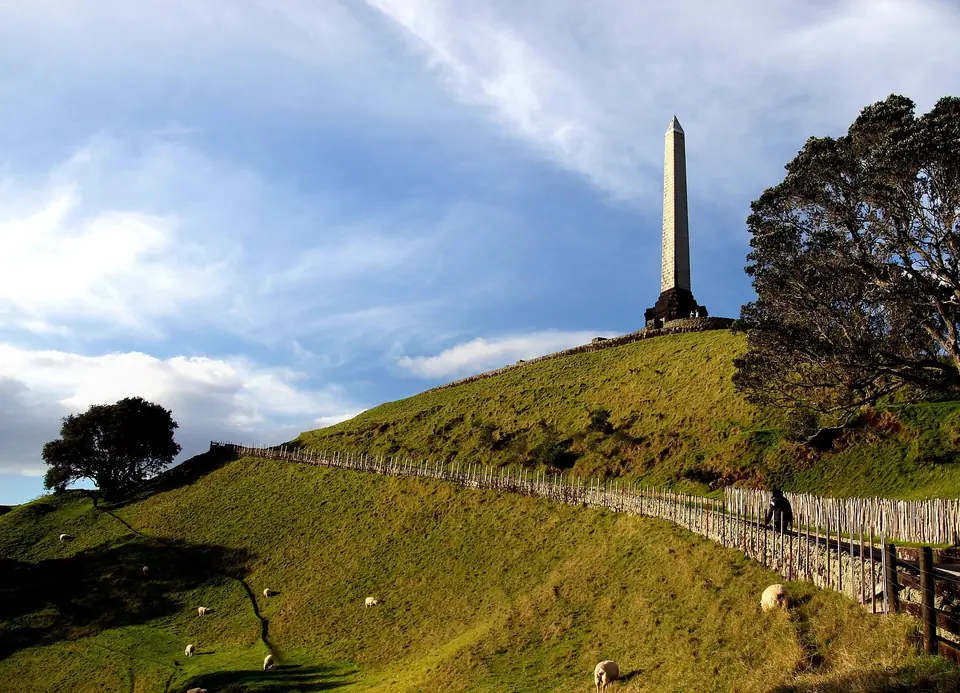
Spring marks the transition back toward extended daylight and rising temperatures. September daytime highs reach 16°C with lows of 9°C across thirteen wet days. October sees temperatures climb to 18°C, while November delivers pleasant 20°C afternoons and ten rain days. Parklands across the Auckland domain network fill with fresh spring growth, and pastoral hillsides surrounding volcanic peaks turn deep green.
Spring is an exceptional window for wildlife observation on the exposed western coastline. At the dramatic headlands of Piha and Muriwai, thousands of Australasian gannets gather to establish nesting territories. The birds arrive in August, lay eggs during early spring, and tend growing chicks through March before migrating north across the Tasman Sea. Spring winds can be strong on the Tasman coast, but viewing platforms provide clear vantage points above the surf.
Selecting Your Travel Window Across Auckland
Choosing the ideal month requires balancing weather stability against visitor density and outdoor goals. High summer between January and March delivers the most dependable sunshine for exploring remote gulf islands and enjoying coastal beaches. Those focused on photography, unhurried city walks, and comfortable volcanic hikes will find April, May, October, and November far quieter. Even in mid-winter, Auckland avoids freezing conditions, ensuring the city remains fully operational throughout all twelve months.
Weather by month
Auckland is warmest in January, with average highs around 24°C, and coldest in July, when nights drop to about 7°C. July is the wettest month by rainfall (105 mm), with rain on about 15 days. For mild weather with fewer rainy days, aim for January, February, March, April, November and December.
| Month | Low | Range | High | Rain | Rainy days |
|---|---|---|---|---|---|
| Jan | 16°C | 24°C | 56 mm | 8 d | |
| Feb | 16°C | 24°C | 49 mm | 7 d | |
| Mar | 15°C | 23°C | 63 mm | 9 d | |
| Apr | 12°C | 20°C | 70 mm | 10 d | |
| May | 10°C | 17°C | 84 mm | 12 d | |
| Jun | 8°C | 15°C | 98 mm | 14 d | |
| Jul | 7°C | 14°C | 105 mm | 15 d | |
| Aug | 8°C | 15°C | 105 mm | 15 d | |
| Sep | 9°C | 16°C | 91 mm | 13 d | |
| Oct | 11°C | 18°C | 77 mm | 11 d | |
| Nov | 12°C | 20°C | 70 mm | 10 d | |
| Dec | 15°C | 22°C | 63 mm | 9 d |
Averages of daily values from 2015 to 2024. Rainy days are days with at least 1 mm of rain. Source: Open-Meteo · Compare destinations by month.
Where it is
- 1Auckland
- Auckland International Airport (AKL) · about 18 km from Auckland in a straight line
- Directions in Google Maps
Stations and taxi ranks: OpenStreetMap. Airports: OurAirports. Distances are in a straight line.
Traveller tips
Real advice from people who have been to Auckland. Every tip is read by our team before it goes live.
No tips yet. Been here? Yours could be the first.
Thank you! Your tip will appear here after a quick review.
More in Auckland
Continue exploring Auckland with related neighbourhood, food, and planning guides
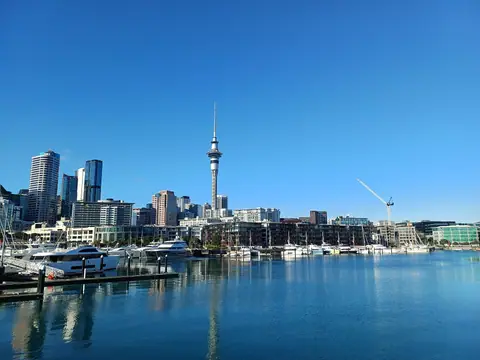
Where to Stay in Auckland: Waterfront Precincts, Heritage Suburbs, and Seaside Bases
Auckland, New Zealand
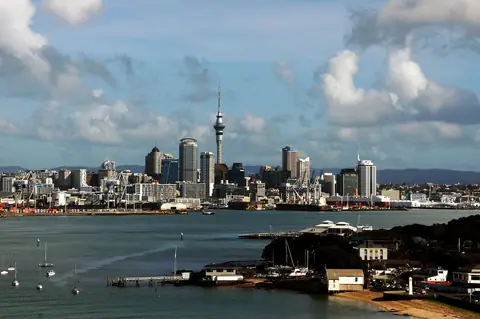
3 Days in Auckland: Harbours, Waiheke Vineyards, and West Coast Surf
Auckland, New Zealand

Sky Tower (328m), Viaduct Harbour, Britomart & Wynyard Quarter Waterfront Walk
Auckland, New Zealand
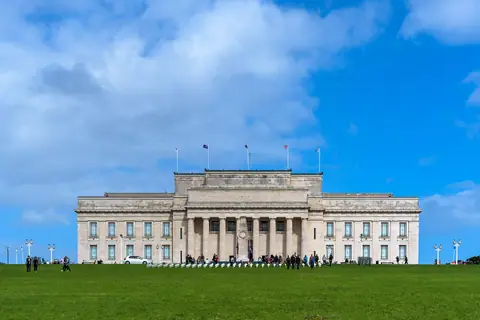
Auckland War Memorial Museum, Pukekawa Domain & Auckland Art Gallery Toi o Tamaki
Auckland, New Zealand
