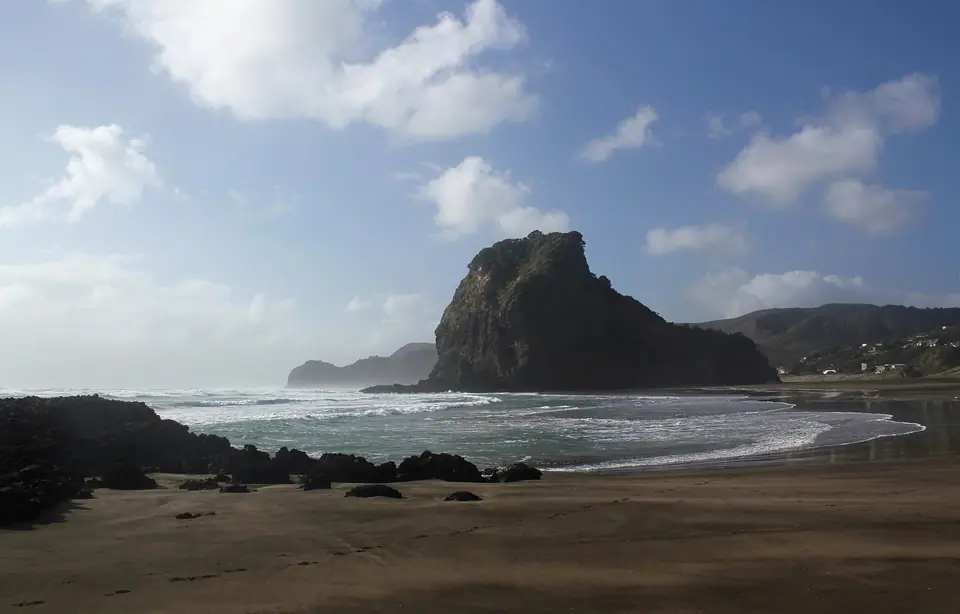
West Coast Wild Beaches: Piha, Waitākere Ranges and Muriwai Gannet Colony
Discover Auckland's dramatic West Coast: tour the Waitākere Ranges rainforest, cross the black sands of Piha Beach, and observe nesting gannets at Muriwai.
While Auckland's eastern Hauraki Gulf beaches are calm and golden, driving forty to forty-five minutes west of downtown across the rainforest spine of the Waitākere Ranges brings travellers to an energetic coastal frontier. The Tasman Sea crashes against a wild coastline carved from ancient volcanic geology. Dark black titanomagnetite sands, plunging gorges, and wind-sculpted headlands define this western rim of the Auckland region.
A successful trip out west requires thoughtful preparation. The terrain is rugged, surf conditions demand strict ocean vigilance, and native forest tracks enforce strict biosecurity rules to protect vulnerable trees. Planning a balanced day trip allows visitors to connect indigenous forest walks, black-sand surf beaches, and world-class seabird colonies in a single journey.
Arataki Visitor Centre and Native Rainforest Waterfalls
Thirty minutes west of central Auckland along Scenic Drive, Route 26, stands the Arataki Visitor Centre. This facility serves as the gateway to the 16,000-hectare Waitākere Ranges Regional Park, known in Māori tradition as Te Wao Nui a Tiriwa. An 11-metre carved guardian post, or pou, crafted by Te Kawerau ā Maki welcomes visitors at the entrance. Expansive timber viewing decks look out across dense native rainforest towards the Manukau Harbour entrance and the distant Manukau Heads.
Protecting this ecosystem requires immediate visitor cooperation. Microscopic soil-borne pathogens cause kauri dieback disease, which starves and kills ancient kauri trees across the northern North Island. Hikers must scrub all soil from footwear and step through automated disinfectant spray stations at every trailhead. Before setting out, check our advice on what to wear in Auckland so you pack proper hiking boots that clean easily.
Two primary waterfalls reward walkers in the lower valleys. Glenesk Road near Piha gives access to Kitekite Falls. This forty-five-minute return walk follows a graded trail through nikau palms and silver ferns to a multi-tiered cascade spilling into a clear plunge pool. One valley south, near Karekare Beach, a ten-minute forest track leads directly to the sheer plunge of Karekare Falls. The brooding coastal landscape of Karekare gained global fame as a filming location for Jane Campion's 1993 feature film, The Piano.
Piha Beach and the Volcanic Formations of Lion Rock
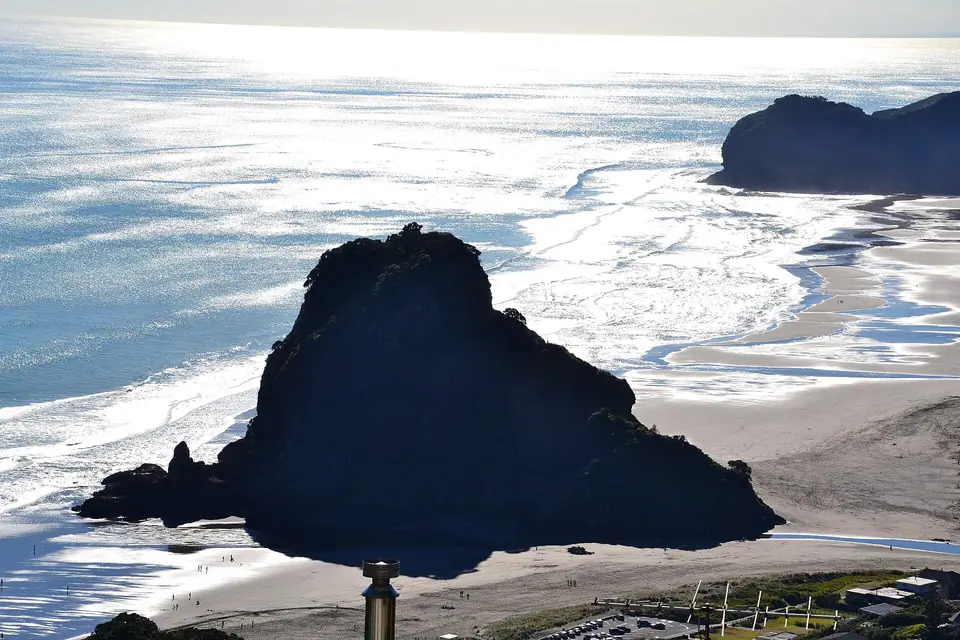
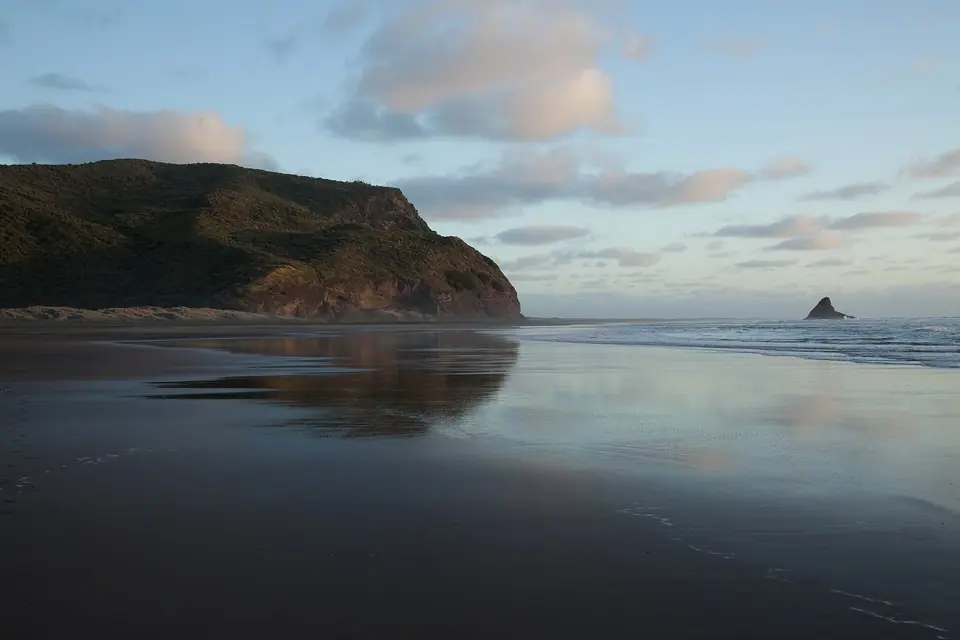
Forty kilometres west of downtown Auckland lies Piha Beach, the most famous surfing location in New Zealand. The shoreline consists of heavy black titanomagnetite iron sand. Coastal currents swept this volcanic mineral north from ancient eruptions in the Taranaki and Waikato regions over millennia. On bright summer afternoons the dark surface absorbs solar heat rapidly, making robust sandals or footwear essential for crossing the dunes.
Dividing the beach into north and south arcs stands the 101-metre eroded volcanic neck of Lion Rock, known in Māori as Te Piha. This monolithic formation once held an ancient fortified pā settlement. A marked trail ascends the lower shoulders of the rock, offering clear views of breaking swells and surrounding valleys.
Water safety at Piha requires strict adherence to official rules. The Tasman Sea creates powerful, shifting rip currents that sweep past offshore sandbars. The Piha Surf Life Saving Club patrols the shoreline between October and April. Swimmers must stay strictly between the red-and-yellow patrol flags. Check conditions through the Safeswim digital portal before entering the water, and never enter the ocean alone or outside designated patrol areas.
| West Coast Destination | Primary Geological Feature | Patrolled Swimming Area | Key Conservation Rule |
|---|---|---|---|
| Arataki Visitor Centre | Elevated volcanic ridge overlooking Manukau Heads | No swimming available | Stay on formed tracks to safeguard regional flora |
| Kitekite Falls | Six-tiered freshwater cascade over basalt rock | Freshwater pool at base of falls | Clean and spray boots at kauri hygiene stations |
| Piha Beach (Te Piha) | 101-metre volcanic neck with titanomagnetite sand | Between red-and-yellow flags (October to April) | Avoid climbing restricted sacred zones on upper rock |
| Muriwai (Ōtakamiro Point) | Clifftop sandstone shelves and offshore sea stacks | Between flags at main beach entrance | Maintain quiet observation distance from nesting birds |
Muriwai Beach and the Clifftop Takapū Colony
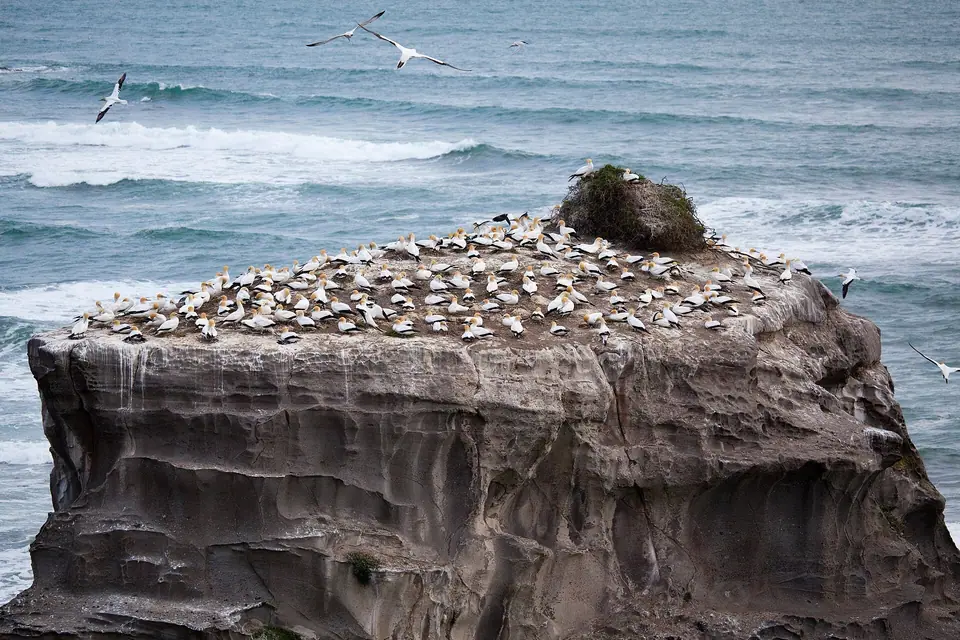
Forty-five minutes north-west of central Auckland via Waimauku, Muriwai Regional Park offers a contrasting wildlife spectacle. The coastal reserve guards Ōtakamiro Point, home to one of only three mainland Australasian gannet colonies in the country. Known locally by their Māori name, takapū, roughly 1,200 breeding pairs nest on sheer cliff ledges and offshore sea stacks.
The annual breeding calendar brings dramatic biological action to the rock faces. Adult birds return across the Tasman Sea from Australia in August to claim nesting territory, renew pair bonds, and lay eggs. During the warmer months from December to February, fluffy white chicks crowd the plateau edges, exercising their wings against strong ocean breezes. By late March, the fledglings launch directly into coastal updrafts on their maiden journey back to Australian waters. Wooden viewing platforms erected on the cliff edge allow travellers to observe courtship displays, territorial squabbles, and precision dives just metres away.
Muriwai Beach extends north from the cliffs for sixty kilometres of unbroken black sand. Strong ocean breezes make the beach popular for land yachting, kite flying, and long-range coastal wandering. Ocean swimming here requires the same caution as Piha, with visitors restricted to the flagged zones near the main surf pavilion.
Seasonal Weather Planning and Transit Logistics
The western maritime climate differs from the sheltered city centre. Data recorded between 2015 and 2024 shows Auckland temperatures peaking in January and February at 24°C daytime highs and 16°C overnight lows. Winter brings cooler conditions, with July and August recording 14°C to 15°C highs, 7°C to 8°C lows, and fifteen wet days monthly. The Waitākere Ranges intercept moist Tasman fronts, generating higher localised precipitation than downtown gauges. Pack an impenetrable waterproof shell regardless of the morning forecast.
Public transport does not service Piha, Karekare, or Muriwai directly. Visiting the West Coast requires either a rental car or an organised coach excursion from the central business district. Driving requires concentration along winding rural routes such as Piha Road and Scenic Drive, where blind corners and steep descents demand moderate speeds.
Combine this coastal expedition with our curated 3 days in Auckland itinerary to balance rugged natural coastlines with inner-city culture. Review the monthly wildlife and weather shifts in our guide to the best time to visit Auckland before finalising your travel dates.
Where it is
- 1West Coast Wild Beaches
- Auckland International Airport (AKL) · about 29 km from here in a straight line
- Directions in Google Maps
Stations and taxi ranks: OpenStreetMap. Airports: OurAirports. Distances are in a straight line.
Traveller tips
Real advice from people who have been to Auckland. Every tip is read by our team before it goes live.
No tips yet. Been here? Yours could be the first.
Thank you! Your tip will appear here after a quick review.
More in Auckland
Continue exploring Auckland with related neighbourhood, food, and planning guides

Auckland Airport Transfers, Puhinui Rail Link, and Ferry Terminal Guide
Auckland, New Zealand
Best Time to Visit Auckland: Seasonal Climate, Wildlife Calendars and Travel Months
Auckland, New Zealand
What to Wear in Auckland: UV Sun Protection, Maritime Rain Shells and Biosecurity Rules
Auckland, New Zealand
Where to Stay in Auckland: Waterfront Precincts, Heritage Suburbs, and Seaside Bases
Auckland, New Zealand
