Centro Cívico, Cathedral and Calle Mitre Chocolate Route in Bariloche
Navigate Bariloche's historic centre with this guide to the 1940 Centro Cívico, the neo-Gothic Cathedral, and artisan chocolatiers on Calle Mitre.
In the late 1930s, the Argentine government transformed a frontier timber settlement on the southern shore of Lago Nahuel Huapi into a premier national park hub. National Parks director Exequiel Bustillo commissioned urban planner Ernesto de Estrada and architect Alejandro Bustillo to reshape central San Carlos de Bariloche. Their work established an integrated Alpine-Andean architectural vocabulary using local volcanic stone, native hardwoods, and slate shingles that defines the urban centre.
Architectural Heritage of the 1940 Centro Cívico
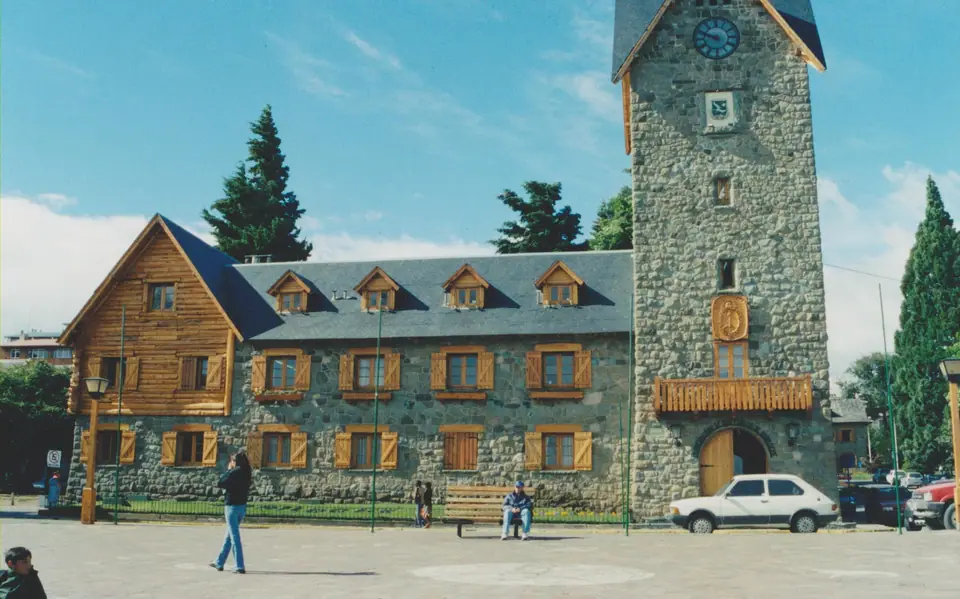
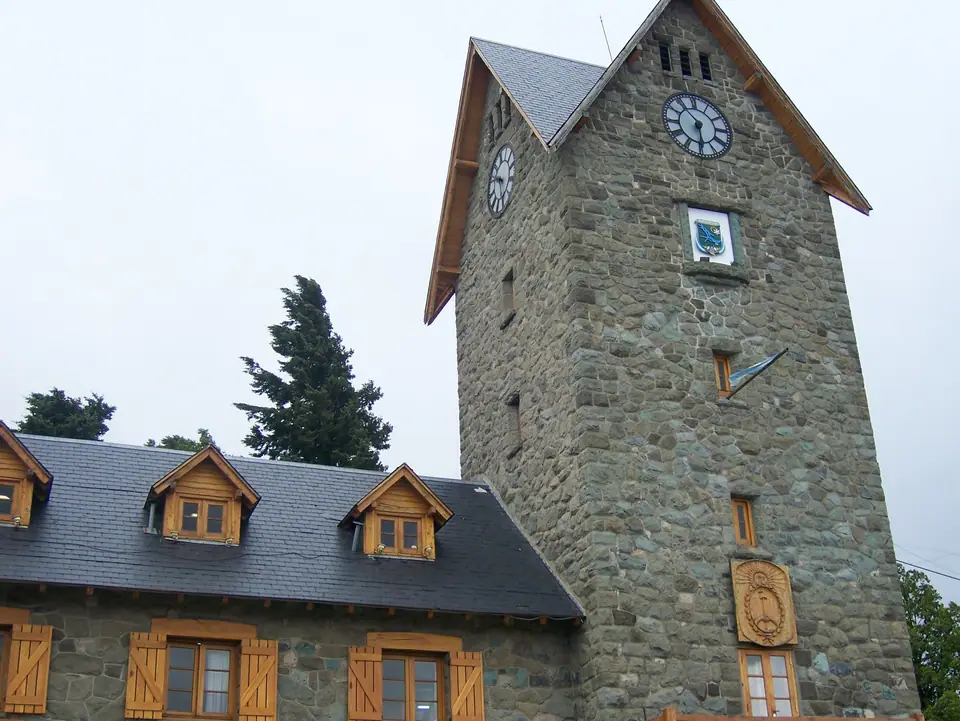
Inaugurated on 17 March 1940 and designated a National Historic Monument in 1987, the Centro Cívico wraps around an open flagstone plaza facing Lago Nahuel Huapi. Ernesto de Estrada designed the civic complex using greenish-grey volcanic tuff stone quarried directly from nearby Cerro Carbón. Structural beams and load-bearing arcades incorporate massive hewn trunks of Cordilleran cypress and slow-growing alerce timber.
The arcaded buildings house the Municipalidad, the local police headquarters, the central post office, the customs bureau, and the Domingo Faustino Sarmiento public library. A central clock tower dominates the northern wing above the lakefront boulevard. At 12:00 noon and 18:00, mechanical gears rotate four carved wooden figures out across the balcony face: an indigenous Tehuelche, a Spanish Jesuit missionary, a Spanish soldier, and an early European pioneer settler.
Exhibits at the Museo de la Patagonia
The eastern wing of the civic complex contains the Museo de la Patagonia Francisco P. Moreno. This regional museum preserves extensive archaeological, geological, and ethnographical collections from the Nahuel Huapi basin. Galleries document regional human habitation across millennia, featuring indigenous Tehuelche and Mapuche artefacts, woven textiles, intricate silver adornments, and guanaco-skin quillangos.
Additional halls display marine fossils from the pre-Andean seabed, documentation of the seventeenth-century Jesuit mission at Nahuel Huapi, and early border demarcation equipment used by surveyor Francisco Pascasio Moreno. Operating hours change between summer and winter seasons. Travellers should verify current museum schedules and entry requirements via the official National Parks portal before arriving.
Alejandro Bustillo's Neo-Gothic Cathedral
Located six blocks east of the Centro Cívico across lakeside gardens, the Catedral Nuestra Señora del Nahuel Huapi opened for worship in 1946. Architect Alejandro Bustillo selected a stark neo-Gothic design constructed from reinforced concrete faced with pale local stone. The soaring spire overlooks the open waters of the lake, offering an imposing counterpoint to the timber arcades of the civic square.
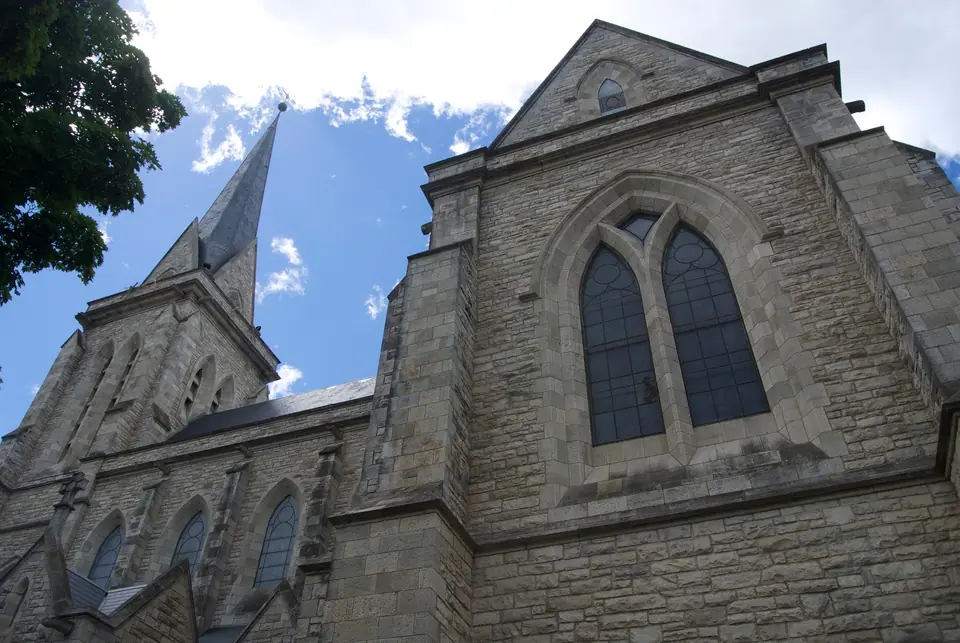
Inside the nave, ribbed vaulted ceilings frame stained-glass lancet windows crafted by French-resident artisans E. And G. Thomas. The panels illustrate traditional Via Crucis stations recast with native Patagonian flora, regional birdlife, and portraits of early regional figures. Bustillo intended the design to merge European liturgical forms with the raw topography of the Andean lake district.
The Artisan Chocolate Mile on Calle Bartolomé Mitre
Directly beneath the stone archways of the Centro Cívico begins Calle Bartolomé Mitre. This pedestrian corridor serves as the historic commercial spine of San Carlos de Bariloche, earning its local reputation as the Chocolate Mile. Immigrants from northern Italy and Switzerland imported European confectionery techniques to the Andes after the Second World War, blending regional berries and nuts with rich cacao.
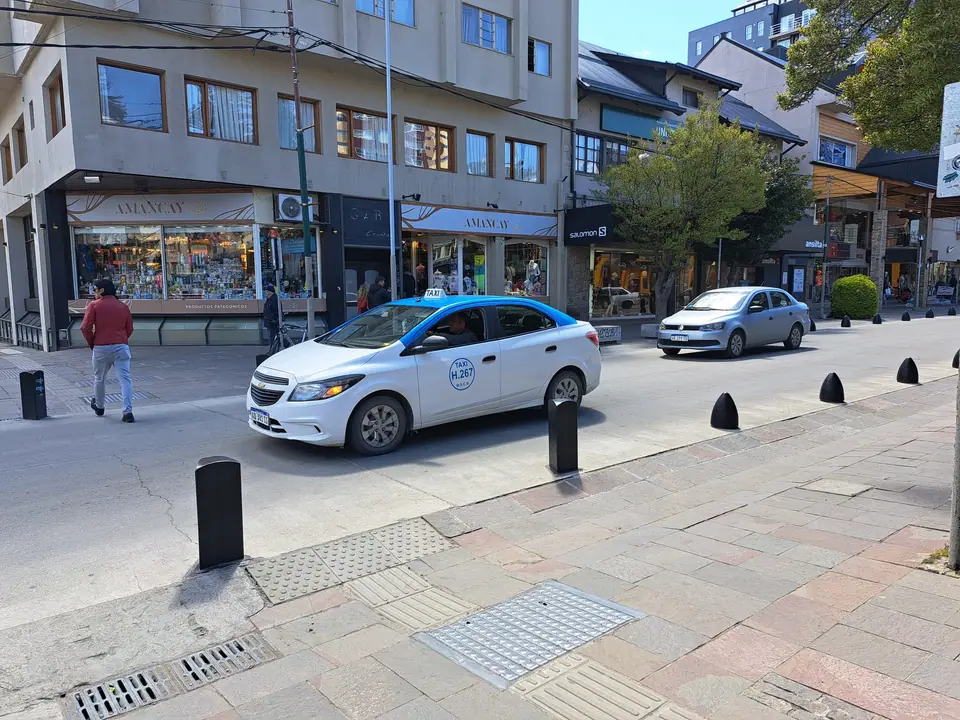
Flagship chocolate houses operate retail parlours and artisan workshops along these paved blocks. At Mitre 202, Rapa Nui presents chocolate bars, frozen raspberries enrobed in dual layers of chocolate, and small-batch gelato. A block eastward at Mitre 298, Mamuschka occupies an eye-catching crimson shopfront, known for multi-layered pralines, single-origin dark chocolate, and marzipan pastries.
Other traditional establishments punctuate the corridor, including del Turista, Frantom, and Abuela Goye. A short detour uphill along Calle Beschtedt leads to Benroth, a specialist workshop producing dark chocolate truffles infused with Patagonian liqueurs. Visitors exploring the urban core can pair these tastings with regional culinary specialities covered in our What to Eat in Bariloche guide.
Key Urban Landmarks Comparison
| Landmark | Primary Architecture | Key Materials | Core Focus |
|---|---|---|---|
| Centro Cívico (1940) | Alpine-Andean Civic Arcades | Green tuff stone, cypress, alerce timber | Historic plaza, clock tower, municipal offices |
| Museo de la Patagonia | Integral wing of Centro Cívico | Carved stone ashlar, native timber beams | Indigenous ethnography, fossils, boundary surveys |
| Catedral Nuestra Señora | Neo-Gothic Religious | White stone ashlar, reinforced concrete | Vaulted nave, regional stained-glass panels |
| Calle Bartolomé Mitre | Pedestrian Commercial Corridor | Paved walkway, timber shopfronts | Artisan chocolatiers, cafes, confectionery shops |
Integrating Downtown with Wider Excursions
Downtown Bariloche functions as the practical transport hub for excursions into Parque Nacional Nahuel Huapi. Urban bus lines depart regularly from streets adjacent to the Centro Cívico. Travellers building a broader trip plan can incorporate these historic downtown sites into our recommended 3 Days in Bariloche Itinerary, which balances urban history with scenic lakeside viewpoints.
After an afternoon walking Calle Mitre, you can connect directly with public transit heading west toward lakeside watering holes highlighted in our Patagonian Craft Beer Trail Guide. Mountain weather shifts swiftly throughout the year across the Andean foothills. Historical records show July averages daytime highs of 6.9°C with overnight lows of -1.2°C and 14 wet days, whereas January brings warm highs of 22.6°C and only 4 wet days. Pack waterproof outer layers even for leisurely strolls between the stone arcades and the cathedral gardens.
Where it is
- 1Centro Cívico, Cathedral and Calle Mitre Chocolate Route in Bariloche
- Teniente Luis Candelaria International Airport (BRC) · about 13 km from here in a straight line
- Directions in Google Maps
Stations and taxi ranks: OpenStreetMap. Airports: OurAirports. Distances are in a straight line.
Traveller tips
Real advice from people who have been to San Carlos de Bariloche. Every tip is read by our team before it goes live.
No tips yet. Been here? Yours could be the first.
Thank you! Your tip will appear here after a quick review.
More in San Carlos de Bariloche
Continue exploring San Carlos de Bariloche with related neighbourhood, food, and planning guides
Cerro Tronador (3,491m), Ventisquero Negro & Cascada Los Alerces Day-Trip Guide
San Carlos de Bariloche, Argentina
Cerro Otto Teleférico, Piedras Blancas and Lago Gutiérrez Guide
San Carlos de Bariloche, Argentina
Route of the Seven Lakes (Ruta de los Siete Lagos) & Villa La Angostura Guide
San Carlos de Bariloche, Argentina
Patagonian Craft Beer Trail, Playa Bonita and Lakeside Breweries Guide
San Carlos de Bariloche, Argentina
