Photo: GRDN711
Things to Do in Bogotá: Top Cultural Sights, Historic Quarters and Mountain Views
A complete guide to Bogotá's essential attractions, including the historic core of La Candelaria, the Museo del Oro, Monserrate sanctuary, and regional day trips.
Bogotá rewards travellers who balance world-class museum collections in the historic core with high-altitude viewpoints and highland excursions across the Cundinamarca savanna. Because major cultural institutions in the centre sit within a compact walking radius, you can pair pre-Columbian metallurgy and colonial plazas in the morning with mountain panoramas in the afternoon. Planning your route carefully allows you to navigate the city without losing precious hours to cross-town traffic.
Marvel at Pre-Hispanic Metallurgical Craft in the Museo del Oro
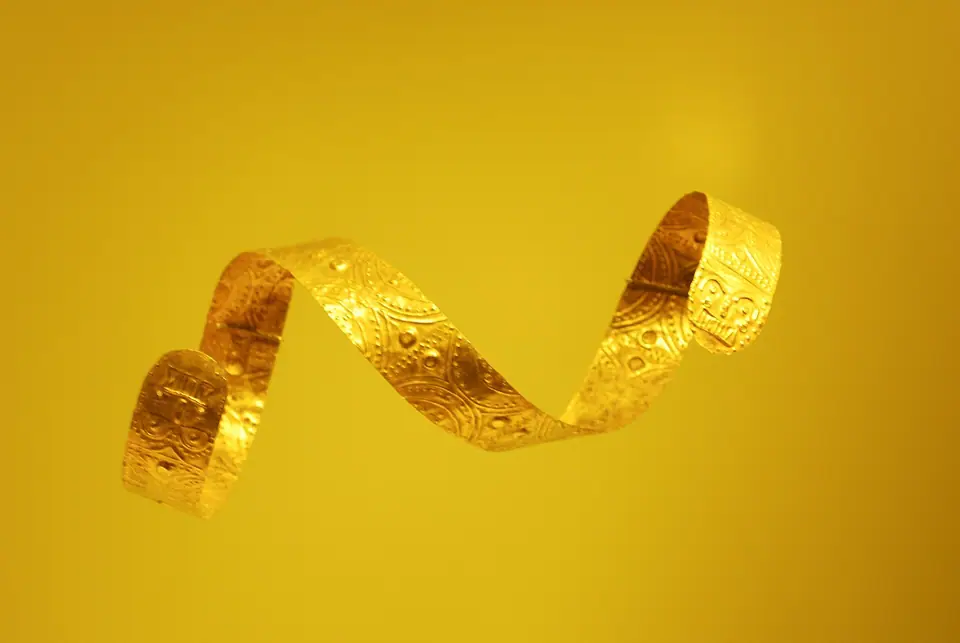
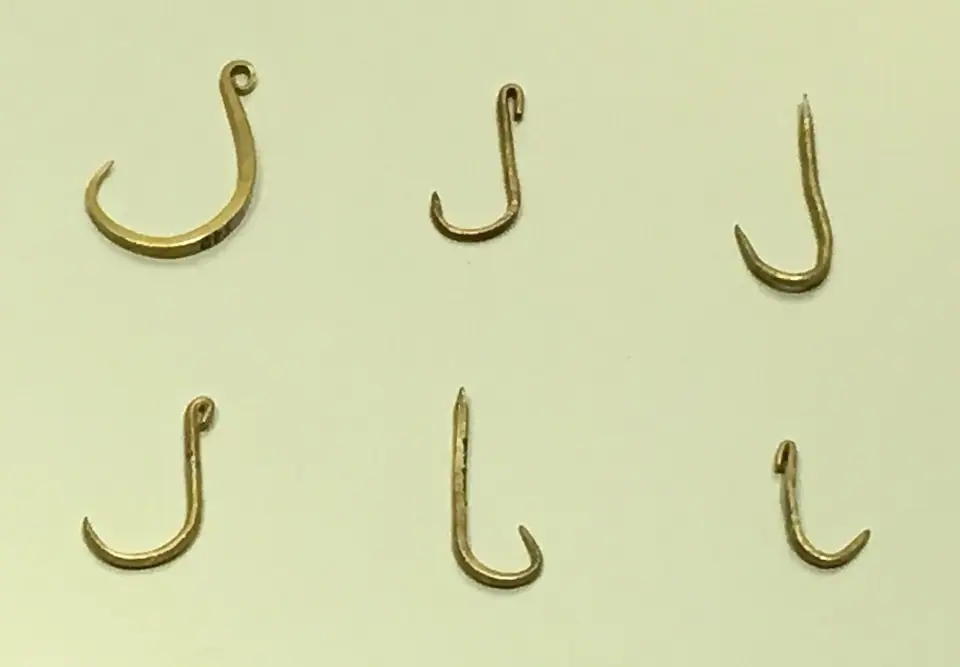
Managed by the Banco de la República on the edge of Parque Santander, the Museo del Oro preserves more than 34,000 pieces of pre-Columbian gold and tumbaga, a sacred alloy of gold and copper. The institution displays these masterworks together with 20,000 ceramic, stone, and textile objects from diverse indigenous societies. Its third-floor Offering Room illuminates the famous Muisca Raft, discovered in a cave in Pasca in 1969. This intricate casting portrays the investiture ritual on Lake Guatavita that gave rise to the legendary tale of El Dorado. Visitors can inspect the famed Poporo Quimbaya, an exceptional example of indigenous casting techniques that represents ancient ceremonial traditions.
Explore the Cultural Block and Museo Botero
A ten-minute walk south on Calle 11 leads to the Banco de la República cultural block in La Candelaria. Inside a restored colonial mansion arranged around a planted courtyard, the Museo Botero exhibits 123 paintings, drawings, and bronze sculptures donated by Colombian master Fernando Botero in 2000. The donation includes 85 international works from his personal collection by Picasso, Monet, Renoir, Dalí, and Giacometti. Connected galleries lead directly into the 1621 Casa de Moneda and the Miguel Urrutia Art Museum, creating an expansive arts complex with free public entry. Travelers following a structured 3-day Bogotá itinerary frequently base their first cultural morning around these interconnected galleries.
Wander Colonial Alleys in Historic La Candelaria
Stepping out of the cultural block brings you into the cobblestone passages of La Candelaria. This district preserves Spanish colonial architecture characterized by whitewashed facades, heavy wooden doors, and ornate overhanging balconies. Small squares such as Chorro de Quevedo offer a relaxed counterpoint to the busy avenues below. Independent coffee shops and community spaces occupy restored family houses, where you can pause between museum visits. The area slopes upward toward the eastern hills, making comfortable walking shoes necessary for the steep grades.
Stand in the Historic Heart of Plaza de Bolívar
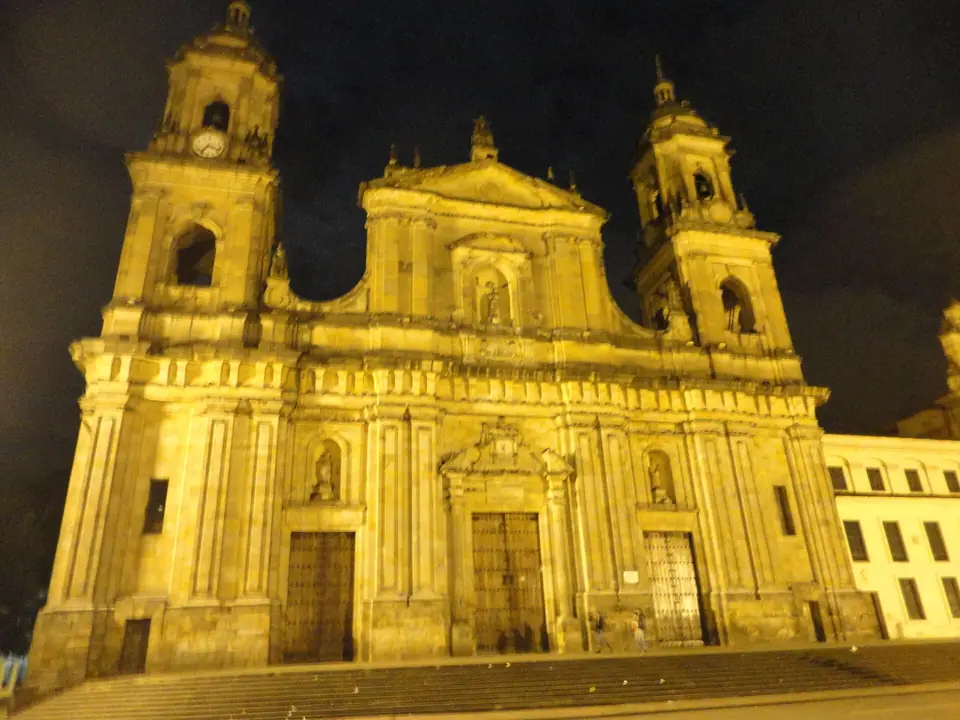
A few blocks downhill from the colonial alleys sits Plaza de Bolívar, the monumental civic centre of the republic. The massive square showcases major institutional architecture from several distinct eras of Colombian history. Four landmark structures define its perimeter:
- Catedral Primada: Built between 1807 and 1823, this neoclassical cathedral anchors the eastern edge of the plaza and holds national historical importance.
- Capitolio Nacional: Constructed between 1848 and 1926, this stately stone building houses Colombia's Congress on the southern boundary.
- Palacio Liévano: This French-influenced neoclassical palace borders the western flank and serves as the seat of Bogotá's city government.
- Palace of Justice: Dominating the northern perimeter, this modern complex houses the supreme judicial bodies of Colombia.
For deep architectural context on these monuments, read our guide to Plaza de Bolívar and the Catedral Primada.
Ascend Cerro de Monserrate for Panoramic Views
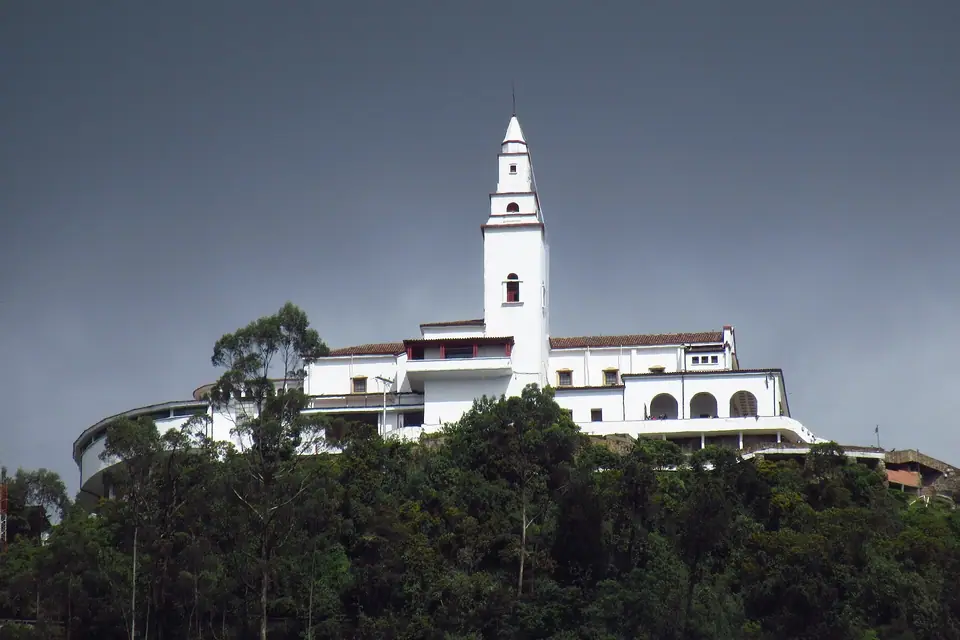
Towering over the eastern edge of the urban bowl, Cerro de Monserrate rises to 3,152 metres above sea level. The summit hosts a seventeenth-century sanctuary dedicated to El Señor Caído, which attracts both religious pilgrims and sightseers. Travellers reach the peak by boarding the mountain funicular, riding the aerial cable car, or walking up the paved stone footpath. Because physical exertion at over 3,000 metres demands extra oxygen, save the strenuous walking path for after you acclimatize to Bogotá's high elevation.
Experience High-Altitude Botanical Life and Regional Day Trips
Urban nature lovers can travel north toward Chapinero, Usaquén, and the Botanical Garden. The José Celestino Mutis Botanical Garden preserves high-Andean plant species and parramo flora under protective glasshouses. If you have an extra morning, venture out of the city bowl toward the salt-mining tunnels of Cundinamarca. The underground Zipaquirá Salt Cathedral offers a remarkable perspective on regional mining heritage and sacred architecture carved directly into halite deposits.
Bogotá Attraction Logistics and Transit Overview
Organising your days by geographical sectors minimizes time spent crossing the city. The table below outlines operational aspects for principal visitor sites across the capital.
| Attraction | Neighbourhood | Access Method | Key Sights |
|---|---|---|---|
| Museo del Oro | Parque Santander | TransMilenio Museo del Oro station | Muisca Raft, Poporo Quimbaya, tumbaga goldwork |
| Museo Botero | La Candelaria | Walking from central plazas | Botero sculptures, European private collection |
| Plaza de Bolívar | Centro Histórico | Walking from Calle 11 or Carrera 7 | Catedral Primada, Capitolio Nacional, city hall |
| Cerro de Monserrate | Eastern Hills | Funicular, teleférico, or stone trail | Mountain sanctuary, panoramic views of the savanna |
| Botanical Garden | Engativá | TransMilenio or taxi from centre | Andean forest collections, highland parramo flora |
Seasonal Weather Planning for City Sightseeing
Bogotá sits high on an Andean plateau where temperatures remain consistently cool throughout the entire calendar year. Open-Meteo climate data spanning 2015 to 2024 reveals daytime average highs between 18.5°C and 20.2°C, beside night lows ranging from 6.4°C to 9.6°C. Rainfall follows a bimodal pattern. The driest months fall in January with 35 millimetres across 5 wet days, and February with 49 millimetres across 7 wet days. In contrast, April and May see substantial precipitation, recording 91 millimetres and 98 millimetres across 13 and 14 wet days respectively. Carry a reliable waterproof layer and dress in breathable thermal layers so that shifting Andean cloud cover never disrupts your sightseeing plans.
Where it is
- 1Bogotá
- El Dorado International Airport (BOG) · about 14 km from Bogotá in a straight line
- Directions in Google Maps
Stations and taxi ranks: OpenStreetMap. Airports: OurAirports. Distances are in a straight line.
Traveller tips
Real advice from people who have been to Bogotá. Every tip is read by our team before it goes live.
No tips yet. Been here? Yours could be the first.
Thank you! Your tip will appear here after a quick review.
More in Bogotá
Continue exploring Bogotá with related neighbourhood, food, and planning guides
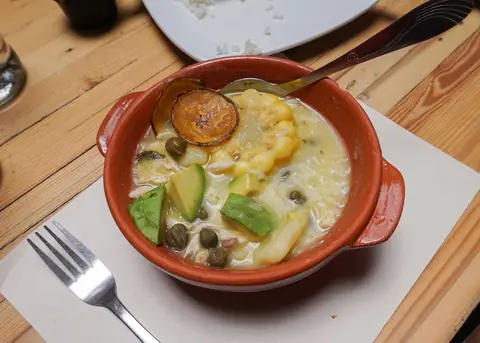
What to Eat in Bogotá: Ajiaco Santafereño, Chocolate and Market Food
Bogotá, Colombia
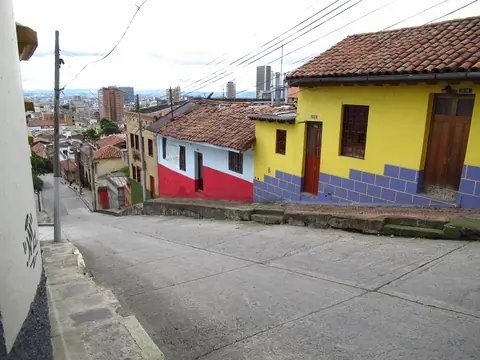
La Candelaria, Chorro de Quevedo and Colonial Streets in Bogotá
Bogotá, Colombia
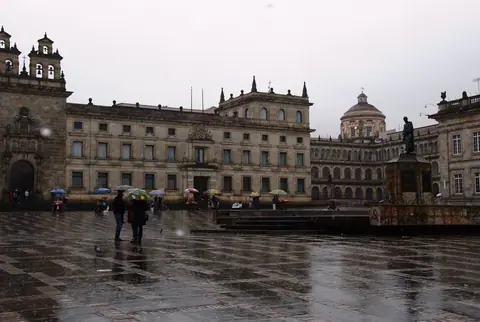
Plaza de Bolívar, Catedral Primada, Capitolio Nacional and Casa de Nariño
Bogotá, Colombia
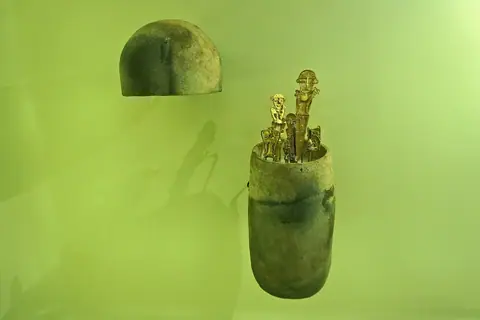
Museo del Oro: Pre-Columbian Gold, the Muisca Raft and Tumbaga Craft
Bogotá, Colombia
