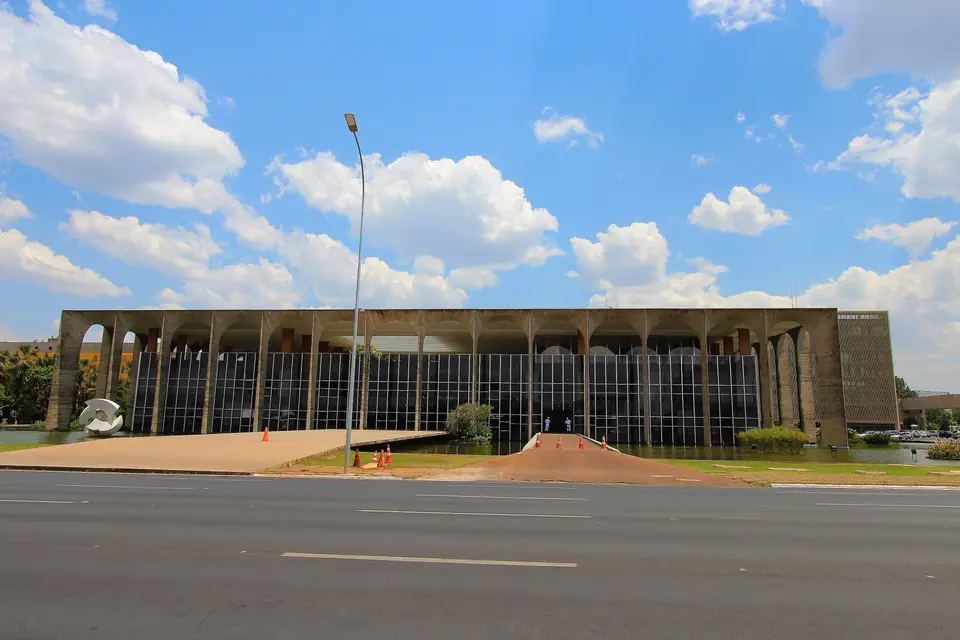
National Congress, Palácio do Itamaraty and Palácio da Alvorada Guide
Discover Oscar Niemeyer and Joaquim Cardozo's structural landmarks in Brasília, featuring the National Congress domes, Palácio do Itamaraty, and Palácio da Alvorada.
Three civic structures designed by architect Oscar Niemeyer and structural engineer Joaquim Cardozo introduced a revolutionary modernist vocabulary to twentieth-century civic planning. Erected between 1957 and 1970, the Palácio do Congresso Nacional, the Palácio do Itamaraty, and the presidential Palácio da Alvorada define the public identity of Brazil's federal capital. Their balanced compositions unite suspended arches, vast water mirrors, reinforced concrete shells, and integrated landscape art.
Palácio do Congresso Nacional: Geometric Domes of Federal Power
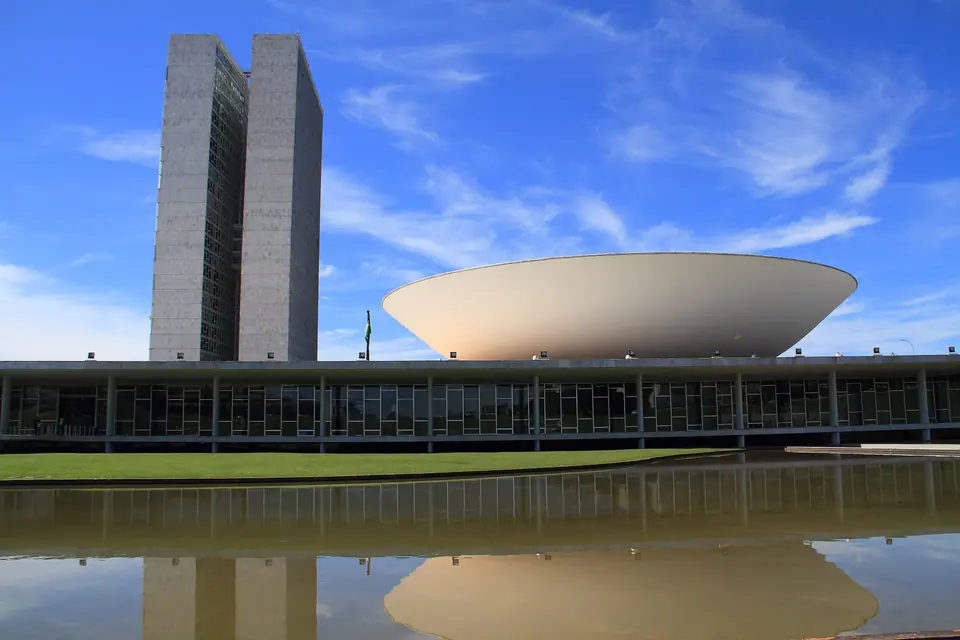
Inaugurated on 21 April 1960 at the eastern climax of the Monumental Axis, the National Congress serves as the legislative core of the republic. Niemeyer positioned the complex upon a broad, horizontal white marble platform, setting up a dialogue between opposing geometric forms that reflect the bicameral constitution. Visitors exploring the Monumental Axis, Cathedral of Brasília and Praça dos Três Poderes immediately register this symbolic balance across the Esplanada dos Ministérios.
On the northern flank of the platform sits a closed concave dome. This shell encloses the plenary hall of the Federal Senate, where 81 senators convene beneath an architectural form intended to foster quiet reflection and deliberate debate. Conversely, the southern flank supports an open convex bowl. This cup crowns the Chamber of Deputies, whose 513 elected representatives gather beneath an outward curve designed to symbolise transparency and receptivity to public sentiment. Between these sculptural shells rise twin 28-storey administrative towers, connected at the fourteenth level by a structural skybridge forming an asymmetric H-shape.
Inside the legislative chambers, art and civic administration interlock seamlessly. Guided interior tours navigate through the vast reception halls, including the Salão Negro and the two primary voting floors. The Chamber of Deputies features green carpets, while the Federal Senate features deep blue carpeting. Throughout the public galleries, visitors encounter integrated wall panels by Athos Bulcão, stained glass and sculptural elements by Marianne Peretti, and a buried winter tunnel garden curated by landscape architect Roberto Burle Marx. Booking time slots in advance through the joint parliamentary visitation portal is mandatory, and security staff enforce strict dress codes requiring tailored trousers or knee-length garments for weekday entry.
Palácio do Itamaraty: Arches and Tropical Waters on the Esplanade
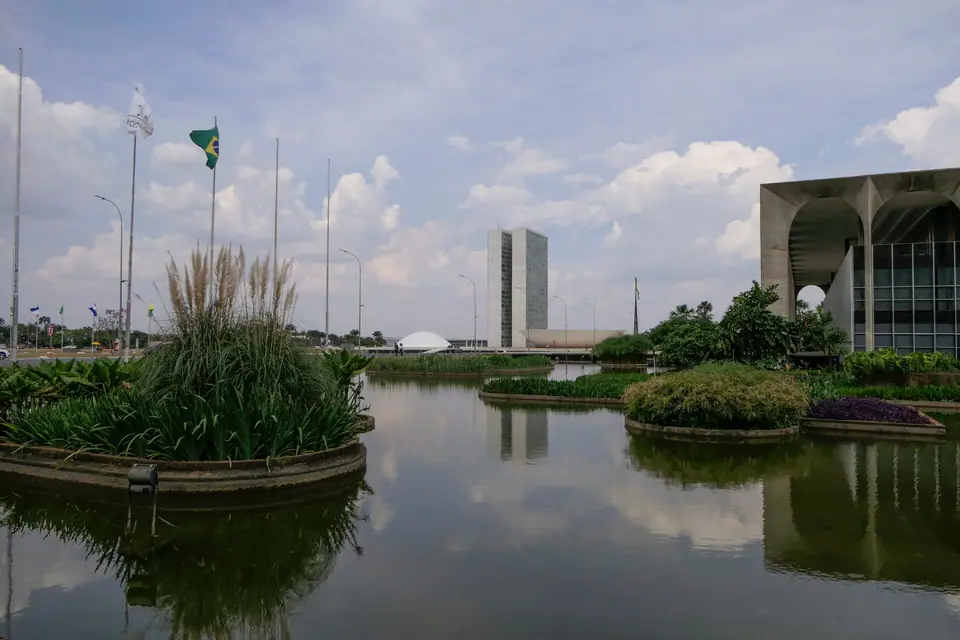
Completed in 1970 and formally known as the Palácio dos Arcos, the headquarters of the Ministry of Foreign Affairs stands directly north of the congressional platform. The exterior presents an imposing cube wrapped in exposed reinforced concrete arches that appear to float over an extensive perimeter reflection pool. This aquatic forecourt, devised by Roberto Burle Marx, features planted islands with native tropical flora, water lilies, and reeds that soften the strict geometric grid of the facade.
Rising directly from the water mirror in front of the main entry terrace sits Meteoro, a five-piece Carrara marble sculpture completed by Bruno Giorgi in 1968. The interconnected forms evoke diplomatic ties binding the five continental landmasses. Crossing the bridge into the ground-floor reception hall reveals one of Joaquim Cardozo's greatest structural achievements: an unsupported spiral staircase. Measuring 2.75 metres in width, this sweeping concrete flight ascends to the banquet mezzanine without a single central pillar or intermediate support column, demonstrating the extreme load-bearing potential of calculated curved concrete.
The upper salons display diplomatic tapestries, historical maps, and classical Brazilian furniture beside modernist canvases. Access to the interior of Itamaraty requires an advance reservation through the foreign ministry portal. Travellers coordinating walking routes along the central avenue can easily pair this tour with other modernist cultural venues highlighted in our Santuário Dom Bosco, CCBB Brasília and Cultural Centres Guide.
Palácio da Alvorada: Presidential Grace on Lago Paranoá
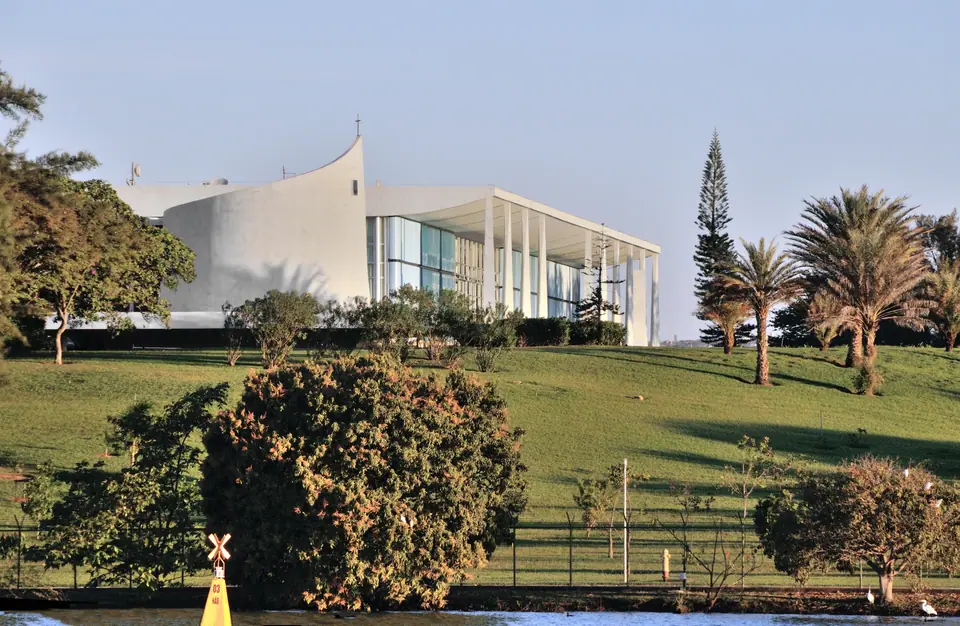
Situated on an isolated peninsula jutting into the waters of Lago Paranoá, the Palácio da Alvorada serves as the official residence of the President of Brazil. Inaugurated on 30 June 1958, it was the very first permanent masonry palace finished during the construction of the new capital, well ahead of the official dedication of the city. Its name translates as the Palace of Dawn, referencing President Juscelino Kubitschek's ambition that Brasília would mark the dawn of a transformed interior economy.
The defining architectural signature of the residence is its rhythmic perimeter colonnade. Niemeyer designed slender, pointed support columns clad in white marble, whose diamond curves taper to delicate contact points against the foundation slab. The reflection of these winged pillars in the surrounding pool creates continuous geometric diamonds that ultimately inspired the official coat of arms of the Federal District. Adjacent to the main rectangular pavilion, a low spiral chapel clad in white concrete provides an intimate contrast to the glass curtain walls. Because it remains an active head-of-state residence with continuous presidential security, exterior photography is permitted from designated perimeter gates, but interior visits remain restricted to specific official programmes announced on the presidency portal.
Architectural and Practical Comparison of the Three Civic Palaces
| Palace | Inauguration Year | Primary Civic Function | Signature Structural Feature | Integrated Artists and Landscapers |
|---|---|---|---|---|
| Palácio do Congresso Nacional | 1960 | Federal Senate and Chamber of Deputies | Concave dome, convex bowl, twin towers | Athos Bulcão, Marianne Peretti, Burle Marx |
| Palácio do Itamaraty | 1970 | Ministry of Foreign Affairs headquarters | Free-spanning spiral stair, concrete arches | Bruno Giorgi, Roberto Burle Marx |
| Palácio da Alvorada | 1958 | Official Residence of the President | Tapered winged marble columns, spiral chapel | Oscar Niemeyer architectural details |
Field Planning and Climate Realities
Navigating these monumental structures requires careful preparation for Brasília's distinct high-altitude Cerrado climate. According to Open-Meteo weather records from 2015 to 2024, precipitation is concentrated between October and March. December is the wettest month on record, logging 133 millimetres across 19 wet days, while January records 119 millimetres across 17 wet days. Summer afternoon downpours across the open esplanade can leave pedestrians exposed on the vast concrete plazas. Conversely, the winter dry season from June to August yields virtually no rainfall, with July recording zero millimetres and zero wet days. Winter daytime highs hover between 25.3 degrees and 27.4°C, but relative humidity can drop sharply, requiring visitors to carry personal water supplies during outdoor perimeter walks. September brings the hottest period, reaching an average high of 29.1°C.
To structure a seamless visiting sequence across the federal district, consult our comprehensive 3 Days in Brasília Itinerary. Always carry official government-issued photo identification when approaching security checkpoints at both congressional towers and ministerial pavilions. Photography regulations are enforced around diplomatic offices and security gates, so verify current checkpoint rules before operating professional camera equipment.
Where it is
- 1National Congress, Palácio do Itamaraty and Palácio da Alvorada
- Presidente Juscelino Kubitschek International Airport (BSB) · about 10 km from here in a straight line
- Directions in Google Maps
Stations and taxi ranks: OpenStreetMap. Airports: OurAirports. Distances are in a straight line.
Traveller tips
Real advice from people who have been to Brasília. Every tip is read by our team before it goes live.
No tips yet. Been here? Yours could be the first.
Thank you! Your tip will appear here after a quick review.
More in Brasília
Continue exploring Brasília with related neighbourhood, food, and planning guides
Best Time to Visit Brasília: Dry Season, Ipê Blossoms and Climate
Brasília, Brazil
Where to Stay in Brasília: Hotel Sectors, Lake Paranoá and Asa Sul
Brasília, Brazil
3 Days in Brasília Itinerary: Monumental Axis, Superquadras, Lake & Cerrado
Brasília, Brazil

What to Eat in Brasília: Cerrado Ingredients and Candango Culinary Traditions
Brasília, Brazil
