What to Eat in Brasília: Cerrado Ingredients and Candango Culinary Traditions
Discover the essential flavours of Brasília, from native Cerrado ingredients like pequi and baru nuts to mid-century candango comfort food and lakeside dining.
When tens of thousands of pioneering builders known as candangos and federal civil servants arrived in the late 1950s to construct Brasília, they transported regional food cultures from across Brazil to the central plateau. Kitchen traditions from Minas Gerais, Goiás, the Northeast, and Rio de Janeiro took root amidst Lúcio Costa's orderly residential superblocks. Over decades of civic growth, these diverse influences merged with wild ingredients gathered from the surrounding savannas. Travellers exploring the capital today encounter a culinary landscape that balances regional comfort classics with native plateau botanicals.
Native Flavours of the Cerrado: Pequi, Baru, and Buriti
The Cerrado savanna surrounding the Federal District is one of the most biodiverse biomes in South America. Local markets, casual eateries, and modern bistro kitchens make extensive use of wild harvest fruits, seeds, and nuts found in this unique landscape:
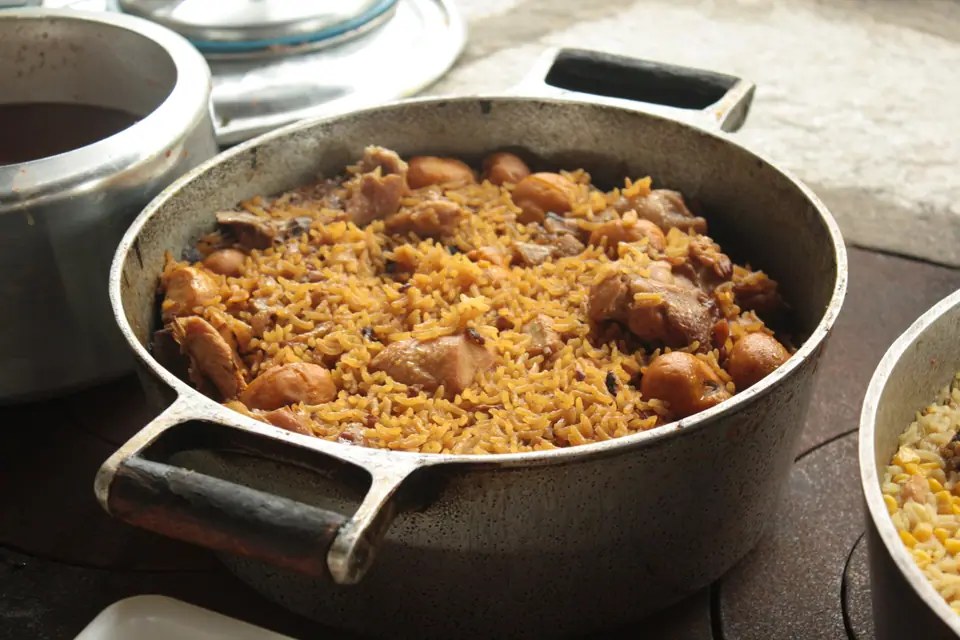
- Galinhada com Pequi: This hearty braised chicken and rice preparation serves as the defining comfort meal of the Central-West plateau. The bright yellow pequi fruit (Caryocar brasiliense) lends a pungent aroma and an oily, savoury richness to the grain. Visitors must follow an essential dining rule: never bite into the centre of a pequi fruit, as the inner seed shell contains thousands of microscopic, painful spines. Scrape the soft yellow flesh gently using only your front teeth.
- Castanha de Baru: Harvested from the wild baruzeiro tree, roasted baru nuts offer a flavour profile reminiscent of toasted peanuts and almonds. They feature prominently in regional confectionery, savoury crusts, and artisanal pestos across Asa Sul and Asa Norte.
- Buriti and Cajuzinho-do-Cerrado: The deep orange pulp of the buriti palm provides natural acidity and colour to sorbets, juices, and seasonal sauces. Miniature native wild cashews known as cajuzinho-do-Cerrado provide an intense, tannic sweetness prized in regional desserts.
- Empadão Goiano: Originating from neighbouring Goiás, this deep-dish savoury pie comes packed with shredded chicken, pork loin, linguiça sausage, hard-boiled eggs, cheese, and guariroba, a native palm heart with a distinctive bitter note.
- Pamonha: Made from freshly grated sweetcorn paste wrapped in its own husk and gently boiled, pamonhas are prepared in both savoury versions filled with melting cheese and sweet variations served warm for afternoon snacks.
Mid-Century Candango Classics and Historic Commercial Strips
Brasília's culinary history remains anchored in the commercial local streets known as Comércio Local Sul, particularly between CLS 104 and CLS 405. These pedestrian rows formed the social hubs for the early capital, where government workers, architects, and builders gathered after long shifts. Classic establishments established during the 1960s still serve substantial sharing platters of filé à parmigiana and charcoal-grilled picanha na brasa.
Among the most enduring institutions is Beirute, open in CLS 109 Sul since 1966. Its tables have welcomed generations of politicians, journalists, and artists over cold draft beer and generous plates of roast beef sandwiches, kibbeh, and traditional Brazilian-Arab specialities. Exploring these shaded commercial arcades reveals how residential life functions outside the formal government sectors. You can combine an afternoon of dining along these blocks with a walking visit to Superquadra 308 Sul, Igrejinha de Fátima & Living Plano Piloto Guide to see how daily residential design complements local food culture.
Street Food Rituals: Pastéis and Caldo de Cana
Casual street food in Brasília centres on golden, deep-fried pastéis accompanied by freshly pressed sugarcane juice (caldo de cana). The capital boasts its own dedicated pastry culture where the thin, blistered dough encases fillings of seasoned minced beef, melting cheese, heart of palm, or shredded chicken with catupiry cheese.
Two venues define this casual dining tradition. The historic Dom Bosco pastelaria stands as a beloved fixture of early Plano Piloto routine. Alternatively, thousands of weekend shoppers head directly to the open-air food stalls at the base of the central television tower. Visitors can sample regional sweets, fried pastéis, and savoury tapioca crêpes before heading to the observation platform featured in our Memorial JK, Brasília TV Tower & Burle Marx's Praça dos Cristais Guide.
Freshwater Fish Dining Along Lago Paranoá
The creation of Lago Paranoá provided Brasília with a vast aquatic recreational area that directly shaped its dining scene. Lakeside restaurants along the shoreline and inside the manicured grounds of Pontão do Lago Sul specialise in grilled freshwater fish from Central-West river basins and the Amazon.
Diners regularly order whole roasted tambaqui ribs (costela de tambaqui), tender tucunaré fillets, and pintado, a spotted river catfish that holds up well over open coals. These fish platters arrive with toasted manioc flour (farofa), fragrant pirão fish gravy, and fresh lime wedges. Outdoor tables offer sunset views across the water towards the iconic arches detailed in our Lago Paranoá, Pontão do Lago Sul and Ponte JK Guide.
Brasília Food Experiences and Regional Specialties
| Dish or Ingredient | Culinary Origin | Primary Flavour Profile | Where to Find |
|---|---|---|---|
| Galinhada com Pequi | Central-West Cerrado | Earthy, aromatic, rich yellow broth | Traditional restaurants in Asa Sul and Asa Norte |
| Castanha de Baru | Native savanna trees | Nutty, crunchy, resembling roasted almonds | Produce stalls and specialized bakeries |
| Empadão Goiano | Goiás State | Savoury, hearty pastry with bitter palm heart | Regional snack bars and market stalls |
| Filé à Parmigiana | 1960s Candango dining | Breaded beef steak with tomato sauce and melted cheese | Historic commercial rows along CLS 104 to 405 Sul |
| Pastel com Caldo de Cana | Brazilian street tradition | Crispy fried pastry and sweet pressed sugarcane | Feira da Torre de TV and Dom Bosco pastelaria |
| Pintado na Brasa | Central-West river systems | Firm, lean freshwater fish grilled over charcoal | Waterfront terraces along Lago Paranoá |
Seasonal Dining Tips and Plateau Weather Realities
Brasília sits at over 1,000 metres of elevation on the Brazilian central plateau, creating two distinct seasonal dining experiences. The long dry period extends from May through September. During July, rainfall drops to zero millimetres across thirty consecutive dry days, while daily maximum temperatures reach around 25.6°C. In August and September, humidity levels often plummet below twenty percent as afternoon highs climb towards 29.1°C. During these dry months, hydration is paramount. Plan on consuming ample fresh juices, chilled coconut water, and cold caldo de cana throughout your sightseeing walks.
By contrast, the rainy summer season begins in October and peaks between November and January, bringing between 119 and 133 millimetres of monthly rainfall across fifteen to nineteen wet days. Afternoon downpours arrive swiftly, making covered commercial verandas in Asa Sul and Asa Norte convenient shelters for lingering lunches. Because menu items and seasonal opening hours at independent restaurants fluctuate across national holiday weeks, check official venue channels ahead of your visit.
Where it is
- 1Brasília
- Presidente Juscelino Kubitschek International Airport (BSB) · about 9 km from Brasília in a straight line
- Directions in Google Maps
Stations and taxi ranks: OpenStreetMap. Airports: OurAirports. Distances are in a straight line.
Traveller tips
Real advice from people who have been to Brasília. Every tip is read by our team before it goes live.
No tips yet. Been here? Yours could be the first.
Thank you! Your tip will appear here after a quick review.
More in Brasília
Continue exploring Brasília with related neighbourhood, food, and planning guides
Best Time to Visit Brasília: Dry Season, Ipê Blossoms and Climate
Brasília, Brazil
Where to Stay in Brasília: Hotel Sectors, Lake Paranoá and Asa Sul
Brasília, Brazil
3 Days in Brasília Itinerary: Monumental Axis, Superquadras, Lake & Cerrado
Brasília, Brazil
Monumental Axis Guide: Cathedral of Brasília, Museu Nacional & Praça dos Três Poderes
Brasília, Brazil
