Santuário Dom Bosco, CCBB Brasília and Cultural Centres Guide
Plan your visit to Santuário Dom Bosco's cobalt stained glass, CCBB Brasília's Niemeyer arts pavilions, and Athos Bulcão's reliefs at Teatro Nacional Cláudio Santoro.
Beyond the civic palaces along the Monumental Axis, three cultural institutions showcase the architectural expression and artistic vitality of Brasília. The cobalt light of Santuário Dom Bosco in Asa Sul, the lakeside galleries of Centro Cultural Banco do Brasil, and the monumental geometric relief facade of Teatro Nacional Cláudio Santoro reveal how sacred design, modern sculpture, and performance venues shaped the federal capital.
Santuário São João Bosco: The Cobalt Cathedral of Asa Sul
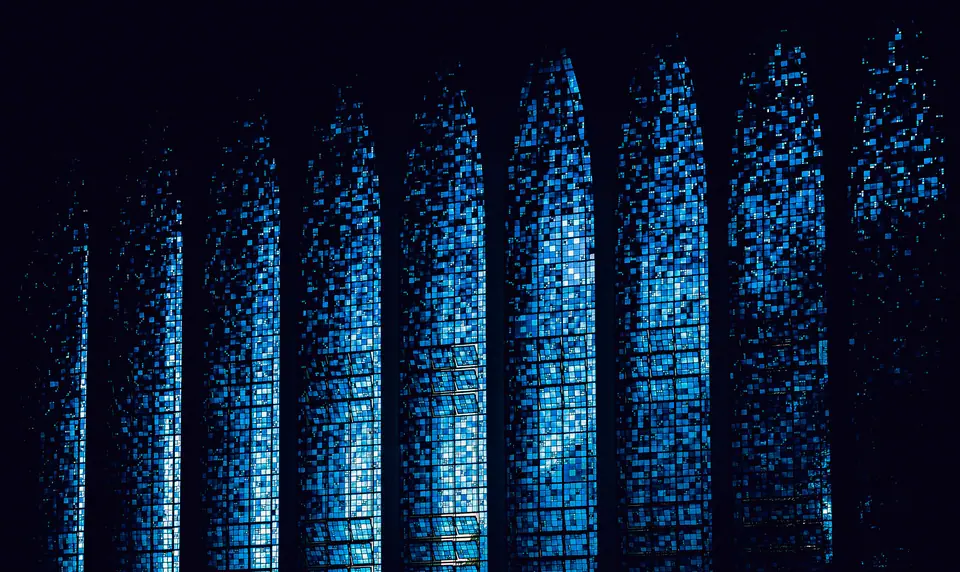
Located at SEPS 702 Sul (Bloco B), Santuário São João Bosco honours the Italian saint who experienced a prophetic vision in 1883 of a promised civilization rising between the 15th and 20th parallels. Architect Cláudio Naves conceived the temple as a striking square structure constructed between 1963 and 23 May 1970. Eighty slender concrete columns rise 16 metres high, forming pointed Gothic-modernist arches that support a soaring coffered ceiling. From the exterior, the concrete frame appears austere and solid, yet entering through the tall bronze portals reveals an interior drenched in deep cerulean light.
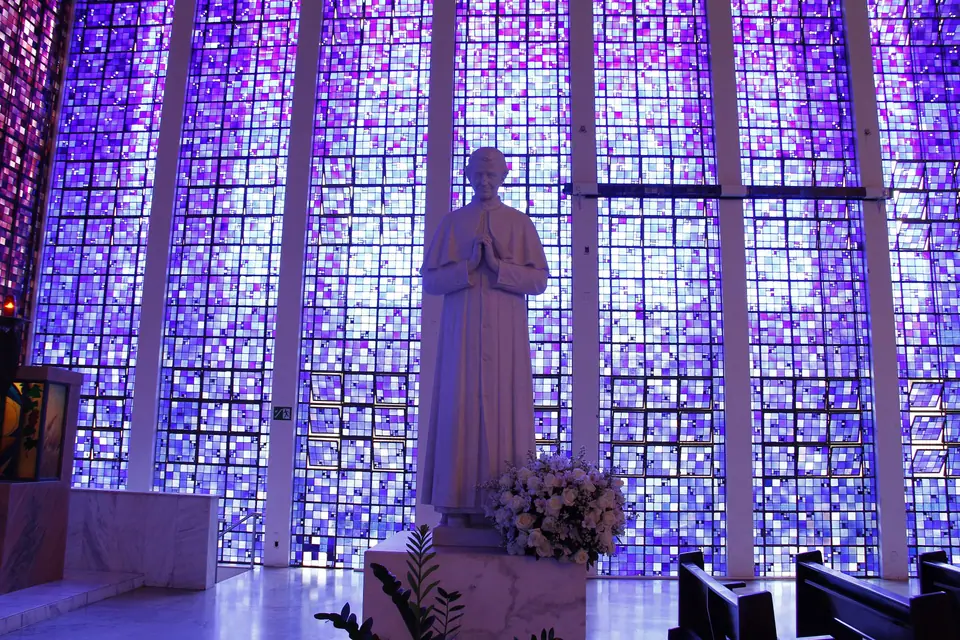
Belgian-Brazilian artist Hubert van Doorninck designed 2,200 square metres of stained glass that completely fills the vertical lancets between the eighty columns. Van Doorninck utilised twelve graduated shades of blue, punctuated with accents of rose and violet glass in the upper quadrants. The shifting tones reproduce the clarity of a starry night sky over the central plateau. When bright tropical sunlight strikes the southern and western facades, the entire nave glows with cool, meditative hues that transform the interior into an underwater cathedral.
Hanging from the central ceiling on steel cables is a monumental 3.5-metre-tall chandelier weighing 2.5 tonnes. Designed by Albericooni, the fixture incorporates 7,400 individual pieces of hand-blown Venetian Murano glass. Below it rests a single ten-tonne block of polished pink marble serving as the main altar. Travellers exploring nearby residential sectors can combine this sanctuary with a walk through Superquadra 308 Sul, Igrejinha de Fátima & Living Plano Piloto Guide to experience domestic modernist architecture in Asa Sul.
Centro Cultural Banco do Brasil: Niemeyer Pavilions by Lago Paranoá
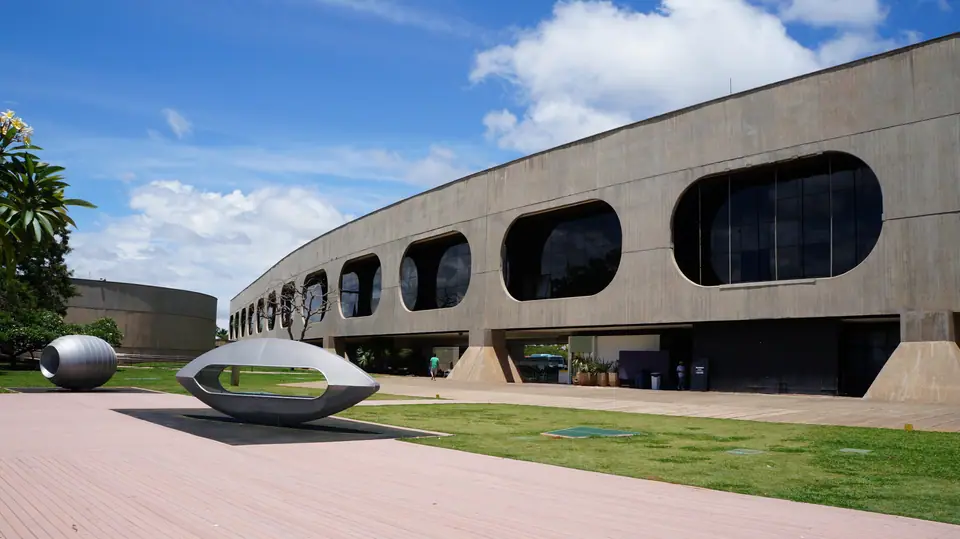
Set across landscaped grounds near the presidential Jaburu residence and the lake, Centro Cultural Banco do Brasil (CCBB) operates inside the Edifício Tancredo Neves. Oscar Niemeyer designed the curved, horizontal complex in 1993, and the institution inaugurated the site as a cultural centre on 12 October 2000. It regularly ranks among the most visited art museums on the planet, hosting major international retrospectives, contemporary Brazilian visual art, film retrospectives, and chamber music.
The complex features climate-controlled gallery pavilions, two screening rooms, a performing arts theatre, and café terraces overlooking sweeping lawns. The expansive outdoor spaces provide families and travellers with open lawns shaded by native Cerrado trees. Many visitors coordinate an afternoon at CCBB with a sunset visit to the waterfront promenades described in our Lago Paranoá, Pontão do Lago Sul and Ponte JK Guide. Check the official CCBB portal before your visit to confirm current exhibition schedules and book timed gallery tickets.
Teatro Nacional Cláudio Santoro: Athos Bulcão's Geometric Pyramid
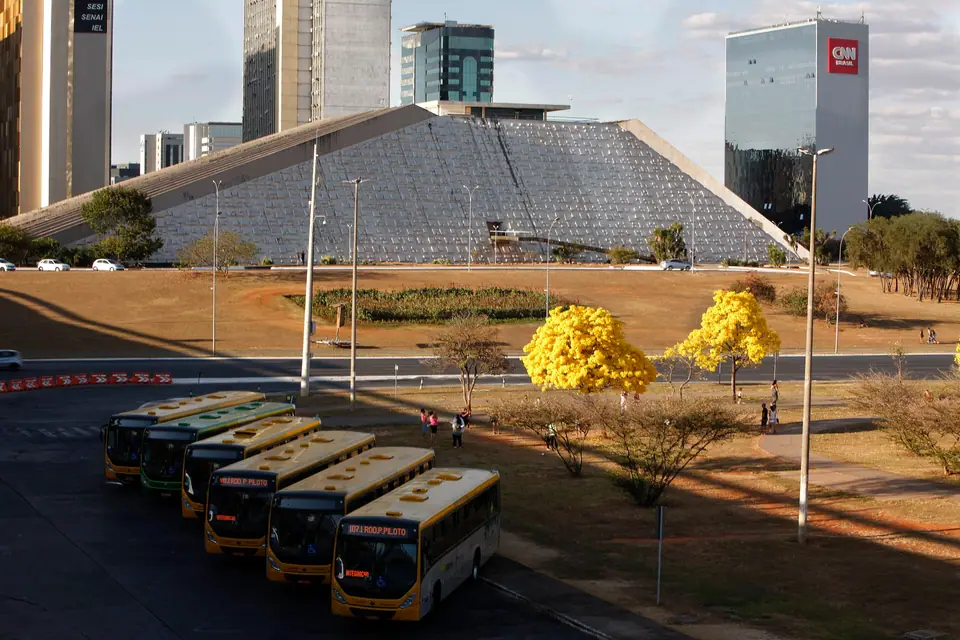
Positioned near the central bus station (Rodoviária) and the Cultural Sector North, the Teatro Nacional Cláudio Santoro forms an Aztec-inspired truncated pyramid designed by Oscar Niemeyer in 1966. Its sloping east and west exterior walls are clad with one of Brazil's largest outdoor architectural artworks: a monumental geometric relief named O Sol faz a Festa, crafted by collaborator Athos Bulcão. Measuring 125 metres long by 27 metres tall, the facade features thousands of triangular and rectangular cast-concrete blocks that create dynamic shadow patterns under changing daylight.
Named in honour of the celebrated maestro who founded the symphony orchestra of the National Theatre, the building houses three grand auditoriums: the Sala Villa-Lobos, Sala Martins Pena, and Sala Alberto Nepomuceno. Travellers admiring the monumental facade can easily connect northwards into the core civic zone outlined in the Monumental Axis Guide: Cathedral of Brasília, Museu Nacional & Praça dos Três Poderes.
Architectural and Cultural Profile of Brasília Arts Venues
| Cultural Venue | Key Architects and Artists | Defining Design Feature | Urban Location |
|---|---|---|---|
| Santuário Dom Bosco | Cláudio Naves, Hubert van Doorninck, Albericooni | 80 concrete columns, 2,200 m² blue stained glass, Murano chandelier | SEPS 702 Sul, Asa Sul |
| CCBB Brasília | Oscar Niemeyer (Edifício Tancredo Neves) | Low curved modernist pavilions, sculpture lawns, outdoor theatre | SCES Trecho 2, near Lago Paranoá |
| Teatro Nacional Cláudio Santoro | Oscar Niemeyer, Athos Bulcão | Truncated pyramid with 125m Athos Bulcão geometric concrete relief | Setor Cultural Norte, near Rodoviária |
Practical Timing and Seasonal Lighting Advice
Lighting conditions dramatically alter the experience of Santuário Dom Bosco and the surrounding modernist facades. Open-Meteo climate data recorded between 2015 and 2024 shows that Brasília experiences its clearest skies during the dry winter. July records zero millimetres of rainfall and zero wet days, with average daytime highs of 25.6°C and cool overnight lows of 13.9°C. August and June maintain similar clarity, recording only 7 millimetres of rain and a single wet day each month.
During these mid-year dry months, intense sunlight streams through Hubert van Doorninck's stained glass windows, projecting vivid bands of cobalt, turquoise, and violet across the floor tiles and marble altar. Conversely, the rainy summer season from November to January brings heavier cloud cover and higher precipitation, peaking in December with 133 millimetres across 19 wet days. While diffuse cloudy light softens the stained glass colours, the interior remains deeply atmospheric. For all three institutions, check official administrative websites before travelling to verify temporary exhibition changes, restoration closures, or special musical performances.
Where it is
- 1Santuário Dom Bosco, CCBB Brasília and Cultural Centres
- Presidente Juscelino Kubitschek International Airport (BSB) · about 8 km from here in a straight line
- Directions in Google Maps
Stations and taxi ranks: OpenStreetMap. Airports: OurAirports. Distances are in a straight line.
Traveller tips
Real advice from people who have been to Brasília. Every tip is read by our team before it goes live.
No tips yet. Been here? Yours could be the first.
Thank you! Your tip will appear here after a quick review.
More in Brasília
Continue exploring Brasília with related neighbourhood, food, and planning guides
Best Time to Visit Brasília: Dry Season, Ipê Blossoms and Climate
Brasília, Brazil
Where to Stay in Brasília: Hotel Sectors, Lake Paranoá and Asa Sul
Brasília, Brazil
3 Days in Brasília Itinerary: Monumental Axis, Superquadras, Lake & Cerrado
Brasília, Brazil

What to Eat in Brasília: Cerrado Ingredients and Candango Culinary Traditions
Brasília, Brazil
