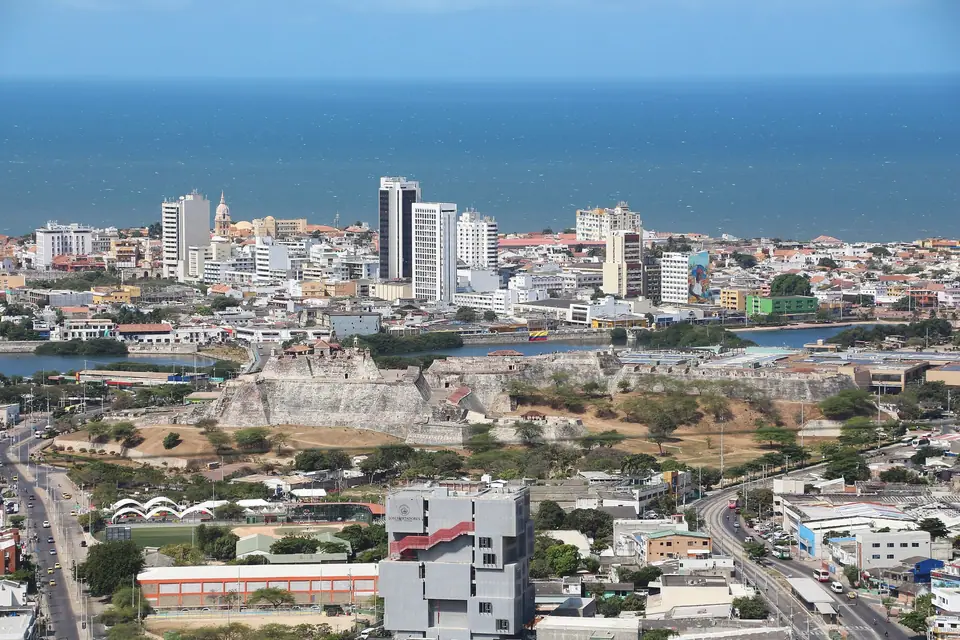
Photo: Bernard Gagnon
3-Day Cartagena Itinerary: Walled City, Fortresses and Islands
A complete three-day Cartagena route through the colonial Walled City, the fortifications of San Felipe and La Popa, lively Getsemaní, and the Rosario archipelago.
Three days in Cartagena de Indias provide sufficient time to balance intramural stone monuments, external military defences, and maritime coral reefs. Managing the equatorial climate shapes every successful visit. Open-Meteo figures show daytime highs reaching 31.1°C to 32.3°C throughout the year, with coastal humidity remaining elevated even during dry months. We schedule strenuous outdoor climbs for early mornings, retreating to shaded cloisters or air-conditioned galleries before noon.
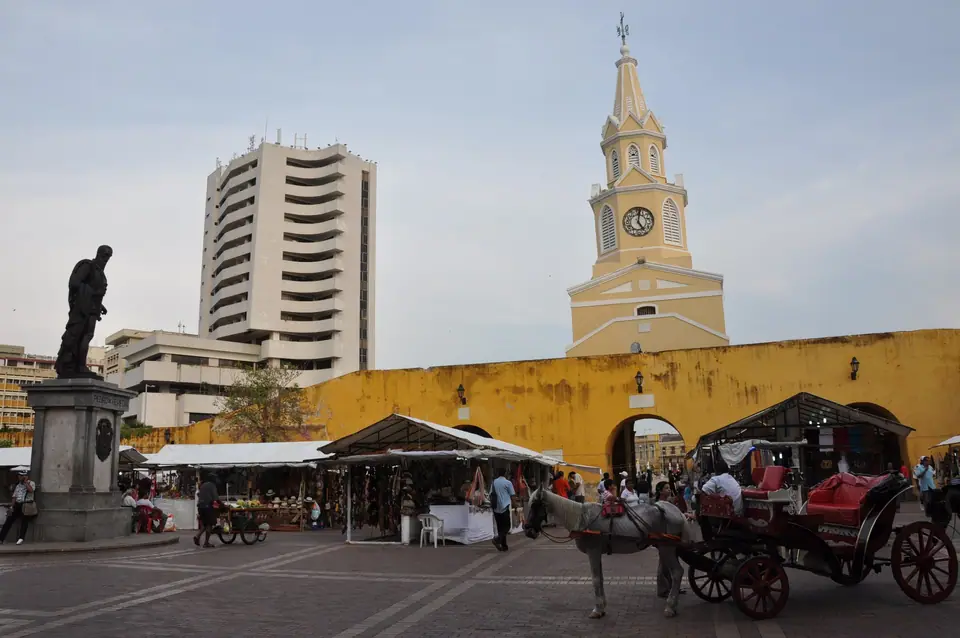
Day 1: The Walled City, Centro, and San Diego
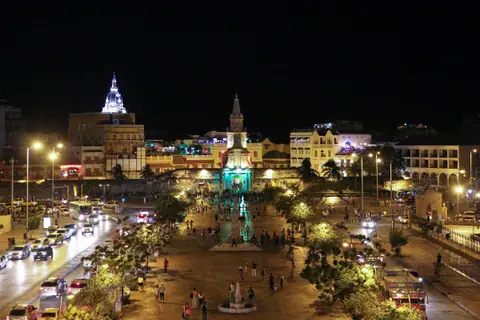
Begin the morning at the iconic yellow gate of the Torre del Reloj, built between 1876 and 1888 by Luis Felipe Jaspe Franco. Passing beneath its vaulted arches leads straight into Plaza de los Coches and the arched arcades of the Portal de los Dulces. From here, walk past Plaza de la Aduana toward the coral-stone church and courtyard of the Sanctuary of San Pedro Claver.
Cross into shaded Plaza de Bolívar, the civic heart of Centro. Two essential cultural landmarks frame this park. The Cathedral of Santa Catalina de Alejandría, commenced in 1577 and completed in 1612, stands directly across from the Zenú Gold Museum and the 1770 Palace of the Inquisition. The thick limestone walls of the Inquisition building offer welcome relief from the midday heat while displaying colonial archives. You can review detailed historical context in our guide to the Plaza de Bolívar and the Palace of the Inquisition.
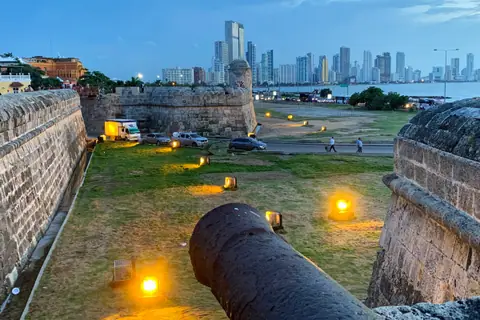
In the afternoon, proceed north into the neighbourhood of San Diego. Pause at Plaza de Santo Domingo to inspect Fernando Botero's bronze sculpture Gertrudis, then view the 1911 facade of Teatro Adolfo Mejía. Continue north to Las Bóvedas, a series of 23 bombproof vaults designed by military engineer Antonio de Arévalo between 1789 and 1795. End the daylight hours atop the ramparts of the Baluarte de Santo Domingo, watching the Caribbean sunset from the stone perimeter of the walled city fortifications.
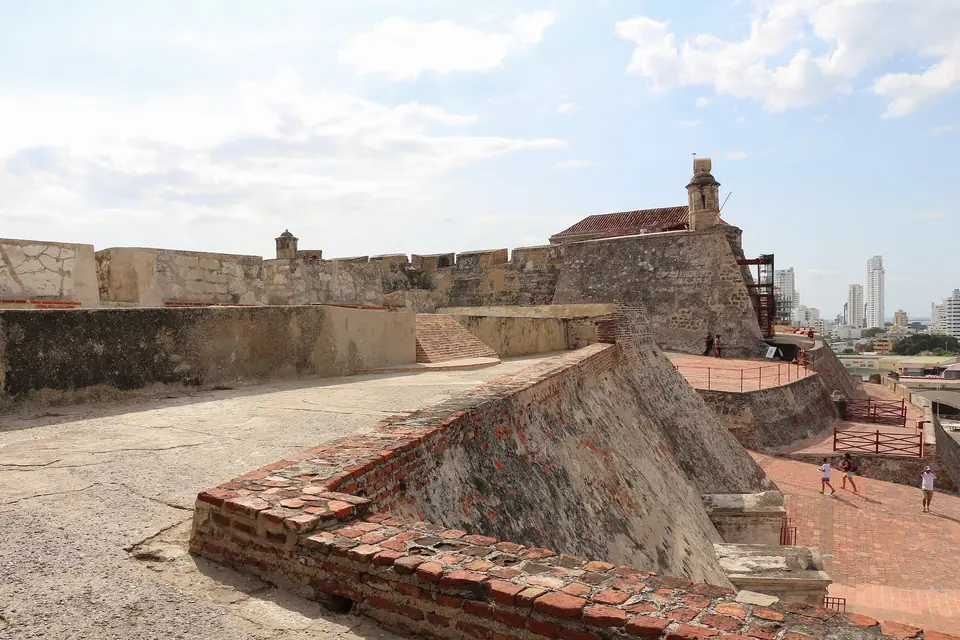
Day 2: Castillo San Felipe, Cerro de la Popa, and Getsemaní
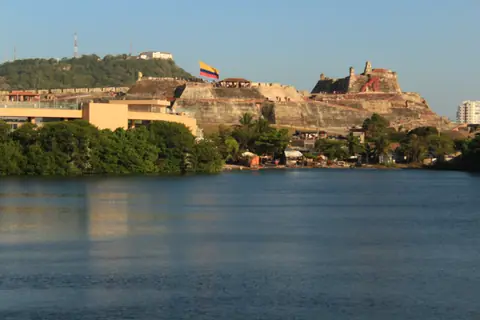
Dedicate the second morning to military engineering outside the city gates. Head east across the bridge to Castillo San Felipe de Barajas, perched atop San Lázaro Hill. Built by the Spanish crown to defend the primary harbour approach, the complex features eight artillery batteries and an intricate maze of underground tunnels designed to trap invaders. Arriving early lets you explore the open brick ramps before stone surfaces absorb full solar radiation.
From the fortress base, take transport up the winding road to the Augustinian Convent of Santa Cruz de la Popa. Founded in 1607, the convent sits at an elevation of 150 metres, which marks the highest geographic point in Cartagena. The flower-lined interior cloister provides quiet spaces, while the perimeter terrace offers unobstructed vistas over the inner bay, the old centre, and the modern towers of Bocagrande. Consult the dedicated Castillo San Felipe and Cerro de la Popa guide for routing specifics.
Descend to the historic suburb of Getsemaní as afternoon temperatures peak. Walk through Parque del Centenario, where sloths and iguanas frequently rest in the canopy. Continue through Calle de la Media Luna and Calle de la Sierpe, noting local murals that illustrate civic independence. Conclude your evening at Plaza de la Trinidad, where neighbourhood life gathers around food carts and street musicians outside the seventeenth-century parish church. You can plan your evening using our Getsemaní and Plaza de la Trinidad guide.
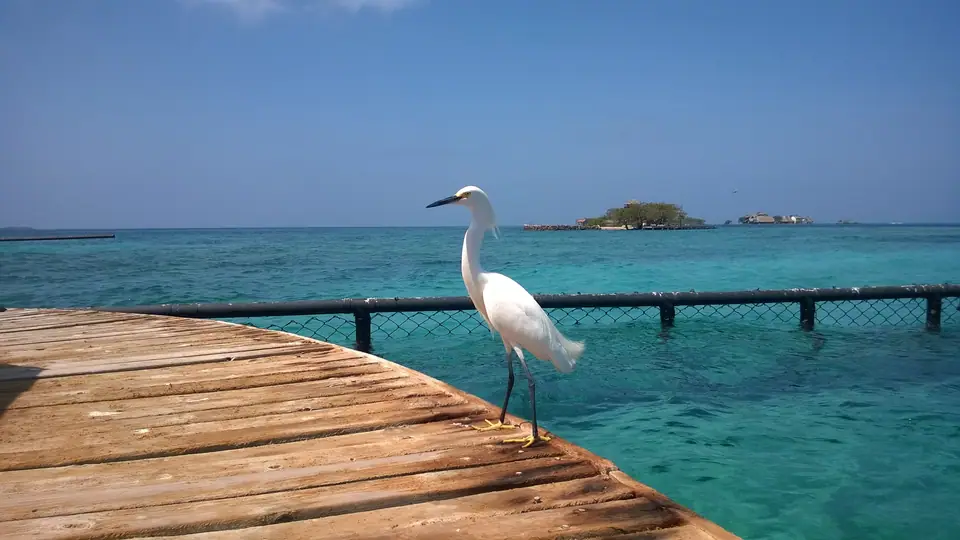
Day 3: Rosario Islands, Isla Barú, and Maritime Waterfronts
The final day centres on the Caribbean marine ecosystem. Board an authorised morning boat at Muelle de la Bodeguita to transit Cartagena Bay. As the vessel leaves the harbour mouth, look out for the eighteenth-century guardian fortifications of San Fernando and San José located at Bocachica. The journey continues toward the protected waters of Parque Nacional Natural Corales del Rosario, situated approximately thirty kilometres southwest of the bay.
The national park protects extensive shallow coral reefs, seagrass plains, and mangrove channels. Spend the morning snorkelling over reef formations or touring the coastal lagoons of Isla Grande. Later, cruise toward the white sand shoreline of Playa Blanca on the Barú Peninsula. Check our full guide to the Rosario Islands and Isla Barú to prepare for marine transfer procedures, park entry regulations, and environmental guidelines.
Return to the city pier by mid-afternoon before open sea conditions roughen under trade winds. Spend your remaining daylight walking the bayside promenades of Castillogrande or Manga. Both waterfront districts offer wide footpaths beneath palm trees, providing views of anchored sailboats against the colonial skyline.
Three-Day Cartagena Itinerary Overview
| Day | Primary Focus | Key Sights and Monuments | Recommended Time of Day |
|---|---|---|---|
| Day 1 | Walled City: Centro and San Diego | Torre del Reloj, Cathedral, Palace of the Inquisition, Las Bóvedas, Baluarte de Santo Domingo | Early morning walk; indoor museums midday; ramparts at sunset |
| Day 2 | Colonial Fortresses and Getsemaní | Castillo San Felipe de Barajas, Cerro de la Popa, Parque del Centenario, Plaza de la Trinidad | Morning climbs for hills; shaded park and mural streets late afternoon |
| Day 3 | Maritime Defences and Coral Islands | Bocachica Forts, Corales del Rosario National Park, Playa Blanca, Manga waterfront | Early morning departure by boat; late afternoon bayside promenade |
Practical Execution and Daily Timing
High temperatures require strict scheduling. Between December and April, Cartagena receives negligible rainfall, recording 0 to 14 millimetres monthly, accompanied by vigorous coastal breezes. Wet conditions increase from May to November, peaking in October with 84 millimetres across 12 wet days. Rain frequently arrives in short, intense afternoon downpours rather than persistent day-long storms.
Always verify opening hours and entry procedures on official institutional sites before arriving at historic monuments, as national holidays and preservation works periodically alter access. Carry adequate drinking water during fortress walks, and confirm boat schedules at the Muelle de la Bodeguita terminal before departure to ensure prompt island transfers.
Where it is
- 1Cartagena
- Rafael Nuñez International Airport (CTG) · about 5 km from Cartagena in a straight line
- Directions in Google Maps
Stations and taxi ranks: OpenStreetMap. Airports: OurAirports. Distances are in a straight line.
Traveller tips
Real advice from people who have been to Cartagena. Every tip is read by our team before it goes live.
No tips yet. Been here? Yours could be the first.
Thank you! Your tip will appear here after a quick review.
More in Cartagena
Continue exploring Cartagena with related neighbourhood, food, and planning guides
Cartagena: Historic Quarters, Climate and City Navigation
Cartagena, Colombia
Things to Do in Cartagena: Fortresses, Plazas and Coral Islands
Cartagena, Colombia

How to Get to Cartagena: Rafael Núñez Airport, Buses and Port
Cartagena, Colombia
Best Time to Visit Cartagena: Trade Winds, Rain and Festivals
Cartagena, Colombia
