Photo: © Dr. Thomas Liptak
Where to Stay in Cartagena: Historic Quarters and Coastal Strips
Strategic neighbourhood guide to Cartagena: compare historic boutique mansions in Centro and San Diego with lively Getsemaní lanes and beachfront Bocagrande towers.
Selecting where to base yourself in Cartagena de Indias shapes daily transport routines, street noise levels, and immediate access to dining. The primary tourist districts cluster into distinct micro-zones. These range from thick stone ramparts built centuries ago to modern coastal skyscrapers facing the open Caribbean Sea. Travellers can balance historic character against seaside resort amenities by evaluating each district before reserving accommodation.
Centro: Monumental Plazas and Restored Palaces
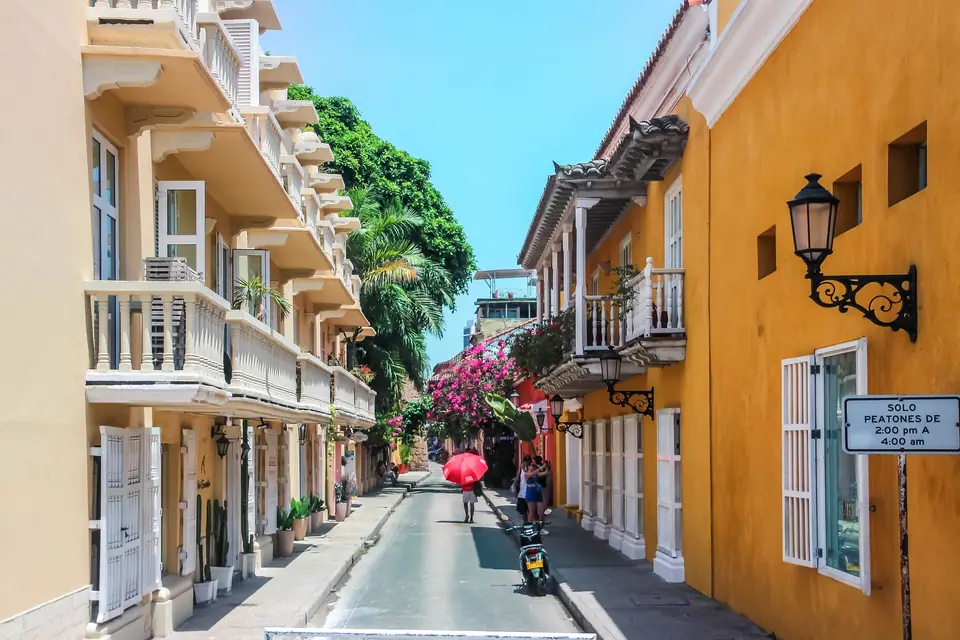
Centro forms the southwestern core of the fortified perimeter. Spanish royal governors, wealthy maritime merchants, and noble families originally constructed grand two- and three-storey stone mansions across these blocks. Bounded by the Torre del Reloj, the Baluarte de Santo Domingo, and Plaza de Bolívar, the district places guests right next to the most celebrated civic architecture.
Many heritage properties now operate as intimate boutique hotels. High beamed ceilings help disperse daytime heat, while central interior arcades shelter palm-filled courtyards and small plunge pools. Rooftop terraces often incorporate mirador towers originally built to spot incoming merchant fleets across the Caribbean. Staying in Centro eliminates the need for taxis when touring museums or dining at fine restaurants. Street corners remain lively late into the evening, which brings urban foot traffic close to ground-floor windows.
San Diego: Convent Architecture and Quieter Lanes
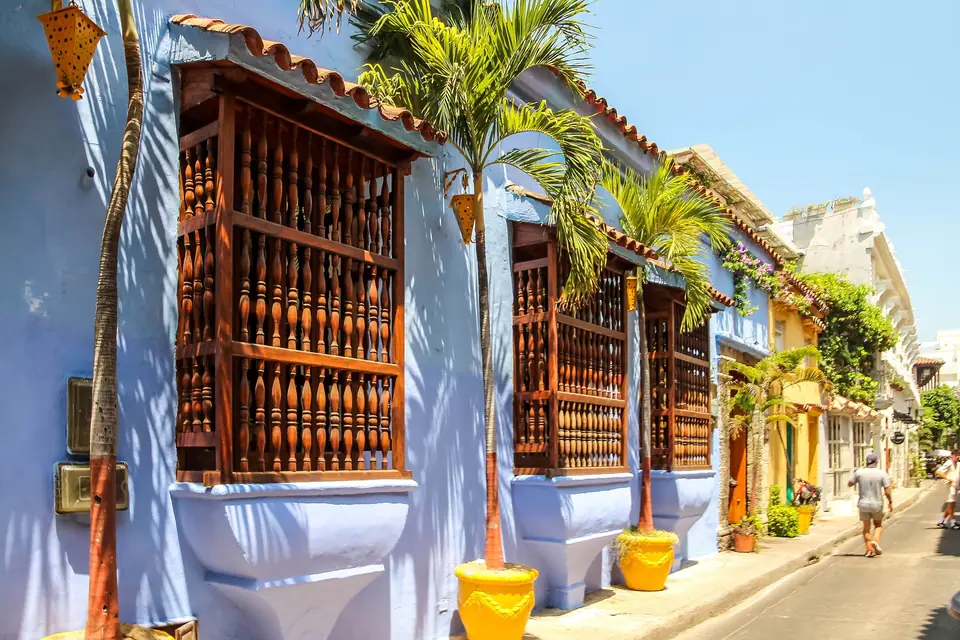
Directly northeast of Centro within the continuous ring of ramparts lies San Diego. This quarter presents a calmer residential environment with narrower streets and fewer tour groups. Life centres on the tree-shaded Plaza de San Diego, which features open-air dining tables and colonial façades. The area draws its distinctive heritage from the former 1621 Convent of Santa Clara, which has been converted into a premier luxury hotel, and the neighbouring Fine Arts School.
Accommodations along Calle del Curato and Calle de los Siete Infantes provide peaceful courtyards behind heavy cedar doorways. Guests can reach the ramparts near Las Bóvedas in minutes on foot. Because traffic is restricted through several narrow alleys, San Diego tends to be quieter at night than Centro while retaining total walkability across the historic quarter.
Getsemaní: Artisan Heritage and Creative Guesthouses
Situated just outside the southern ramparts across Parque del Centenario, Getsemaní is the historic artisan quarter. Centred around Plaza de la Trinidad, this neighbourhood features traditional single-storey row houses painted in brilliant pastel shades. Streets such as Calle de la Sierpe and Calle del Guerrero display vivid public murals and decorative hanging flags.
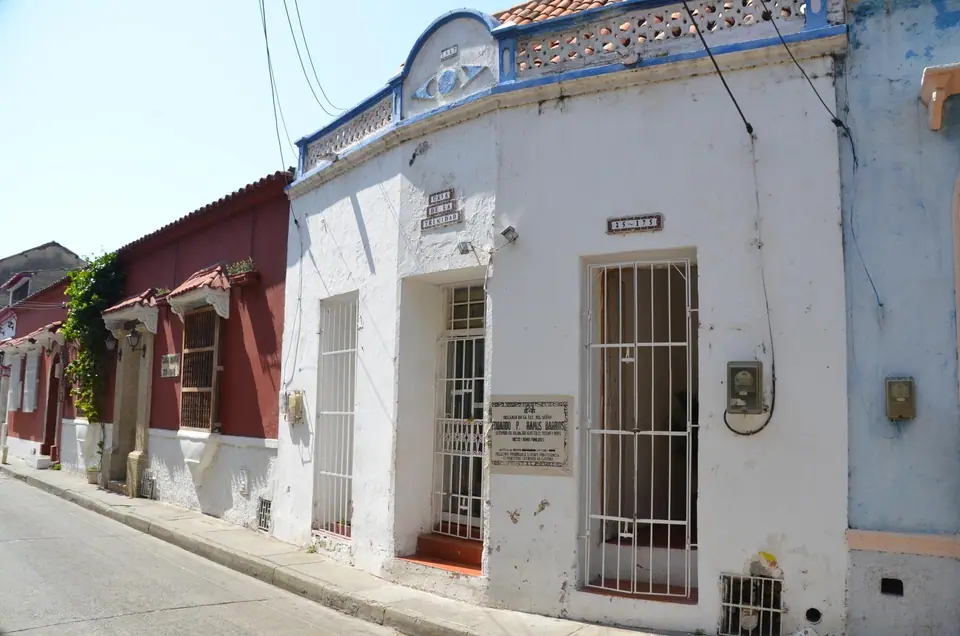
Accommodations here include creative guesthouses, converted row houses, and design-focused boutique lodgings. Rooms often open onto compact courtyards filled with tropical plants. Evenings bring spontaneous street performances, food carts, and social gatherings on the square outside the parish church. The district offers authentic street life, though bedrooms facing main thoroughfares can experience persistent music late at night. Choosing a room with an interior window ensures uninterrupted rest.
Bocagrande, Castillogrande, and El Laguito: Modern Oceanfront High-Rises
South of the walled city lies a slender peninsula dividing the open Caribbean Sea from Cartagena Bay. Bocagrande, Castillogrande and Manga form the primary modern commercial and residential strip. Avenida San Martín and Carrera 1 run parallel down the sand spit, lined with high-rise towers, international chain hotels, and shopping malls. The 202-metre Hotel Estelar tower at Plaza Bocagrande serves as a prominent landmark on the skyline.
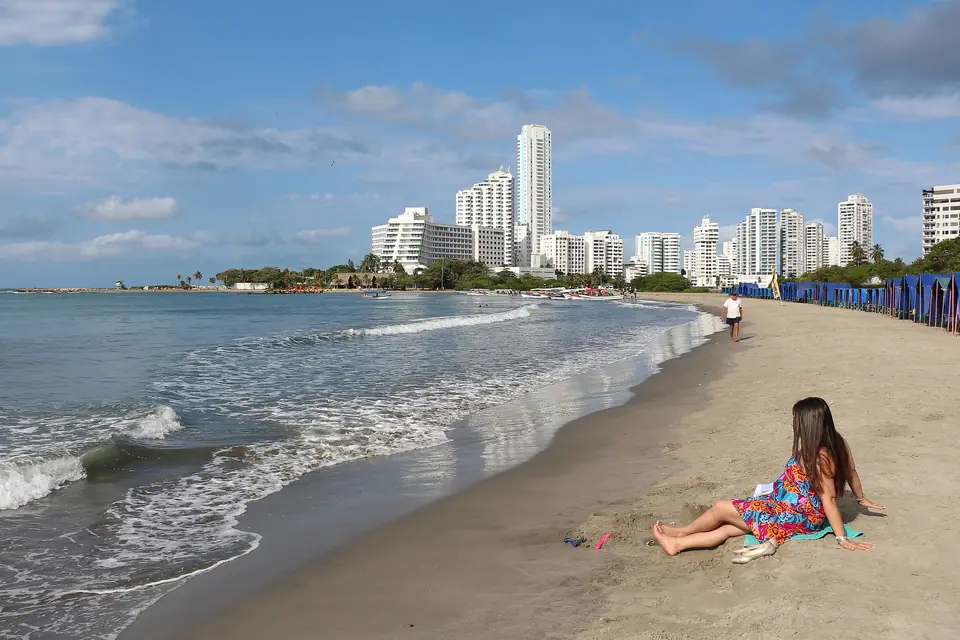
This peninsula suits travellers seeking spacious contemporary rooms, large swimming pools, fitness centres, and direct beach access. Sea breezes help temper the midday warmth along the seafront promenade. Taxis connect the peninsula to the historic centre in roughly ten to fifteen minutes depending on traffic. Castillogrande sits farther south near the mouth of the bay, providing quiet residential surroundings and water taxi departures across to regional beaches.
Manga and Crespo: Low-Density Residential Alternatives
For a complete break from resort corridors and tourist crowds, two peripheral neighbourhoods offer distinct alternatives. Manga is a peaceful residential island located directly across the Puente Román from Getsemaní. The neighbourhood is known for ornate early-twentieth-century Republican villas, private yacht marinas, and the historic Fort of San Sebastián del Pastelillo. Staying in Manga provides quiet avenues and waterfront promenades overlooking the bay, situated a short taxi journey from the walled core.
North of the city near Rafael Núñez Airport lies Crespo. This coastal neighbourhood features casual local guesthouses and practical short-stay hotels. It serves travellers with early morning flights or those seeking uncomplicated access to the northern coastal highway heading toward regional excursion points.
Neighbourhood Comparison for Strategic Base Selection
| Neighbourhood | Primary Atmosphere | Accommodation Style | Key Advantage | Main Consideration |
|---|---|---|---|---|
| Centro | Historic and grand | Restored colonial mansions | Total walkability to landmarks | Higher noise on busy plazas |
| San Diego | Charming and relaxed | Former convents and boutique hotels | Quiet lanes within the ramparts | Premium nightly room rates |
| Getsemaní | Artistic and social | Converted row houses and creative inns | Lively street life and dining | Late evening musical noise |
| Bocagrande | Modern coastal resort | Beachfront high-rise hotel towers | Large pools and ocean views | Requires short taxi to old town |
| Manga | Subdued residential | Republican villas and guest apartments | Peaceful marinas and bay views | Limited tourist dining options |
Seasonal Weather and Accommodation Planning
Cartagena experiences uniform tropical temperatures throughout the year. Daytime maximum temperatures average between 31.1°C in January and 32.3°C in June. Nighttime lows remain balmy, varying between 24.0°C in winter and 26.1°C in early summer. Air conditioning and well-ventilated courtyards are essential features for comfortable rest regardless of the month.
Precipitation patterns dictate how you use hotel facilities. The dry season runs from January through March, recording 0 millimetres of rainfall and zero wet days across historical observations. This period brings constant sunshine and northeast trade winds, making open rooftop miradors and outdoor dining courtyards very pleasant. May through November sees higher humidity and regular convective rain, peaking in October with 84 millimetres across 12 wet days. During these wetter months, hotels with covered interior patios and spacious lounge rooms provide welcome retreats during passing tropical downpours.
Practical Arrival and Booking Guidance
Travellers arriving via Rafael Núñez Airport can reach Centro, San Diego, or Getsemaní in roughly fifteen minutes by airport taxi. Authorised taxi counters inside the arrivals terminal calculate fixed fares by destination zone, preventing fare confusion on arrival.
Historic properties inside Centro and San Diego possess strict structural limits due to protected heritage laws. Rooms vary widely in layout, window placement, and ceiling height within the same building. If natural daylight or an exterior window is vital for your comfort, verify the specific room configuration before confirming your booking. Properties in Bocagrande provide standardized layouts, elevators, and full accessibility, making them practical for guests with mobility challenges.
Where it is
- 1Cartagena
- Rafael Nuñez International Airport (CTG) · about 5 km from Cartagena in a straight line
- Directions in Google Maps
Stations and taxi ranks: OpenStreetMap. Airports: OurAirports. Distances are in a straight line.
Traveller tips
Real advice from people who have been to Cartagena. Every tip is read by our team before it goes live.
No tips yet. Been here? Yours could be the first.
Thank you! Your tip will appear here after a quick review.
More in Cartagena
Continue exploring Cartagena with related neighbourhood, food, and planning guides
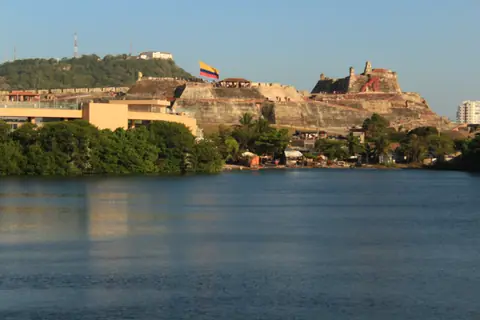
Best Time to Visit Cartagena: Trade Winds, Rain and Festivals
Cartagena, Colombia
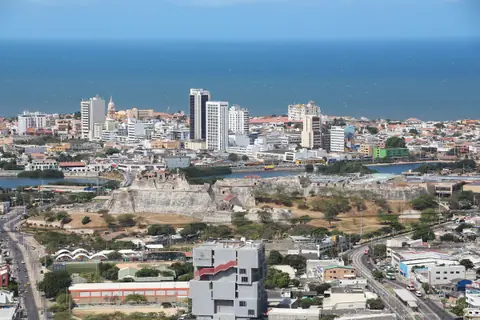
3-Day Cartagena Itinerary: Walled City, Fortresses and Islands
Cartagena, Colombia

What to Eat in Cartagena: Arepa de Huevo, Coconut Rice and Seafood
Cartagena, Colombia
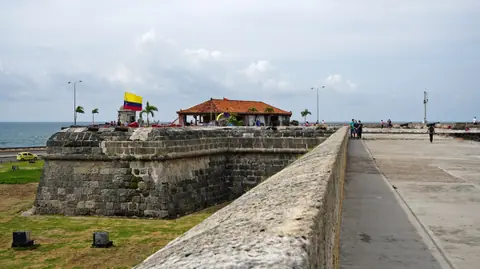
Walled City of Cartagena: Las Murallas, Clock Tower and Las Bóvedas
Cartagena, Colombia
