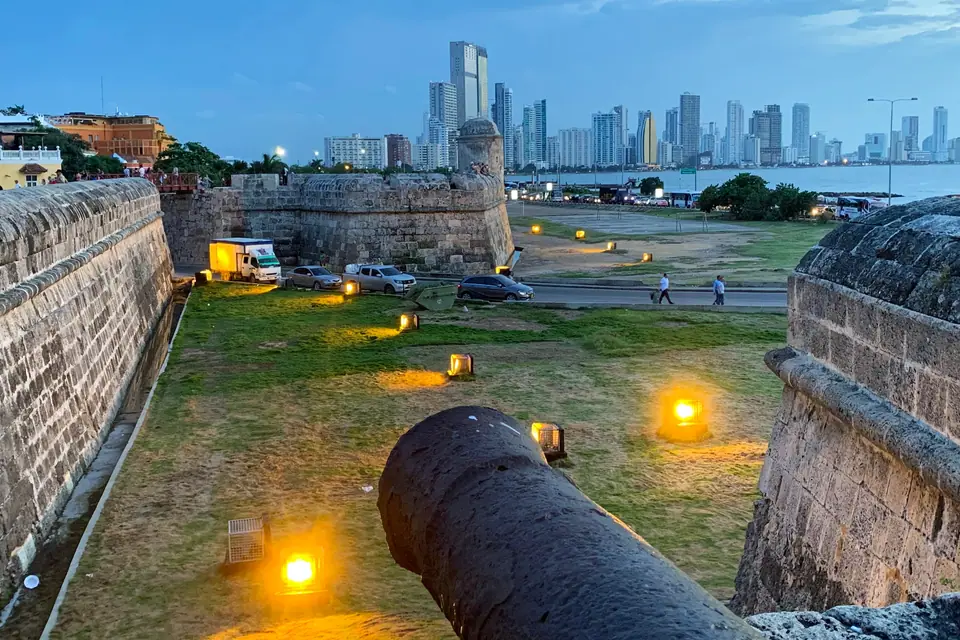
Photo: Mariordo (Mario Roberto Durán Ortiz)
Things to Do in Cartagena: Fortresses, Plazas and Coral Islands
Plan your days across Cartagena, from traversing the historic ramparts of Las Murallas and the tunnels of Castillo San Felipe to exploring colonial plazas and offshore coral reefs.
Few coastal cities in the Americas preserve the architectural weight of the colonial Spanish Caribbean as thoroughly as Cartagena de Indias. Travellers who divide their days between defensive stonework, quiet shaded squares and maritime excursions encounter a remarkably unified historic landscape.
Walk the 11-Kilometre Circuit of Las Murallas and Las Bóvedas
Begin your orientation along the wide coral-limestone ramparts of Las Murallas and the Torre del Reloj. Designed by military engineers Bautista Antonelli, Cristóbal de Roda and Antonio de Arévalo, these fortifications took over two centuries to complete, finishing in 1796. The thick parapets connect major bastions such as the Baluarte de Santo Domingo, Baluarte de San Ignacio and Baluarte de Santa Catalina. Walking the top provides expansive views across the Caribbean Sea and down into the historic core.
At the northern edge of the San Diego neighbourhood, the walls encompass Las Bóvedas. Built between 1789 and 1795 as bombproof munitions vaults and barracks, the structure features forty-seven neoclassical arches and twenty-three vaulted bays. Today, artisans use these cool brick recesses to sell woven textiles, hammocks and local crafts.
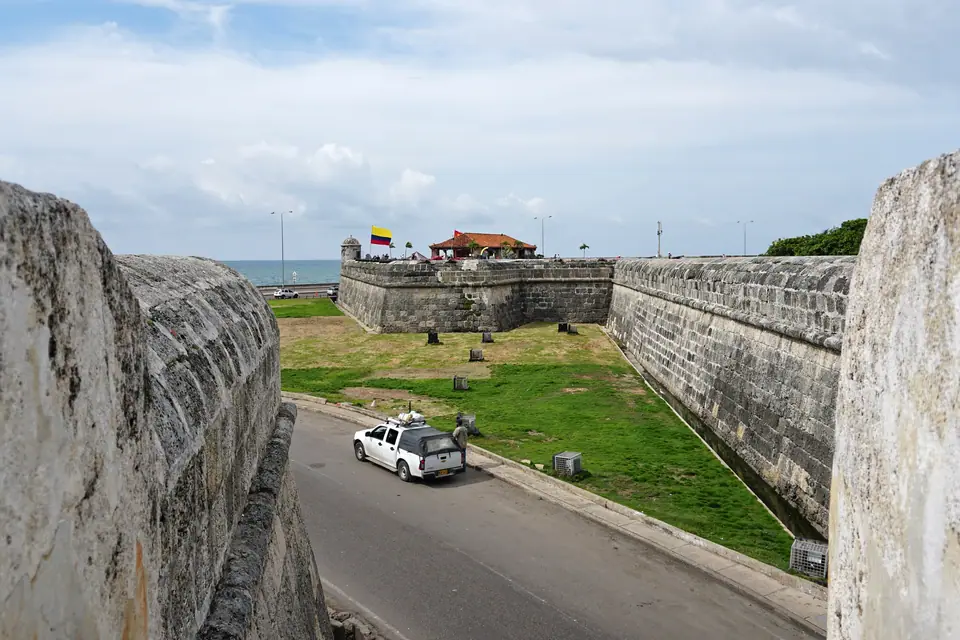
Explore Castillo San Felipe de Barajas on San Lázaro Hill
Positioned east of the old centre on the 41-metre crest of San Lázaro Hill, Castillo San Felipe de Barajas dominates the land approaches to the city. Initial work began in 1536, followed by substantial expansions between 1639 and 1657. In 1763, royal engineer Antonio de Arévalo added further exterior batteries, creating an interlocking defensive complex with complex subterranean galleries designed to transmit sound.
The fortress proved decisive between March and May 1741 during the War of Jenkins' Ear. Spanish Admiral Blas de Lezo commanded a small defending garrison that successfully repelled a massive British expedition led by Admiral Edward Vernon, which comprised 186 vessels and roughly 28,000 men. Visitors can navigate the dimly lit interior tunnels, inspect iron artillery emplacements and view the wider bay from the uppermost gun battery.
Tour Plaza de Bolívar, the Palace of the Inquisition and the Cathedral
At the centre of the walled precinct lies Plaza de Bolívar, the Palace of the Inquisition and Cartagena Cathedral. The Palace of the Inquisition, completed in 1770, displays an ornate Spanish Baroque stone portal enclosing a central courtyard. Its museum rooms present colonial trial archives, historical instruments and exhibits on regional civil history.
Across the paved square stands the Cathedral of Santa Catalina de Alejandría. Begun in 1577 under master builder Simón González, the church required reconstruction following English privateer Francis Drake's damaging artillery assault in 1586, reaching full completion in 1612. A short walk across the plaza brings you to the Museo del Oro Zenú, which exhibits intricate pre-Columbian gold filigree and ceramic collections created by the indigenous Zenú people from the surrounding river basins.
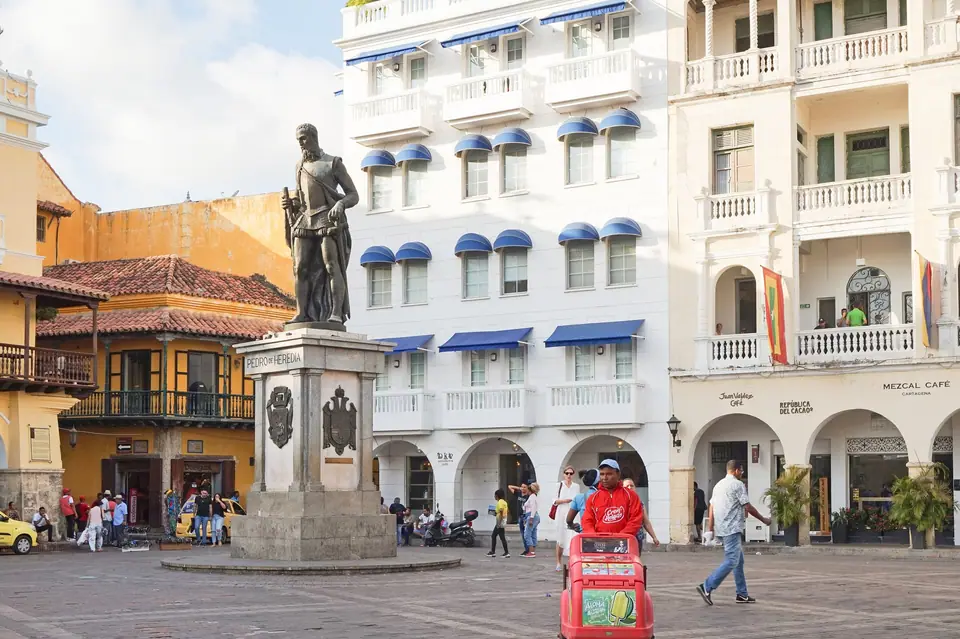
Wander the Street Art and Plazas of Getsemaní
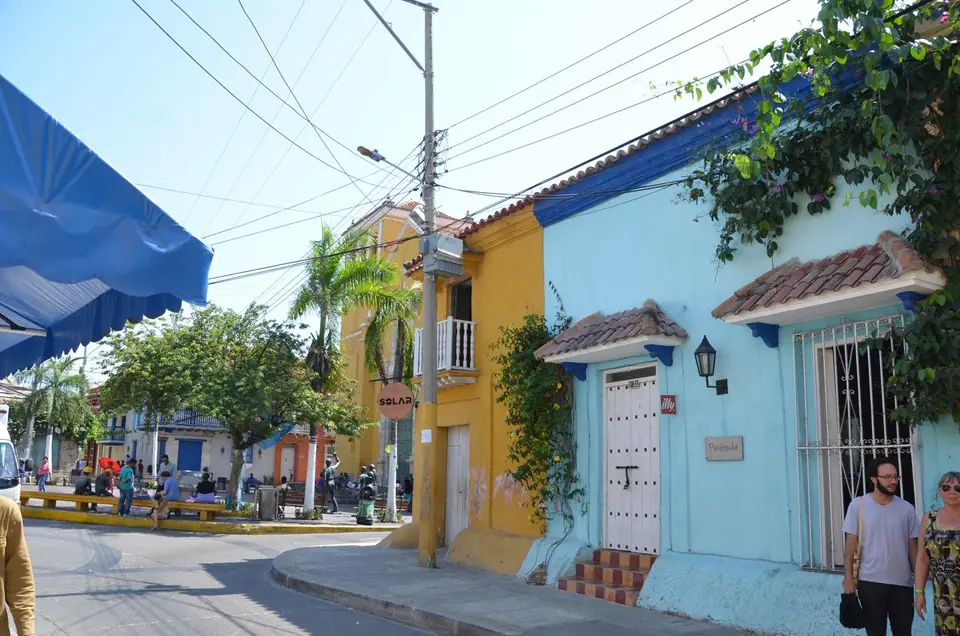
Cross the broad Camellón de los Mártires to enter the adjacent neighbourhood documented in our Getsemaní guide. Historically home to harbour craftsmen and free Afro-descendant citizens who initiated the local independence movement in 1811, Getsemaní maintains a residential rhythm across Calle de la Sierpe, Calle de San Juan and Calle de la Media Luna.
By late afternoon, domestic life gathers around Plaza de la Trinidad in front of the 17th-century church. Street artists paint large narrative murals on plaster walls, while food vendors prepare fresh regional snacks. The quarter offers an atmospheric contrast to the formal palaces of the inner walled sectors.
Sail to the Rosario Islands and Isla Barú
Beyond the urban fortifications, water transport departs daily from the Muelle de la Bodeguita toward the Parque Nacional Natural Corales del Rosario y de San Bernardo. This marine protected territory contains 28 coral islands covering approximately 120,000 hectares of shallow submerged reefs, seagrass beds and open Caribbean water.
Day boats motor across the bay toward remote coral cays and the white-sand peninsula of Isla Barú. Snorkellers observe brain coral, sea fans and tropical reef fish in clear offshore shallows. Plan maritime departures early in the morning, as open-water swells frequently rise across Cartagena Bay by mid-afternoon.
Cartagena Sightseeing Logistics
| Major Sight | Primary Focus | Recommended Timeframe | Practical Advice |
|---|---|---|---|
| Las Murallas and Las Bóvedas | Colonial stone ramparts and porticoes | Late afternoon or sunset | Wear rubber-soled shoes for uneven masonry surfaces. |
| Castillo San Felipe de Barajas | Military architecture and tunnel complex | Early morning hours | Exposed stonework reflects severe midday heat; carry drinking water. |
| Plaza de Bolívar Heritage Cluster | Baroque architecture, cathedral and pre-Columbian gold | Midday heat peak | Thick colonial stone walls provide shelter during warm hours. |
| Rosario Islands and Isla Barú | Coral reef snorkelling and coastal waters | Full single-day excursion | Board registered transport from Muelle de la Bodeguita early. |
Daily Heat and Movement Strategy
Cartagena experiences tropical temperatures year-round, with daytime highs consistently reaching between 31.1°C and 32.3°C. The dry season from January to March averages zero wet days, paired with fresh trade winds. Rainfall peaks between August and October, when October records 84 millimetres across 12 wet days. High humidity demands careful pacing regardless of the calendar month.
We recommend organising your daily movement around two distinct windows. Explore exposed elevations like Castillo San Felipe and open ramparts during the initial hours after daybreak. Retire to air-conditioned galleries or shaded arcades between midday and mid-afternoon. Re-emerge onto the perimeter ramparts when trade winds sweep the Caribbean waterfront before dusk.
Where it is
- 1Cartagena
- Rafael Nuñez International Airport (CTG) · about 5 km from Cartagena in a straight line
- Directions in Google Maps
Stations and taxi ranks: OpenStreetMap. Airports: OurAirports. Distances are in a straight line.
Traveller tips
Real advice from people who have been to Cartagena. Every tip is read by our team before it goes live.
No tips yet. Been here? Yours could be the first.
Thank you! Your tip will appear here after a quick review.
More in Cartagena
Continue exploring Cartagena with related neighbourhood, food, and planning guides
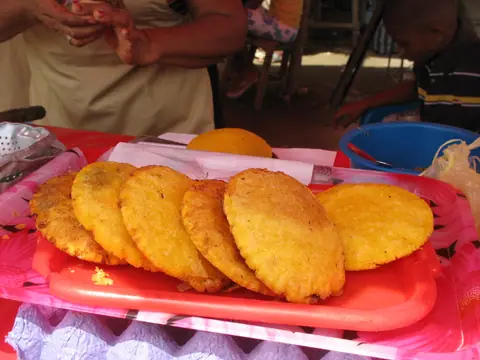
What to Eat in Cartagena: Arepa de Huevo, Coconut Rice and Seafood
Cartagena, Colombia
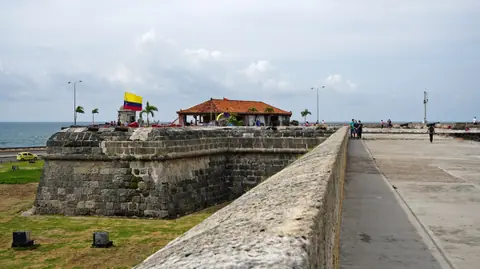
Walled City of Cartagena: Las Murallas, Clock Tower and Las Bóvedas
Cartagena, Colombia
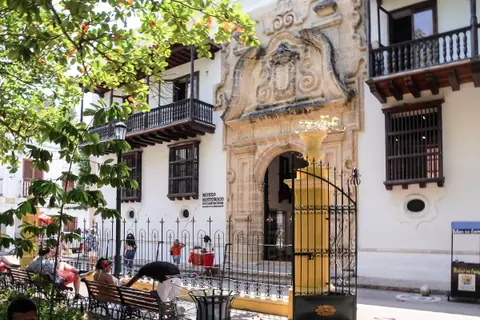
Plaza de Bolívar, Palace of the Inquisition and Cartagena Cathedral
Cartagena, Colombia
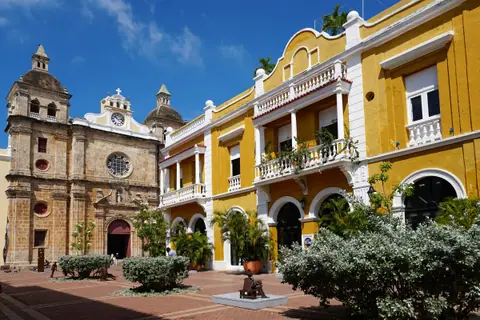
San Pedro Claver, Plaza de Santo Domingo and Colonial Plazas
Cartagena, Colombia
