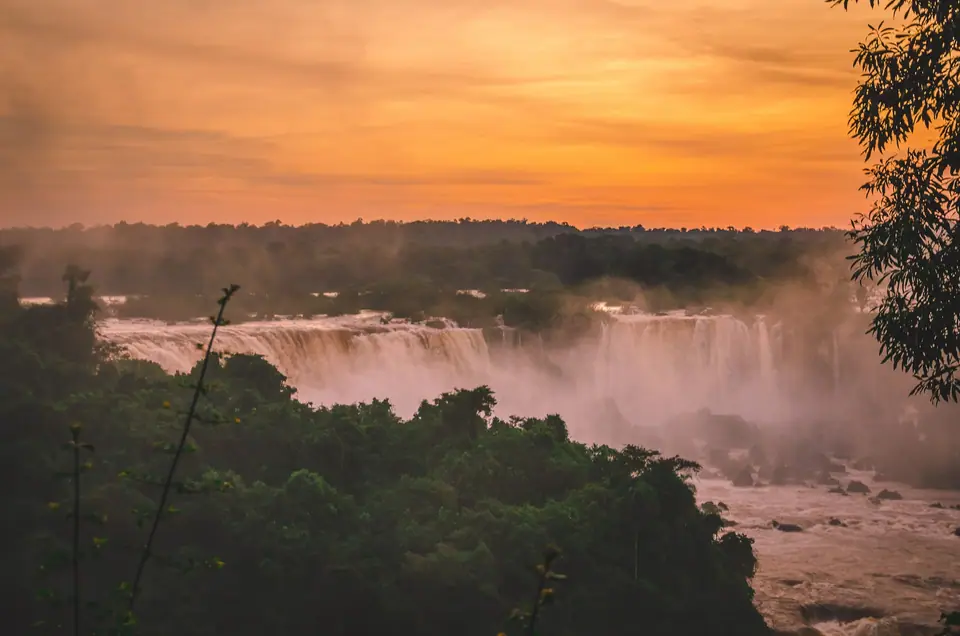
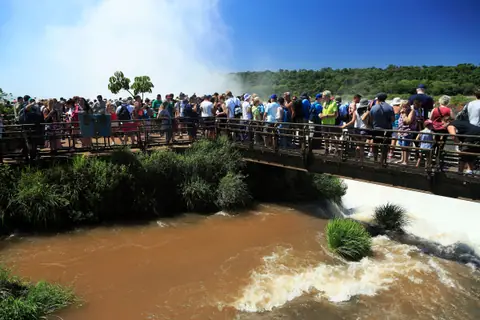
Photo: José Machado JR · CC BY-SA 4.0
Best Time to Visit Foz do Iguaçu: Waterfall Flow, Seasons and Full Moon Walks
Plan your trip to Foz do Iguaçu using verified meteorological data, seasonal waterfall volume patterns, and night walks under the full moon across the border.
Because the 1,320-kilometre-long Iguaçu River drains a vast subtropical watershed across Paraná and Santa Catarina states that receives precipitation throughout the year, the falls flow powerfully in every calendar month. Official meteorological records from Station 83827 at Foz do Iguaçu Aeroporto confirm a humid subtropical climate with warm summers and mild winters. The river maintains an average flow of approximately 1,500 cubic metres per second. Choosing the ideal travel period depends on whether you prioritise massive river discharge, crisp walking conditions on park catwalks, or optimal photography lighting for vivid rainbows.
March to May and August to October: Optimal Walking Comfort and Visibility
For most travellers, the two shoulder windows of March to May and August to October provide the most balanced park experience. These months combine manageable humidity, dependable river flow, and clear skies for landscape photography. High temperatures average 30.2°C in March, cooling steadily to 27.6°C in April and 23.8°C in May, accompanied by eight to nine wet days per month. Spring warms up at an equally measured pace, recording 25.4°C in August, 27.1°C in September, and 29.0°C in October.
During these transition periods, you bypass the intense midday heat and school holiday crowds of midsummer and midwinter. You can comfortably traverse the Brazilian catwalks at Iguaçu National Park without oppressive sun exposure. These clear autumn and spring afternoons generate optimal conditions for spotting vivid optical rainbows across the spray. These months also encourage lively wildlife encounters next door at Parque das Aves, where native toucans and macaws remain active throughout the temperate mornings.
December to February: High Water Discharge and Summer Storms
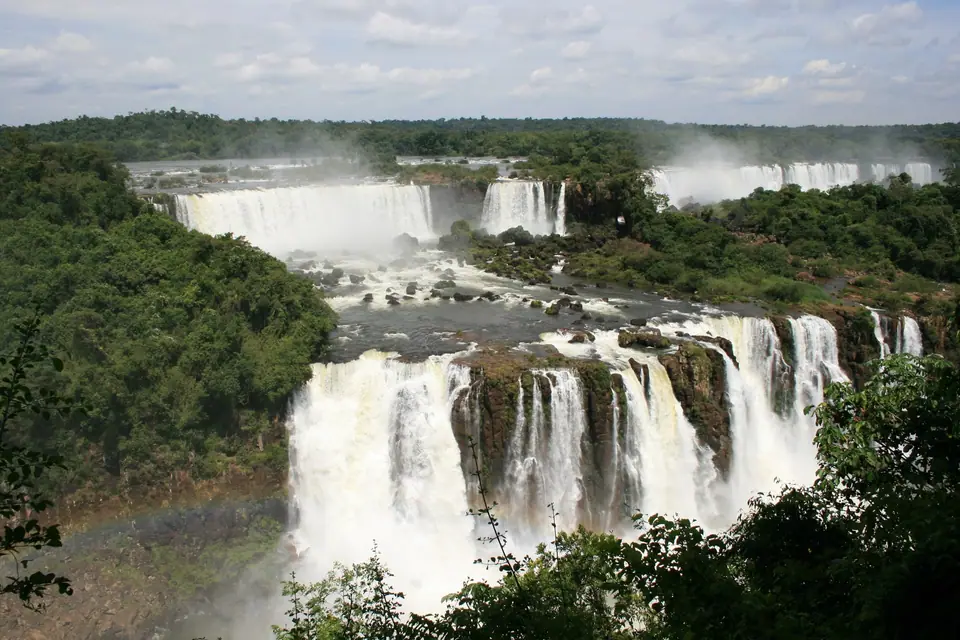
The austral summer brings the highest temperatures and the most dramatic waterfall volume of the year. Afternoon highs regularly reach 31.2°C to 31.5°C between December and February, with nighttime lows lingering around 20.8°C. Convective moisture yields 70 to 77 millimetres of rainfall across ten to eleven wet days monthly. These conditions fuel intense humidity and powerful late-afternoon downpours.
Substantial rainfall across the upper river basin swells the 275 distinct cascades into a unified, roaring wall of white water. The airborne mist rising from the gorge intensifies dramatically, saturating visitors on outer observation decks within seconds. This summer surge frequently prompts the operators of Itaipu Dam to open their massive spillway gates, offering an additional spectacle of civil engineering power. Visitors travelling in summer should bring quick-drying technical clothing, waterproof dry bags for electronics, and strong insect repellent for forest trails.
June to August: Crisp Skies and Minimal Rainfall
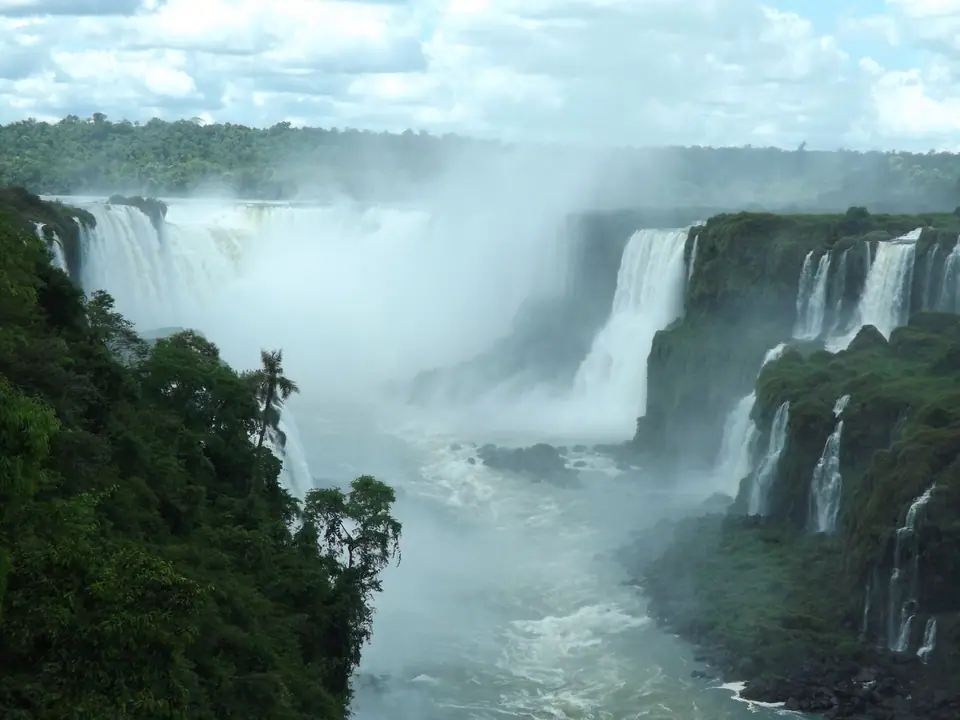
Winter in the subtropical interior of Paraná offers the coolest and driest weather of the calendar. High temperatures hover between 22.4°C and 25.4°C from June through August, while early morning lows drop to 12.1°C in July and 13.5°C in August. Rainfall reaches its annual minimum in August, which registers only 42 millimetres across six wet days.
These cool, sunny conditions make winter exceptionally pleasant for extended hiking across the Upper and Lower Circuits of Iguazú Falls on the Argentine side. The reduced atmospheric humidity expands visibility across the canyon, allowing photographers to capture distinct, individual rock ledges and discrete river braids. While daytime walking feels crisp and energising, early departures require a light fleece jacket or windbreaker. River discharge remains substantial due to the steady base flow of the river basin, ensuring excellent sightseeing without summer heat exhaustion.

Seasonal Weather and River Discharge Comparison
The following climate table outlines monthly temperature normals, precipitation metrics, and seasonal waterfall characteristics recorded at the local aerodrome station.
| Season | Months | Average High / Low | Rainfall and Wet Days | Waterfall Profile |
|---|---|---|---|---|
| Austral Autumn | March to May | 23.8°C to 30.2°C / 13.9°C to 19.6°C | 56 to 63 mm, 8 to 9 days | Balanced flow, clear air, vivid rainbows |
| Austral Winter | June to August | 22.4°C to 25.4°C / 12.1°C to 13.5°C | 42 to 56 mm, 6 to 7 days | Crisp visibility, distinct cascades, mild walking |
| Austral Spring | September to November | 27.1°C to 30.3°C / 15.3°C to 19.0°C | 56 to 70 mm, 8 to 10 days | Rising water volume, active birdlife, warming days |
| Austral Summer | December to February | 31.2°C to 31.5°C / 20.4°C to 20.9°C | 70 to 77 mm, 10 to 11 days | Peak discharge, heavy spray, tropical downpours |
Passeio de Lua Cheia: Planning Around the Lunar Rainbow
Beyond traditional daytime sightseeing, timing your arrival around the lunar cycle unlocks one of the region's rarest natural phenomena. Both park authorities organise specialized evening excursions known as the Passeio de Lua Cheia in Brazil and the Caminata de Luna Llena in Argentina. These outings run across five consecutive nights around each astronomical full moon.
When bright moonlight strikes the dense spray rising from the chasm, it produces an ethereal lunar rainbow, or arco-íris lunar, arching through the dark forest canopy. Operating nights depend directly on lunar phases and cloud cover, while ticket reservations must be secured well in advance through the official park administration websites. Aligning your travel dates with these monthly moon cycles adds an exceptional nocturnal dimension to your waterfall itinerary.
Weather by month
Foz do Iguaçu is warmest in January, with average highs around 32°C, and coldest in July, when nights drop to about 12°C. January is the wettest month by rainfall (77 mm), with rain on about 11 days. For mild weather with fewer rainy days, aim for May, June, July and August.
| Month | Low | Range | High | Rain | Rainy days |
|---|---|---|---|---|---|
| Jan | 21°C | 32°C | 77 mm | 11 d | |
| Feb | 21°C | 31°C | 70 mm | 10 d | |
| Mar | 20°C | 30°C | 63 mm | 9 d | |
| Apr | 17°C | 28°C | 56 mm | 8 d | |
| May | 14°C | 24°C | 56 mm | 8 d | |
| Jun | 13°C | 22°C | 56 mm | 8 d | |
| Jul | 12°C | 23°C | 49 mm | 7 d | |
| Aug | 14°C | 25°C | 42 mm | 6 d | |
| Sep | 15°C | 27°C | 56 mm | 8 d | |
| Oct | 18°C | 29°C | 70 mm | 10 d | |
| Nov | 19°C | 30°C | 63 mm | 9 d | |
| Dec | 20°C | 31°C | 70 mm | 10 d |
Averages of daily values from 2015 to 2024. Rainy days are days with at least 1 mm of rain. Source: Open-Meteo · Compare destinations by month.
Where it is
- 1Foz do Iguaçu
- Cataratas International Airport (IGU) · about 13 km from Foz do Iguaçu in a straight line
- Directions in Google Maps
Stations and taxi ranks: OpenStreetMap. Airports: OurAirports. Distances are in a straight line.
Traveller tips
Real advice from people who have been to Foz do Iguaçu. Every tip is read by our team before it goes live.
No tips yet. Been here? Yours could be the first.
Thank you! Your tip will appear here after a quick review.
More in Foz do Iguaçu
Continue exploring Foz do Iguaçu with related neighbourhood, food, and planning guides

3 Days in Foz do Iguaçu Itinerary: Brazilian Falls, Argentine Side and Itaipu Dam
Foz do Iguaçu, Brazil

What to Eat in Foz do Iguaçu: Dourado, Surubim, Picanha Churrasco and Chipa
Foz do Iguaçu, Brazil
Iguaçu National Park (Brazilian Side), Garganta do Diabo and Macuco Safari Guide
Foz do Iguaçu, Brazil
Argentine Side of Iguazú Falls Day Trip: Upper, Lower and Devil's Throat Circuits
Foz do Iguaçu, Brazil
