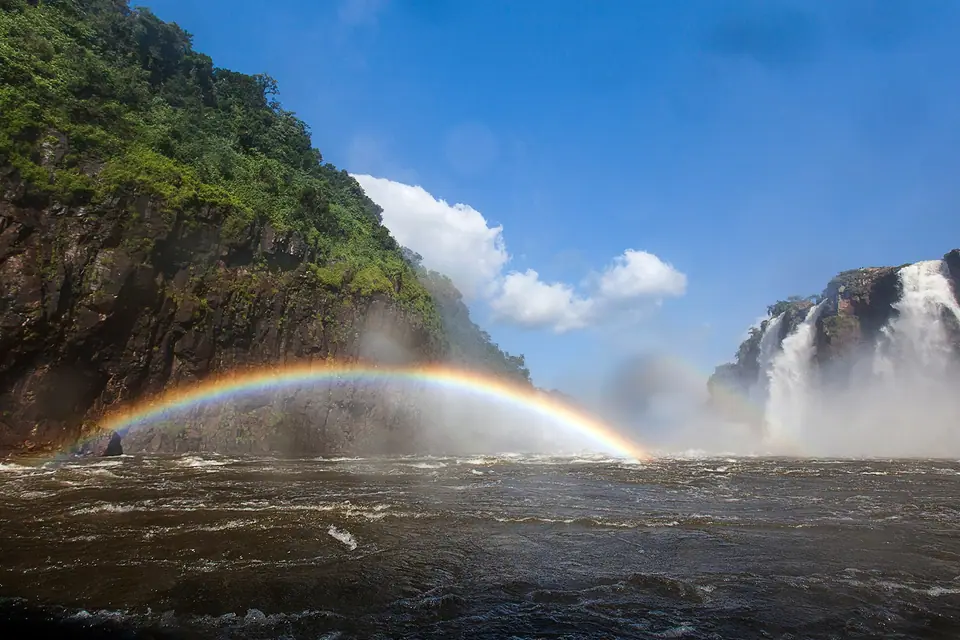
Photo: JLGuillon · CC BY-SA 4.0
Things to Do in Foz do Iguaçu: Waterfalls, Wildlife and Engineering Wonders
Plan your trip to Foz do Iguaçu with this guide to the Brazilian waterfalls, Parque das Aves, Itaipu Binacional, Argentine trails, and border viewpoints.
While the thunder of 275 individual cascades draws travellers from around the globe, Foz do Iguaçu is surrounded by 185,000 hectares of subtropical Atlantic Forest, immense civil engineering projects, and a tri-national river confluence. You can encounter toucans at tree level, stand directly in the cloud of river mist, and watch ships navigate between sovereign nations in a single journey. Connecting these core highlights ensures you experience the landscape from panoramic cliff viewpoints down to river level. Travellers can organise their schedule using our 3-day Foz do Iguaçu itinerary.
Walk the Brazilian Falls Trail to Garganta do Diabo
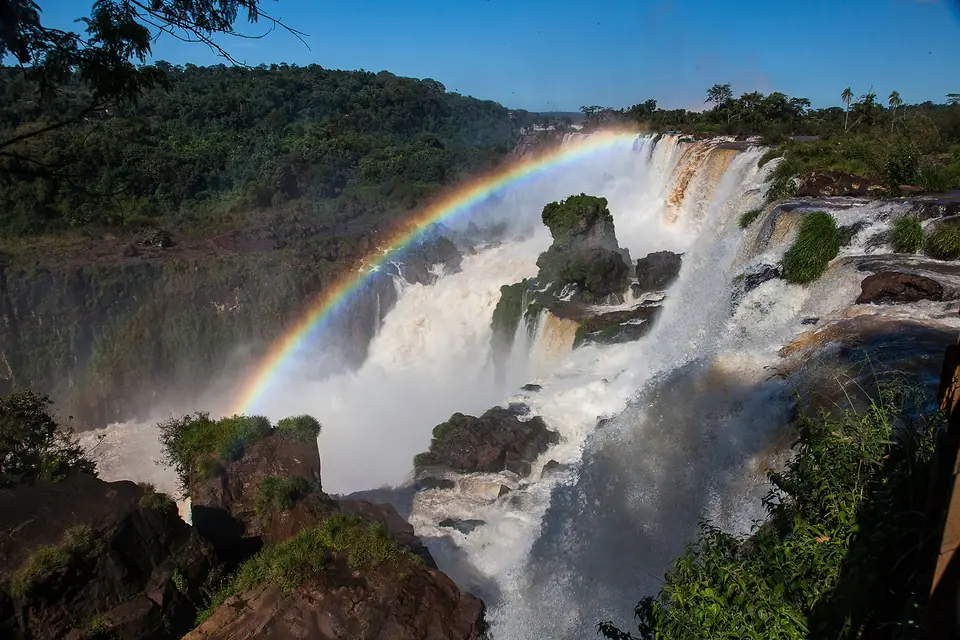
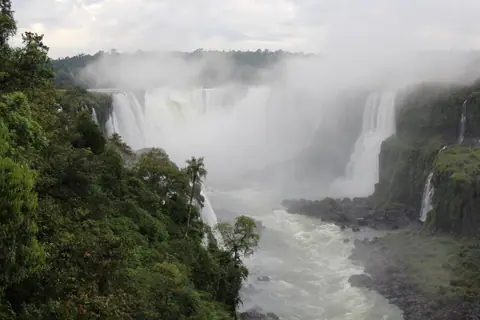
Your journey inside Parque Nacional do Iguaçu begins at the visitor centre, where open-top double-decker buses carry visitors past native subtropical woodland to the trail entrance opposite Hotel das Cataratas. The 1.5-kilometre paved walking track descends gently along the rim of the canyon, delivering sweeping panoramic views over the Argentine side across the river. You will spot San Martín Island, the leaping waters of Bossetti Falls, and the stepped drops of Floriano, Deodoro, and Benjamin Constant waterfalls framed by dense rainforest foliage.
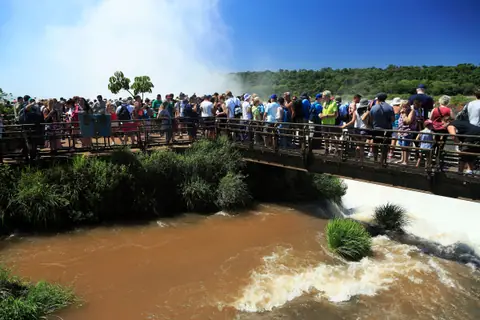
The path culminates at a long metal walkway constructed directly over the churning lower Iguaçu River. Walking across this suspended bridge takes you directly into the amphitheatre of Garganta do Diabo, an 82-metre chasm that produces perpetual spray and vivid double rainbows. Water vapour fills the air, so packing a water-resistant jacket and a secure pouch for your electronics is essential. An elevator tower ascends from the lower platform to the upper rim, giving you a top-down view across the boiling crest of Floriano Falls.
Speedboat Rapids and Atlantic Forest Immersion at Parque das Aves
Adventurous travellers can book the Macuco Safari within the Brazilian park reserve. The activity starts with an open electric wagon journey through the subtropical canopy, guided by naturalists who point out wild orchids, hardwoods, and bromeliads. Visitors then walk down stairs to the river pier and board twin-engine rigid inflatable boats. The pilots navigate the rapids of the lower canyon up to the base of the Three Musketeers cascades, dousing everyone on board in river spray.
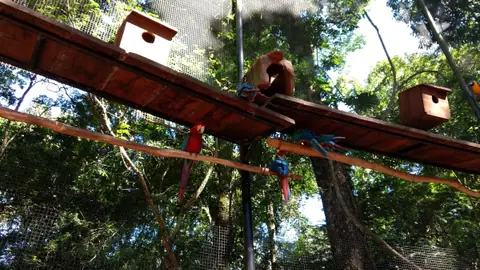
Directly opposite the national park gates sits Parque das Aves. Dennis and Anna Croukamp founded this dedicated avian rescue sanctuary in 1994, occupying 16.5 hectares of Atlantic Forest. The park cares for over 1,300 birds across 130 species, with a major focus on regional conservation. You walk through five enormous walk-through immersion aviaries, allowing toco toucans to hop across branches inches away from your head. Enclosures house scarlet ibises, hyacinth macaws, and the endangered harpy eagle, offering an unmatched wildlife photography experience before you return to town.
Cross to the Argentine Circuits of Parque Nacional Iguazú
No trip to the border region is complete without visiting the opposite bank of the river. A day trip into Parque Nacional Iguazú in Argentina lets you explore the cascades from intimate forest footpaths. The Argentine side contains roughly eighty percent of the waterfall system, organised across three distinct trail networks connected by the gas-propelled Ecological Jungle Train.
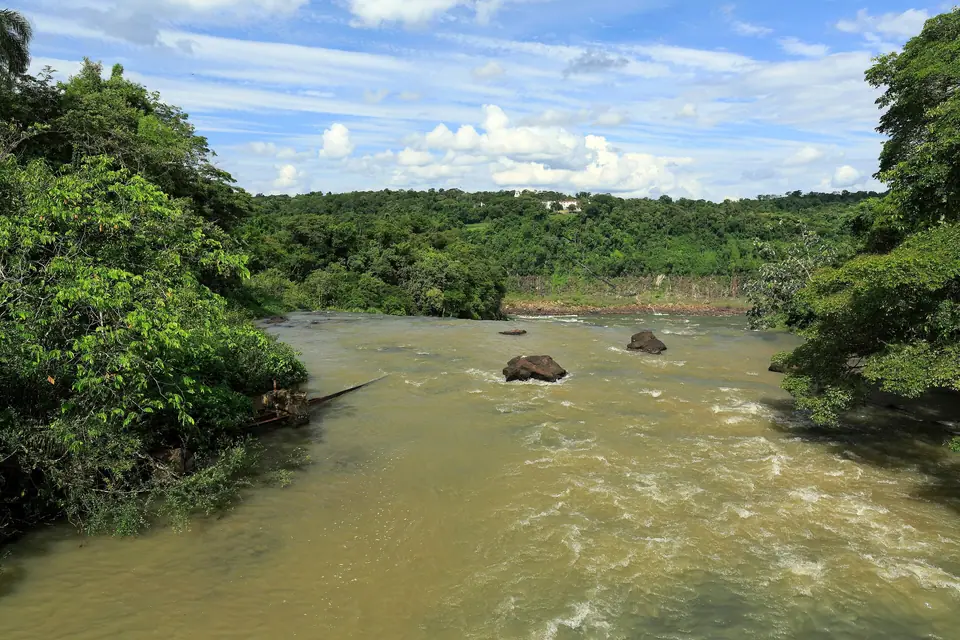
The Upper Circuit leads along elevated catwalks running directly across the top crest of the waterfalls, looking down into vertical drops where swifts nest in wet stone crags. The Lower Circuit plunges into the river canyon, providing views of Bossetti and the cascades opposite San Martín Island from below. Finally, the jungle train carries travellers to the Garganta del Diablo station, where a 1,100-metre boardwalk crosses the wide, tranquil upper river before terminating at the thunderous brink of the Devil's Throat.
| Circuit or Attraction | Primary Feature | Typical Perspective | Walking Terrain |
|---|---|---|---|
| Brazilian Falls Trail | Panoramic vistas across 275 falls | Sweeping wide-angle views | 1.5 km cliff path with steps |
| Brazilian Walkway | Lower base of Garganta do Diabo | Immersion in spray and rainbows | Level metal bridge over water |
| Argentine Upper Circuit | Balconies above falls drop-offs | Overhead crest perspective | Elevated flat steel grating |
| Argentine Lower Circuit | River canyon base viewpoints | Upward look at roaring torrents | Forested path with stair flights |
| Argentine Devil's Throat | Lip of the largest vertical chasm | Direct precipice observation | 1.1 km upper river footbridge |
Tour the Itaipu Binacional Hydroelectric Dam
North of the city centre, the Paraná River divides Brazil from Paraguay. Here, engineers constructed the massive Itaipu Binacional Hydroelectric Plant between 1975 and 1984. Spanning 7,919 metres across and rising 196 metres high, the hollow gravity concrete dam features 20 generator units with an installed capacity of 14,000 megawatts, generating massive shares of electricity for both partnering nations.
Open-sided buses take visitors across the crest of the dam wall, providing views of the Paraná reservoir on one side and the riverbed below. Guided tours include the central spillway, where massive white chutes discharge excess reservoir water during flood seasons. Visitors interested in ecology can pair the technical tour with the Bela Vista Biological Refuge, an animal sanctuary established on the reservoir shoreline to protect regional fauna displaced during the construction of the basin.
Watch Sunset at the Tri-Border River Confluence
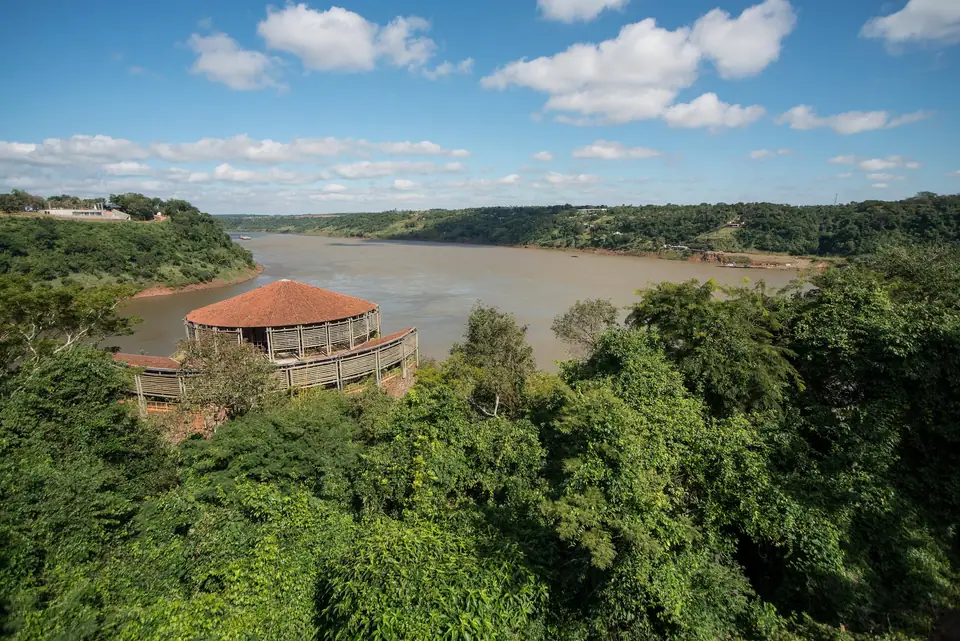
In the late afternoon, make your way south to Marco das Três Fronteiras. Established in 1903, this historic outpost marks the spot where the brown waters of the Iguaçu River flow into the Paraná River. Standing on the Brazilian shore, you gaze across the water at the riverbanks of Argentina and Paraguay.
The site features a stone obelisk painted in the green and yellow colours of Brazil, matching identical markers in blue and white across in Argentina and red, white, and blue across in Paraguay. The complex includes replica facades of Jesuit missions, walking promenades, and evening cultural performances celebrating folk music from all three nations. Sunset here paints the vast river surface in gold, presenting a peaceful finale to active days spent walking through subtropical spray.
Selecting Your Base and Seasonal Timing
Foz do Iguaçu experiences hot, humid summers, with January seeing average highs of 31.5°C, lows of 20.9°C, and 77 millimetres of rainfall over 11 wet days. Winter brings milder exploration weather, with July averaging 22.9°C during the day and dropping to 12.1°C at night across 49 millimetres of rain and 7 wet days. August features the lowest precipitation of the year at 42 millimetres over 6 wet days. Bring sturdy walking footwear, lightweight quick-drying layers, and high-factor sun cream throughout the year. Lodging along Avenida das Cataratas gives swift public bus access to both national parks and the international airport, while the central district provides easy proximity to diverse dining venues.
Where it is
- 1Foz do Iguaçu
- Cataratas International Airport (IGU) · about 13 km from Foz do Iguaçu in a straight line
- Directions in Google Maps
Stations and taxi ranks: OpenStreetMap. Airports: OurAirports. Distances are in a straight line.
Traveller tips
Real advice from people who have been to Foz do Iguaçu. Every tip is read by our team before it goes live.
No tips yet. Been here? Yours could be the first.
Thank you! Your tip will appear here after a quick review.
More in Foz do Iguaçu
Continue exploring Foz do Iguaçu with related neighbourhood, food, and planning guides

What to Eat in Foz do Iguaçu: Dourado, Surubim, Picanha Churrasco and Chipa
Foz do Iguaçu, Brazil
Iguaçu National Park (Brazilian Side), Garganta do Diabo and Macuco Safari Guide
Foz do Iguaçu, Brazil
Argentine Side of Iguazú Falls Day Trip: Upper, Lower and Devil's Throat Circuits
Foz do Iguaçu, Brazil
Parque das Aves Guide: Toucans, Macaws and Harpy Eagles in the Atlantic Forest
Foz do Iguaçu, Brazil
