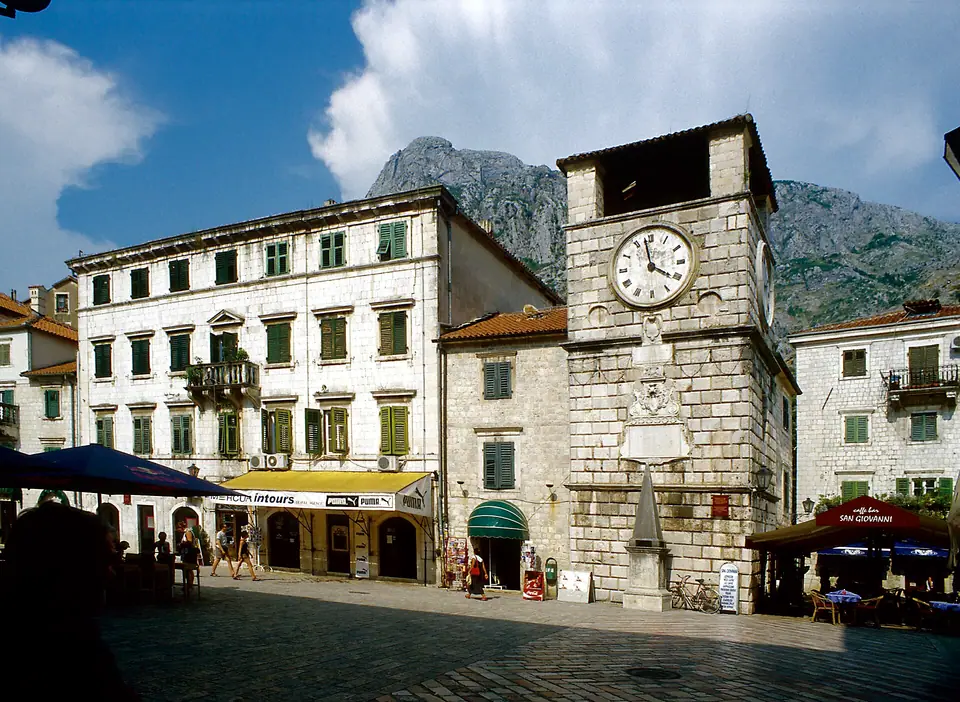
Photo: Falk2 · CC BY-SA 4.0
Kotor Old Town (Stari Grad): Squares, Palaces & Cathedral Walk
Self-guided walking tour of Kotor Old Town (Stari Grad): Sea Gate, Clock Tower, Cathedral of Saint Tryphon, Maritime Museum, Venetian palaces and churches.
Enclosed within a circuit of stone ramparts and wedged between the emerald waters of the bay and the sheer vertical karst cliff of St John's Hill, Kotor Old Town (Stari Grad) sits on the UNESCO list of cultural and historical heritage. Unlike Dubrovnik's orthogonal grid or Split's Roman palace quadrangle, Kotor's street plan is an organic, asymmetrical labyrinth of cobbled lanes that open unexpectedly onto sun-dappled plazas named after historic guilds. These include the Square of the Arms, the Square of Flour, the Square of Milk and the Square of Salad. The street grid was designed for defence so that invading forces would lose their bearings inside its twisting alleys. Even so, the Old Town requires no map if you follow the sequence of its monumental gates, noble Venetian palaces and historic churches.
To plan your timing around cruise arrivals, check our Kotor travel guide before starting out.
The Three Gates: Sea Gate, Gurdic Bastion & River Gate
Every walk through Stari Grad begins at one of the fortified portals piercing the thick stone walls:
- The Sea Gate (Vrata od Mora / Main Gate). Built under Venetian Provveditore Bernardo Renier, its rusticated barrel-vaulted passage displays fascinating historical layers. Inside sits a Gothic marble relief of the Madonna and Child flanked by Saint Tryphon (holding a miniature model of Kotor) and Saint Bernard. Overhead rises the winged Lion of Saint Mark together with a stone inscription quoting Josip Broz Tito on peace and independence.
- The Gurdic Gate (Južna Vrata / South Gate). Anchoring the southern apex of the triangle where the walls meet the cliff face. This triple-layered gatehouse spans an emerald karst spring canyon via a wooden drawbridge. In winter and spring, underground water surges up from the cavern system to flood the moat. Meanwhile, in late summer the siphon retreats inside the limestone cave.
- The River Gate (Sjeverna Vrata / North Gate). Commemorating historical defences. This arched gate opens onto the roaring turquoise waters of the Škurda River and the Kamp Bastion.
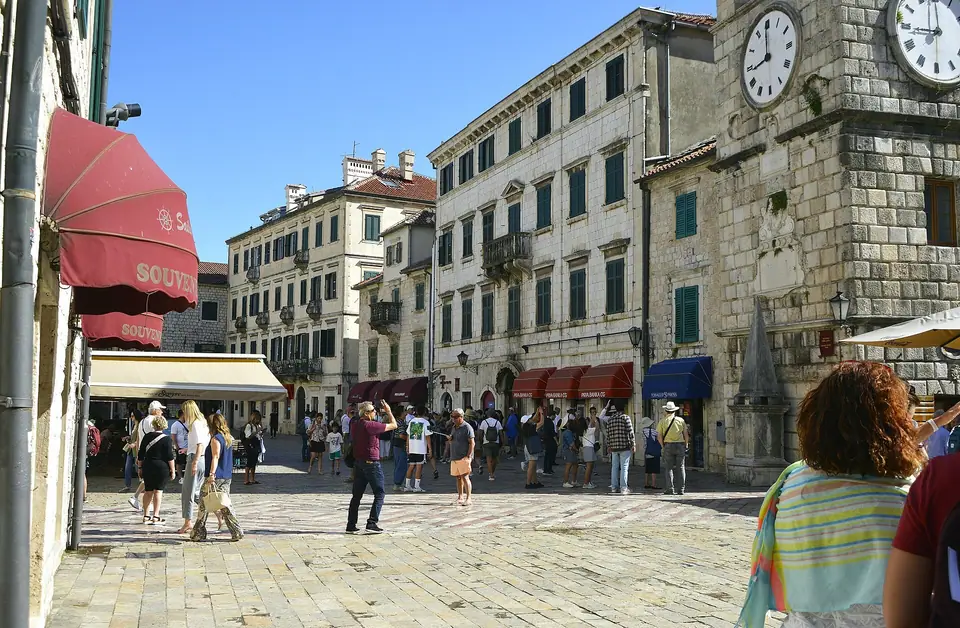
Square of the Arms (Trg od Oružja) & Square of Flour (Pjaca od Brašna)
Stepping through the Sea Gate brings you onto Trg od Oružja (Square of the Arms). A prominent plaza in Kotor where Venetian arsenals were stored and repaired. Directly in front of you rises the three-storey Clock Tower (Gradski Toranj), which leans noticeably towards the west due to historical earthquakes. At the base of the Clock Tower stands a tapering medieval stone pyramid, the Pillar of Shame (Stup Srama). Here petty offenders and tax debtors were publicly bound before the citizenry. Surrounding the square are the elongated Provveditore's Palace (Kneževa Palata), the Napoleon Theatre and the polygonal Kampana Tower.
Walk south into the adjacent Pjaca od Brašna (Square of Flour). Once dominated by maritime wheat warehouses, to compare two contrasting noble residences of Kotor's patrician families. On one side stands the Venetian-Gothic Pima Palace (recognisable by its green wooden shutters, Renaissance arcaded terrace and wrought-iron balconies). Opposite sits the austere Beskuća Palace, whose late-Gothic portal displays the elaborate coat of arms of Count Jozo Beskuća.
Cathedral of Saint Tryphon (Katedrala Svetog Tripuna)
The origin of local maritime tradition is linked to the arrival of the relics of Saint Tryphon, the patron saint of the city of Kotor. Saint Tryphon festivities run from 13 January through 3 February and include a procession and a series of rituals in the cathedral. The building remains the spiritual heart of the Catholic community, with two Baroque bell towers linked by a monumental terrace erected along the western facade.
Inside the three-aisled nave, alternating granite Corinthian columns and sturdy Romanesque piers frame the sanctuary. A stone ciborium rises above the high altar carved with miniature reliefs. Behind the altar glistens the gilded silver Pala d'Oro crafted by master goldsmiths. Climb the stone staircase inside the tower to visit the Reliquary Treasury (Relikvijar). This holds the silver head reliquary of Saint Tryphon and sailors' silver votive plaques. Afterwards, step onto the upper balcony between the bell towers for views over St Tryphon's Square.
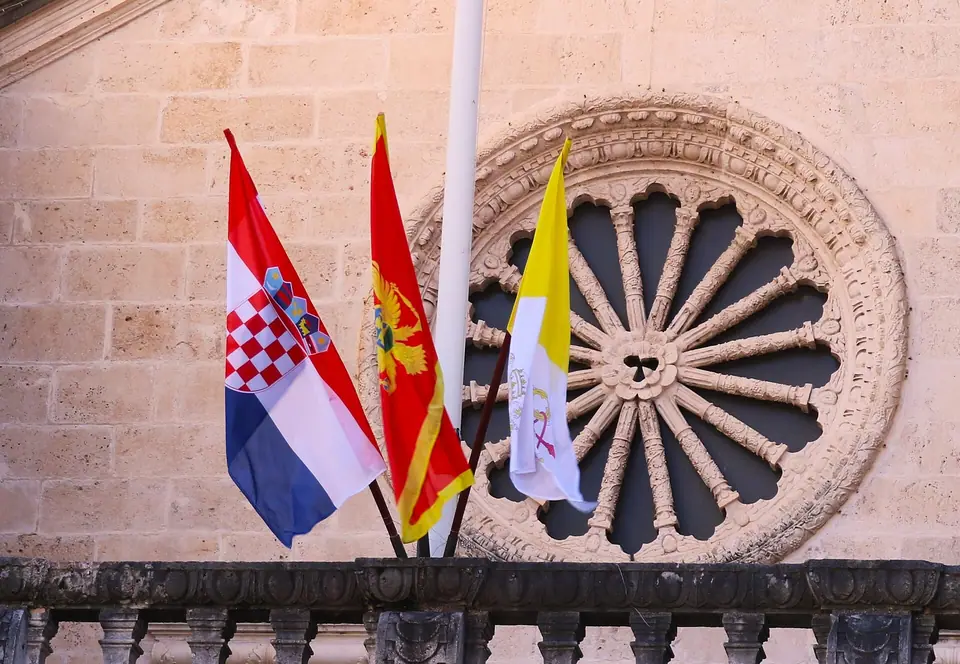
Maritime Museum (Grgurina Palace) & the Northern Churches
A short walk north of the cathedral on Boka Navy Square stands the Baroque Grgurina Palace. Today it houses the Maritime Museum of Montenegro (Pomorski Muzej Crne Gore). The museum chronicles maritime heritage including the Boka Navy, a traditional maritime organization established in Kotor in 809. The cultural heritage of the Boka Navy was inscribed on the UNESCO Representative List of the Intangible Cultural Heritage of Humanity in 2021. Formal celebrations feature members in traditional uniforms carrying historic weapons and dancing the traditional circle kolo dance.
Finish your walk in the northern quarter at Trg Svetog Luke (St Luke's Square), where two historic Orthodox churches stand side by side:
- Church of St Luke (Crkva Svetog Luke). Built in Romanesque-Byzantine style, this intimate stone church holds a history of interfaith tolerance. It historically contained both a Roman Catholic altar and an Eastern Orthodox iconostasis under the same roof so both communities could worship inside the fortified walls.
- Church of St Nicholas (Crkva Svetog Nikole). Towering above the northern square with twin domes, its interior houses a silver-and-wood iconostasis. Ensure shoulders and knees are covered, as detailed in our Kotor dress guide. Outside on nearby Cats' Square (Pjaca od Mačaka / Trg od Salate). Visitors often stop by the small local museum celebrating the Old Town's feline population.
Hidden Corners: Blessed Ozana, Collegiate St Mary's & Gurdić Spring
South of the River Gate stands the Collegiate Church of St Mary (Crkva Svete Marije Koleđate). Known to locals as the Church of the Blessed Ozana. It was built over early Christian ruins whose stone baptistery remains visible beside the apse. Inside, this Romanesque church holds the shrine of Blessed Ozana of Kotor, who lived as an anchoress in a stone cell. The church's monumental bronze entrance doors, sculpted by Vasko Lipovac, depict scenes from her life and Kotor's medieval history.
To finish your loop around the southern perimeter of Stari Grad, follow the narrow lane behind the Drago and Bizanti palaces. The Bizanti Palace continues to host official municipal events and delegations. The lane leads straight to the Gurdić Gate. Step onto the wooden drawbridge outside the southern arch to look down into the deep turquoise cavern of the Gurdić karst siphon. Here mountain water meets the tidal bay.
As you walk from square to square inside Stari Grad, you trace a maritime story shaped by Roman, Byzantine, and Venetian rule along the Montenegrin coast. Right outside the Sea Gate lie Marina Kotor and the Port of Kotor, situated directly in front of the UNESCO-listed city walls. Inside the gates, Kotor's living seafaring identity is preserved by the Boka Navy. A traditional non-governmental maritime organization founded upon the arrival of the relics of patron saint St Tryphon. Every year during the St Tryphon festivities, the Boka Navy gathers on the cathedral square to perform its traditional kolo circle dance. Next, try carrying the saint's reliquary through the historic streets.
Walking the quiet northern lanes of Stari Grad between the River Gate, and Saint Clare's Church also shows how medieval stone masons adapted Venetian urban design to a narrow karst delta. Small stone bridges cross the transparent waters of the Škudra River outside the northern ramparts. Meanwhile, the southern Gurdić bastion stands directly above a seasonal cavern spring. Taking your time in these outer corners of the walled town rewards you with peaceful courtyards even when excursion groups gather around the main clock tower.
Where it is
- 1Kotor Old Town (Stari Grad)
- Tirana International Airport Mother Teresa (TIA) · about 137 km from here in a straight line
- Directions in Google Maps
Stations and taxi ranks: OpenStreetMap. Airports: OurAirports. Distances are in a straight line.
Traveller tips
Real advice from people who have been to Kotor. Every tip is read by our team before it goes live.
No tips yet. Been here? Yours could be the first.
Thank you! Your tip will appear here after a quick review.
More in Kotor
Continue exploring Kotor with related neighbourhood, food, and planning guides
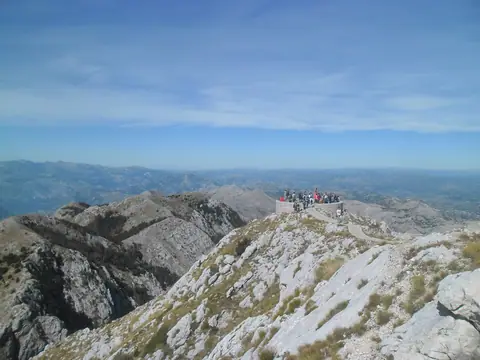
Lovćen National Park, Njegoš Mausoleum & 25-Hairpin Road Guide
Kotor, Montenegro
Blue Cave (Plava Špilja), Mamula & Submarine Tunnels Boat Guide
Kotor, Montenegro
Dobrota Promenade: Captain's Palaces, Churches & Swimming Pontas
Kotor, Montenegro
Risan Roman Mosaics, Herceg Novi & Budva Day Trips from Kotor
Kotor, Montenegro
