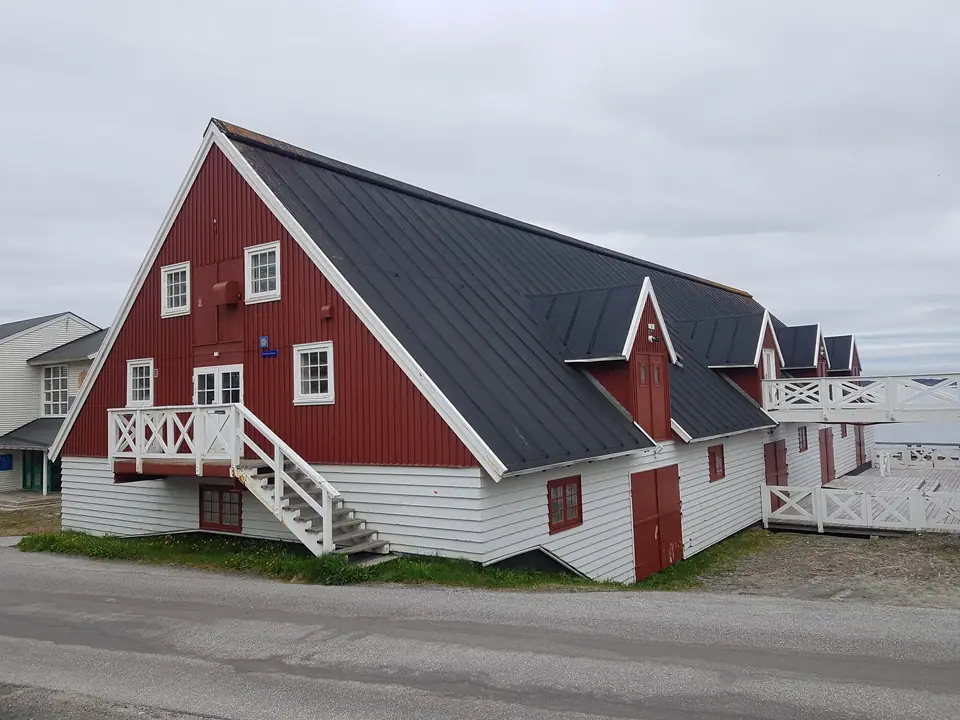
Photo: Kenny McFly · CC BY-SA 4.0
Greenland National Museum and the Qilakitsoq Mummies
Discover the 1475 Qilakitsoq mummies, ancient skin boats, and Arctic artefacts inside Nuuk's historic harbourfront Greenland National Museum.
Harbourside History at Nunatta Katersugaasivia Allagaateqarfialu
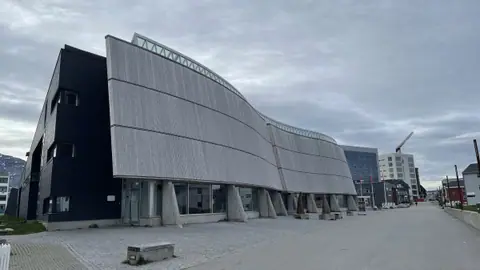
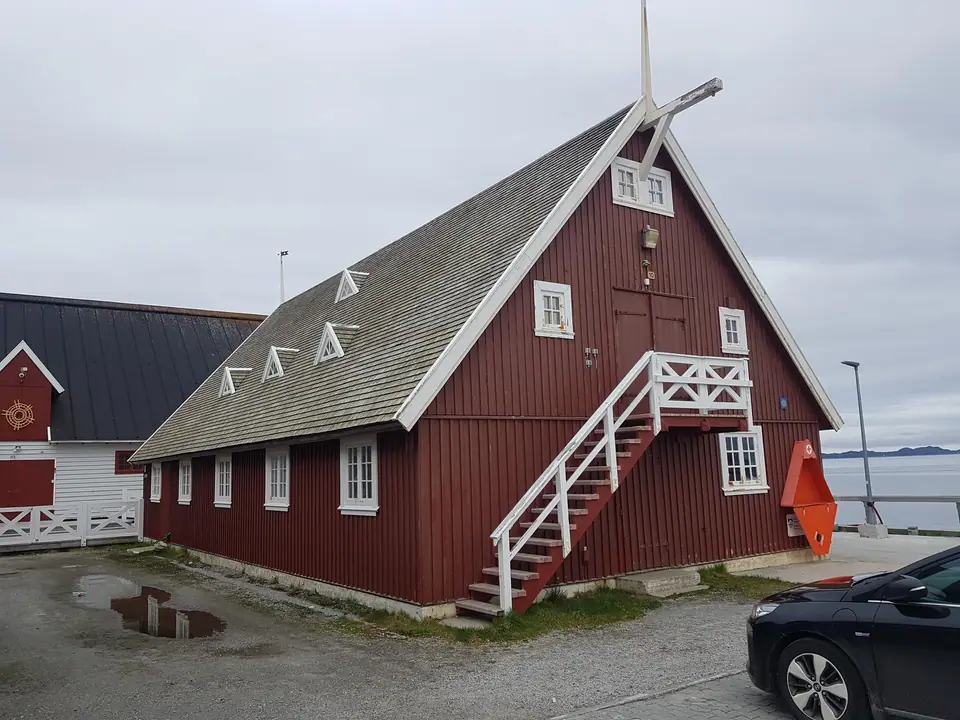
Standing on the rocky waterfront of Kolonihavnen, the Greenland National Museum, known locally as Nunatta Katersugaasivia Allagaateqarfialu, forms the central repository of the nation's archaeology and social history. The institution opened in 1965 inside the historic 1747 Moravian Brethren Mission House at New Herrnhut. During the 1970s, it moved into a cluster of restored colonial warehouses at the water's edge, including a prominent timber warehouse erected in 1936. This move accommodated tens of thousands of indigenous ethnographic objects returned from the National Museum of Denmark under the landmark Utimut repatriation partnership. In 1991, the museum formally amalgamated with the National Archives, whose research reading rooms now operate at the Ilimmarfik university campus.
A visit here integrates seamlessly with an architectural walking tour of Old Colonial Harbour, Nuuk Cathedral and Hans Egede House. The museum buildings showcase preserved exterior timberwork typical of early twentieth-century Arctic trading stations. Inside, visitors encounter detailed permanent galleries tracking human habitation across Greenland over four millennia. Displays trace the earliest Saqqaq and Dorset hunter-gatherers through the medieval Norse settlement period and into the Thule culture, the direct ancestors of modern Kalaallit Inuit. Because seasonal opening days and gallery maintenance schedules vary, we advise checking the official museum website before planning an arrival.
The 1475 Qilakitsoq Mummies and Thule Garments
The museum's most renowned gallery houses the naturally mummified remains of four Thule Inuit individuals. On 9 October 1972, brothers Hans and Jokum Grønvold were hunting ptarmigan near the abandoned settlement of Qilakitsoq on the Nuussuaq Peninsula close to Uummannaq. Beneath a sheltering rock overhang twenty-seven metres above sea level, they discovered two stone-covered graves containing eight bodies. Radiocarbon analysis dates the burials to approximately 1475 CE, with an uncertainty margin of fifty years. The bodies had freeze-dried naturally in the arid, sub-zero winds of western Greenland. Following extensive forensic analysis in Copenhagen, the collection returned to Nuuk in 1982, where four individuals remain on public view in a climate-controlled gallery.
The display includes three adult women and a six-month-old infant boy. Discoverers initially thought the baby was an elaborate doll due to his tiny stature and pristine skin preservation. Mitochondrial DNA testing confirmed that the buried individuals shared maternal kinship across both graves. Infrared photography highlighted intricate facial tattoos on the women, created using soot-blackened sinew drawn through the dermis across their foreheads, cheeks, and chins. Excavators also salvaged seventy-eight complete articles of Arctic clothing. The garments feature waterproof sealskin kamit boots stuffed with insulating beach grass, caribou-skin trousers, and delicate inner parkas assembled from the feathered skins of five Arctic bird species.
Inuit Watercraft and Arctic Hunting Technology
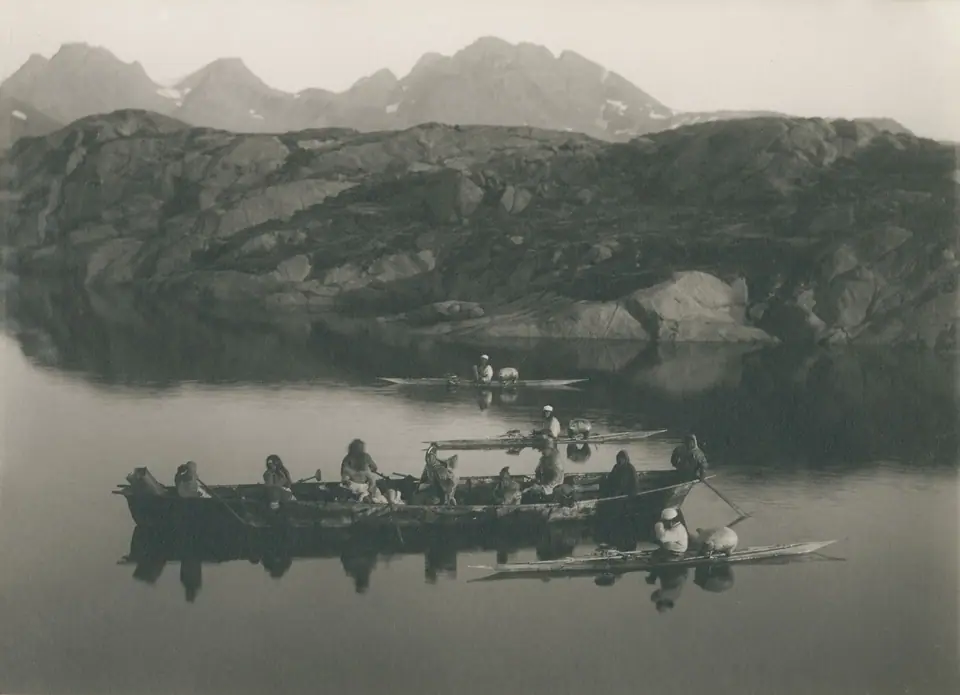
Beyond the burial chambers, the museum preserves an outstanding collection of traditional Arctic watercraft and hunting implements. A centrepiece of the maritime hall is an intact skin-on-frame umiak, an open boat traditionally rowed by women to transport families and camp gear along summer fjords. Suspended beside the larger transports are narrow hunting kayaks, tailored precisely to the body measurements of individual hunters using driftwood ribs lashed with seal rawhide. Waterproof seams stitched with split sinew guaranteed that hunters remained dry even when executing rolling manoeuvres in icy swells.
The displays illuminate how Inuit communities mastered stone, bone, antler, and marine mammal ivory fabrication before widespread access to metal trade goods. Toggle harpoon heads made from walrus tusk swivel inside prey beneath sea ice, preventing heavy marine mammals from escaping. Small soapstone blubber lamps, known as qulliq, sit beside wooden scraping benches. These versatile vessels provided light, melted snow for drinking water, and warmed winter turf homes without producing heavy soot. For travellers combining cultural study with outdoor exploration, pair this visit with an excursion across Nuup Kangerlua Fjord Cruises, Sermitsiaq and Qooqqut to grasp the aquatic terrain where hunters deployed these tools.
Greenlandic Textile Traditions and National Dress
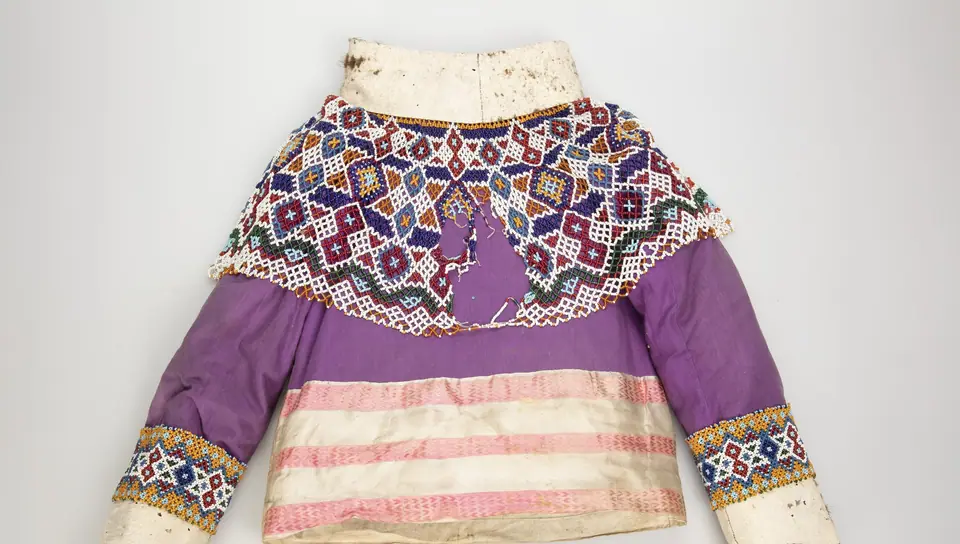
Textile craftsmanship remains a lively theme in the upper galleries, where curated costumes demonstrate the evolution of Greenlandic clothing. The collection documents how traditional Thule garments transformed into the elaborate West Greenlandic national costume, the kalaallisuut. After European contact and the introduction of trade goods, women incorporated imported glass beads into expansive, multicoloured collars that drape over the chest and shoulders. The lower portions feature high sealskin kamit boots decorated with fine floral skin-embroidery known as avicheet.
Male traditional dress displays equal refinement, pairing dark wool trousers with a clean white anorak and trimmed sealskin footwear. The museum exhibits contrast these ceremonial styles with utilitarian garments designed for open-sea survival. Thick caribou anoraks with inward-facing fur trap warm air against the skin, while outer layers with outward-facing hair shed snow and gale-force coastal winds. Examining these stitching patterns provides profound respect for the seamstresses whose needlework enabled long-term human survival in extreme polar latitudes.
Exhibition Galleries at a Glance
| Gallery Division | Primary Exhibits | Historical Era | Cultural Significance |
|---|---|---|---|
| Qilakitsoq Crypt | Four mummies, sealskin boots, feathered anoraks | Circa 1475 CE (Thule culture) | Natural freeze-drying, early tattooing, textile science |
| Maritime Transport | Skin kayaks, hunting implements, open umiak boat | Thule to early modern era | Arctic sea navigation, marine mammal hunting efficiency |
| Early Paleo-Inuit | Microblades, soapstone bowls, carved bone points | Saqqaq and Dorset periods | Pioneering Arctic survival four thousand years ago |
| Colonial and Costume | Glass-bead collars, embroidered boots, trade goods | Eighteenth to twentieth century | Cultural synthesis, ceremonial dress evolution |
Seasonal Planning and Coastal Weather Factors
The museum sits right on the open water of Nuuk harbour, exposed to coastal wind and fluctuating precipitation. Winter visits between December and March require warm thermal footwear, as freezing fog and ice glaze the wooden steps and gravel approaches around the warehouse. January averages a high of -5°C and a low of -9.7°C across 14 wet days, while February brings the coldest temperatures, averaging a high of -6°C and a low of -10.9°C over 13 wet days. March remains cold with highs of -5.1°C, lows of -10°C, and 105 millimetres of precipitation over 15 days.
Spring brings modest warming, with April recording highs of -0.7°C and lows of -5.2°C. May temperatures push above freezing to a high of 3.9°C and a low of -1.2°C across 91 millimetres of rainfall. Summer brings the mildest weather for walking between Kolonihavnen warehouses. June delivers highs of 8.4°C and lows of 2°C over 11 wet days. July marks the warmest period, averaging a high of 11.1°C and a low of 4.4°C across 13 wet days. August posts similar conditions with highs of 10.2°C and lows of 4.5°C.
Autumn cools quickly along the fjord. September records highs of 6.5°C and lows of 2°C across 98 millimetres of rain. October follows with highs of 2.3°C and lows of -1.8°C over 14 wet days. November drops to a high of -1.1°C and a low of -5.3°C. December concludes the cycle with highs of -3.2°C and lows of -7.7°C across 14 wet days. Sturdy waterproof footwear with deep tread is essential year-round to navigate wet docks and snowy ramps safely.
Where it is
- 1Greenland National Museum and the Qilakitsoq Mummies
- Nuuk International Airport (GOH) · about 4 km from here in a straight line
- Directions in Google Maps
Stations and taxi ranks: OpenStreetMap. Airports: OurAirports. Distances are in a straight line.
Traveller tips
Real advice from people who have been to Nuuk. Every tip is read by our team before it goes live.
No tips yet. Been here? Yours could be the first.
Thank you! Your tip will appear here after a quick review.
More in Nuuk
Continue exploring Nuuk with related neighbourhood, food, and planning guides