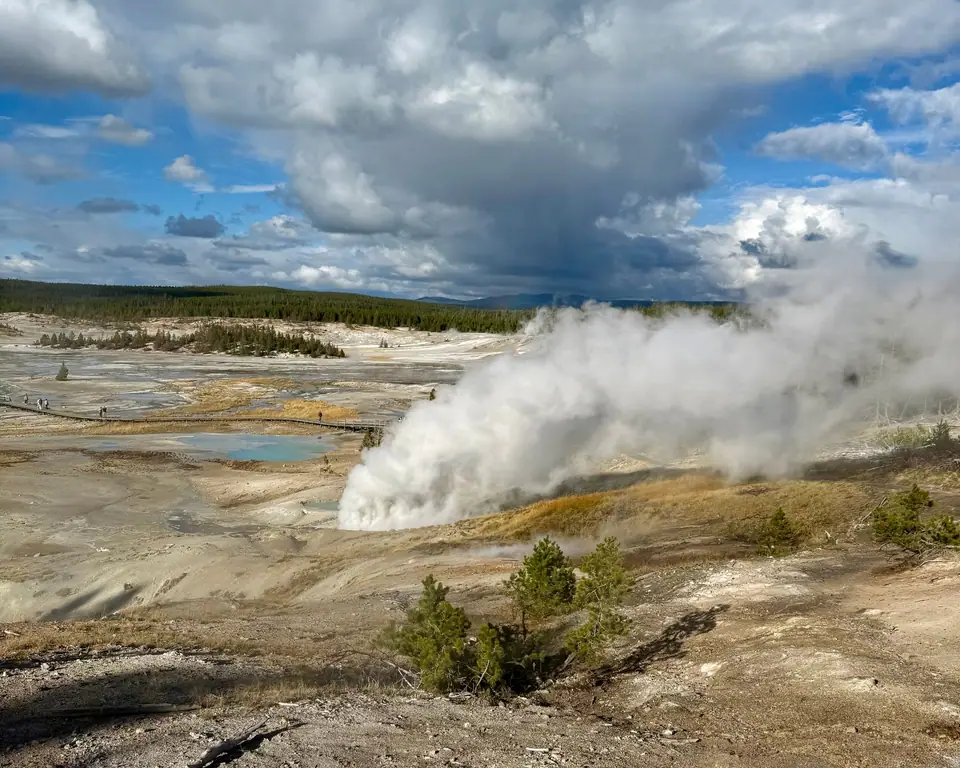
Best Time to Visit Yellowstone: Month-by-Month Roads, Wildlife & Weather
When roads and trails open in Yellowstone, with May to June wildlife, summer geyser views, September elk rut and winter snowcoaches compared.
For most first-time visitors, the best time to visit Yellowstone is late May through September, with 15 May to 15 June best for wildlife and September best for thinner crowds and autumn colour. Yellowstone sits on a high volcanic plateau at 2,400 metres (8,000 feet) across the Continental Divide, so winter lingers well into spring.
Only one corridor stays open to private cars year-round: the 85-kilometre northern road connecting the North Entrance at Gardiner through Mammoth Hot Springs and Lamar Valley to Cooke City. Every other entrance, pass and geyser loop follows a strict seasonal opening and closing schedule.
| Season Window | Roads & Passes Open | Key Sightseeing Strength | Crowd & Weather Reality |
|---|---|---|---|
| Late April to Mid-May | North, West and Madison to Old Faithful corridors open staggered; South & East open mid-May | Bison calving begins, thawing waterfalls and early river valley bears | Night freezes, snow flurries possible, many park lodges still closed |
| 15 May to Mid-June | All five entrances plus Dunraven Pass and Beartooth Highway open by late May | Newborn orange bison calves, grizzly bears on valley floors, peak Lower Falls snowmelt | Cool mornings, heavy rush-hour parking only around Old Faithful |
| Late June to August | All 230 kilometres of the Grand Loop Road, alpine trails and boat docks open | Warm afternoons keep steam thin above Grand Prismatic Spring | Peak crowds, afternoon bison jams, daytime highs of 23°C to 26°C |
| September to Mid-October | Full Grand Loop stays open until 1 November weather closing | Approximately 40% fewer crowds, golden aspens, bull elk rut at Mammoth | Crisp frost at dawn; early-to-mid October lodge closures |
| 15 December to 15 March | Interior closed to private cars; North-to-Northeast road open year-round | Winter snowcoach tours to Old Faithful and Lamar Valley wolves | Sub-zero cold down to -15°C and under 3% of annual visitor numbers |
Late Spring (15 May to Mid-June): Baby Wildlife and Thundering Falls
Deep snow still blankets peaks above 2,700 metres through early June, pushing elk, mule deer, pronghorn, black bears and grizzly bears down onto green riverbanks beside the road. Thousands of bright orange newborn bison calves, nicknamed 'Red Dogs', and spotted elk calves gather in Lamar Valley and Hayden Valley.
Snowmelt also sends the Yellowstone River over the brink of the Lower Falls at peak volume. Plan your arrival from mid-May onward so both the South Entrance from Grand Teton and the East Entrance from Cody are open, while Dunraven Pass and the Beartooth Highway typically clear snow in late May.
High Summer (Late June, July and August): Geyser Colours and Alpine Hikes
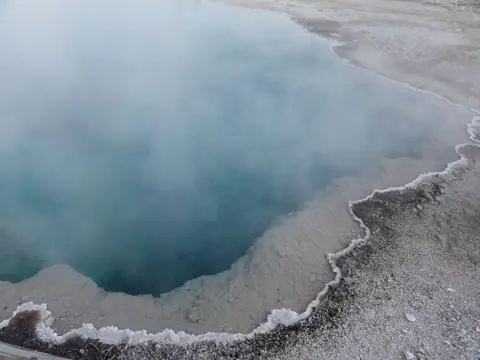
July and August give access to every trail and pass across the plateau, including high-elevation climbs like Mount Washburn. Because afternoon air warms to 23°C to 26°C (73°F to 79°F), hot springs release far less blinding surface steam than on freezing mornings.
Those warm afternoons offer the clearest midday photography above Grand Prismatic Spring from the Fairy Falls Overlook Trail, as well as the easiest walking along the Upper Geyser Basin boardwalks. Late August adds the dramatic bison rut across Hayden and Lamar Valleys, though you should expect long queues at West Yellowstone and boardwalk car parks.
Early Autumn (September to Mid-October): Elk Rut Without Peak Traffic
After the first weekend of September, visitor volume drops by roughly 40% while daytime highs stay comfortable for sightseeing. Golden quaking aspens brighten river corridors, and huge bull elk bugle and spar across the lawns of Mammoth Hot Springs throughout September.
Watch facility dates carefully if travelling after September. Most in-park lodges, restaurants and campgrounds close in early to mid-October, and nearly all interior park roads shut to wheeled vehicles on 1 November ahead of winter snowpack.
Winter (15 December to 15 March): Snowcoaches and Lamar Valley Wolves
Less than 3% of Yellowstone's visitors experience the plateau in winter, when cold air traps dense frost crystals on bison and geyser vents steam heavily into blue skies. Interior routes operate strictly via guided oversnow snowcoaches and snowmobiles linking West Yellowstone, Gardiner and Flagg Ranch to Old Faithful and Canyon.
Independent drivers can still stay in Gardiner and explore Mammoth Hot Springs plus Lamar Valley by private car all winter, watching wolf packs against white snowfields. Check our Yellowstone packing guide and where to stay in Yellowstone before booking winter or spring dates.
Weather by month
Yellowstone is warmest in July, with average highs around 25°C, and coldest in January, when nights drop to about -16°C. May is the wettest month by rainfall (58 mm), with rain on about 11 days. For mild weather with fewer rainy days, aim for July, August and September.
| Month | Low | Range | High | Rain | Rainy days |
|---|---|---|---|---|---|
| Jan | -16°C | -4°C | 42 mm | 10 d | |
| Feb | -15°C | -3°C | 36 mm | 9 d | |
| Mar | -10°C | 2°C | 40 mm | 9 d | |
| Apr | -6°C | 7°C | 46 mm | 9 d | |
| May | -1°C | 14°C | 58 mm | 11 d | |
| Jun | 3°C | 20°C | 56 mm | 10 d | |
| Jul | 6°C | 25°C | 38 mm | 7 d | |
| Aug | 5°C | 24°C | 36 mm | 7 d | |
| Sep | 1°C | 18°C | 40 mm | 7 d | |
| Oct | -4°C | 10°C | 38 mm | 7 d | |
| Nov | -11°C | 1°C | 40 mm | 9 d | |
| Dec | -16°C | -4°C | 44 mm | 10 d |
Averages of daily values from 2015 to 2024. Rainy days are days with at least 1 mm of rain. Source: Open-Meteo · Compare destinations by month.
Official prices and opening hours
- Yellowstone National Park Private Vehicle Pass (7-Day)Official site ↗
- America the Beautiful Interagency Annual PassOfficial site ↗
Key entrances and seasonal corridors on the map
- 1North Entrance (Gardiner & Roosevelt Arch) · Only entrance open to regular cars year-round
- 2Mammoth Hot Springs · Year-round northern corridor base; autumn bull elk rut
- 3Lamar Valley · Year-round road access; spring bison calves and winter wolf watching
- 4Grand Canyon of the Yellowstone · Peak snowmelt waterfall flow in May and June
- 5Hayden Valley · Central wildlife corridor opening in May; August bison rut
- 6Old Faithful & Upper Geyser Basin · Spring road opening from West Entrance; winter snowcoach destination
Traveller tips
Real advice from people who have been to Yellowstone. Every tip is read by our team before it goes live.
No tips yet. Been here? Yours could be the first.
Thank you! Your tip will appear here after a quick review.
More in Yellowstone
Continue exploring Yellowstone with related neighbourhood, food, and planning guides
Driving the 230km Figure-8 Grand Loop Road: Beating Traffic, 'Bison Jams' & Offline Maps
Yellowstone, United States
Where to Stay in Yellowstone: In-Park Lodges versus Gateway Towns
Yellowstone, United States
What to Wear in Yellowstone: 8,000-Foot Morning Layers, Bear Spray, Binoculars & Hat Straps
Yellowstone, United States
3 to 4 Days in Yellowstone: Lower Loop Geysers, Canyon & Lake, Upper Loop & Grand Teton
Yellowstone, United States
