Best Things to Do in Yellowstone National Park
Plan your Yellowstone exploration with verified insight on geyser basins, wildlife corridors, dramatic canyon waterfalls, and kid-friendly hiking trails.
Stand Beside Erupting Hydrothermal Wonders
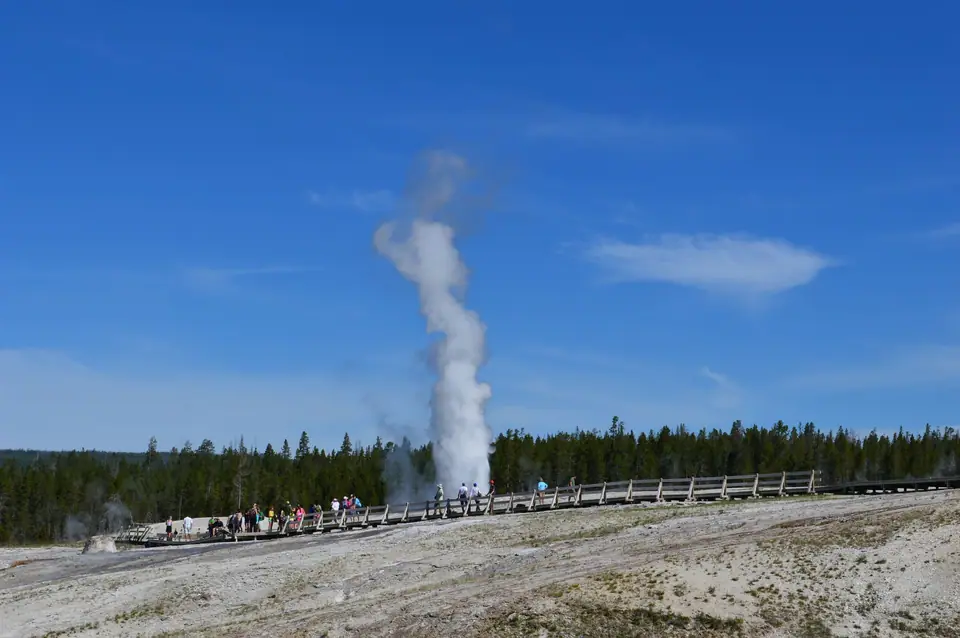
Yellowstone National Park encompasses nearly 3,500 square miles across northwest Wyoming, southern Montana, and eastern Idaho. Within this vast volcanic plateau sits the greatest collection of geysers on Earth. Watching Old Faithful and Upper Geyser Basin ranks among the premier experiences across the reserve. Arrive at the visitor centre to check predicted eruption times, then wander the 4-kilometre boardwalk loop toward Morning Glory Pool. More than 150 thermal features simmer across this basin alone, enveloped by the historic architecture of the 1904 Old Faithful Inn.
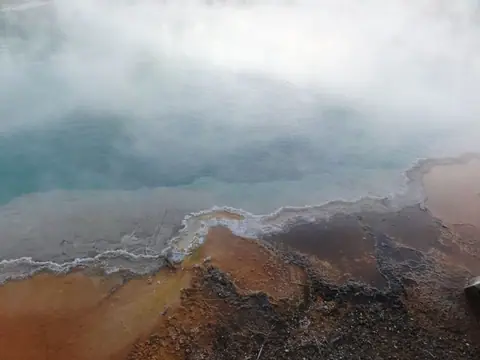
A short drive north brings you to the Midway Geyser Basin. Avoid looking at Grand Prismatic Spring solely from the ground-level boardwalk where thick steam often obscures the view. Instead, hike the elevated trail toward the Fairy Falls overlook. Seen from the hillside ridge above, the spring reveals magnificent concentric bands of orange, yellow, and turquoise created by heat-tolerant bacteria. For a more acidic hydrothermal landscape, tour Norris Geyser Basin to view the milky waters of Porcelain Basin and the unpredictable eruptions of Steamboat Geyser.
Track Megafauna Across Lamar and Hayden Valleys
Wildlife viewing defines Yellowstone just as powerfully as its hydrothermal vents. The broad river plains of Lamar Valley and Hayden Valley form North America's premier wildlife corridor. For the best sightings, set out at dawn with spotting scopes and binoculars. In Lamar Valley, herds of wild bison graze across open meadows, pronghorn sprint along gravel river terraces, and wolves move across distant ridgelines. Consult our dedicated Lamar Valley and Hayden Valley safari guide to identify reliable pullouts and ethical viewing distances.
Hayden Valley straddles the central transit corridor between Yellowstone Lake and Canyon Village. Grizzly bears frequently patrol the marshy flats during early summer, while massive bull bison often create road blockages. The parkwide speed limit is 45 mph unless marked lower, and drivers must yield immediately when herds step onto the tarmac.
Marvel at the Grand Canyon of the Yellowstone
Carved by millennia of rushing water and thermal alteration, the Grand Canyon of the Yellowstone plunges over 300 metres through yellow, orange, and crimson rhyolite stone. Standing on the precipice at Artist Point offers a direct view of the roaring 94-metre Lower Falls. The sheer vertical drop sends mist drifting hundreds of metres into the pine forests flanking the South Rim.
Travellers keen on physical exertion should descend the Brink of the Lower Falls trail. This steep pathway drops 180 metres via sharp switchbacks directly to the lip of the cascade. From there, you can feel the physical rumble of the Yellowstone River as it surges over the cliff face. Across the canyon, the North Rim drive provides access to Lookout Point and the dramatic staircase descent of Uncle Tom's Trail.
Explore Historic Forts and Steaming Terraces
At the park's northern border sits Mammoth Hot Springs, the administrative headquarters of the reserve. Here, subterranean waters dissolve subsurface limestone, depositing brilliant white and orange travertine steps across the hillside. The Lower and Upper Terraces feature elevated boardwalks circling Liberty Cap, Canary Spring, and Palette Spring.
Surrounding the thermal features are the red-roofed stone buildings of 1891 Fort Yellowstone, constructed during the decades when the United States Army managed the national park. Wild elk routinely rest on the landscaped lawns outside park headquarters. Passing through this area brings visitors past the historic 1903 Roosevelt Arch at the North Entrance in Gardiner, Montana.
Essential Yellowstone Highlights and Family Suitability
| Experience and Location | Primary Appeal | Ideal Time of Day | Suitability for Children |
|---|---|---|---|
| Upper Geyser Basin (Old Faithful) | Predictable geysers and historic 1904 log inn | Mid-morning or late afternoon | Superb, fully paved pathways and flat wooden boardwalks |
| Grand Prismatic Spring Overlook | Vivid rainbow rings seen from elevated vantage | Midday when sun dissipates thermal steam | Moderate, requires a steady 20-minute uphill dirt hike |
| Lamar Valley Wildlife Watching | Bison herds, wolves, grizzly bears, and pronghorn | First light at sunrise | High, excellent from roadside pullouts using binoculars |
| Grand Canyon Artist Point | 94-metre waterfall drop and coloured canyon walls | Early morning light on canyon walls | Great, short paved stroll directly from parking area |
| West Thumb Geyser Basin | Lakeside thermal cones directly in Yellowstone Lake | Late afternoon | Excellent, flat wooden walkway along the shoreline |
Active Adventures for Every Season and Travel Style
Finding rewarding things to do in Yellowstone with kids centers on short boardwalks and engaging wildlife spots. The thermal walkways at West Thumb Geyser Basin allow young explorers to peer into vivid shoreline cones without strenuous trekking. Mud Volcano offers bubbling cauldrons and the roaring steam vents of Dragon's Mouth Spring, capturing young imaginations along an easy loop. Families should review packing fundamentals in what to wear in Yellowstone to stay comfortable across unpredictable mountain weather.
Travellers seeking things to do in Yellowstone in September enjoy distinct advantages. The summer rush subsides, daytime temperatures average an agreeable 18.2°C, and the annual elk rut begins. Bull elk bugle loudly across Mammoth Hot Springs and Madison Junction, echoing through the pine forests. Autumn also brings gold foliage to riparian willow flats, though nighttime temperatures dip near 0.8°C, requiring warm layers.
For visitors exploring things to do in Yellowstone Montana sections, the state holds three percent of park acreage along with crucial gateway towns. From West Yellowstone, travellers enjoy rapid entry to the Madison River corridor, where fly fishers cast for trout and bald eagles perch on dead lodgepole snags. The North Entrance near Gardiner provides access to the Roosevelt Arch and year-round vehicle transit through the Lamar Valley toward Silver Gate and Cooke City.
Beyond the boardwalks, day hikes provide silence and solitude. Trails lead through pine forests toward hidden cascades like 60-metre Fairy Falls and Mystic Falls. Hikers aiming for panoramic vistas can tackle the trail up Mount Washburn to scan the vast caldera rim. Distances between hubs are significant, with roughly 50 miles separating Old Faithful from Canyon Village. Careful planning ensures you spend less time behind the wheel and more time encountering the wild wonder of America's first national park.
Where it is
- 1Yellowstone
- Yellowstone Airport (WYS) · about 51 km from Yellowstone in a straight line
- Directions in Google Maps
Stations and taxi ranks: OpenStreetMap. Airports: OurAirports. Distances are in a straight line.
Traveller tips
Real advice from people who have been to Yellowstone. Every tip is read by our team before it goes live.
No tips yet. Been here? Yours could be the first.
Thank you! Your tip will appear here after a quick review.
More in Yellowstone
Continue exploring Yellowstone with related neighbourhood, food, and planning guides
The Grand Canyon of the Yellowstone: Artist Point, Brink of the Lower Falls & North vs South Rim
Yellowstone, United States
Yellowstone Wildlife Safari Guide: Lamar Valley ('America's Serengeti') & Hayden Valley
Yellowstone, United States
Mammoth Hot Springs: The Travertine Terraces, 1891 Fort Yellowstone & the 1903 Roosevelt Arch
Yellowstone, United States
Norris Geyser Basin (Steamboat Geyser & Porcelain Basin) & Artists Paintpots
Yellowstone, United States
