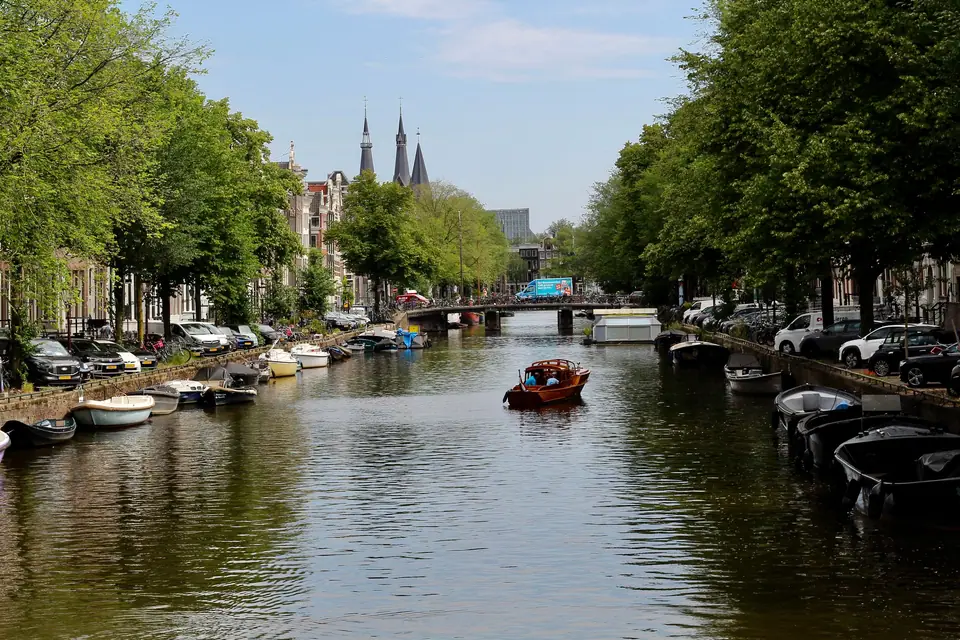
Best Things to Do in Amsterdam: Museums, Canals & Markets
Golden Age masterpieces, quiet canal walks, open-air boat rides, and neighbourhood markets.
Amsterdam rewards an unhurried daily rhythm. Pair early morning walks along mirror-still canals with one pre-booked museum in the middle of the day. Save late afternoons for a neighbourhood street market or a candlelit brown café. Below we rank the fourteen most rewarding experiences in the city, complete with practical booking rules and links to our detailed neighbourhood guides.
The 14 essential Amsterdam experiences
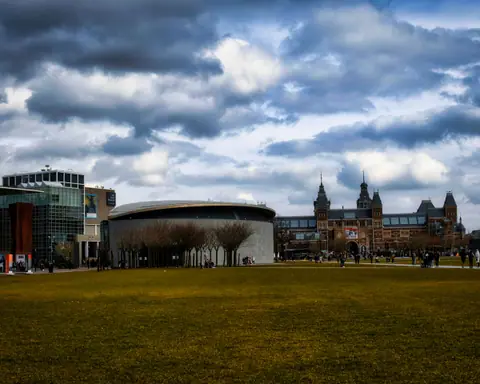
- The Rijksmuseum Gallery of Honour. Designed by Pierre Cuypers and opened in 1885, the national museum of the Netherlands spans 800 years of Dutch history across 80 galleries. Enter on the earliest morning slot and walk straight up to Level 2's vaulted Gallery of Honour (Eregalerij). Here you stand before Rembrandt's 1642 militia portrait The Night Watch and four intimate domestic scenes by Johannes Vermeer, including The Milkmaid and The Little Street; see our Museumplein guide.
- The Van Gogh Museum. This modernist building holds over 200 paintings, 500 drawings, and hundreds of letters preserved by Vincent van Gogh's brother Theo and sister-in-law Jo van Gogh-Bonger. The chronological route traces his rapid evolution from dark Dutch peasant studies (The Potato Eaters) to Arles and Saint-Rémy masterpieces (Sunflowers, The Bedroom, and Almond Blossom). Timed online booking is mandatory.
- Walking the Jordaan, Brouwersgracht, and the Nine Streets. Cross the white wooden drawbridges of Brouwersgracht in the quiet morning light. Step into the seventeenth-century almshouse courtyard of the Karthuizerhofje in the Jordaan, then browse the vintage boutiques and cheese counters of De Negen Straatjes (the Nine Streets); follow our Canal Ring and Jordaan route.
- The Anne Frank House (Prinsengracht 263). Climb behind the hinged movable bookcase into the preserved rear annex (Het Achterhuis). Here Anne Frank, her family, and four others hid from Nazi occupation for 761 days between July 1942 and August 1944. Her original red-checked diary is displayed on the ground floor. Book online exactly six weeks ahead on a Tuesday morning.
- An Open Electric Canal Boat Cruise (Sloep). Skip the 100-seat glass-topped tour barges outside Centraal Station. Instead, book a 10-to-12-passenger open electric sloep departing near the Anne Frank House or Rijksmuseum. Smaller electric boats glide silently down narrow side canals and pass beneath the Seven Bridges viewpoint at Reguliersgracht and Herengracht. Since 2025, Amsterdam requires passenger canal boats in the centre to run on zero-emission electric power, making water cruises whisper-quiet.
- The Albert Cuyp Market in De Pijp. Operating Monday to Saturday along Albert Cuypstraat since 1905, the country's largest daytime street market stretches for nearly a kilometre. Eat a warm caramel stroopwafel pressed before your eyes, taste 36-month-aged Gouda, and explore the cafés around Sarphatipark in our De Pijp food guide.
- The Free GVB Ferry to Amsterdam Noord and NDSM Wharf. Walk to the water's edge behind Amsterdam Centraal Station and step onto the free blue-and-white GVB pedestrian ferry across the IJ waterway. The 5-minute crossing to Buiksloterweg reaches the angular white EYE Filmmuseum and A'DAM Lookout. Meanwhile, the 14-minute crossing to NDSM Wharf lands at a former shipbuilding yard converted into the massive STRAAT street-art museum and waterfront cafés.
- The Begijnhof Courtyard and Dam Square. Behind an unmarked wooden door off Spui square lies the fourteenth-century Begijnhof (buh-KHYN-hof). This enclosed garden courtyard was founded for a Catholic sisterhood of unmarried women (Beguines). It preserves Amsterdam's oldest surviving wooden house (Het Houten Huys, built around 1528) and a clandestine chapel. Five minutes north stands the 1655 classical Royal Palace (Koninklijk Paleis) on Dam Square.
- The Rembrandt House Museum and Jewish Cultural Quarter. On Jodenbreestraat stands the brick merchant house where Rembrandt lived, etched, and taught students between 1639 and 1658. Daily demonstrations show how his copperplate etchings were printed. Two blocks east, visit the candle-lit Portuguese Synagogue (completed in 1675 with sand-strewn wooden floors) and the National Holocaust Museum.
- Vondelpark and the Stedelijk Museum. Combine modern Dutch design (Mondrian, Rietveld, and De Stijl) inside the Stedelijk Museum with an afternoon stroll around the willow-lined ponds of 47-hectare Vondelpark.
- An Evening in a Historic Brown Café (Bruin Café). Settle into a candlelit seventeenth- or eighteenth-century corner pub stained dark by centuries of wood smoke. Classic choices include Café 't Smalle on Egelantiersgracht, Café Papeneiland on Prinsengracht, or In 't Aepjen near Zeedijk. Order a flute of Dutch pilsner or a tulip glass of malt oude jenever paired with hot beef-ragout bitterballen and mustard.
- De Plantage and Hortus Botanicus. Founded in 1638 to grow medicinal herbs and tropical plants brought back on East India Company ships, the Hortus Botanicus sits in the leafy Plantage quarter. Its grounds house a three-climate glasshouse, a 1912 Palm House, and a warm butterfly pavilion.
- Canal House Interior Museums (Van Loon, Willet-Holthuysen & Our Lord in the Attic). Step inside a grand double-width mansion on Keizersgracht or Herengracht at Museum Van Loon (built in 1672, complete with a manicured private garden and coach house) or Museum Willet-Holthuysen. Both show how wealthy Golden Age merchant families lived behind the brick facades. In the old core at Oudezijds Voorburgwal 38, Museum Ons' Lieve Heer op Solder ("Our Lord in the Attic") reveals a complete 1663 three-storey clandestine Catholic church hidden inside the top rafters of a canal house.
- A 15-Minute Train Excursion to Haarlem or Zaanse Schans. Hop an NS train from Centraal Station for 15 minutes west to medieval Haarlem for the Grote Markt, St Bavo's Church organ played by Mozart and Handel, and the Frans Hals Museum. Alternatively, ride 17 minutes northwest toward Zaanse Schans to walk inside working seventeenth-century timber windmills grinding mustard, spices, and pigments.
Glass-top tour barge vs small electric open boat
- Small Open Electric Boat / Large Glass-Top Barge: Small 12-seat open boats navigate narrow Jordaan canals and provide live conversation with a local skipper. Glass-top boats are only preferable during heavy winter rain or during the December and January Amsterdam Light Festival.
To group these fourteen experiences into three walkable days without crossing town twice, follow our 3-day Amsterdam itinerary and check our transport guide.
Where it is
- 1Amsterdam
- Amsterdam Airport Schiphol (AMS) · about 12 km from Amsterdam in a straight line
- Directions in Google Maps
Stations and taxi ranks: OpenStreetMap. Airports: OurAirports. Distances are in a straight line.
Traveller tips
Real advice from people who have been to Amsterdam. Every tip is read by our team before it goes live.
No tips yet. Been here? Yours could be the first.
Thank you! Your tip will appear here after a quick review.
More in Amsterdam
Continue exploring Amsterdam with related neighbourhood, food, and planning guides
Best Time to Visit Amsterdam: Tulips, King's Day & Seasons
Amsterdam, Netherlands
What to Wear in Amsterdam: Windproof Layers, Shoes & Tips
Amsterdam, Netherlands
Amsterdam Canal Ring & Jordaan: Walking Route & Hofjes
Amsterdam, Netherlands
Museumplein Guide: Rijksmuseum, Van Gogh & Vondelpark
Amsterdam, Netherlands
