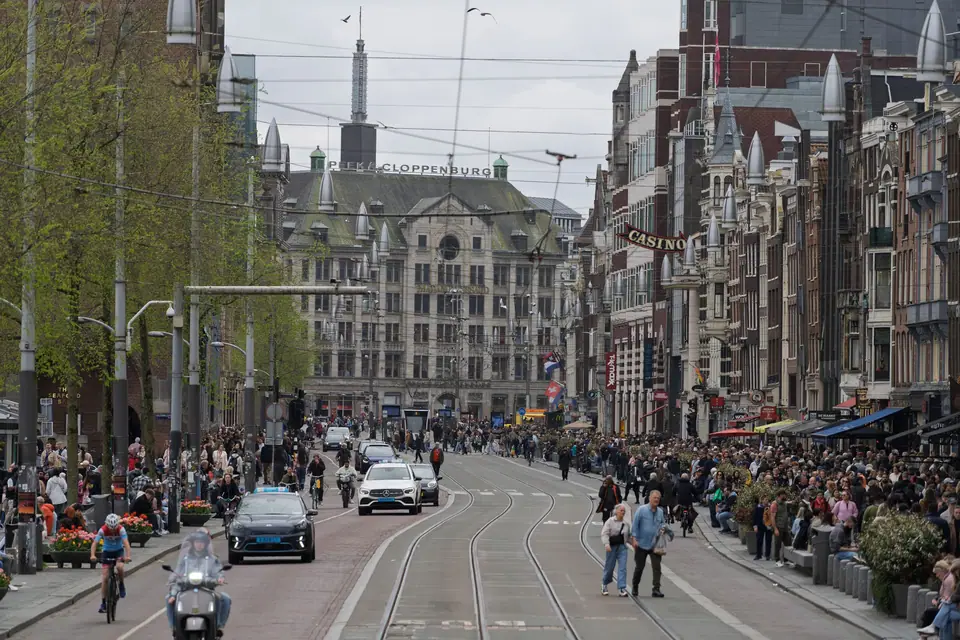
What to Wear in Amsterdam: Windproof Layers, Shoes & Tips
Windproof layers, flat walking shoes, and why umbrellas struggle in North Sea gusts.
Two everyday realities dictate how Amsterdam residents dress. Gusty winds blow inland off the North Sea and the IJ (EYE) waterway, and the streetscape is built for walking and cycling in all four seasons. A flimsy folding umbrella will turn inside out on the very first arched canal bridge you cross. Packing a proper hooded windproof and waterproof jacket with flat, cushioned shoes makes exploring our 3-day Amsterdam itinerary comfortable in any weather.
Why a hooded rain shell beats an umbrella on the canals
- Breathable Hooded Waterproof Jacket / Folding Street Umbrella: Because Amsterdam sits flat near sea level, Atlantic rain showers rarely fall straight down. They blow horizontally off the water for fifteen minutes and then clear into sunshine. A hip- or thigh-length waterproof shell (such as a Rains-style coat or Gore-Tex trench) keeps you dry without battling gusts. It also leaves both hands free when climbing steep canal-house steps, holding a warm stroopwafel at the Albert Cuyp Market, or riding a bicycle.
- Flat Rubber-Soled Trainers or Boots / Thin-Soled Heels: Central Amsterdam streets are paved in small red-brown clay bricks called klinkers (KLIN-kers) and granite cobbles. Sunken metal GVB tram rails also cross every main square. Even more importantly, historic seventeenth-century canal houses have extraordinarily steep, narrow wooden staircases angled almost like ship ladders. You will climb them inside the Anne Frank House, historic brown cafés, and boutique hotels in the Jordaan. Wear supportive flat walking shoes with non-slip treads.
How Amsterdammers dress: understated smart-casual
Dutch street style is relaxed, well-cut, and allergic to ostentation. Across the Jordaan, Oud-West, and De Pijp, locals favour dark denim or tailored chinos, crisp cotton shirts, and fine merino or cashmere jumpers. They pair them with leather Chelsea boots or clean white trainers and a structured wool coat or waterproof parka. Unlike Rome or Florence, Amsterdam's historic churches (such as the Westerkerk and Oude Kerk) have been Protestant or secular heritage spaces since the 1578 Alteratie. They do not enforce strict bare-shoulder or knee checks at the door. However, visitors should remove hats inside churches and keep voices low inside the Portuguese Synagogue and Anne Frank House. Men visiting the Portuguese Synagogue are given a complimentary kippah skullcap at the entrance. Even when attending an evening classical concert at the Royal Concertgebouw or Dutch National Opera, smart-casual trousers and a collared shirt or dress fit right in. Only a handful of high-end cocktail bars and Michelin-starred dining rooms expect a blazer.
Season-by-season packing checklist
Match your layers to the monthly temperature and rainfall patterns in our Amsterdam seasons guide:
- Spring (March to May; Highs 10°C to 18°C, Lows 4°C to 10°C): Spring days swing rapidly from crisp 6°C mornings to sunny 17°C afternoons. Pack a windproof waterproof shell, a warm fleece or merino mid-layer, cotton t-shirts, and water-resistant trainers. Include a light scarf for open-top canal boat cruises, as the air on the water always feels five degrees cooler than on the pavement. If your visit includes 27 April (King's Day / Koningsdag), pack a bright orange jumper, shirt, or scarf so you blend into the street celebrations.
- Summer (June to August; Highs 21°C to 23°C, Lows 13°C to 15°C): Pack breathable cotton or linen shirts, light trousers or summer dresses, sunglasses, and comfortable walking sandals or trainers. Always include one light cardigan or denim jacket and a packable rain shell, as breezy evenings along the IJ waterfront or sudden July showers still occur. Note that many older canal-house hotels do not have built-in air conditioning, so pack light sleepwear for warm spells.
- Autumn (September to November; Highs 10°C to 19°C, Lows 5°C to 12°C): October and November are Amsterdam's wettest months. Bring waterproof leather ankle boots or Gore-Tex trainers (wet leaves on brick canal quays can be slippery), layered wool jumpers, and a hooded raincoat.
- Winter (December to February; Highs 6°C to 8°C, Lows 2°C to 3°C): Although the thermometer rarely plunges far below zero, damp coastal humidity and wind chill off the canals make 4°C in Amsterdam feel noticeably colder than 4°C inland. Pack thermal base layers, a warm wool or down coat, a knit hat, gloves, a wool scarf, and insulated water-resistant boots. Museums and brown cafés are well heated inside, so dress in peelable layers rather than a single heavy pullover.
What to wear if you hire a bicycle
If you rent a city bike to ride through Vondelpark or out along the Amstel River, avoid long trailing scarves. Wide maxi skirts and loose coat belts can also catch in the wheel spokes or chain guard. Dutch locals ride in normal street clothes and slip a compact pair of waterproof rain trousers (regenbroek) over their jeans during heavy showers. Because upright Dutch bicycles have a comfortable step-through frame and enclosed chain case, everyday jeans and trainers work well. Stores such as HEMA, Bever, and Uniqlo on Kalverstraat stock affordable rain ponchos, gloves, and thermal layers if the weather turns.
Five daily bag essentials for Amsterdam museums and trams
- Small Cross-Body Bag or Compact Handbag: The Rijksmuseum, Van Gogh Museum, Stedelijk, and Anne Frank House prohibit backpacks and large bags inside the galleries. The Anne Frank House has no cloakroom for large rucksacks at all. Carrying a small cross-body bag saves cloakroom queues.
- Contactless Bank Card or Phone Wallet: Essential for alleen pinnen card-only shops and for tapping in and out on GVB trams and NS trains via OVpay.
- Refillable Water Bottle: Fill up free at Amsterdam's green cast-iron public drinking fountains (watertappunten) across every square and park.
- Type C or Type F Two-Round-Pin Plug Adapter: The Netherlands uses standard continental European 230V sockets running at 50 Hz.
- Sunglasses and Lip Balm: Low-angle sunlight reflecting off the water of the canals and IJ harbour is bright even in winter and spring, and brisk sea breezes can dry skin quickly. Pack a small reusable cloth tote bag for carrying cheese and bakery finds back to your hotel.
Weather by month
Amsterdam is warmest in August, with average highs around 23°C, and coldest in January, when nights drop to about 2°C. October is the wettest month by rainfall (89 mm), with rain on about 13 days. For mild weather with fewer rainy days, aim for May, June, July and September.
| Month | Low | Range | High | Rain | Rainy days |
|---|---|---|---|---|---|
| Jan | 2°C | 7°C | 74 mm | 14 d | |
| Feb | 2°C | 8°C | 63 mm | 11 d | |
| Mar | 4°C | 11°C | 56 mm | 11 d | |
| Apr | 6°C | 14°C | 43 mm | 9 d | |
| May | 10°C | 18°C | 53 mm | 9 d | |
| Jun | 13°C | 21°C | 66 mm | 10 d | |
| Jul | 15°C | 23°C | 78 mm | 11 d | |
| Aug | 15°C | 23°C | 86 mm | 12 d | |
| Sep | 12°C | 20°C | 79 mm | 11 d | |
| Oct | 9°C | 15°C | 89 mm | 13 d | |
| Nov | 5°C | 10°C | 84 mm | 14 d | |
| Dec | 3°C | 8°C | 81 mm | 15 d |
Averages of daily values from 2015 to 2024. Rainy days are days with at least 1 mm of rain. Source: Open-Meteo · Compare destinations by month.
Where it is
- 1Amsterdam
- Amsterdam Airport Schiphol (AMS) · about 12 km from Amsterdam in a straight line
- Directions in Google Maps
Stations and taxi ranks: OpenStreetMap. Airports: OurAirports. Distances are in a straight line.
Traveller tips
Real advice from people who have been to Amsterdam. Every tip is read by our team before it goes live.
No tips yet. Been here? Yours could be the first.
Thank you! Your tip will appear here after a quick review.
More in Amsterdam
Continue exploring Amsterdam with related neighbourhood, food, and planning guides
Museumplein Guide: Rijksmuseum, Van Gogh & Vondelpark
Amsterdam, Netherlands

De Pijp & Dutch Food Guide: Albert Cuyp Market & Dishes
Amsterdam, Netherlands

Where to Stay in Amsterdam: 6 Best Areas & Hotel Tips
Amsterdam, Netherlands

Amsterdam 3-Day Itinerary: Canals, Museums, De Pijp & Noord
Amsterdam, Netherlands
