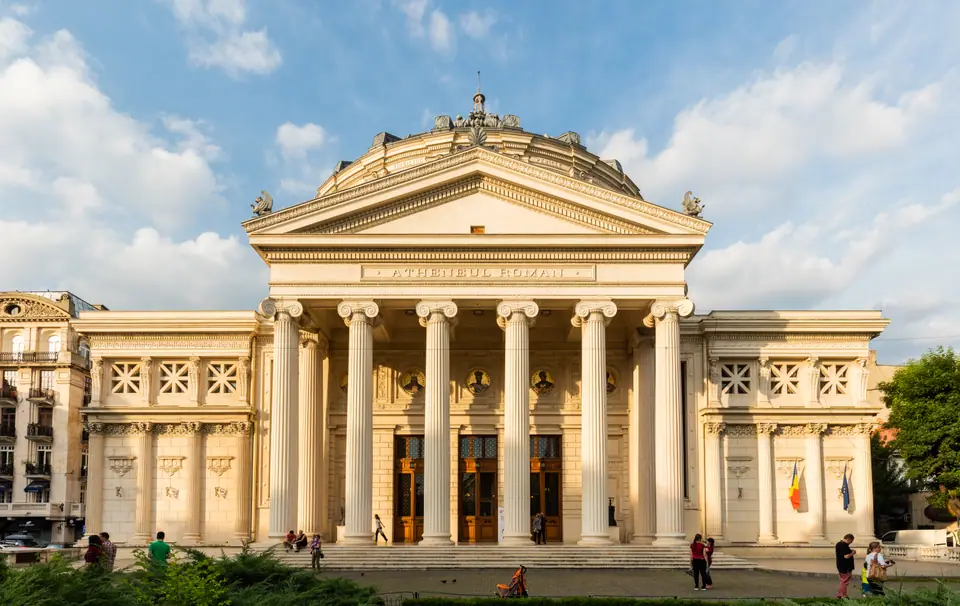
Photo: Diego Delso · CC BY-SA 4.0
Lipscani and the Romanian Athenaeum: Historic Walking Route
Cobblestone passages, Brâncovenesc church courtyards, and grand neoclassical monuments line the historic route along Calea Victoriei.
Bucharest preserves its merchant memory within the dense labyrinth of Lipscani, where medieval trade guilds once gave their names to curving stone lanes. We begin our stroll along pedestrianised alleys paved with rough granite, stepping around historic foundations uncovered by municipal excavators. These blocks escaped the wide-scale urban clearances of the twentieth century. They present a compact pocket of historic architecture that stands in striking contrast to later civic projects. Before setting out, selecting restful hotels around University Square allows visitors to reach the pedestrian zone within minutes on foot.
The network of lanes between the riverbank and University Square demands unhurried exploration on foot, away from heavy car traffic. Morning hours offer quiet strolls across open flagstones before outdoor café terraces fill with patrons. Artisans and traders from across Europe once traded textiles and metalwork along these narrow avenues, establishing an energetic hub of commerce. Restored facades reveal intricate iron balconies, tall arched doorways, and delicate stucco ornaments that survived repeated fires and earthquakes over centuries.
Navigating the Cobblestones of Old Lipscani
Navigating Lipscani requires sensible footwear, as uneven flagstones and loose curbs remain standard throughout the conservation area. The quarter serves as an open outdoor museum where ancient tavern cellars sit beneath restored residential floors. We find quiet corners beside former inns, where heavy carriage gates once shielded horses and cargo wagons from muddy thoroughfares. These courtyards now host independent galleries, pleasant reading rooms, and family eateries serving traditional cornmeal dishes and grilled meats.
We can structure a morning exploration through the historic core by grouping major waypoints along clean walking lines:
- The merchant lane network of Strada Lipscani and Strada Smârdan for restored civic facades.
- The monastic quietude of Stavropoleos Church for stone carvings and timber porticoes.
- The soaring book emporium of Cărturești Carusel for multi-level gallery browsing.
- The northern gateway along Calea Victoriei leading toward civic palaces and art institutions.
Planning transport connections remains straightforward, as local metro stations bookend the pedestrian perimeter at Piața Unirii and Piața Universității. Direct pedestrian crossings link these stations with central avenue walks and shaded courtyard blocks right outside the old walls. Taxis and ride-hailing services pick up passengers strictly at designated roadway perimeters, keeping the core lanes peaceful for walkers.
Quiet Sanctuaries and Cultural Enclaves
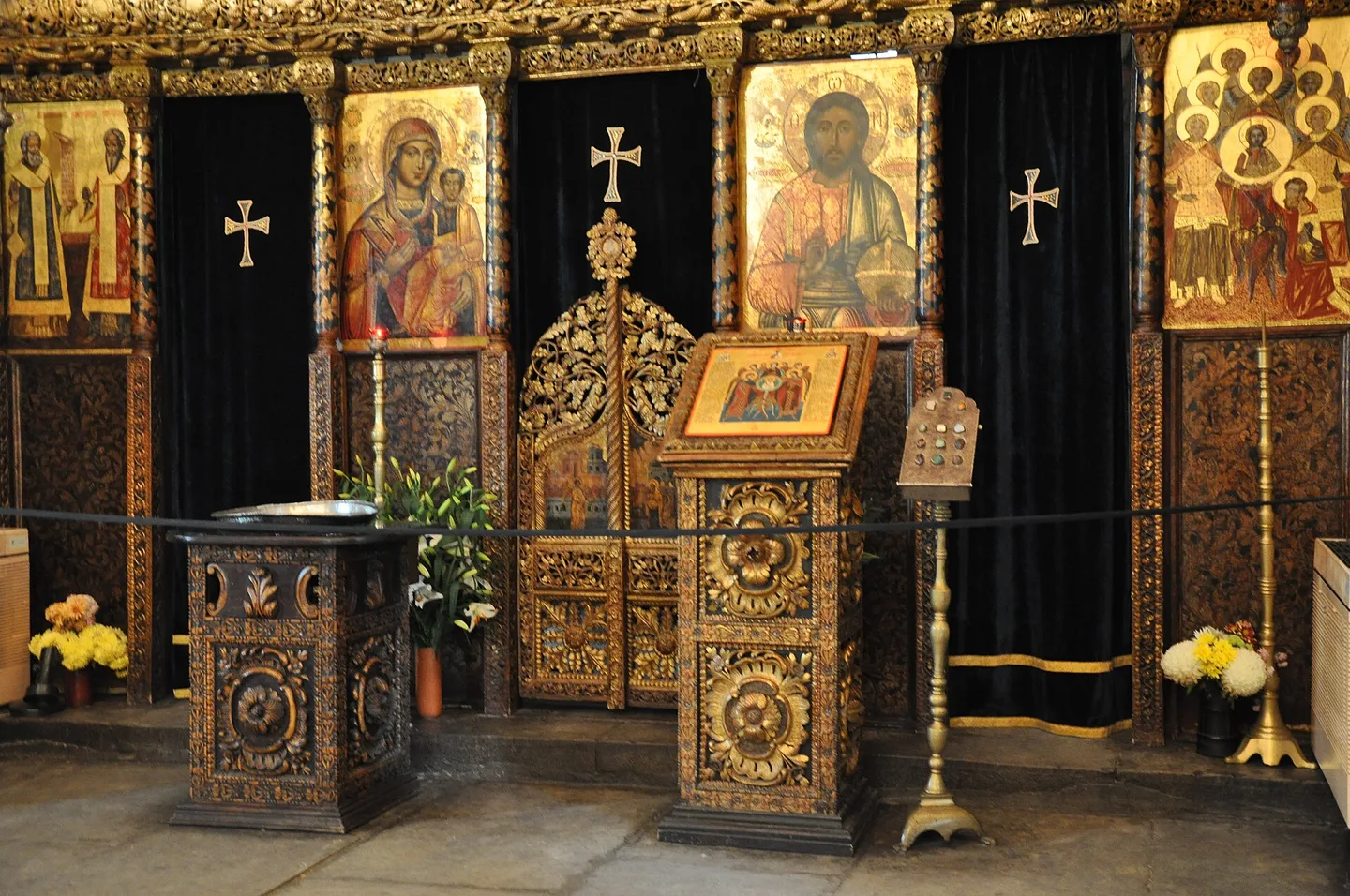
Tucked between towering masonry walls stands Stavropoleos Monastery, an enduring masterpiece of the indigenous Brâncovenesc architectural style. The small Orthodox sanctuary features intricate floral stonework, twisted columns, and ornate wooden doors carved by regional master craftsmen. We step inside to admire Byzantine frescoes glowing softly beneath candlelight, surrounded by painted saints and gilded icon screens. Outside, the enclosed cloister courtyard shelters historic carved tombstones and weathered architectural fragments salvaged from demolished city sanctuaries.
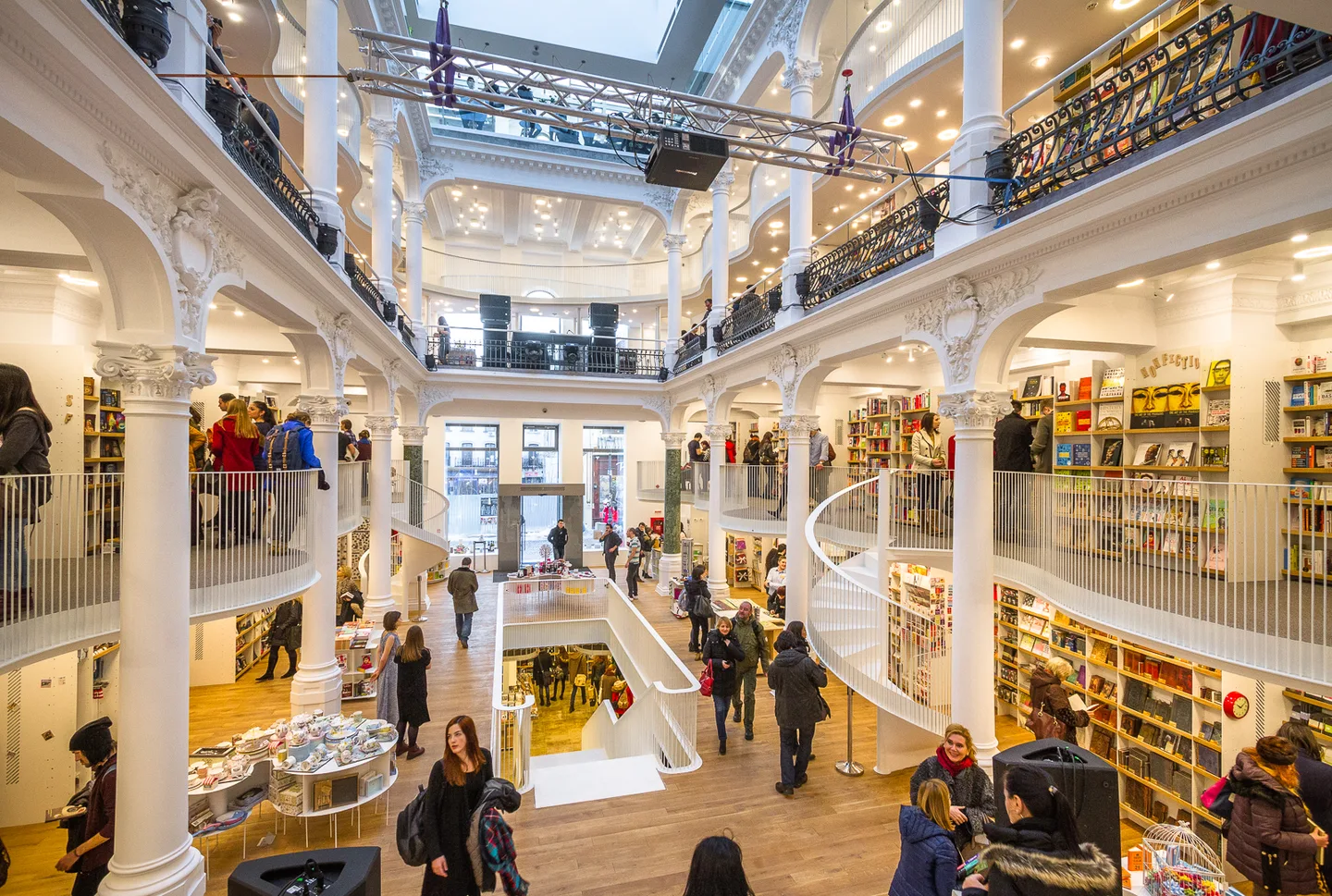
A short stroll away along Strada Lipscani reveals Cărturești Carusel, an exceptional bookshop housed within a restored nineteenth-century trading hall. White undulating balconies rise through multiple floors beneath a broad glazed skylight that floods the reading halls with natural light. Visitors browse local literature, regional maps, and design gifts across polished timber floors while classical melodies drift down from the top-floor tearoom. The structure stands as a remarkable triumph of sensitive urban restoration, reviving private merchant property for modern civic life.
Ascending Calea Victoriei Towards the Athenaeum
Leaving the pedestrian grid behind, we trace Calea Victoriei northwards along the most celebrated historical boulevard in the capital. This noble thoroughfare acquired its name following the War of Independence, quickly becoming the primary walkway for Romanian aristocracy and foreign diplomats. Elegant Belle Époque palaces alternate with modernist apartment blocks, demonstrating the rapid stylistic evolution of Bucharest across different decades. Broad pavements and dedicated cycle lanes allow easy progression past the National Museum of Romanian History and grand administrative headquarters.
We soon arrive at Revolution Square, an expansive civic space shaped by the dramatic events of the late twentieth century. Royal palaces, historic library buildings, and civic monuments surround the perimeter, recalling pivotal moments that defined modern Romanian democracy. The equestrian statue of King Carol I surveys the broad avenue, pointing visitors towards shaded benches under mature linden trees. Walking this stretch offers clear insight into how French neoclassical planning principles influenced municipal designers seeking a sophisticated continental identity.
Architectural Harmony at the Romanian Athenaeum
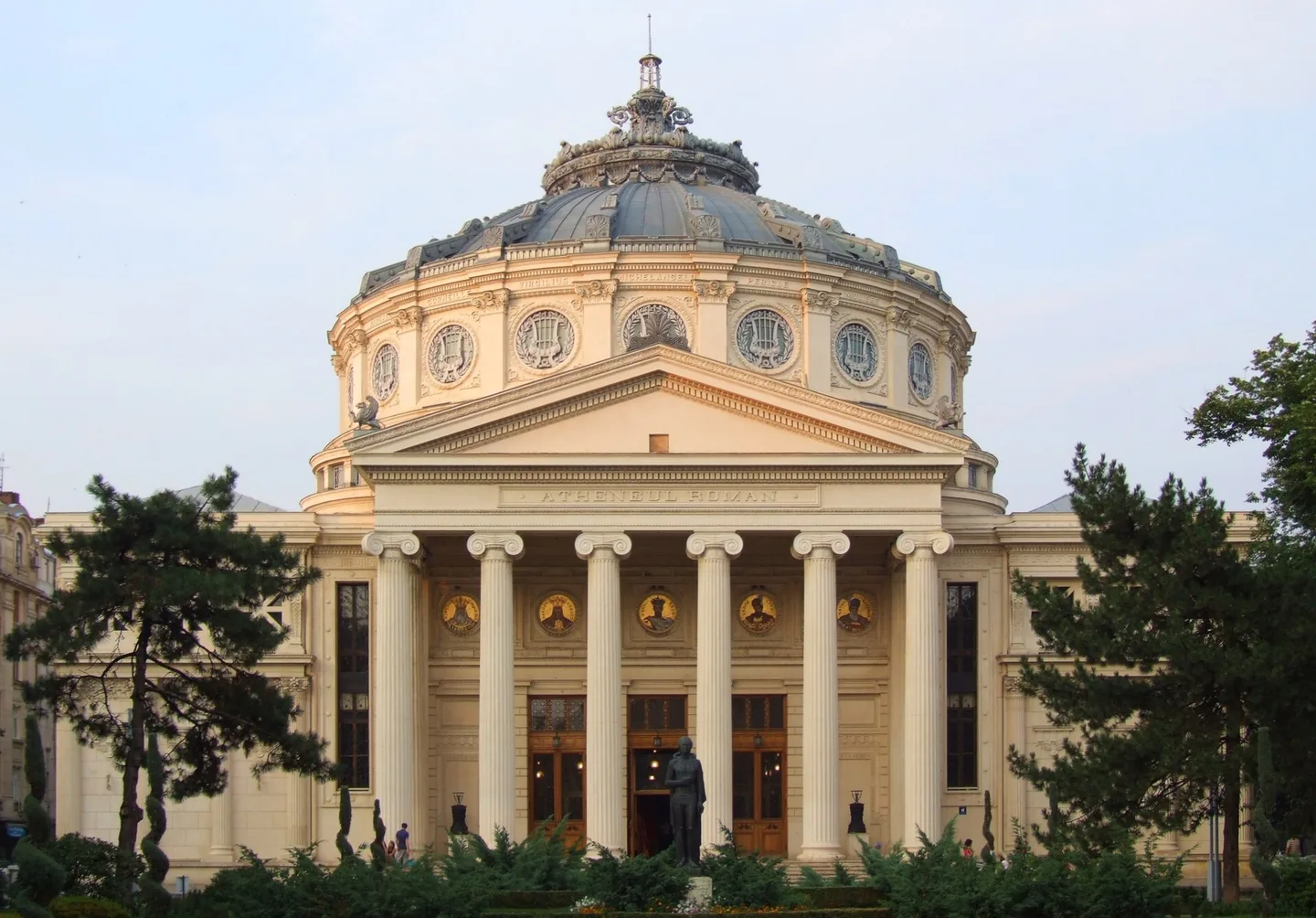
At the northern edge of the historic promenade stands the Romanian Athenaeum, the supreme crown of classical music in Romania. Completed in the late nineteenth century through a celebrated public fundraising campaign, the building reflects triumphant neoclassical and eclectic French design principles. A majestic portico of Ionic columns supports an ornate triangular pediment, evoking ancient Greco-Roman temples beneath a monumental dome. Manicured flowerbeds and bronze statues honouring prominent regional poets surround the entrance steps, creating a tranquil green retreat from urban traffic.
Inside the grand circular concert hall, a magnificent fresco spanning the interior dome circumference depicts pivotal milestones from national history. Renowned as the permanent home of the George Enescu Philharmonic Orchestra, the auditorium possesses world-recognised acoustics that draw international chamber ensembles. Attending an evening symphonic performance or admiring the marble staircases offers a fitting finale to our historic walking route through Bucharest.
Official prices and opening hours
- Palace of the Parliament (Palatul Parlamentului)Official site ↗
- Dimitrie Gusti National Village Museum (Herăstrău Park)Official site ↗
Where it is
- 1Lipscani and the Romanian Athenaeum
- Bucharest Henri Coandă International Airport (OTP) · about 15 km from here in a straight line
- Directions in Google Maps
Stations and taxi ranks: OpenStreetMap. Airports: OurAirports. Distances are in a straight line.
Traveller tips
Real advice from people who have been to Bucharest. Every tip is read by our team before it goes live.
No tips yet. Been here? Yours could be the first.
Thank you! Your tip will appear here after a quick review.
More in Bucharest
Continue exploring Bucharest with related neighbourhood, food, and planning guides