Photo: Diego Delso · CC BY-SA 4.0
Palace of the Parliament: Scale, Architecture and Booking Rules
Bucharest holds one of the heaviest administrative buildings on Earth, demanding advance tour arrangements, identity screening, and thorough urban walking plans.
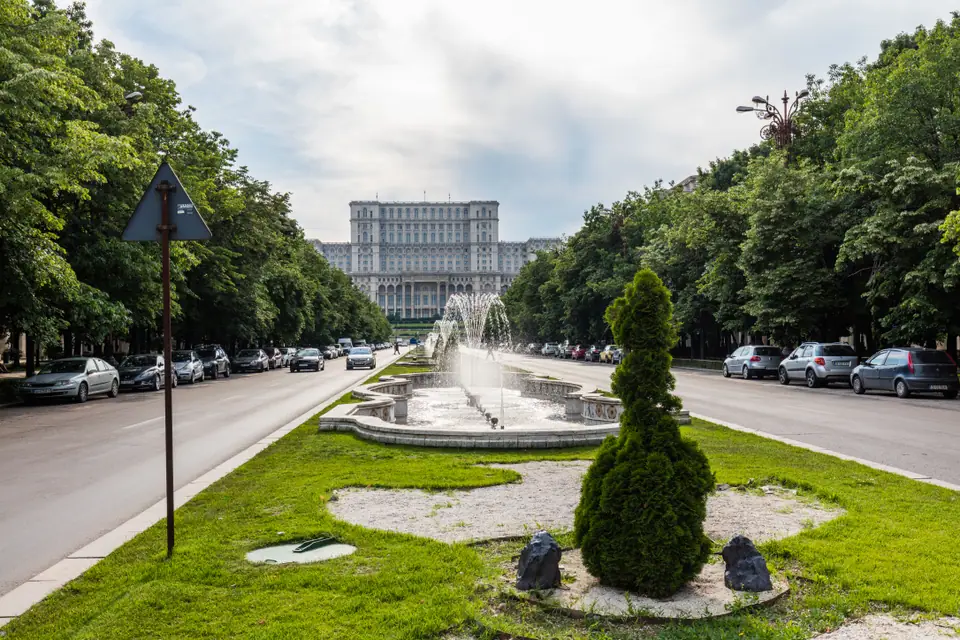
Standing at the southern termination of broad ceremonial boulevards, the Palace of the Parliament dominates the central skyline of Bucharest with imposing stone mass. Conceived during the final decade of the socialist regime, the colossal structure reshaped the historic Uranus neighbourhood through dramatic architectural interventions. We observe an edifice ranking among the largest administrative buildings globally, built with domestic marble, timber, and cast bronze. Approaching the perimeter fence from eastern avenues reveals geometric symmetry favoured by its architects. Broad pavements connect these monument blocks with Calea Victoriei boulevards and metro stations across central town.
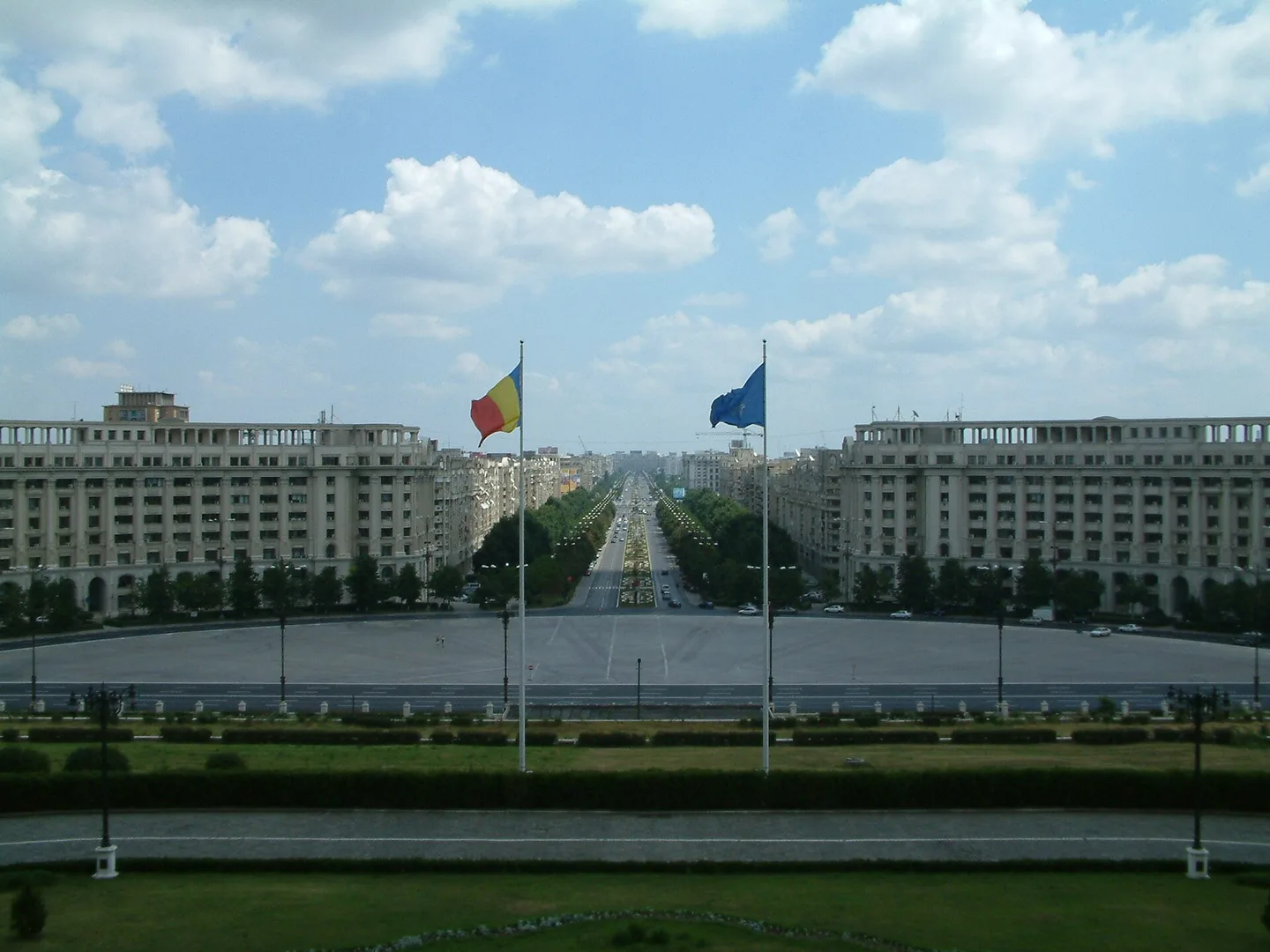
The palace functions as the active seat of the Senate and Chamber of Deputies, meaning visitors encounter working political institutions rather than a dormant museum. Vast terrace podiums lift central halls above street level, creating clear sightlines across public lawns. Dense limestone cladding and carved masonry give exterior facades a heavy neoclassical texture. Planners cleared older parishes and streets to lay an unbroken visual axis eastward across central squares, leaving long walking distances around the outer compound.
Booking Rules, Entry Protocols and Admission Logistics
Entering the complex requires strict adherence to state administrative rules, beginning with compulsory advance reservations and identity checks. Every guest must present an original valid national passport or official European Union identity card at the designated entry gates. Driving licences or digital smartphone scans are routinely refused by reception guards, turning unprepared walkers away at the outer doors. Metal detectors, baggage X-ray scanners, and bag inspections monitor every public entrance.
- Original physical passport or valid European identity card required at the checkpoint desk.
- Airport-standard electronic screening for all personal daypacks and metal accessories.
- Compulsory escort by an accredited internal guide along pre-approved corridors.
- Designated visitor entry situated on the northern side along Bulevardul Națiunile Unite.
- Advance ticket confirmation required before arriving at the outer gates.
Individual exploration without an official guide remains strictly prohibited inside the complex due to continuous government operations. Guests assemble into structured language groups, walking closely behind assigned parliamentary staff members. Straying from the group into side lobbies or unlit stairwells draws prompt intervention from uniformed internal officers. Pair formal legislative tours cleanly with monument boulevards and northern park galleries to round out your afternoon. Group sizes stay controlled at the northern reception desk to keep movement orderly through legislative wings.
Navigating the Interiors and Key Architectural Halls
Once past the checkpoint barrier, tour paths lead up sweeping monumental staircases constructed entirely from pale Transylvanian stone. Cavernous assembly chambers display colossal crystal chandeliers, patterned oak parquetry, and intricately woven wool carpets weighing several tonnes. The acoustic resonance within the grandest galleries highlights the absence of soft domestic furnishings across the principal ceremonial suites. Gilded plaster ceilings frame soaring archways, reflecting the late socialist state's focus on domestic mineral production and national craft traditions. Vast monumental doors carved from native oak and walnut seal off executive committee rooms along adjacent wings.
| Interior Sector | Architectural Character | Visitor Experience |
|---|---|---|
| Grand Staircases | Monolithic white marble steps and balustrades | Broad ceremonial ascent with echoing acoustics |
| Plenary Foyers | High stone pillars and gilded rosettes | Vast transition zones between legislative halls |
| Ceremonial Chambers | Crystal chandeliers and heavy drapery | Restricted viewing along roped central routes |
| Elevated Balconies | Carved balustrades facing public avenues | Panoramic vistas across the central urban axis |
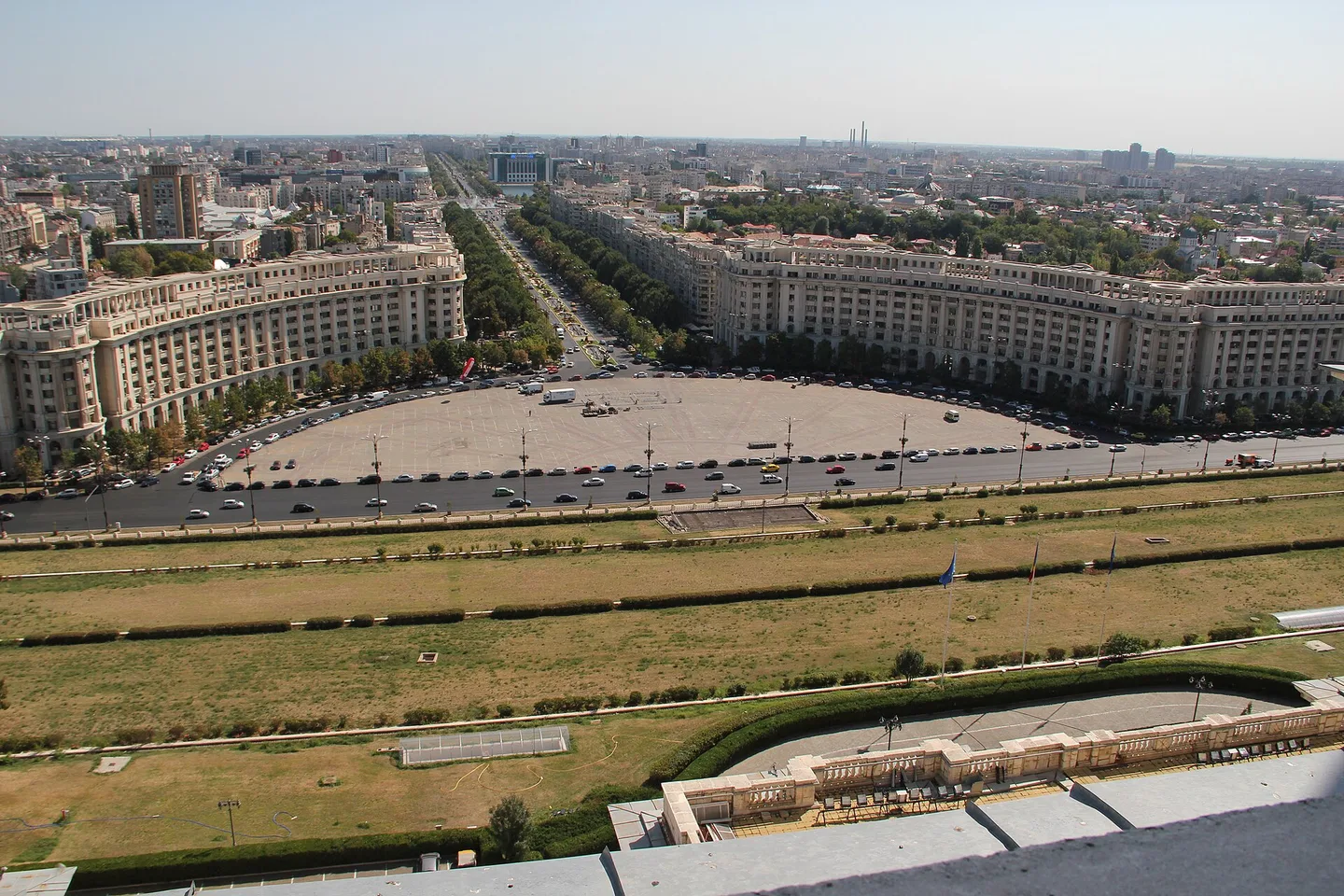
Tour routes occasionally include external loggias that grant elevated panoramas over Bulevardul Unirii and distant residential quarters. Looking out from these grand colonnades demonstrates how urban architects aligned public fountains directly with the central presidential balcony. Natural daylight streams through tall rectangular apertures, illuminating polished marble floor tiles that stretch toward distant perimeter doors. Because internal walking circuits cover long corridors and multiple flights of steps, comfortable closed walking shoes prove essential. Photography permissions inside the legislative wings depend on current parliamentary rules and specific guide instructions.
Surrounding Avenues, Transit Links and Area Routes
Reaching the monument by public transport proves straightforward, with nearby underground rail stations anchoring practical pedestrian routes. Piața Unirii metro station serves as a prime interchange, allowing visitors to walk westward along tree-lined pavements alongside the ceremonial fountains. Alternatively, Izvor station offers direct access to the parkland adjoining the northern facade and the primary visitor reception entrance. Skirting the massive perimeter fence demands considerable physical effort, so allocating extra transit time is recommended. Walking paths connect directly from Izvor park toward central transit stops along the southern riverbank.
Surrounding parklands provide open public lawns where residents exercise, walk dogs, and photograph the colossal stone foundations. The southern wing hosts contemporary cultural galleries, offering contrasting perspectives on experimental art within authoritarian concrete spaces. Exploring the wider urban district reveals leafy residential quarters that survived the extensive demolition campaigns of late socialist planning. Leaving the northern gates allows a gentle downhill walk toward the banks of the Dâmbovița river and quiet garden squares. Exploring the perimeter avenues during late afternoon offers striking views of stone facades under changing natural light.
Official prices and opening hours
- Palace of the Parliament (Palatul Parlamentului)Official site ↗
- Dimitrie Gusti National Village Museum (Herăstrău Park)Official site ↗
Where it is
- 1Palace of the Parliament
- Bucharest Henri Coandă International Airport (OTP) · about 16 km from here in a straight line
- Directions in Google Maps
Stations and taxi ranks: OpenStreetMap. Airports: OurAirports. Distances are in a straight line.
Traveller tips
Real advice from people who have been to Bucharest. Every tip is read by our team before it goes live.
No tips yet. Been here? Yours could be the first.
Thank you! Your tip will appear here after a quick review.
More in Bucharest
Continue exploring Bucharest with related neighbourhood, food, and planning guides