Photo: Brian Barbutti · CC BY-SA 4.0
San Telmo, Plaza Dorrego, and the Historic Mercado
Discover San Telmo in Buenos Aires, from the 1897 Mercado iron hall and Plaza Dorrego antique fairs to colonial streets and authentic neighbourhood tango.
Directly south of Plaza de Mayo, San Telmo is the oldest continuously settled residential quarter in Buenos Aires. Known as Alto de San Pedro during the seventeenth century, the area initially housed river harbour hands, dockworkers, and brickmakers who laboured above the silted margins of the Río de la Plata. Wealthy merchants built multi-patio residences here throughout the eighteenth and early nineteenth centuries. That concentration shifted abruptly when the yellow fever epidemic of 1871 drove affluent residents north towards Recoleta. Their abandoned neoclassical mansions became crowded immigrant tenements known as conventillos, providing fertile soil for the birth of tango culture, trade workshops, and bohemian artist ateliers that still anchor neighbourhood identity today.
Walking across the uneven granite setts of Calle Defensa exposes this rich architectural heritage. Unlike the planned boulevards constructed across the city centre during subsequent decades, San Telmo retained its tight colonial grid, narrow pavements, and low-rise skyline. Travellers who base their walking routes here discover an authentic balance between working residential life, time-worn antique shops, and preserved municipal landmarks.
Architectural Legacy of Mercado de San Telmo
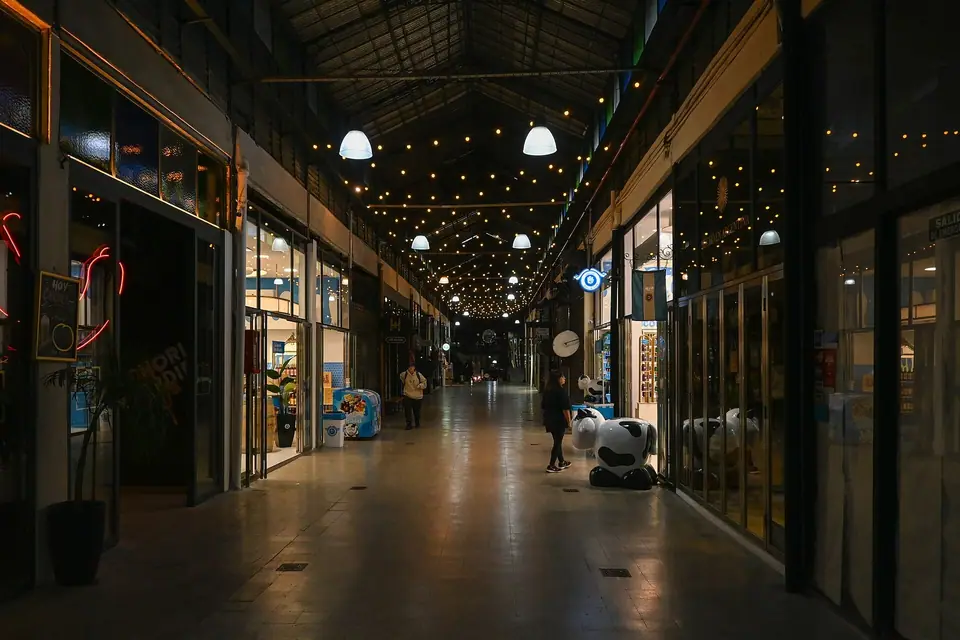
Bounded by Calle Bolívar, Calle Carlos Calvo, Calle Defensa, and Calle Estados Unidos, the Mercado de San Telmo remains the commercial anchor of the neighbourhood. Italian architect Juan Antonio Buschiazzo designed the municipal market hall, which officially opened its doors in 1897. The interior showcases industrial-age civil engineering, supported by heavy riveted cast-iron columns, arched trusses, and an expansive central glass cupola that illuminates the internal retail aisles.
The market preserves its dual character with remarkable persistence. Working neighbourhood butchers, fishmongers, and greengrocers trade fresh produce beneath the iron framework right next to specialist vintage vendors. Travellers can inspect stalls stacked with mid-century soda siphons, vintage tango records, antique silver mate gourds, and historical print advertisements. Counter-service eateries inside the perimeter serve freshly baked empanadas, grilled beef cuts, and artisanal coffee. Visiting on a Tuesday or Wednesday morning reveals the market hall in its quietest state, allowing unhurried architectural photography before midday trade picks up.
Plaza Dorrego and Sunday Antique Trading
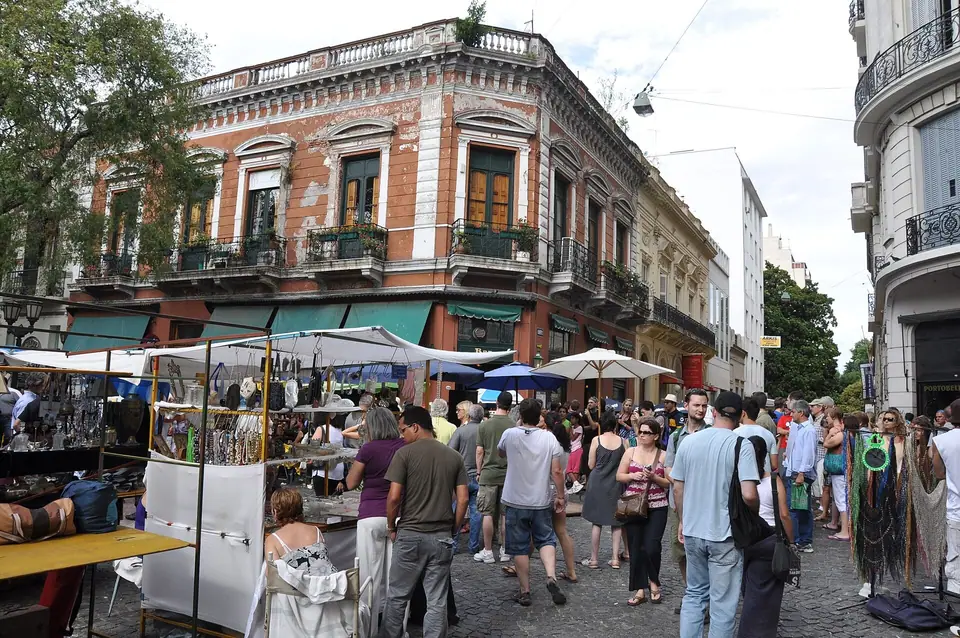
Plaza Dorrego forms the social heart of San Telmo at the crossing of Calle Defensa and Calle Humberto Primo. Second only to Plaza de Mayo in historical antiquity, this open public square served as a critical rest stop for horse-drawn delivery wagons entering Buenos Aires from southern supply routes. Today, shady plane trees shelter traditional café tables where locals linger over espresso and mineral water on wide flagstone terraces.
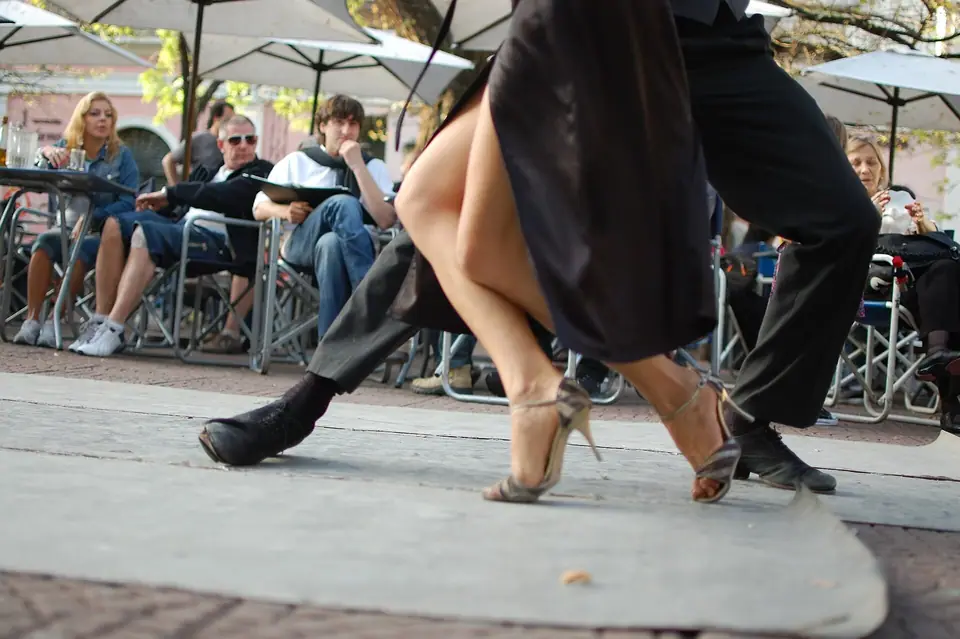
Every Sunday, the square hosts the famous Feria de Antigüedades de San Telmo. Authorised dealers pack the central plaza with display tables featuring antique jewellery, pocket watches, porcelain sets, vintage leather luggage, and collectable tango memorabilia. Street musicians and couples performing improvised tango steps regularly gather on the surrounding cobblestones, drawing enthusiastic crowds of onlookers. On weekdays, the square settles into a relaxed tempo, offering a peaceful retreat to sit outside historic barrooms and watch neighbourhood life unfold at a leisurely pace.
San Pedro Telmo Church and Colonial Remnants
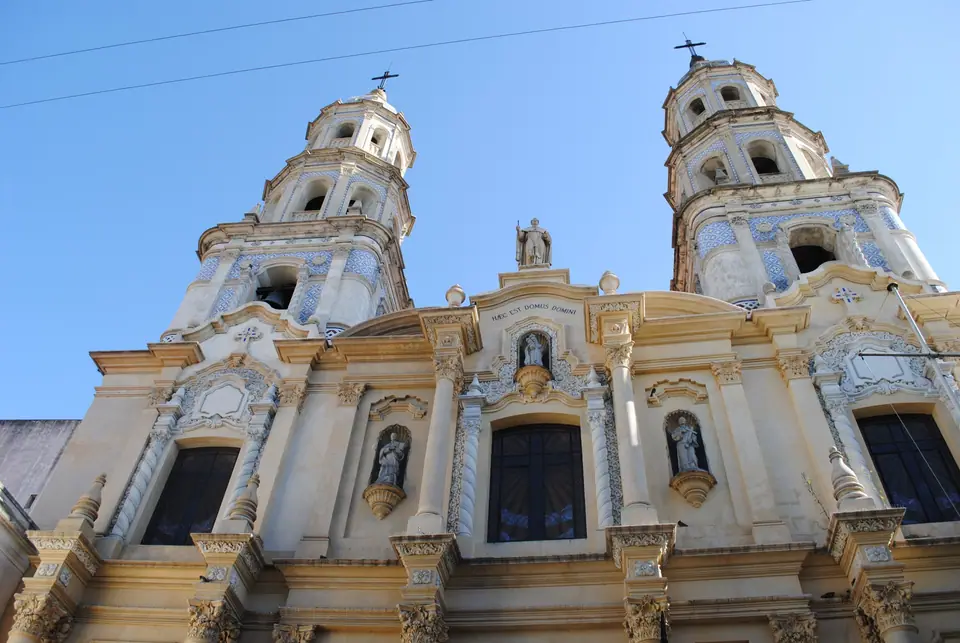
Just half a block north of Plaza Dorrego on Calle Humberto Primo stands the Church of San Pedro González Telmo. Construction began under the Jesuit order in 1734 under the direction of architect Andrés Blanqui, with subsequent master builders completing the complex across several decades. Named in honour of Saint Pedro González Telmo, the patron saint of seafarers, the building features distinctive twin bell towers adorned with Portuguese blue-and-white ceramic tiles, a wide brick cloister, and heavy wooden entrance portals.
The surrounding blocks contain some of the oldest preserved colonial streetscapes in the Argentine capital. Heavy timber doors open into cool entrance vestibules called zaguanes, leading through wrought-iron gates into deep central courtyards lined with ceramic tiles and climbing jasmine vines. Exploring these quiet residential passages provides direct insight into local urban life away from the heavier vehicle traffic found along nearby thoroughfares.
San Telmo Exploration Directory
| Location | Primary Attraction | Architectural Style | Optimal Visiting Window |
|---|---|---|---|
| Mercado de San Telmo | Food market and vintage stalls | 1897 cast-iron industrial dome | Weekday mornings for lower foot traffic |
| Plaza Dorrego | Antique fair and open-air tango | Colonial open public square | Sunday fair day or quiet weekday afternoons |
| San Pedro Telmo Church | Eighteenth-century church and cloister | Colonial Baroque with tiled bell towers | Morning hours between service schedules |
| Pasaje San Lorenzo | Restored conventillos and historic alleyways | Nineteenth-century residential architecture | Daylight hours during walking tours |
Seasonal Weather and Walking Conditions
San Telmo is best explored entirely on foot, making local weather conditions an essential planning factor. According to Open-Meteo climate data recorded between 2015 and 2024, summer conditions bring warm afternoon temperatures to the capital, with January reaching an average daily high of 30.1°C and a low of 20.2°C across 9 wet days. February follows closely with highs of 28.9°C, lows of 19.4°C, and 56 millimetres of rainfall over 8 wet days. Exploring the cobbled pavements during summer calls for light cotton clothing, adequate hydration, and taking shaded rests beneath the trees of Plaza Dorrego during peak afternoon heat.
Autumn offers mild conditions for wandering through market arcades and open squares. April experiences comfortable average highs of 23.2°C and lows of 14.1°C with 63 millimetres of precipitation. Winter temperatures drop significantly, with July recording an average high of 15.5°C and a brisk low of 7.5°C across 7 wet days. Spring transforms the streetscape as temperatures recover; November records an average high of 26°C and a low of 16.1°C across 9 wet days, when purple jacaranda blossoms begin carpeting the neighbourhood pavements.
Urban Connections and Practical Route Advice
Navigating San Telmo requires practical attention to foot travel conditions. The centuries-old granite cobblestones on Calle Defensa and intersecting side streets can be slippery when wet, and broken flagstones make sturdy walking shoes necessary. Heavy delivery vehicles use several secondary streets, so remain mindful of kerb drops while photographing historic facades.
Public transport connects the quarter reliably to wider Buenos Aires. Subte Line C stops along Avenida Independencia and Avenida San Juan, providing rapid transit connections to Retiro railway station. Combining a visit to San Telmo with an evening stroll along the waterfront docks of Puerto Madero requires only a short walk eastward across Avenida Paseo Colón. For dining options, the neighbourhood offers traditional beef cuts and casual counter meals detailed in our overview of what to eat across the capital. Check opening schedules on official municipal cultural portals before planning visits to specific historic interiors or parish museums.
Where it is
- 1San Telmo, Plaza Dorrego, and the Historic Mercado
- Aeroparque Jorge Newbery (AEP) · about 8 km from here in a straight line
- Directions in Google Maps
Stations and taxi ranks: OpenStreetMap. Airports: OurAirports. Distances are in a straight line.
Traveller tips
Real advice from people who have been to Buenos Aires. Every tip is read by our team before it goes live.
No tips yet. Been here? Yours could be the first.
Thank you! Your tip will appear here after a quick review.
More in Buenos Aires
Continue exploring Buenos Aires with related neighbourhood, food, and planning guides
Best Time to Visit Buenos Aires: Seasons, Jacarandas, and Weather
Buenos Aires, Argentina
Where to Stay in Buenos Aires: Neighbourhoods and Hotel Bases
Buenos Aires, Argentina
3 Days in Buenos Aires: Neighbourhoods, Tango, and Riverfront
Buenos Aires, Argentina
What to Eat in Buenos Aires: Asado, Empanadas, Choripán, and Helado
Buenos Aires, Argentina
