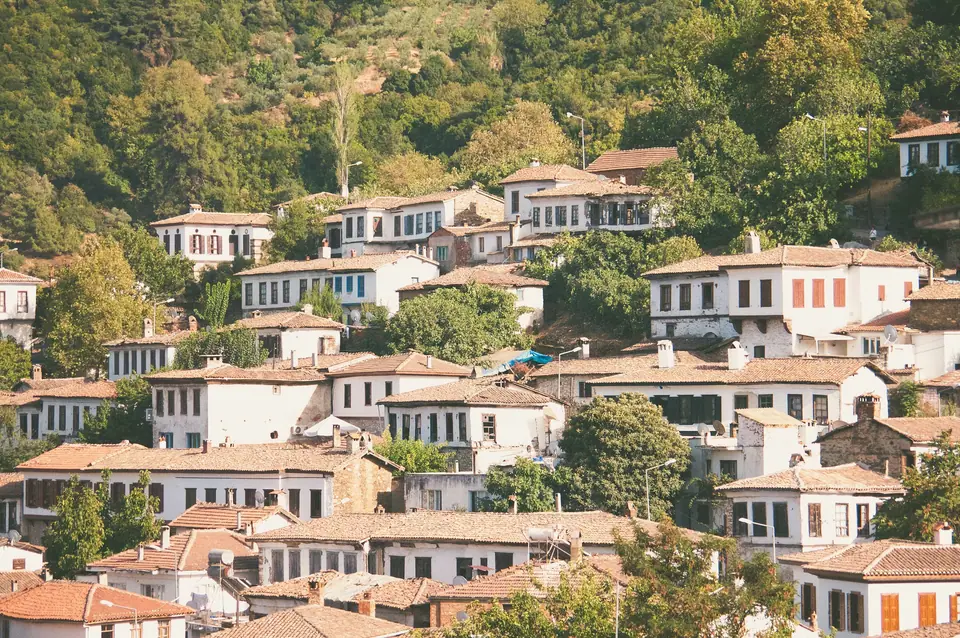
Photo by Liligance on Unsplash
Şirince Day Trip from Ephesus and Selçuk
Complete travel guide for an afternoon excursion to Şirince from Ephesus, featuring transport options from Selçuk, historic stone architecture, and regional food.
Şirince sits about 8 kilometres east of Selçuk, high in the hills above the ancient plain. The winding road climbs steadily through silver-green olive groves, orchards, and vineyards. Most travellers combine this historic settlement with an early morning walking the marble streets of the ancient city. Reviewing our One Day in Ephesus Itinerary shows how comfortably a morning at the ruins pairs with an unhurried afternoon in the hills. The altitude provides a cooler retreat when coastal plains turn sweltering.
The Heritage and Architecture of the Hill Village
Until the 1920s, Şirince was predominantly an Ottoman Greek village. Following the compulsory population exchange between Greece and Turkey, Muslim families arriving from northern Greece settled into the valley. Many of the whitewashed, two-storey stone houses with timber frames and red terracotta tiled roofs date directly from the nineteenth century. These traditional residences cling to steep hillside contours, facing outward across verdant terraces.
Walking up the paved paths leads to significant religious architecture. Near the crest of the settlement stands the restored Church of Saint John the Baptist. A second historic sanctuary, the Church of Saint Demetrius, rests partly in ruins lower down the slope. Both stone structures offer panoramic viewpoints over slate-roofed dwellings and surrounding orchards. The regional landscape carries deep spiritual connections, as pilgrims visiting the House of the Virgin Mary on Mount Koressos will observe across nearby slopes.
Wandering the Cobbled Streets and Village Markets
The core appeal of visiting Şirince lies in stepping away from structured museum corridors. Narrow cobbled alleys climb past garden walls draped in grapevines and fig trees. The lower market lanes close to the transport drop-off point feature stalls selling locally produced goods. Vendors display cold-pressed olive oil, handmade olive oil soaps, regional thyme, dried figs, walnut preserves, and intricate needle lace made by local artisans.
These central footpaths become active with day visitors around midday. Escaping the crowds requires only five minutes of steady uphill walking. As the incline steepens, the commercial displays thin out, leaving quiet residential courtyards where elderly residents chat on shady stone thresholds. To explore more activities across the wider municipality, consult our guide on Things to Do in Ephesus.
Fruit Wines and Traditional Village Cuisine
Şirince earned modern fame across Turkey for fruit-fermented sweet wines. Local cellars and boutique shops offer tastings of wines pressed from blackberries, sour cherries, peaches, melons, quinces, and pomegranates. These beverages are distinctly sweet and dessert-oriented rather than classical dry dinner vintages. Conventional grape wines from regional Aegean vineyards are stocked across tasting rooms as well. Nearly every shopkeeper invites pedestrians inside to sample several varieties before making a selection.
Regional dining focuses on fresh, unpretentious Aegean flavours. Village women roll out thin sheets of dough on low wooden tables to prepare fresh gözleme. These savoury flatbreads are cooked on convex iron griddles over open braziers, filled with wild mountain greens, sharp curd cheese, minced meat, or spiced potatoes. Shaded terrace restaurants tucked beneath walnut trees serve extended Aegean breakfasts with local olives, homemade jams, honeycomb, and rich clotted cream. Pair your meal with thick Turkish coffee brewed slowly in hot sand.
Seasonal Weather Considerations
Open-Meteo climate records from 2015 to 2024 illustrate distinct shifts across the seasons in this corner of İzmir Province. Summer afternoon heat reaches demanding peaks, while winter brings pronounced rain. The mountain air in Şirince typically feels several degrees cooler than the exposed marble monuments down at the archaeological site, offering welcome relief during July and August.
| Season | Average High / Low | Rainfall Pattern | Planning Focus |
|---|---|---|---|
| Spring (April to May) | 21.4°C to 26.0°C / 12.0°C to 16.3°C | 40 to 48 mm (6 wet days monthly) | Mild temperatures, blossoming fruit trees, pleasant walking. |
| Summer (June to August) | 31.3°C to 36.2°C / 21.0°C to 24.4°C | 3 to 34 mm (1 to 5 wet days monthly) | Intense afternoon heat, dry trails, seek shaded courtyards. |
| Autumn (September to October) | 25.6°C to 30.9°C / 15.9°C to 20.6°C | 21 to 46 mm (3 to 4 wet days monthly) | Grape harvest period, pleasant daylight, gentle breezes. |
| Winter (November to February) | 12.8°C to 20.1°C / 5.7°C to 11.7°C | 77 to 144 mm (9 to 12 wet days monthly) | Heavy rainfall, woodsmoke from chimneys, peaceful alleys. |
Checking regional forecasts before setting out helps you select appropriate layers. For detailed suggestions on footwear and clothing suited to climbing cobbled slopes, read our resource on What to Wear in Ephesus.
Transport Logistics from Selçuk and Ephesus
Reaching the village without a private vehicle is straightforward and efficient. Local minibuses, known across Turkey as dolmuş, depart regularly from the central bus terminal in Selçuk. The journey spans roughly twenty minutes as the bus navigates hairpin turns through the hills. Taxis wait outside the main gates of Ephesus and at the Selçuk train station, offering a direct option for small groups.
Drivers should proceed with caution along the winding mountain roadway, especially on Saturdays and Sundays when domestic visitors travel inland from İzmir. Vehicle entry to the historic upper lanes is strictly restricted to preserve the old stone foundations. Drivers must leave their cars in the pay parking facilities located at the bottom of the village approach, continuing on foot up the cobbled tracks.
Comparing Day Excursions and Overnight Stays
Most visitors treat Şirince as a three-hour afternoon excursion after touring the archaeological zone. However, remaining overnight reveals an entirely different character. Once the final minibuses return to Selçuk in the late afternoon, the souvenir market quietens and tourist coaches depart. The valley settles into tranquil silence broken only by evening goat bells and birdsong.
Historic houses that were abandoned decades ago have been restored into boutique guesthouses featuring whitewashed plaster walls, traditional timber ceilings, and working fireplaces for cooler autumn evenings. Spending the night allows travellers to wake up to valley mist rising off the olive orchards before the first day-trippers arrive from the coast. To decide where to base yourself across the area, read our overview on Where to Stay Near Ephesus.
Where it is
- 1Şirince Day Trip from Ephesus and Selçuk
- Adnan Menderes International Airport (ADB) · about 46 km from here in a straight line
- Directions in Google Maps
Stations and taxi ranks: OpenStreetMap. Airports: OurAirports. Distances are in a straight line.
Traveller tips
Real advice from people who have been to Ephesus. Every tip is read by our team before it goes live.
No tips yet. Been here? Yours could be the first.
Thank you! Your tip will appear here after a quick review.
More in Ephesus
Continue exploring Ephesus with related neighbourhood, food, and planning guides