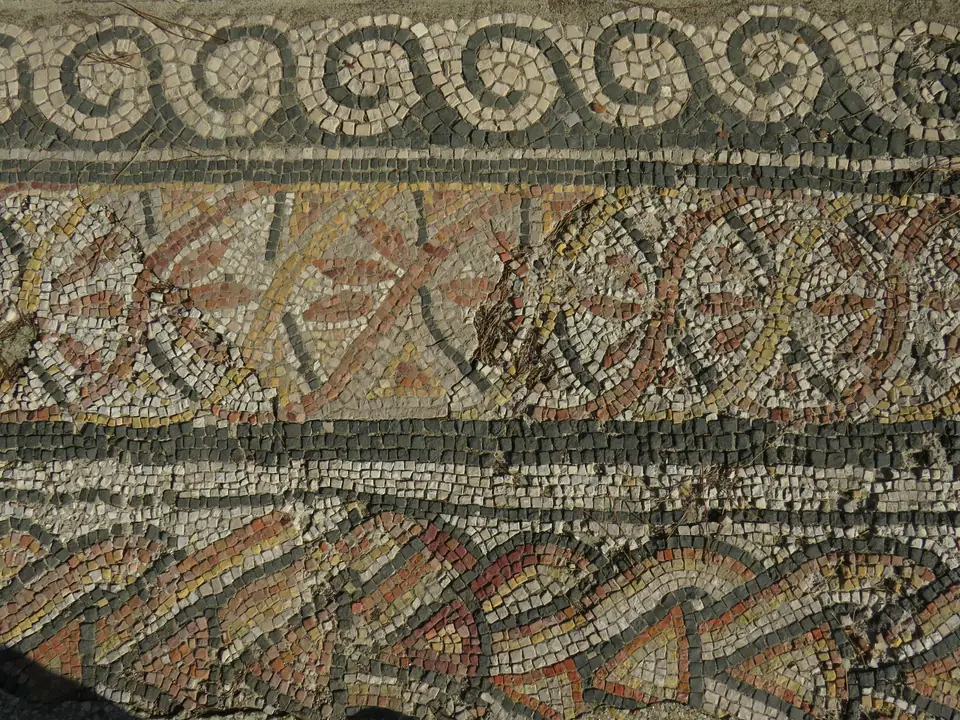
Photo by Adrien Antal on Unsplash
Ephesus Terrace Houses Guide: What to See and Visitor Logistics
Explore the Roman residential villas inside Ephesus. Read our practical guide covering hillside frescoes, intricate mosaic pavements, gangway access, and walking logistics.
Standing halfway down Curetes Street inside ancient Ephesus, the hillside residential quarter known as the Terrace Houses offers an intimate counterpoint to public civic monuments. While the exterior ruins display communal life through marble avenues, colonnades, and civic halls, this covered complex reveals the domestic reality of elite Roman citizens from the first century onwards. An earthquake brought the multi-storey units down centuries ago, sealing interior spaces beneath fallen masonry and preserving remarkably delicate decorative schemes. Today, visitors step off the sunny open street into a shaded protective structure engineered directly over the archaeological excavation.
Locating the Residential Hillside Within Ephesus
Ephesus was founded in the tenth century BC by Attic and Ionian Greek colonists on the site of Apasa. The city later grew into a dominant member of the twelve settlements comprising the Ionian League. After coming under Roman control in 129 BC, it served as a monumental administrative centre and maritime hub until its harbour silted up. The residential block sits terraced against the slope of Mount Coressus, directly overlooking Curetes Street just before the avenue reaches the grand facade of the Library of Celsus. You can coordinate this stop with our wider One Day in Ephesus Itinerary: A Strategic Archaeological Walking Plan.
The entrance turnstile sits on the right-hand side as you walk downhill towards the library. Entry to this specific sector requires a separate supplemental ticket beyond the standard ancient city pass. Tickets can be acquired at the site access points or at the dedicated turnstile entrance. Travellers who want to map their approach across the regional road grid from İzmir or the nearby market town of Selçuk should consult our transport guide on How to Get to Ephesus. Because guided bus groups frequently skip this interior section to maintain their schedules, the covered walkways often provide a quieter experience than the crowded thoroughfares outside.
Interior Architecture and Domestic Highlights
The protected site features a sequence of domestic units constructed across distinct ascending levels. Wealthy Ephesians designed these homes around central light-filled courtyards, known as peristyles, which were surrounded by private dining rooms, domestic reception spaces, and private baths. Deep within the hillside structures, archaeologists uncovered sophisticated clay-pipe infrastructure that channelled water to private rooms and distributed warm air through sub-floor hypocaust cavities. This advanced building engineering shows how the Roman elite blended urban luxury with seismic adaptation.
As you traverse the suspended metal gangways, look down directly into the original living quarters. You will see several signature features preserved in their original domestic locations:
- Vivid Wall Paintings: Frescoes depict intricate floral bands, bird motifs, dramatic theatrical masks, and depictions of the Muses. Many pigments retain surprising visual saturation because centuries of protective debris shielded them from sun exposure.
- Geometric and Figural Mosaics: Intricate stone carpets pave the reception rooms and colonnaded peristyles. These floor mosaics alternate between tight geometric designs and mythological portraits rendered in local stone tesserae.
- Clad Marble Dining Salons: Certain banqueting rooms retain their original revetment wall revetments, where thin sheets of imported veined marble were pegged against brickwork to project family status.
- Active Restoration Stations: Conservators maintain live working tables inside the enclosure. You can watch specialists sorting, numbering, and piecing together thousands of fractured marble shards into coherent architectural elements.
Terrace Houses Archaeological Features
| Sector Element | Primary Focus | Visual Features to Observe | Visitor Pathway Condition |
|---|---|---|---|
| Peristyle Courtyards | Central domestic lightwells | Doric and Ionic columns, stone drainage basins | Viewed from overhead steel bridges |
| Triclinium Dining Halls | Elite entertainment spaces | Intricate multi-coloured mosaic floors | Direct downward sightlines through glass railings |
| Private Living Chambers | Domestic family suites | Mythological wall frescoes and painted friezes | Narrow single-file metal walkways |
| Hypocaust Heating Cells | Thermal bath engineering | Suspended tile floors and terracotta heating pipes | Exposed cross-sections beside step ascents |
| Restoration Workshops | Onsite conservation | Numbered marble fragments on sorting tables | Visible beside the middle platform level |
Physical Accessibility and Gangway Routing
The internal walkway layout follows a strict one-way loop that climbs through the excavation on modern suspended metal catwalks and descending stairs. These walkways allow researchers to work on the fragile floors below without tourist interference. However, this vertical configuration requires continuous stair navigation. Visitors must ascend and descend dozens of open-grate industrial metal steps as the path tracks the hillside grade. The transparent metal mesh flooring can induce vertigo in travellers sensitive to heights. Pushchairs, prams, and wheelchairs cannot enter the gangway system, and there are no lift facilities within the protective hangar. Wear sturdy, non-slip footwear to maintain firm footing on smooth steel grids. Review our dedicated guide on What to Wear in Ephesus: Footwear, Sun Protection, and Modesty Guidelines before heading onto the ancient avenues.
Seasonal Weather and Site Conditions
Because the complex is fully enclosed beneath a modern protective roof structure, it offers shade from the intense Aegean sun. Midday summer heat across the open ruins can be punishing. Long-term climate data from Open-Meteo across the 2015 to 2024 recording period shows that July reaches average daytime highs of 36.2°C with merely 4 millimetres of rainfall. August remains similarly hot with average highs of 35.2°C. Within the covered enclosure, shade shields you from direct solar radiation, though ambient afternoon temperatures remain high as warm air gathers beneath the ceiling canopy.
Winter brings cooler conditions beside heavier coastal rainfall. January records an average low of 5.7°C, an average high of 12.8°C, and 144 millimetres of precipitation spread across roughly twelve wet days. December averages 114 millimetres of rain, while November registers 121 millimetres. The protective roof keeps the mosaics and gangways dry during winter storms, making it a reliable indoor stop when driving rain sweeps Curetes Street. Plan on spending 45 to 60 minutes inside the structure to examine the frescoes carefully without rushing your ascent through the stairwells.
Where it is
- 1Ephesus Terrace Houses
- Adnan Menderes International Airport (ADB) · about 42 km from here in a straight line
- Directions in Google Maps
Stations and taxi ranks: OpenStreetMap. Airports: OurAirports. Distances are in a straight line.
Traveller tips
Real advice from people who have been to Ephesus. Every tip is read by our team before it goes live.
No tips yet. Been here? Yours could be the first.
Thank you! Your tip will appear here after a quick review.
More in Ephesus
Continue exploring Ephesus with related neighbourhood, food, and planning guides