Ponte Hercílio Luz, Mercado Público and Historic Centro
Engineering landmarks, market courtyards, and colonial shaded squares define downtown Florianópolis during walking tours.
Downtown Florianópolis anchors its maritime history along the narrow marine channel dividing Santa Catarina Island from mainland Brazil. While beach communities draw surf crowds to outer coves, the urban core shelters centuries of civic life, trade networks, and public architecture. We start our exploration by heading towards the western waterfront where sea breezes sweep through the bayside promenade.
Crossing the Landmark Suspension Bridge
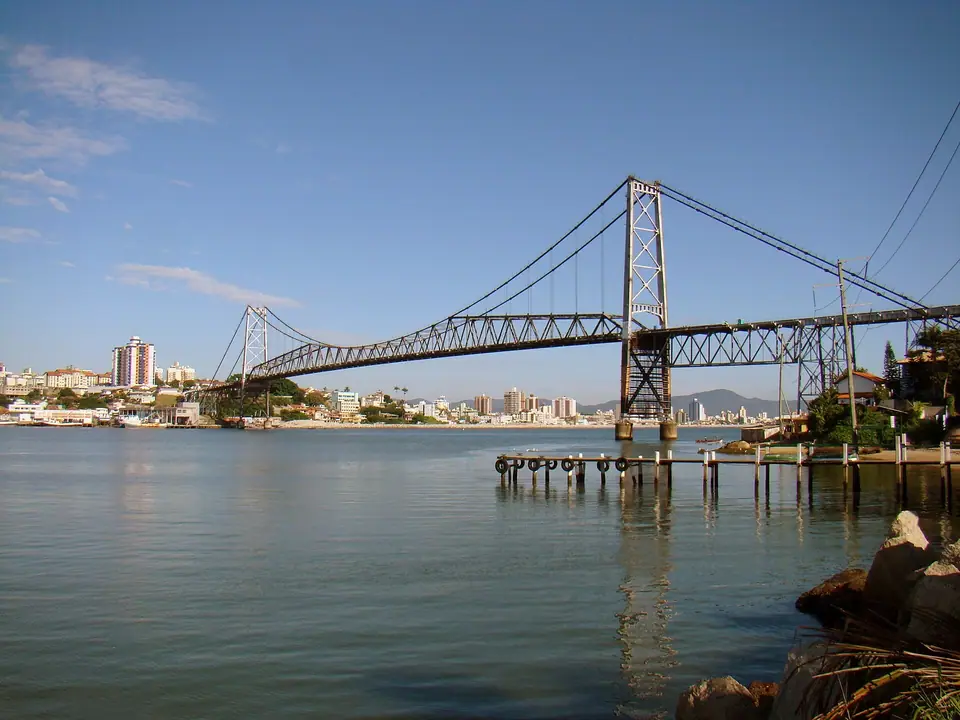
The skyline remains defined by the sweeping eye-bar cables and steel trusses of Ponte Hercílio Luz. Erected across the channel, this suspension bridge restored pedestrian access after extensive structural repairs, linking the insular centre to mainland hills.
Walking along its suspended wooden planks gives us an unbroken vista across Baía Sul and Baía Norte. Pedestrians share protected paths alongside cycle lanes, watching fishing skiffs move beneath the steel floorbeams while afternoon light reflects off calm harbour waters.
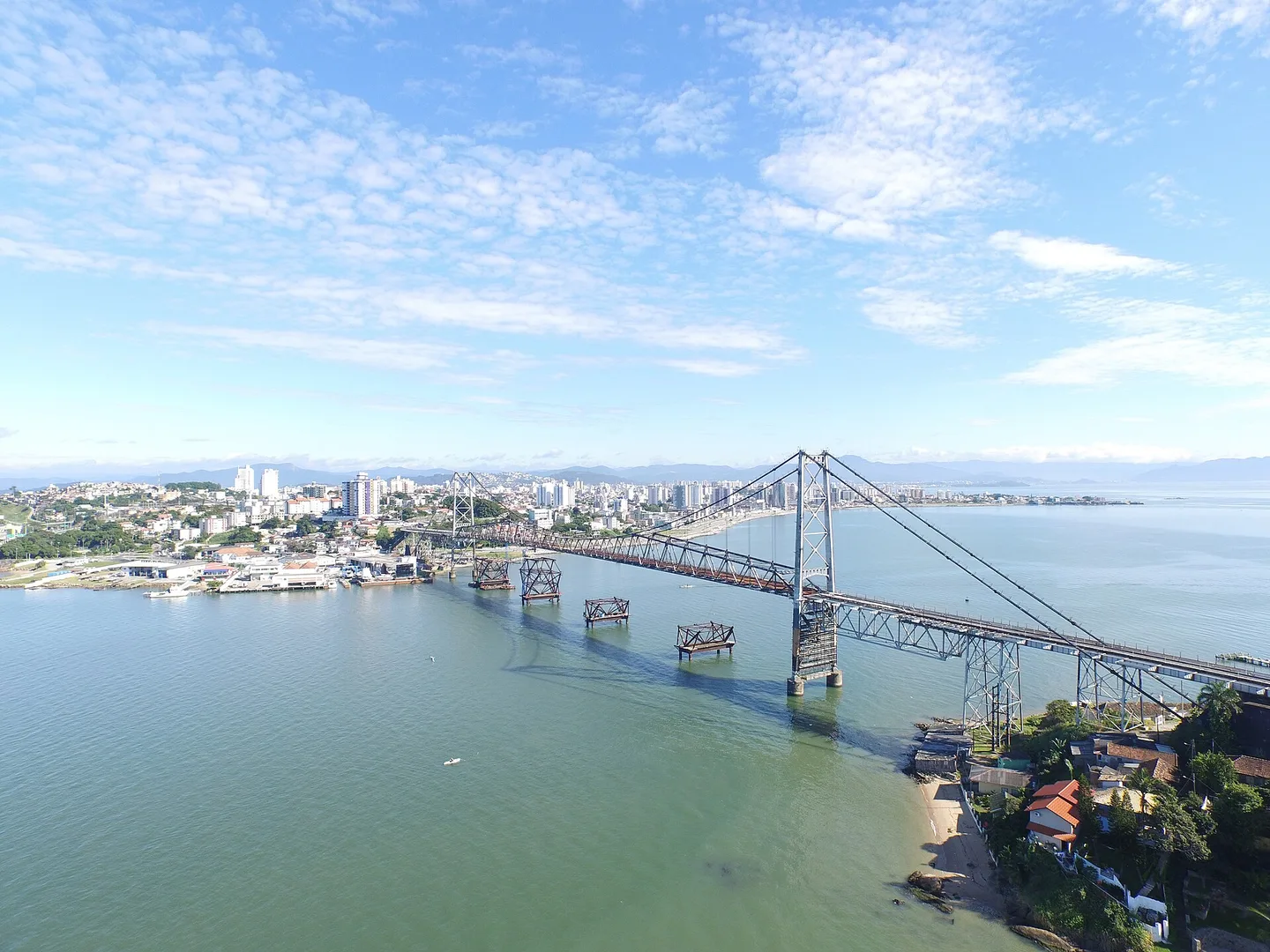
At the island base of the crossing, Parque da Luz offers elevated grassy slopes and leafy shade trees. Families gather here on weekends to admire the monumental ironwork against coastal sunsets, setting a gentle pace before entering the downtown street grid.
Navigating the Market Halls and Seafood Stalls
A short walk southeast from the waterfront leads directly to Mercado Público de Florianópolis. This public market stands as the social heartbeat of the district, housed within two parallel yellow-walled pavilions separated by an airy central courtyard.
Inside the northern wing, fishmongers lay out whole groupers, red snappers, and trays of fresh Santa Catarina oysters collected from southern bays. Artisans in neighbouring stalls arrange braided palm baskets, sugarcane sweets, and cachaça infusions crafted across regional farms.
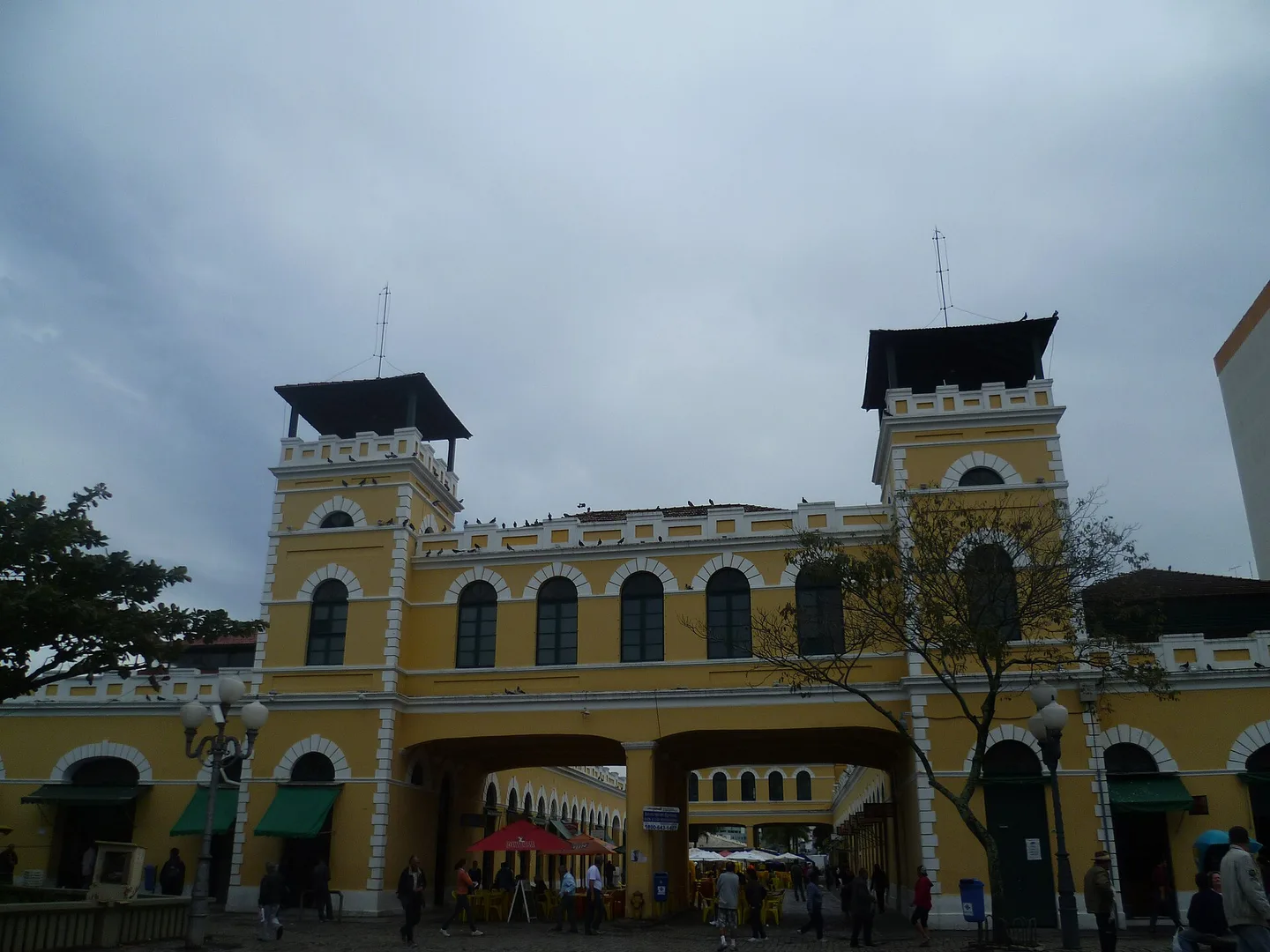
The southern pavilion focuses on informal eateries where cooks prepare crisp pastéis filled with seasoned shrimp or minced crab. Finding a wooden table under the retractable courtyard roof allows us to sample local petiscos while listening to musicians playing acoustic samba.
Checking our island climate and transit notes helps balance morning market walks with coastal excursions across outlying fishing villages.
Colonial Streets and Shaded Squares of Centro
Leaving the market, we follow cobbled alleys upward into Praça XV de Novembro, the principal historical square of Florianópolis. Coloured colonial facades from Portuguese settlements line adjacent avenues, displaying whitewashed masonry, tiled cornices, and wrought-iron window grilles.
At the heart of the square stands the renowned century-old fig tree. Its sprawling canopy requires support from heavy wooden beams and metal props. Walking beneath its wide branches offers welcome shelter during humid afternoons when subtropical sun beats down upon the worn flagstones.

The upper border of the square hosts the Catedral Metropolitana, commanding gentle stone steps that face the harbour slopes. Palácio Cruz e Sousa preserves nineteenth-century governors' quarters, featuring patterned parquetry floors and ornate neoclassical stucco mouldings.
Downtown Walking Sequence and Logistics
Navigating the old town on foot demands little stamina because distances between key landmarks remain short. We find that combining the bridge, the municipal market, and the central squares creates a logical route that avoids midday bus traffic.
- Morning waterfront: Stroll the open walkways of Ponte Hercílio Luz for clear harbour views across both mainland channels.
- Midday market: Settle into the covered central arcade of Mercado Público for freshly shucked local shellfish and pastries.
- Afternoon heritage: Walk through Praça XV de Novembro towards the leafy courtyards of historic civic palaces.
- Bayfront buses: Board municipal services at Terminal de Integração do Centro for onwards routes to coastal coves.
| Landmark | District Zone | Main Highlight | Transit Note |
|---|---|---|---|
| Ponte Hercílio Luz | Western waterfront | Restored steel suspension walkways | Pedestrian footbridge from Parque da Luz |
| Mercado Público | Lower commercial core | Twin seafood market pavilions | Two blocks north of TICEN hub |
| Praça XV de Novembro | Upper historic centre | Century-old fig tree and cathedral | Uphill walk from central avenues |
Visitors who want to explore beyond the old town can experience coastal routes and outdoor sights across Florianópolis on day excursions. Municipal buses terminate right beside the market hall at Terminal de Integração do Centro, forming the central hub of island transit. Buying a rechargeable smart card at the station kiosk makes onwards transfers simple. You can reach northern sandy coves, surfing dunes, coastal oyster villages, and southern lagoon trails without needing a private car.
Official prices and opening hours
- Projeto TAMAR Sea Turtle Centre (Barra da Lagoa)Official site ↗
Where it is
- 1Ponte Hercílio Luz, Mercado Público and Historic Centro
- Hercílio Luz International Airport (FLN) · about 8 km from here in a straight line
- Directions in Google Maps
Stations and taxi ranks: OpenStreetMap. Airports: OurAirports. Distances are in a straight line.
Traveller tips
Real advice from people who have been to Florianópolis. Every tip is read by our team before it goes live.
No tips yet. Been here? Yours could be the first.
Thank you! Your tip will appear here after a quick review.
More in Florianópolis
Continue exploring Florianópolis with related neighbourhood, food, and planning guides
Where to Stay in Florianópolis: Balanced Bases Across Santa Catarina Island
Florianópolis, Brazil
3 Days in Florianópolis Itinerary: Lagoa, Ilha do Campeche & Azorean Sunset
Florianópolis, Brazil
What to Eat in Florianópolis: Oysters, Shrimps and Mullet
Florianópolis, Brazil
Lagoa da Conceição, Dunas da Joaquina and Costa da Lagoa
Florianópolis, Brazil
