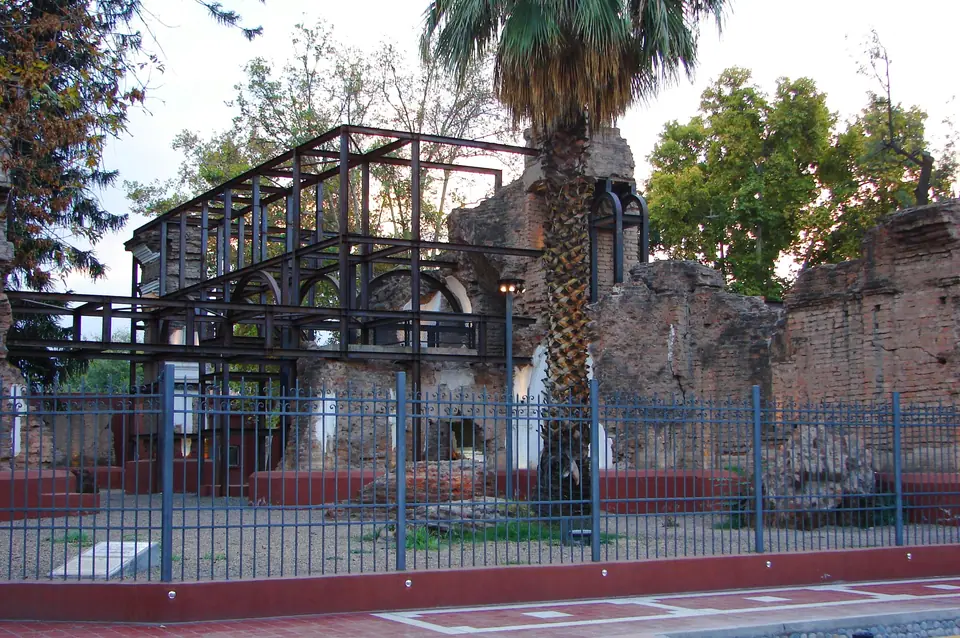
Área Fundacional, San Francisco Ruins and Paseo Sarmiento Guide
Uncover the origins of Mendoza across the excavated Cabildo at Área Fundacional, the 1731 San Francisco Ruins, and tree-lined urban strolls through Paseo Sarmiento.
Modern Mendoza is renowned for its wide boulevards and five symmetrical squares, yet the city began in a different location. Spanish conquistador Pedro del Castillo established the settlement on 2 March 1561 in the district today known as the Cuarta Sección. For three centuries, colonial civic life centred on the Plaza Mayor. That era ended abruptly on 20 March 1861, when a violent earthquake levelled the mud-brick and masonry capital in seconds. To reduce future seismic risks, provincial authorities rebuilt the urban grid one kilometre to the southwest around new civic spaces, as detailed in our Parque General San Martín and plazas guide. Exploring the original colonial footprint reveals an essential layer of local history that standard vineyard excursions often bypass.
Walking fifteen minutes northeast from central avenues brings you directly into the Área Fundacional. Here, preserved foundations, exposed aqueducts, and lone structural survivors document the transition from an indigenous desert oasis to an Imperial outpost and an earthquake-resilient modern metropolis. Pairing this archaeological precinct with the pedestrian corridors of Paseo Sarmiento and Mercado Central delivers an engaging half-day urban route through Mendoza's past and present.
Área Fundacional and the Museo del Área Fundacional (MAF)
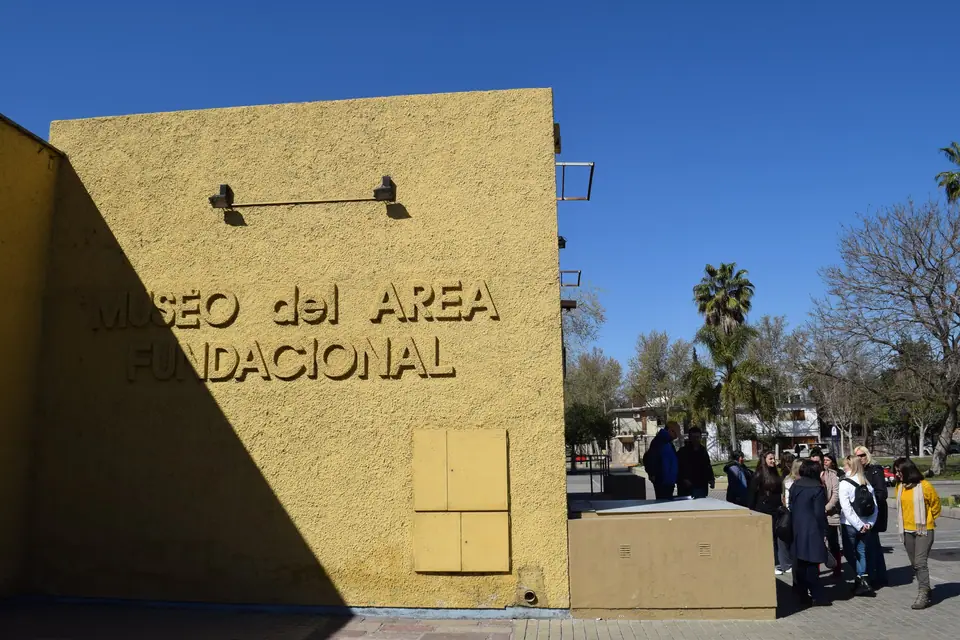
Plaza Pedro del Castillo occupies the precise ground of the colonial Plaza Mayor. On the eastern perimeter of the square stands the Museo del Área Fundacional, inaugurated in 1993 directly above active archaeological digs. Rather than presenting static display cases on conventional floors, the museum features elevated walkways suspended over the excavated brick foundations of the colonial Cabildo, or Town Hall, as well as the later nineteenth-century municipal market that collapsed during the 1861 disaster.
Below the glass floor panels, visitors can study pre-Hispanic ceramic fragments left by the native Huarpe people, who engineered the original desert irrigation channels long before European arrival. The collection transitions into early Spanish colonial tiles, religious artefacts, and everyday tools recovered from the rubble. An underground chamber beneath the square preserves the seventeenth-century stone cistern and water fountain that supplied potable water to early residents. Because operational schedules can adjust during municipal holidays, verify current opening times on the official city portal before visiting.
Ruinas Jesuíticas de San Francisco and Parque O'Higgins
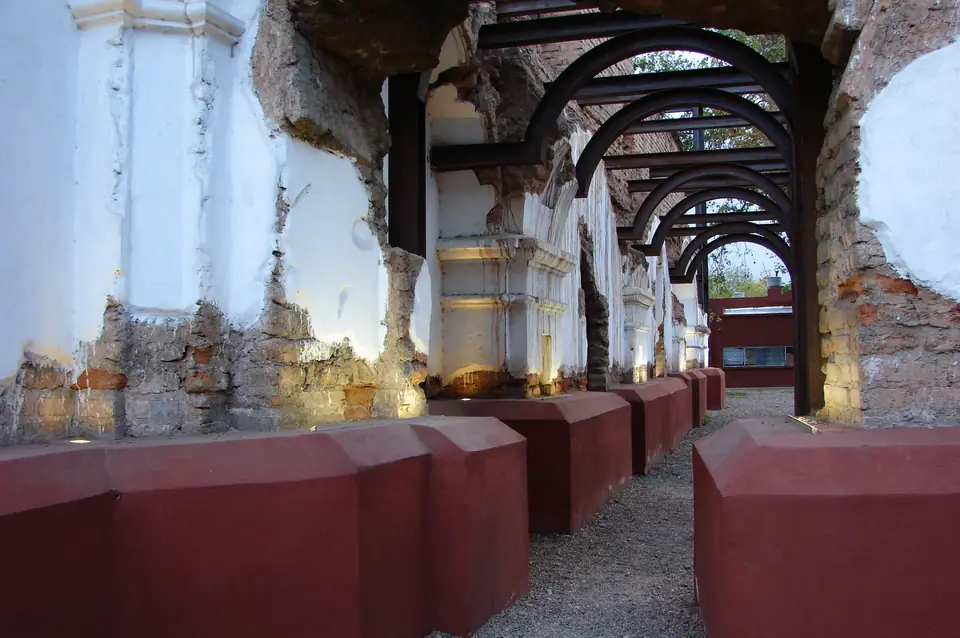
Directly across Calle Ituzaingó at the corner of Calle Beltrán stand the monumental arches of the Ruinas Jesuíticas de San Francisco. Built between 1716 and 1731 by the Jesuit order, this church was transferred to the Franciscan order following the Jesuit expulsion in 1767. Its massive brick-and-gravel mortar piers proved remarkably resilient. When the catastrophic 1861 tremor destroyed virtually every structure in colonial Mendoza, these substantial walls remained standing, making them the only colonial ecclesiastical architecture to survive the disaster.
The Argentine government declared the ruins a National Historic Monument in 1941. Today, steel braces and protective walkways allow visitors to inspect the masonry up close without damaging the vulnerable brickwork. Adjacent to the ruins lies Parque O'Higgins, a green corridor featuring public walking trails, family recreation areas, and the municipal aquarium. After inspecting the colonial core, you can continue exploring the broader historical and culinary landscape using our 3 days in Mendoza itinerary.
Paseo Peatonal Sarmiento and Pasaje San Martín
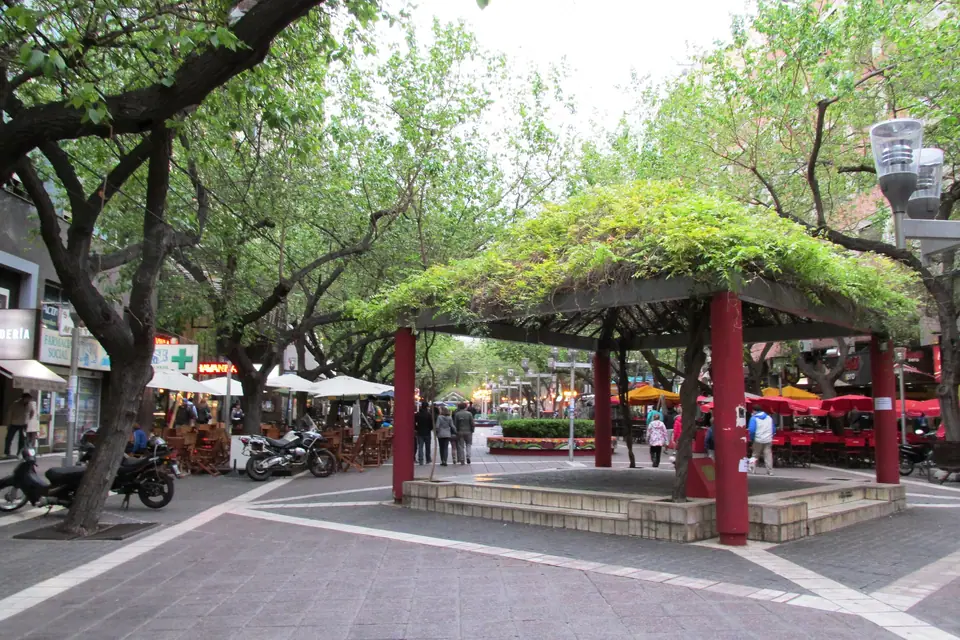
Southwest of the historic ruins, the city transitions into the reconstructed nineteenth-century grid. The primary east-west pedestrian corridor is Paseo Peatonal Sarmiento, which spans three shaded blocks linking Plaza Independencia to Avenida San Martín. Lined with mature sycamores, outdoor cafe tables, and bookshops, this promenade showcases the modern urban design that defines Mendoza's civic lifestyle. It offers an ideal environment for an afternoon espresso or a glass of local wine between sightseeing stops.
At the eastern terminus where Paseo Sarmiento meets Avenida San Martín stands Pasaje San Martín. Completed in 1926, this building was Mendoza's first multi-storey commercial gallery and residential tower, designed with anti-seismic reinforced concrete. Entering the ground-floor arcade reveals ornate French-influenced plasterwork, bronze fixtures, and an expansive stained-glass skylight. Continuing your urban walk toward the lively bar district described in our Avenida Arístides lifestyle guide demonstrates how commercial energy shifted south over the twentieth century.
Mercado Central and Mendoza Urban Sector Overview
Two blocks north of Paseo Sarmiento along Calle Las Heras, the Mercado Central has served as a primary food market since 1889. The covered hall houses dozens of traditional vendors displaying regional cured meats, spiced olives, cheeses, and cuts of beef suitable for local culinary preparations. The market is particularly practical for travellers seeking casual counter lunches, including freshly baked empanadas mendocinas seasoned with cumin and stuffed with hand-cut beef.
| District or Site | Primary Architectural Highlight | Historical Era | Suggested Visit Focus |
|---|---|---|---|
| Museo del Área Fundacional | Excavated Cabildo floors and underground cistern | 1561 to 1861 | Huarpe ceramics and colonial foundations |
| Ruinas de San Francisco | Massive brick-and-mortar arches | 1716 to 1731 | Earthquake-surviving Jesuit masonry |
| Paseo Peatonal Sarmiento | Tree-lined pedestrian promenade and cafes | Post-1861 modern grid | Outdoor dining and central urban strolls |
| Pasaje San Martín | Stained-glass gallery and early tower | 1926 | Early twentieth-century civic design |
| Mercado Central | Covered historic marketplace | 1889 | Regional provisions and counter lunches |
Seasonal Weather Patterns and Walking Logistics
Mendoza experiences a dry continental climate with marked seasonal shifts that influence walking tours. Summer months bring high temperatures, with January reaching an average daily high of 32.2°C and rainfall averaging 42mm across 6 wet days. Midday walking in December and January can be taxing, so plan to tour the exposed grounds of Plaza Pedro del Castillo in the morning hours before retreating to shaded cafes on Paseo Sarmiento.
Autumn offers mild conditions, with April recording highs of 22.4°C, lows of 10.1°C, and only 21mm of rain. Winter features clear, crisp weather suitable for extended walking. July averages daytime highs of 14.8°C, nightly lows of 2.1°C, and just 14mm of precipitation across 2 wet days. Spring warms up steadily, with October posting comfortable highs of 25.3°C and lows of 11.4°C. Taxis, app-based ride services, and city buses connect the Microcentro with the Cuarta Sección in under ten minutes, though walking along Avenida San Martín provides an easy, flat route for pedestrians.
Where it is
- 1Área Fundacional, San Francisco Ruins and Paseo Sarmiento
- Governor Francisco Gabrielli International Airport (MDZ) · about 6 km from here in a straight line
- Directions in Google Maps
Stations and taxi ranks: OpenStreetMap. Airports: OurAirports. Distances are in a straight line.
Traveller tips
Real advice from people who have been to Mendoza. Every tip is read by our team before it goes live.
No tips yet. Been here? Yours could be the first.
Thank you! Your tip will appear here after a quick review.
More in Mendoza
Continue exploring Mendoza with related neighbourhood, food, and planning guides
Villavicencio Nature Reserve, 365 Curves Road and Uspallata Valley Guide
Mendoza, Argentina
Mendoza: Oasis City Grid, Wine Regions and High Andes
Mendoza, Argentina
12 Best Things to Do in Mendoza: Malbec Bodegas, Uco Valley & Aconcagua
Mendoza, Argentina
How to Get to Mendoza: Flights, Andes Mountain Highway and Urban Transit
Mendoza, Argentina
