Best Things to Do in Victoria: From Inner Harbour Sights to Island Castles
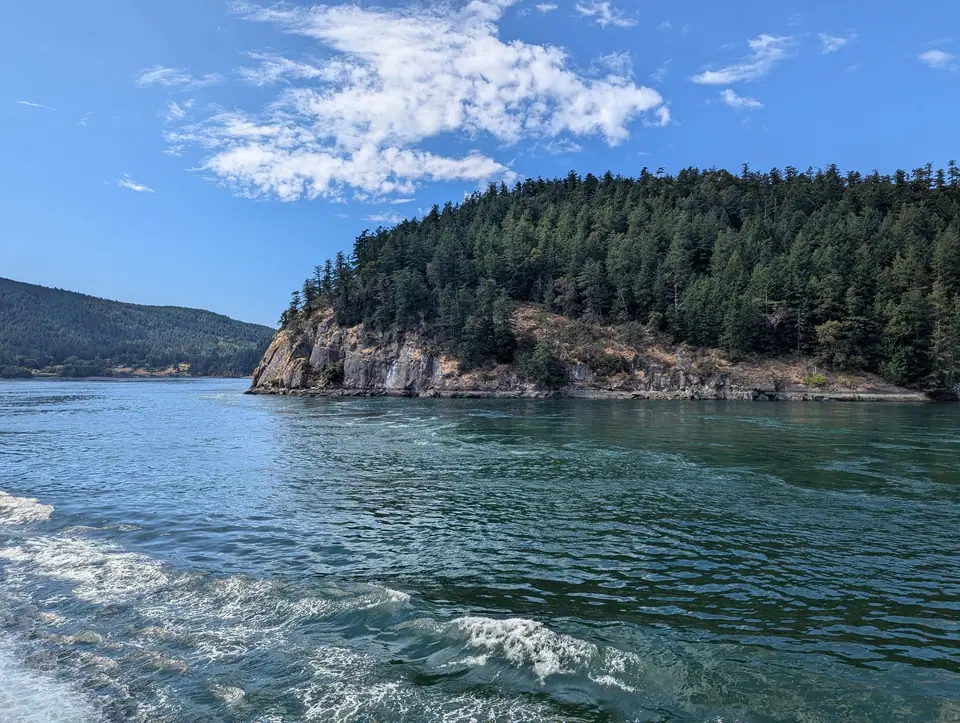
Historic harbour architecture, grand coastal estates, forested public grounds, and marine passages fill Vancouver Island during every calm season.
Victoria presents an inviting combination of protected Pacific waterways, Victorian stone masonry, and deep ceremonial First Nations history right along the southern tip of Vancouver Island. We begin our journey along the Inner Harbour, where salt air blends with the steady hum of incoming passenger catamarans and floatplanes. The waterfront promenade allows travellers to explore grand civic facades on foot without needing motor vehicles. Looking across the central basin, the Parliament Buildings anchor the southern waterfront with copper domes, ornate stone arcades, and landscaped public lawns. Across Belleville Street, the historic Fairmont Empress faces the docks, showcasing brick hospitality architecture established during western railway expansion.
Walking along the waterfront apron introduces street performers, maritime vessels, and easy pedestrian links to neighbouring wharves. Visitors following our Inner Harbour landmarks can connect the maritime basin directly with public plazas and nearby legislative grounds. Wide paved paths lead west toward Fisherman's Wharf, where floating homes and eco-tour departure docks line the shore. Exploring this shoreline reveals British Columbia's coastal geography, connecting distant mountain silhouettes with landscaped municipal gardens while municipal buses and water taxis link every cove. Confirm museum admission tiers directly with individual historic sites ahead of timed tours.
Walking further along Belleville and Wharf streets connects travellers to maritime docks where passenger vessels dock regularly. Heritage bronze plaques along the granite causeway recount maritime expeditions and the historic establishment of Fort Victoria. Street musicians perform near the lower promenade during mild afternoons, creating an engaging atmosphere for families and photographers. The Inner Harbour serves as the central anchor of the entire municipal footprint, giving easy walking access to hotels, eateries, and regional transit lines.
Historic Estates and Vancouver Island Castle Heritage
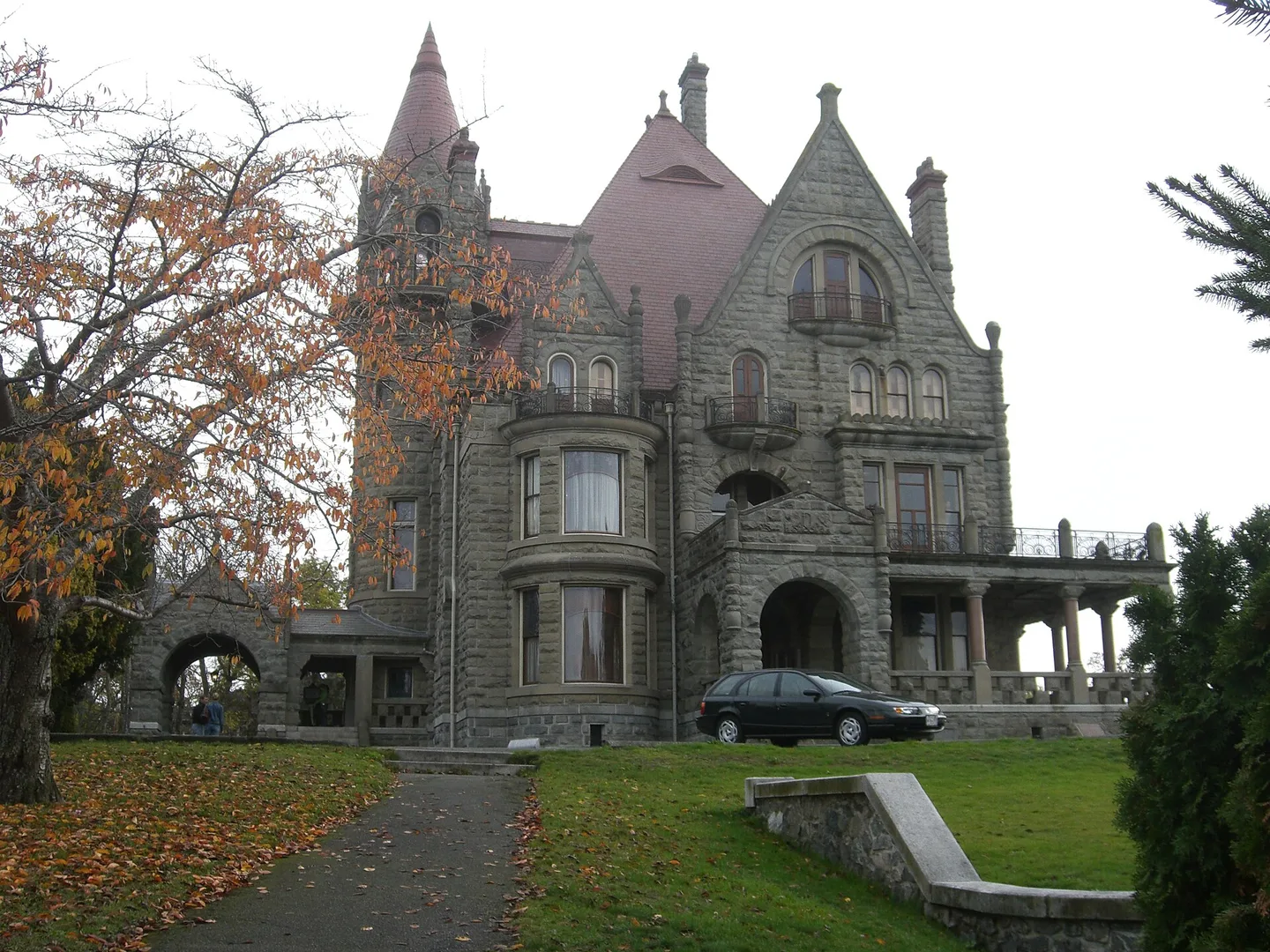
Beyond the immediate waterfront basin, residential Victoria holds grand late-nineteenth-century stone properties built during the Vancouver Island industrial boom. Craigdarroch Castle stands prominently on a hill in the Rockland neighbourhood, displaying dramatic Scottish Baronial granite turrets, stained glass, and heavy woodwork. Commissioned by coal baron Robert Dunsmuir, the estate illustrates the immense personal fortunes generated by resource industries in British Columbia. Climbing the interior staircase leads through meticulously conserved drawing rooms, private quarters, and high vantage points over coastal forests. The surrounding residential avenues feature leafy Garry oak canopies, heritage stone walls, and quiet paths suitable for walking.
Further west along the coast in Colwood stands Hatley Castle, another remarkable Dunsmuir family commission that mirrors Edwardian manor architecture. Set beside Esquimalt Lagoon, the estate features formal Japanese, Italian, and rose gardens surrounding an expansive stone fortress. You can pair these heritage estates through the practical routes in our Dunsmuir castles itinerary to balance suburban transit with woodland strolls. The grounds showcase sweeping views over the Strait of Juan de Fuca towards snow-capped peaks. Both sites retain substantial original stone craft, demonstrating how early European settlers interpreted grand Old World residential ideals on Pacific shores.
The surrounding grounds around Hatley Castle also connect with the historical campus of Royal Roads. Old-growth Douglas fir and western red cedar stands shelter walking paths leading down to the saltwater lagoon shore. Birdwatchers frequently spot migratory waterfowl, kingfishers, and herons feeding along the tidal flats. Visiting these two castles reveals how nineteenth-century wealth shaped southern Vancouver Island architecture and landscape design.
First Nations Art, Museums, and Old Town Streets
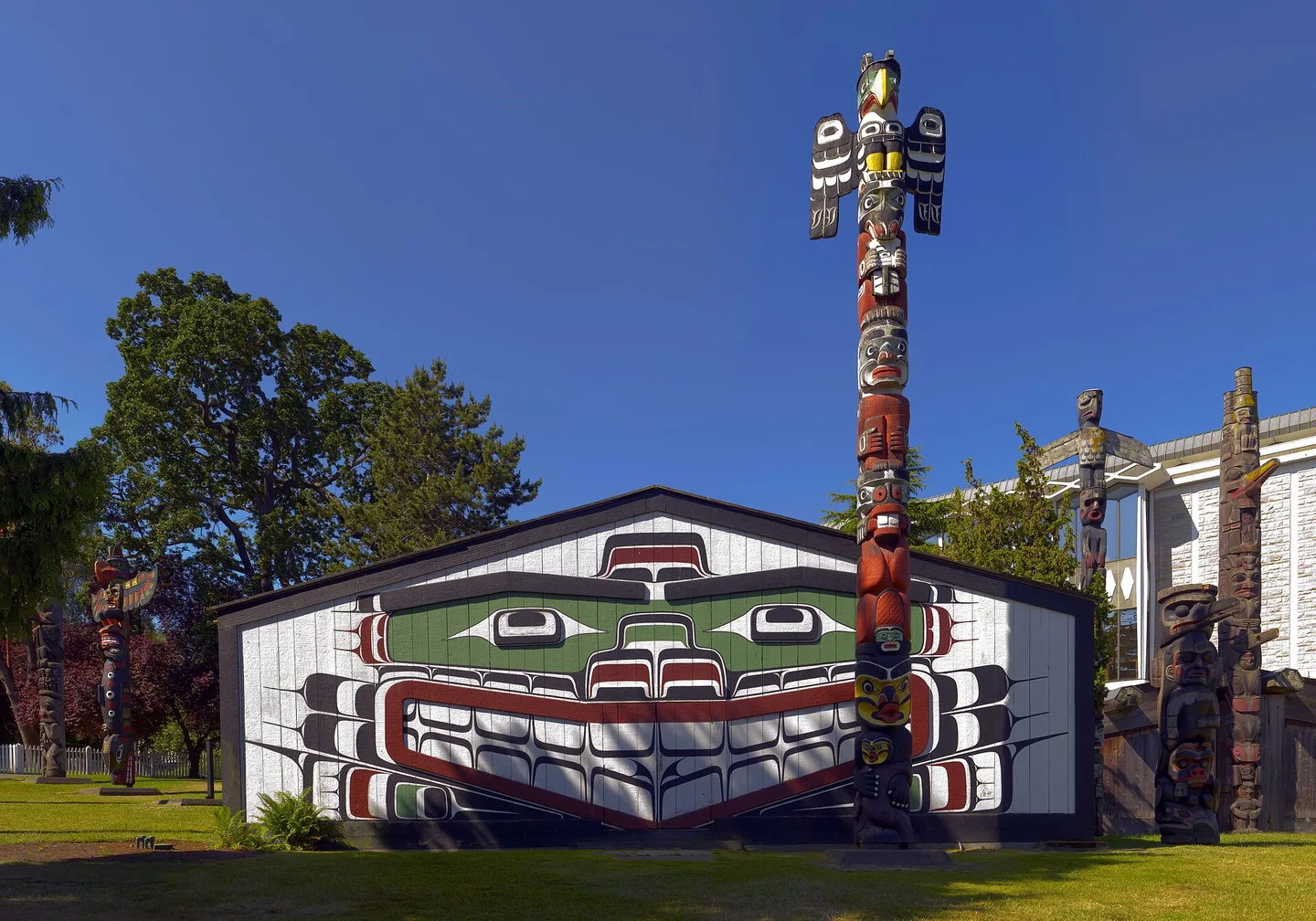
Cultural exploration in Victoria requires understanding deep Indigenous heritage alongside provincial administrative history. Thunderbird Park sits beside the Royal BC Museum, functioning as a vital open-air precinct for Northwest Coast carving. Here, carved cedar poles from Kwakwaka'wakw, Haida, and Nuu-chah-nulth traditions display hereditary crests and ancestral stories. Standing central within the park is Wawadit'la, also known as Mungo Martin House, a traditional big house constructed in the mid-twentieth century. The building serves as an enduring venue for ceremonial gatherings, preserving West Coast woodcarving arts across changing generations. Cultural exhibitions within the museum complex present provincial history, natural biology, and Indigenous collections.
From the cultural precinct, walking north brings us directly into Old Town and Canada's oldest Chinatown. The area centres on Fisgard Street, entered through the ornate Gate of Harmonious Interest with hand-carved stone lions. Here, compact alleys reveal historic brick trading halls and tiny courtyards that sheltered immigrant communities. Fan Tan Alley attracts visitors as the narrowest business lane in North America, lined with independent bookshops, tea houses, and artist studios. The surrounding blocks along Government Street and Johnson Street preserve Victorian Italianate commercial shopfronts with cast-iron elements.
Market Square offers a sheltered brick courtyard where old warehouses now house independent shops and local eateries. Exploring these passages reveals how Victoria developed from an early Pacific fur-trading post into an active commercial seaport. Many independent shops feature regional arts, craft goods, and locally roasted coffee. The compact scale of Old Town makes thorough exploration on foot both relaxing and rewarding.
| Neighbourhood Precinct | Primary Cultural Focus | Key Landmark or Street |
|---|---|---|
| Inner Harbour Basin | Provincial government and maritime trade | Legislative Buildings and waterfront promenades |
| Chinatown & Old Town | Pioneer commerce and immigrant heritage | Fan Tan Alley and Fisgard Street |
| South Rockland | Late-Victorian industrial wealth | Craigdarroch Castle and residential oak groves |
| Humboldt Precinct | Indigenous carving and regional history | Thunderbird Park and Mungo Martin House |

Salish Sea Waters and Coastal Green Spaces
The waterways surrounding southern Vancouver Island nourish some of the richest marine ecosystems in North America. Leaving the harbour by passenger vessel opens up the Salish Sea, where cold ocean currents sustain resident and transient killer whales, humpbacks, and porpoises. Planning sea outings with responsible Salish Sea whale cruises keeps wildlife boats at safe distances along rugged coastlines. Harbour seals haul out on offshore granite islets, while bald eagles patrol coastal fir canopies overhead. Naturalists on board explain salmon migrations and seasonal feedings sustaining this fragile marine habitat.
Back on solid land, Victoria's parklands keep quiet walking paths winding through oak meadows and rocky coastal bluffs. Beacon Hill Park stretches across rolling grounds south of downtown, linking naturalised lakes with native Garry oak meadows and ocean lookouts. Walking south through the park leads to the pebble beaches of Dallas Road along open ocean swells. Further north on the Saanich Peninsula, seasonal blooms fill historic limestone quarries reached cleanly on buses headed for Brentwood Bay and sunken garden terraces. This balance between cultivated flowerbeds and wild headlands gives Victoria enduring variety.
A walk through the southern edge of Beacon Hill Park leads directly to the Mile Zero marker of the Trans-Canada Highway. From this point, panoramic vistas extend across the Strait of Juan de Fuca towards the Olympic Mountains in Washington State. Offshore currents attract coastal seabirds, sea otters, and kite flyers who gather along the bluffs during breezy afternoons. Returning north along Douglas Street or Cook Street brings travellers through neighbourhood commercial pockets filled with neighbourhood cafes and bakeries. Whether wandering coastal cliffs or heritage urban streets, Victoria offers varied highlights within a remarkably walkable area.
Official prices and opening hours
- The Butchart Gardens (Brentwood Bay)Official site ↗
- Royal BC Museum & Thunderbird ParkOfficial site ↗
Where it is
- 1Victoria
- Victoria International Airport (YYJ) · about 25 km from Victoria in a straight line
- Vancouver International Airport (YVR) · about 86 km from Victoria in a straight line
- Directions in Google Maps
Stations and taxi ranks: OpenStreetMap. Airports: OurAirports. Distances are in a straight line.
Traveller tips
Real advice from people who have been to Victoria. Every tip is read by our team before it goes live.
No tips yet. Been here? Yours could be the first.
Thank you! Your tip will appear here after a quick review.
More in Victoria
Continue exploring Victoria with related neighbourhood, food, and planning guides

Visiting Royal BC Museum, Thunderbird Park and Helmcken House
Victoria, Canada
Whale Watching in Victoria: Orcas, Humpbacks and Coastal Sea Excursions
Victoria, Canada
Fisherman's Wharf Float Homes, Water Taxis and James Bay
Victoria, Canada
Old Town Victoria, Chinatown, Fan Tan Alley and Market Square
Victoria, Canada
