


France Travel Guide: Best Places to Visit, Things to Do and Travel Tips
The complete guide to planning a trip across France — every major region, when to go, getting around, food and wine, budget breakdowns, practical tips, and ready-made itineraries from 5 days to 3 weeks.
France Travel Guide: Best Places to Visit, Things to Do and Travel Tips
Ask five people what they picture when they think of France and you'll likely get five different answers — the Eiffel Tower, a glass of Bordeaux, a lavender field in Provence, a château on the Loire. That's really the point: France isn't one destination so much as a dozen very different ones stitched together, and a fast train network that makes moving between them easier than in almost any other country its size.
This guide walks through the parts that actually matter when you're planning: when to go, how to get around once you're there, what each region is really like beyond the postcard version, what to eat, roughly what to budget, and a few ready-made itineraries depending on how much time you have. It's written for a first serious trip to France, but there's enough regional depth here to be useful on a second or third visit as well.
If there's one piece of advice worth taking seriously before anything else, it's this: don't try to see all of France in one trip. The country is bigger and more varied than its shape on a map suggests, and cramming Paris, the Riviera, and Brittany into a single week usually means more time on trains than actually in any of those places. Pick a region or two, go deeper, and save the rest for next time.
Best Time to Visit France
France has a temperate climate overall, but conditions vary significantly between the north, the mountainous east, and the Mediterranean south, so the right time to visit often depends on which region is on the itinerary.
Spring (April to June)
Spring is widely considered the best all-round season to visit France. Temperatures are mild across most of the country, gardens and countryside are in bloom, and tourist numbers are lower than in summer. This is also an excellent window for visiting the Loire Valley châteaux and the vineyards of Burgundy and Bordeaux before the summer crowds arrive.
Summer (July to August)
Summer is peak season, particularly along the French Riviera and in coastal Brittany and Normandy, where beaches and seaside towns fill up with both French and international visitors. Paris itself sees a curious pattern: many Parisians leave the city in August for their own summer holidays, which can mean quieter neighborhoods but also some smaller shops and restaurants closed for the month. Expect the highest accommodation prices of the year and book major attractions well in advance.
Fall (September to October)
Fall rivals spring as the best time to visit, especially for wine regions, since September and early October coincide with the grape harvest in Burgundy, Bordeaux, and the Loire. Weather remains pleasant into October, crowds thin out noticeably after early September, and the changing colors in the countryside add another reason to visit rural regions during this period.
Winter (November to March)
Winter is low season for most of the country, with shorter days and cooler, often grey weather, but it brings two specific draws: the Christmas markets of Alsace, particularly in Strasbourg and Colmar, and the ski season in the French Alps, which typically runs from December through March. Outside of these two pockets, winter is the quietest and cheapest time to visit cities like Paris, Lyon, and Bordeaux.
Weather by Region
Northern France and Paris follow a temperate oceanic pattern with mild, wet winters and warm but rarely extreme summers. The Mediterranean south, including Provence and the Riviera, is drier and noticeably hotter in summer, often into the 30s Celsius, while the mountainous regions of the Alps and Pyrenees bring cooler temperatures and heavier precipitation, including snow at altitude well into spring.
Getting to France
Paris Charles de Gaulle (CDG) is France's main international gateway, with the widest range of direct long-haul connections, followed by Paris Orly for shorter European and domestic routes. Travelers focusing on the south can often fly directly into Nice Côte d'Azur Airport for the Riviera or Marseille Provence Airport for Provence, avoiding a transfer through Paris entirely.
From the United Kingdom, the Eurostar high-speed train runs directly from London St Pancras to Paris Gare du Nord in about two and a quarter hours, city center to city center, which is often faster and more convenient than flying once airport transfers are factored in. Drivers from the UK can also cross via the Eurotunnel Le Shuttle from Folkestone to Calais.
Because France sits at the center of Europe's rail network, it's also easy to arrive by train from neighboring countries — high-speed connections link Paris with Brussels, Amsterdam, Geneva, and several German and Italian cities, making a multi-country European itinerary straightforward to plan around a France-based trip.
Ferries offer another entry point, particularly for travelers coming from the UK or planning to reach Corsica. Regular Channel crossings connect Dover to Calais and other Channel ports, while Corsica is served by overnight and daytime ferries from Marseille, Nice, and Toulon, as well as from several Italian ports, which can be a scenic and practical alternative to flying for travelers with a vehicle.
Getting Around France
The high-speed TGV network is the backbone of long-distance travel within France, connecting Paris to Lyon in around two hours, to Marseille in a little over three, and to Bordeaux in about two hours as well. Booking several weeks or months ahead typically unlocks fares well below last-minute prices, since French rail pricing works on a demand-based model similar to airline tickets.
Regional TER trains fill in the gaps between smaller towns that the TGV network doesn't reach directly, and they're generally reliable, if slower. For budget-conscious travelers, long-distance buses operated by companies like BlaBlaCar Bus and FlixBus cover many of the same routes as the trains at a fraction of the cost, at the expense of travel time.
Within major cities, metro, tram, and bus networks make a car unnecessary and often more of a hindrance than a help — parking in central Paris, Lyon, or Nice can be both expensive and hard to find. Renting a car becomes genuinely useful once the itinerary moves into the countryside: the Loire Valley, rural Provence, the Dordogne, and the Alsace Wine Route are all far easier to explore with a rental than by relying on infrequent regional buses.
Domestic flights exist between the major cities, but given the speed of the TGV, they rarely make sense for routes like Paris–Lyon or Paris–Bordeaux. They're more useful for reaching Corsica or covering longer north–south distances, such as Paris to Nice or Paris to Toulouse, in under two hours.
Cycling in France
France has invested heavily in long-distance cycling routes, and touring by bike has become a popular way to see the countryside at a slower pace. The Loire à Vélo trail follows the Loire River past many of the region's châteaux on mostly flat, well-marked paths, while Provence and the Luberon offer more demanding routes through vineyards and hill villages. Bike rental and luggage-transfer services are widely available along the most popular routes, making a self-guided multi-day cycling trip realistic even for casual riders.
Regions and Cities to Explore
France is divided into distinct regions, each with its own landscape, cuisine, and pace of life. The sections below cover the regions that draw the most international visitors, along with the cities and towns worth building an itinerary around in each one.
Paris and Île-de-France
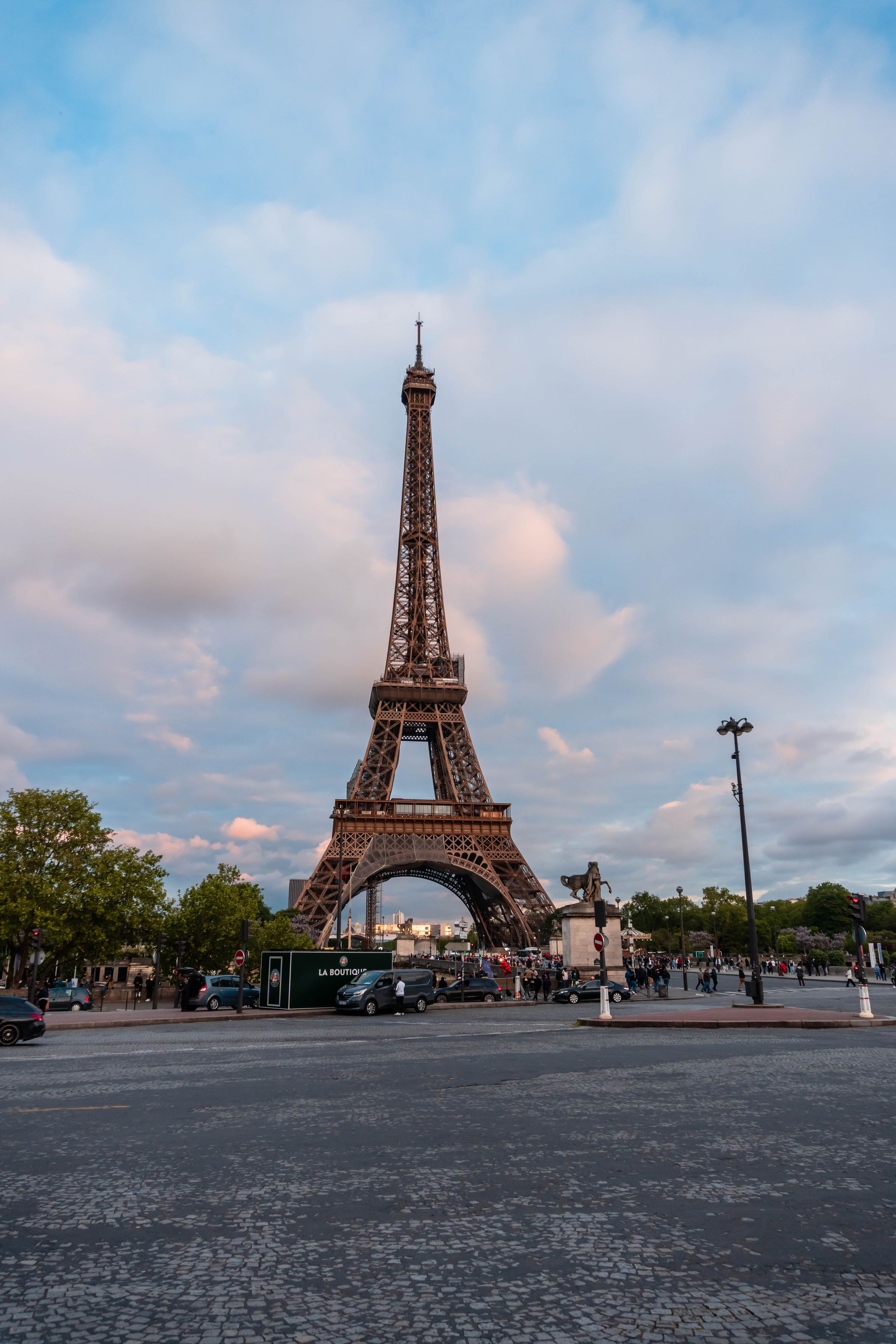
Paris needs little introduction, but it does need more time than most first-time visitors give it. The Eiffel Tower, the Louvre, Notre-Dame, and the Musée d'Orsay anchor a city where an entire day can disappear inside a single museum, or a single neighborhood like Montmartre or Le Marais. Three to four days is a realistic minimum if you want to see the major sights without treating each one as a box to tick.
The wider Île-de-France region around Paris makes for easy day trips: the Palace of Versailles, with its Hall of Mirrors and formal gardens, is the most popular, reachable by regional train in under an hour. Families traveling with children often build a day or two around Disneyland Paris, located just east of the city and connected by its own RER train line.
Loire Valley
It's easy to see why French royalty picked the Loire Valley for their weekend estates — the Renaissance châteaux scattered along the river are still the region's whole reason for being. Château de Chambord, with its distinctive double-helix staircase, and Château de Chenonceau, built straight across the River Cher, are the two everyone photographs, but smaller estates like Villandry, better known for its geometric gardens than the building itself, are just as worth the detour. Amboise and Tours make convenient bases, and there's something genuinely pleasant about pairing an afternoon of château-hopping with a glass of local Vouvray or Chinon.
Beyond the headline châteaux, Cheverny and Azay-le-Rideau are quieter alternatives that see far fewer coach tours, making them a good choice for travelers who want to explore at their own pace. Renting a car or bicycle in the region makes it easy to combine two or three estates in a single day, since most sit within a short drive of one another along the river.
Normandy
Normandy is a region of contrasts more than any other on this list — a fortified abbey rising out of tidal flats one hour, a quiet cemetery overlooking a D-Day beach the next. Mont Saint-Michel, near the Brittany border, is the landmark everyone comes for, and it's genuinely worth seeing early, before the tour buses arrive. Further along the coast, Omaha Beach and the Normandy American Cemetery draw visitors interested in World War II history, while medieval Bayeux holds its famous tapestry. Honfleur's harbor and the chalk cliffs at Étretat are the reward for anyone who keeps driving past the obvious stops.
The regional capital, Rouen, is worth a stop for its Gothic cathedral, once painted repeatedly by Monet, and its well-preserved medieval old town. Speaking of Monet, his home and water-lily gardens at Giverny sit just across the regional border and are easily combined with a Normandy itinerary or a day trip from Paris.
Brittany
Cross into Brittany and France starts to feel different — the language, the music, even the food shift toward something more Celtic than French. Savory buckwheat galettes and sweet crêpes both trace back to here, which alone is reason enough to visit. The walled port city of Saint-Malo is the obvious base, but the real oddity is Carnac, where thousands of prehistoric standing stones sit arranged in rows nobody has fully explained. Travelers with a car and a bit more time should push on to the rugged coast around Quiberon and the island of Belle-Île.
Local etiquette in Brittany's crêperies is simple but worth knowing: savory buckwheat galettes are ordered as a starter or main, sweet wheat-flour crêpes as dessert, and both are traditionally paired with a bowl of dry Breton cider rather than wine, served in the region's distinctive ceramic cups.
Alsace and Lorraine
Alsace sits on the border with Germany, and its architecture, cuisine, and wine reflect that dual heritage. Strasbourg's Petite France district, with its half-timbered houses along the canals, and the even smaller, equally colorful town of Colmar are the region's highlights, especially during the Christmas market season in December. The Alsace Wine Route links a string of picture-postcard villages through the region's vineyards, ideal for a slow day of driving with regular stops.
Colmar in particular is worth an overnight stay rather than a day trip, since its canal-side Petite Venise district and half-timbered squares are noticeably quieter once the day-trip crowds from Strasbourg head home. Neighboring Lorraine is quieter still, but the 18th-century Place Stanislas in Nancy, with its gilded wrought-iron gates, is one of the most elegant Art Nouveau public squares in France.
Burgundy
Burgundy runs on wine, and the Route des Grands Crus through the Côte d'Or reads like a list of labels you'd recognize from a restaurant menu — it links some of the most sought-after vineyard villages anywhere. Beaune, with its glazed-tile Hôtel-Dieu, is the natural base for tasting your way through the region, while Dijon, the regional capital, has a compact old town and a food culture that goes well beyond the mustard it's famous for.
Further north in the region, the town of Chablis gives its name to a distinct, mineral style of white wine grown on nearby limestone slopes, and makes a good stop for travelers driving between Burgundy and Paris. The Abbey of Fontenay, a remarkably intact 12th-century Cistercian abbey, is a worthwhile detour for anyone interested in medieval architecture and monastic history.
Provence
Painters have been trying to capture Provence's light for centuries, and once you're standing in a lavender field near Valensole in July, it's obvious why. The region is a mix of hilltop villages like Gordes and Roussillon in the Luberon, Roman ruins in Arles that once inspired Van Gogh, and market towns that seem built for slow mornings with coffee and produce shopping. Avignon, with its fortress-like Palais des Papes, and Aix-en-Provence, all tree-lined boulevards and open-air markets, make the two most practical bases for exploring everything in between.
The Provençal coastline deserves its own time: Marseille, France's second-largest city, has a lively Old Port and gives direct access to the calanques, dramatic limestone inlets best explored by boat or on foot from the nearby town of Cassis. Inland, the wetlands of the Camargue are home to wild horses, flamingos, and France's own cowboy culture, a striking contrast to the hill villages further north in the region.
French Riviera (Côte d'Azur)
Nice is the Côte d'Azur's most practical base, combining the seafront Promenade des Anglais with a colorful old town and excellent train connections to the rest of the coast. Its central location makes it possible to day-trip to almost anywhere else on the Riviera without ever needing a car.
Cannes, best known for its film festival each May, and neighboring Antibes, with its old fortified town and yacht-filled harbor, sit about half an hour from Nice by train and are easily combined into a single day trip. Both offer a quieter, less crowded alternative to Nice itself outside festival season.
Monaco, the independent microstate wedged into the coastline, is reachable from Nice in under half an hour and is worth a half-day visit for the Monte Carlo Casino, the Prince's Palace, and the Oceanographic Museum perched above the sea, even for travelers who have no interest in gambling.
Saint-Tropez and the surrounding Var coast sit further west and are harder to reach without a car or a seasonal boat shuttle, but reward the extra effort with a mix of beach clubs, a genuinely charming old fishing port, and hilltop villages like Ramatuelle just inland.
Lyon and the Rhône Valley
Widely considered the country's food capital, Lyon pairs remarkable Renaissance heritage in Vieux Lyon with a dining scene built around its famous bouchons. The city is easy to explore on foot, and a funicular ride up to the Basilica of Fourvière rewards visitors with one of the best views in the region. Lyon also sits at the northern edge of the Rhône Valley wine region, making it a practical base for exploring Beaujolais and the northern Rhône vineyards to the south.
The French Alps
The French Alps are best known for winter sports, with resorts like Chamonix, at the foot of Mont Blanc, Western Europe's highest peak, drawing skiers and mountaineers from December through March or April depending on snowfall. In summer, the same region shifts to hiking, paragliding, and mountain biking, and the lakeside town of Annecy, sometimes called the 'Venice of the Alps' for its canals, makes an appealing base for a slower, scenery-focused visit at any time of year.
Southwest France and the Dordogne
Bordeaux earns its reputation twice over — once for the wine, once for the city itself, which has quietly become one of France's most pleasant places to walk around since its 18th-century center was restored. It's also the obvious jumping-off point for the vineyards of Médoc and Saint-Émilion. La Cité du Vin and the redeveloped quays along the Garonne have given independent travelers even more reason to stay a few extra nights rather than treating it as a day trip.
Inland, the Dordogne Valley is one of France's most rewarding road-trip regions, combining the medieval town of Sarlat-la-Canéda, with its golden-stone market square, with prehistoric cave art at sites like Lascaux, one of the most significant collections of Paleolithic paintings in the world.
Further southwest, the Basque Country around Biarritz and Bayonne offers a different character entirely — Atlantic surf beaches, a distinct Basque cultural identity with its own language and festivals, and a cuisine that leans toward Spanish influence, with pintxos-style small plates appearing alongside classic French dishes on local menus.
Corsica
Most first-time visitors to France never make it to Corsica, which is a shame, because the island holds some of the country's most dramatic scenery — the red cliffs of Bonifacio's harbor, a mountainous interior crossed by the notoriously difficult GR20 trail. Ajaccio, Napoleon's birthplace, is the usual entry point by air or ferry.
Beyond Bonifacio and Ajaccio, Corsica's coastline hides some of the clearest water in the Mediterranean, particularly around the Lavezzi Islands in the far south. The island works best as its own short trip rather than an add-on to a mainland France itinerary, given the additional travel time required to reach it and the amount there is to see once you arrive.
French Cuisine: What to Eat
French cuisine varies as much by region as the landscape does, and eating your way across the country is one of the best ways to understand its regional differences. In Lyon, expect hearty bouchon classics like quenelles and coq au vin; in Provence, lighter dishes built around olive oil, tomatoes, and herbes de Provence, such as ratatouille and bouillabaisse; and in Brittany, buckwheat galettes filled with cheese, ham, or egg, traditionally washed down with dry cider rather than wine.
Wine Regions of France
France's major wine regions each have their own personality: Bordeaux for structured reds built from cabernet sauvignon and merlot, Burgundy for terroir-driven pinot noir and chardonnay from tightly defined vineyard plots, Champagne for the sparkling wine that shares its name, the Loire Valley for crisp whites like Sancerre and Vouvray, the Rhône Valley for full-bodied reds around Châteauneuf-du-Pape, and Alsace for aromatic whites like Riesling and Gewürztraminer. Most regions offer tastings directly at vineyards, often free or for a small fee that's waived with a purchase.
Cheese and Bread
France produces several hundred distinct cheeses, and the specific varieties shift by region — Comté and Reblochon in the Alps, Camembert and Livarot in Normandy, and Roquefort in the south. A proper cheese course, served after the main dish and before dessert, typically includes two or three varieties paired with fresh bread rather than crackers. Markets, held in most towns at least once a week, are often the best way to sample regional specialties directly from producers rather than restaurants.
Dining Customs and Etiquette
Lunch is typically served from around noon to 2 p.m. and dinner rarely starts before 7:30 p.m., with many restaurants closing entirely between the two services. Tipping is not expected in the way it is in the United States, since a service charge is already included in the bill by law, though rounding up or leaving a few euros for good service is common and appreciated. Bread is generally provided free with a meal, and it's normal to use a piece of it to help push food onto your fork.
Where to Stay
Accommodation options in France range from international hotel chains to small, family-run establishments with far more character. In the countryside, staying in a chambre d'hôte (a French bed and breakfast) or a gîte (a self-catered rural cottage) is often more atmospheric than a standard hotel and gives direct insight into local life, particularly in wine regions like Burgundy and the Loire Valley, where many estates now offer rooms.
In Paris, the choice of neighborhood matters as much as the hotel itself. The Marais and Saint-Germain-des-Prés offer central, walkable locations with a strong concentration of restaurants and shops, while areas further from the center, such as the 11th or 20th arrondissements, tend to be quieter and less expensive without sacrificing much in terms of metro access.
For a genuinely memorable stay, several historic châteaux across the Loire Valley and Dordogne now operate as boutique hotels, allowing guests to actually spend the night inside a centuries-old estate rather than just visiting for the afternoon — an option worth considering for a special occasion or a slower, countryside-focused leg of the trip.
Shopping and Markets
Open-air markets are one of the best places to experience daily French life, with most towns holding at least one weekly market selling fresh produce, cheese, bread, and local crafts. In Paris, markets like the one on Rue Mouffetard operate alongside flea markets such as the Marché aux Puces de Saint-Ouen, one of the largest antique markets in the world, held on the northern edge of the city.
For fashion, Paris remains the obvious draw, from the flagship houses along Avenue Montaigne to more accessible high-street shopping around Rue de Rivoli and the Marais. Outside the capital, look for regional specialties to bring home: Provençal linens and lavender products, Alsatian pottery, Burgundy wine and mustard, and Basque linens from the southwest.
Budget and Costs
How much a trip to France costs really comes down to where you go. Paris and the Riviera are on the pricier end by European standards, but step outside those two areas — into the Dordogne, rural Alsace, or much of the Loire Valley — and prices drop noticeably for a comparable, sometimes better, experience. Budget travelers relying on hostels, bakery lunches, and public transport will spend a fraction of what a mid-range trip with hotels and restaurant dinners costs, and luxury travel in Paris or the Riviera can run several times higher still.
Accommodation Costs
Hostel dorm beds and budget rural gîtes sit at the lower end of the market, mid-range hotels and chambres d'hôte occupy the middle, and boutique châteaux hotels or five-star properties in Paris and the Riviera sit at the top. As with most of Europe, prices spike in July and August and around major events like the Cannes Film Festival, so booking ahead saves money as much as it saves stress.
Food and Dining Costs
A bakery sandwich or pastry lunch is one of the cheapest and most enjoyable ways to eat in France, while sit-down lunches with a prix fixe menu tend to cost noticeably less than the same restaurant's dinner menu. Wine by the glass is often inexpensive compared to other European capitals, particularly outside Paris, and supermarket picnics remain a reliable way to cut costs without sacrificing quality.
Transport Costs
TGV fares vary enormously depending on how far in advance they're booked, so the same Paris–Marseille route can cost several times more at the last minute than it does with a month's notice. City transit passes covering metro, bus, and tram are generally inexpensive and worth buying for multi-day stays in any major city rather than paying per ride.
Activities and Attraction Costs
Many museums, including the Louvre, offer free entry on the first Sunday of the month during off-peak periods, or reduced rates for visitors under 26 who are EU residents. Château entry fees in the Loire Valley add up quickly if visiting several in one trip, so it's worth checking whether a regional multi-château pass is available before buying individual tickets.
Practical Travel Tips
Visas and Entry Requirements
France is part of the Schengen Area, so visitors from many countries, including the United States, Canada, the UK, and Australia, can enter visa-free for short tourist stays, typically up to 90 days within a 180-day period. Requirements do change over time, so it's worth checking current entry rules directly with the French government or your home country's foreign affairs department before booking.
Money and Payments
France uses the euro, and contactless card payment is widely accepted, including for small purchases at bakeries and cafés. That said, small rural establishments, market stalls, and some older restaurants still operate cash-only, so it's worth carrying some cash, especially outside major cities.
Language
French is the national language, and while English is commonly spoken in tourist areas of Paris and other major cities, that drops off noticeably in smaller towns and rural regions. Learning a handful of basic phrases — bonjour, merci, s'il vous plaît, and parlez-vous anglais? — goes a long way, and opening any interaction with a simple 'bonjour' before switching to English is considered good manners.
Etiquette and Customs
Greeting shopkeepers and waitstaff when entering a business is expected rather than optional in French social norms. Meals, particularly dinner, are treated as a leisurely event rather than something to rush through, and asking for the bill (l'addition) is necessary, since it's considered impolite for a server to bring it unprompted.
Safety
France is generally a safe country for travelers, and violent crime against tourists is rare. The most common issue in major tourist areas, particularly around the Eiffel Tower, the Paris metro, and busy train stations, is pickpocketing, so keeping bags zipped and valuables out of back pockets in crowded areas is a reasonable precaution rather than a sign of any unusual danger.
Traveling with Children
France is a genuinely family-friendly destination, with reduced or free museum entry for young children in many cases, high chairs and children's menus common in restaurants outside the most formal dining rooms, and attractions like Disneyland Paris built specifically around families. Renting an apartment rather than a single hotel room can make longer stays with children considerably more comfortable, particularly in Paris.
Solo and Female Travelers
France is a popular and generally comfortable destination for solo and female travelers, with well-developed public transport and a strong café culture that makes eating alone unremarkable rather than awkward. As anywhere, ordinary urban precautions apply — staying aware in poorly lit areas late at night and keeping an eye on drinks in busy bars — but there's nothing specific to France that requires unusual caution beyond that.
Connectivity and Practical Logistics
France operates on 230V electricity with the standard European two-pin plug, so travelers from the UK, US, or Australia will need an adapter. Tap water is safe to drink throughout the country. Many smaller shops, and some museums, close on Mondays or for a midday break in smaller towns, so it's worth checking opening hours in advance for anything time-sensitive, particularly outside major cities.
Best Outdoor Activities and Hiking
Corsica's GR20 is widely considered one of Europe's most demanding long-distance trails, crossing the island's mountainous interior over roughly two weeks for experienced hikers, though shorter sections can be tackled as day hikes from either end. The French Alps offer everything from gentle valley walks around Annecy to serious alpine routes near Chamonix, with the Tour du Mont Blanc drawing hikers from across Europe each summer.
For a gentler pace, the lavender routes of the Luberon in Provence and the flat, well-marked Loire à Vélo cycling trail suit travelers who want to be active without technical difficulty. In the Camargue, guided horseback rides through the wetlands offer a distinctive way to see the region's wild horses, flamingos, and salt flats up close.
Festivals and Events Calendar
France's calendar is built around several major events worth planning a trip around. The Nice Carnival in February brings parades and flower battles to the Riviera during its quietest season, while the Cannes Film Festival in May turns that town into one of the most exclusive events in the world for two weeks.
Bastille Day on July 14th is celebrated nationwide with fireworks and a major military parade in Paris, and the Tour de France cycling race crosses the country each July, drawing crowds to roadside towns along its route. The Avignon Festival, also in July, fills the city with theater performances in venues including the Palais des Papes courtyard.
Fête de la Musique on June 21st sees free concerts and street performances take over cities nationwide for a single night, and Beaujolais Nouveau Day in November, marking the release of that year's young Beaujolais wine, is celebrated with informal tastings across wine regions and Lyon in particular.
Suggested Itineraries
5 Days: Paris Only
Five days is enough to see Paris properly without a single rushed day: the Louvre and Musée d'Orsay on separate mornings, the Eiffel Tower and a Seine cruise, Montmartre and Sacré-Cœur, and a full day trip to Versailles, leaving one flexible day for whichever neighborhood or museum most caught your interest along the way.
7 Days: Paris and One Region
A one-week trip works best focused on Paris plus a single nearby region rather than trying to cover the whole country. A common structure spends four days in Paris, covering the major museums, Montmartre, and a day trip to Versailles, followed by three days in the Loire Valley for château visits, reachable by a short train ride from Paris and easily explored with a rental car once there.
10 Days: Paris, the Loire, and Provence
Ten days allows for a north-to-south route without feeling rushed: four days in Paris, three days in the Loire Valley, and three days in Provence, using the high-speed TGV to cover the longer distance between the Loire region and the south in a few hours. This route captures the country's contrast between capital, countryside château life, and Mediterranean light and landscape.
14 Days: A Full Loop of France
Two weeks makes it possible to combine several distinct regions: three to four days in Paris, two to three days in the Loire Valley, three to four days in Provence, and a final three to four days on the French Riviera before flying home from Nice rather than looping back through Paris. Travelers who prefer wine country to the coast can substitute Burgundy or Bordeaux for the Riviera leg without losing the overall north-to-south rhythm of the trip.
3 Weeks: The Grand Tour
For travelers with three weeks to spend, a grand loop starting and ending in Paris can realistically cover Normandy, the Loire Valley, Bordeaux and the Dordogne, Provence, and the French Riviera, with a final high-speed train back to Paris for a departing flight. This pace allows two to three nights in most stops, enough time to settle in rather than simply passing through, while still covering the country's north, west, south, and southeast in a single trip.
Frequently Asked Questions
How many days do you need in France?
A week is enough for Paris and one nearby region, but ten days to two weeks allows for a more comfortable pace covering two or three regions without feeling rushed. Travelers with three weeks or more can realistically build a full loop covering the north, south, and southeast of the country.
Is France expensive to visit?
France can be visited on a range of budgets. Paris and the French Riviera are among the more expensive parts of the country, while rural regions like the Dordogne, Alsace, and much of the Loire Valley offer noticeably lower accommodation and dining costs for a comparable experience.
Do I need to speak French to travel in France?
English is widely understood in Paris and other major tourist destinations, but it is far less common in small towns and rural areas. Learning a handful of basic French phrases makes day-to-day interactions noticeably smoother and is generally well received.
What is the best way to see the Loire Valley châteaux?
A rental car offers the most flexibility for visiting several châteaux in one day, since many sit within a short drive of each other but are not always well connected by public transport. Guided day tours from Tours or Amboise are a solid alternative for travelers who would rather not drive.
Is it safe to travel to France?
France is a generally safe destination for travelers. The most common issue is pickpocketing in crowded tourist areas and on public transport, rather than any more serious risk, and ordinary precautions are sufficient for most visitors.
Final Thoughts
No two trips to France really need to look the same. A week built entirely around Paris feels like an entirely different holiday from two weeks driving through Provence and the Riviera, or a slower trip spent tracing Normandy's coastline and its history. If this is your first time putting a France itinerary together, resist the urge to see it all — pick what genuinely interests you, go deeper there, and let the rest wait for a return trip.
