



Santorini
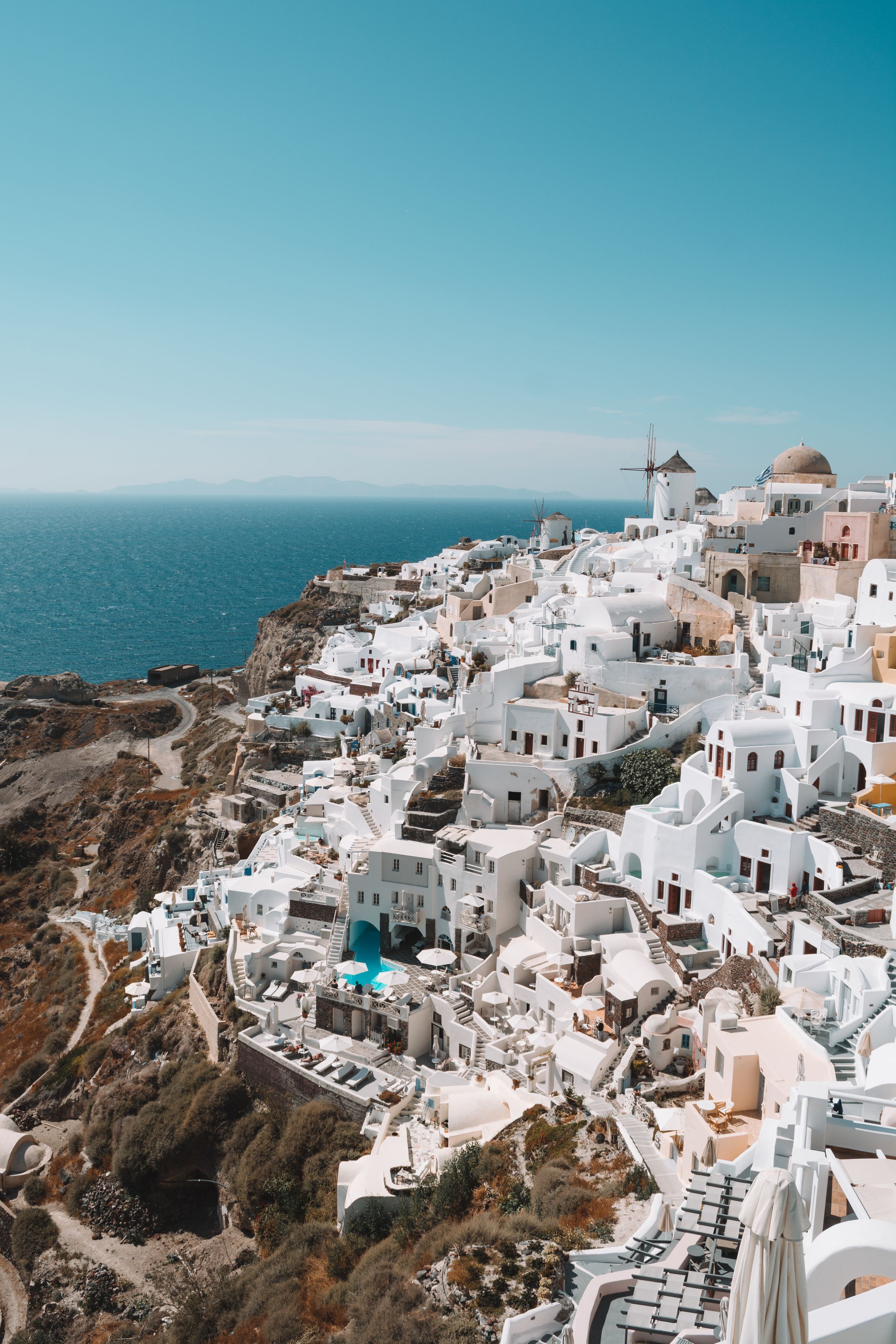
What's left of a volcano that erupted 3,600 years ago, now covered in whitewashed villages and blue domes.
Quick decisions
How many days?
2 days: tight — Oia sunset plus one other activity. 3 days: the realistic minimum, adding a boat tour or beach day. 4+ days: room for wine tasting, Akrotiri, and a slower pace overall.
Where should I stay?
Oia: the classic view, the highest prices. Fira: more practical, livelier. Imerovigli: quieter, arguably the best views. Kamari/Perissa: beach-side, lower cost. See our full where-to-stay guide.
Do I need a car?
Helpful, not essential. Local buses connect the main towns and beaches. A rental car or ATV gives more flexibility for reaching quieter beaches, wineries, and sunset spots on your own schedule.
Best for
First-time visitors: yes, though it's more about views and atmosphere than activities. Couples: yes — a genuine honeymoon and anniversary favorite. Families: workable, but steep terrain and steps limit stroller and mobility access. Budget travelers: Oia specifically runs expensive; Kamari or Perissa keep costs down.
Before you go
Sunset dinner: book weeks ahead in peak season. Boat tour: book ahead too, especially in summer. Shoes: steps and cobblestones everywhere in Fira and Oia. Wind: pack a light layer even in summer.
Getting around
Airport/port → hotel: taxi, pre-arranged transfer, or local bus from JTR airport or Athinios port. Between towns: local bus network, rental car/ATV, or taxi — walking only works within a single town.
Continue your trip
Ferries connect Santorini to other Cycladic islands — Paros, Naxos, and Mykonos are all common next stops for island-hopping — or fly back to Athens (45-55 min) to continue on the Greek mainland.
Overview
Santorini is not really an island so much as the rim of a volcano that blew apart in one of the largest eruptions in recorded history, around 3,600 years ago. What's left is a crescent-shaped sliver of land wrapped around a flooded caldera, with the whitewashed, blue-domed villages that made the island famous perched right along that cliff edge.
Most visitors can cover the main highlights in three to four days — long enough for Oia's sunset, Fira's caldera walk, a boat trip out to the volcano itself, and at least one of the island's black-sand beaches. See our full Santorini travel guide for how to plan around that.
Getting there
Most visitors fly into Santorini's own airport (JTR), with ferries from Athens' port of Piraeus as the slower, cheaper alternative. See our full guide to getting to Santorini for routes, timings, and how to choose between flying and the ferry.
Where to stay
Where you stay changes the whole character of a Santorini trip — a caldera-view room in Oia or Imerovigli is the postcard experience, while Fira and Kamari offer more practical, less expensive bases. See our full where-to-stay guide for the breakdown.
Things to do
The Oia sunset, Fira's caldera walk, the island's black and red sand beaches, and its volcanic wineries anchor most itineraries — our Oia sunset guide, beaches guide, and wine tasting guide cover each in detail.
Food and drink
Santorini's volcanic soil produces some genuinely distinctive food and wine — tomatoes with a concentrated, almost sun-dried sweetness even fresh, capers that grow wild across the island, and Assyrtiko wine with a mineral edge you won't find grown anywhere else quite the same way.
Culture
The eruption that shaped Santorini is widely linked to the Minoan civilization's decline and has long been floated as a possible inspiration for the Atlantis legend, though that connection remains speculative rather than established fact. The excavated Bronze Age settlement at Akrotiri, buried and preserved by the same eruption, offers a rare, direct window into life on the island before it happened.
In-depth Santorini guides
Planning your visit? These cover the specifics.
- Santorini Travel Guide: What to Know Before You Go
- Best Things to Do in Santorini
- How to Get to Santorini
- Best Time to Visit Santorini
- What to Wear and Pack for Santorini
- Oia Sunset Guide: How to Actually See It
- Santorini's Best Beaches: Red, Black, and White Sand
- Santorini Wine Tasting Guide
- Where to Stay in Santorini: A Neighborhood Guide
- Santorini 3-Day Itinerary
Reviews
Log in to write a review.
No reviews yet — be the first to write one.