



Santorini Travel Guide: What to Know Before You Go
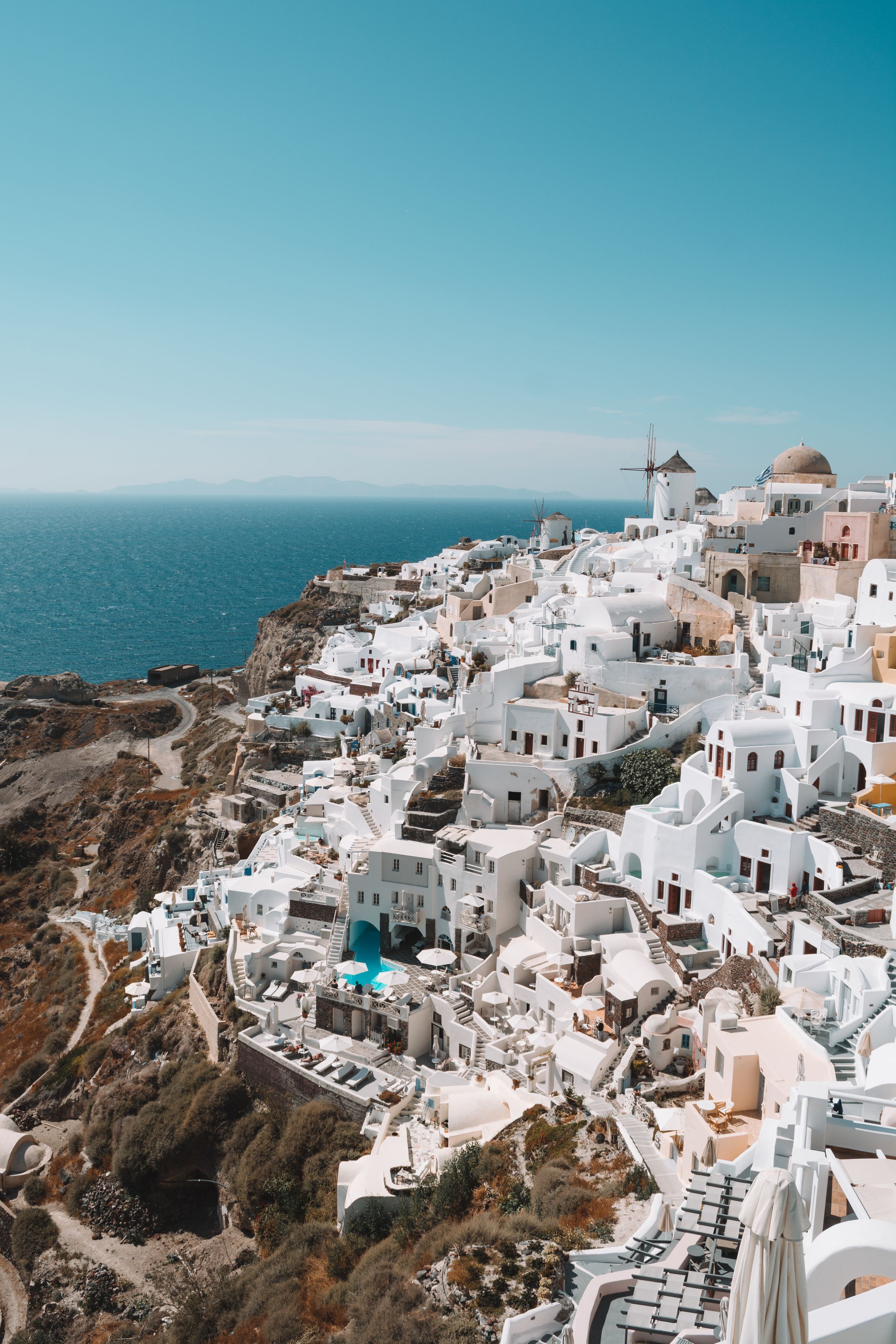
Photos of Santorini all look roughly the same for a reason — whitewashed cave houses, blue-domed churches, a caldera view — but the island itself has more range than its Instagram reputation suggests, once you get past the two or three most-photographed corners.
How the island is laid out
Santorini is a crescent, with the caldera-facing western side (Fira, Imerovigli, Oia) holding the views everyone comes for, and the flatter eastern and southern coast (Kamari, Perissa, Akrotiri) holding the beaches and archaeological sites. They don't feel like the same island.
Book the sunset spot and the boat tour ahead
A prime dinner reservation with an Oia sunset view, and popular volcano boat tours, both fill up during peak season — booking these specific things a few weeks ahead is worth it if either matters to your trip.
Is Santorini walkable?
Within Fira and Oia individually, yes — both are compact, pedestrian-friendly villages. Between towns, no — distances and steep terrain mean you'll want a bus, taxi, ATV, or rental car rather than walking the island's length.
How much time to actually give it
Three to four days covers the highlights without rushing; two days is workable but tight, especially if a boat tour is part of the plan. See our 3-day itinerary for a suggested pace.
Money and payments
Card payment is widely accepted in Fira and Oia, though smaller tavernas and beach-side spots in Kamari or Perissa sometimes prefer cash — carrying some euros covers the gap.
How much does a trip to Santorini cost?
Santorini runs expensive by Greek island standards, particularly for caldera-view accommodation in Oia, which can rival major European capitals in peak season. Kamari and Perissa offer a noticeably cheaper base without losing easy access to the rest of the island.
Language
English is widely spoken in tourist areas, hotels, and restaurants across the island, so language rarely poses a practical barrier even in smaller villages.
Don't fill every afternoon with another activity. Santorini is one of those places where leaving a few hours completely open can be part of the plan.
Connectivity
Santorini runs on the standard European 230V two-pin plug, and tap water is generally safe though many visitors prefer bottled given the taste. The emergency number across Greece is 112.
First-time visitors sometimes underestimate how much of the appeal here is simply sitting somewhere with a view rather than actively doing things — building in unstructured time isn't wasted time on this particular island.