Quick Field Data
- UNESCO Inscription: 1986 (Criteria i, iii, iv, vi). The richest group of Roman imperial monuments north of the Alps, with the Roman core of Trier Cathedral and the Gothic Church of Our Lady.
- Scale & Footprint: A serial group beside the Moselle in Trier, Rhineland-Palatinate, led by the Porta Nigra, the Aula Palatina (Basilica), the 112.5-by-41-metre Cathedral of St Peter and the neighbouring Liebfrauenkirche.
- Access & Ticketing: The cathedral, its cloister and the Church of Our Lady are open to visitors, while the Cathedral Treasury and several Roman monuments charge entry; check current times before visiting.
- Arrival Logistics: On the Moselle in western Rhineland-Palatinate, Germany, reached by rail and road from Dortmund to the north-east.
Augusta Treverorum, the Western Capital, and Emperor Constantine
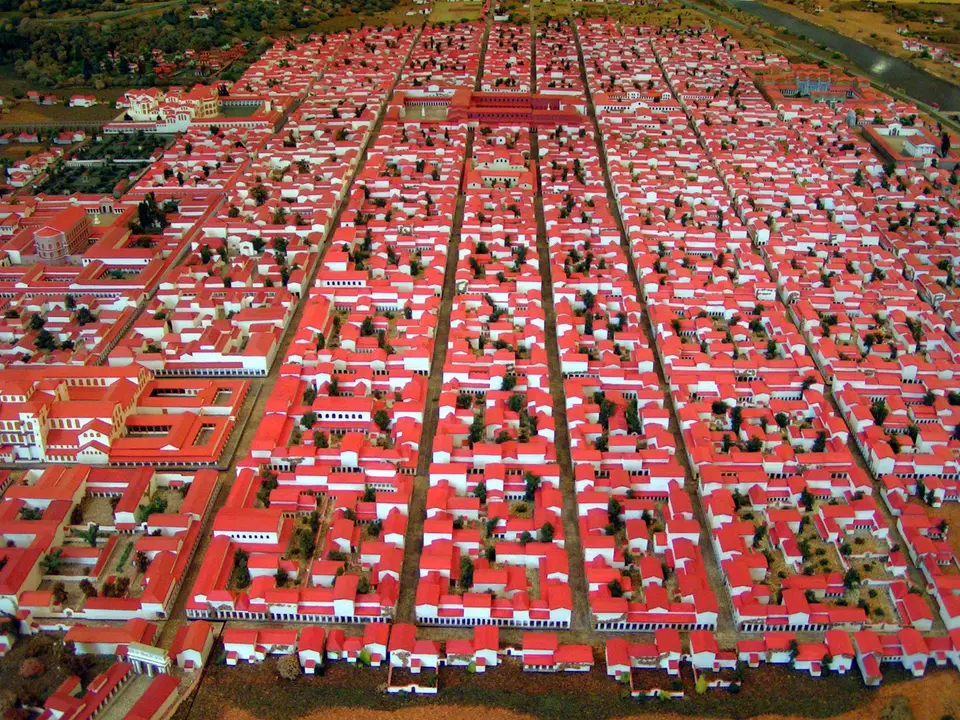
Trier lies on the Moselle in the western German state of Rhineland-Palatinate. In Roman times it was Augusta Treverorum, in the province of Gallia Belgica, and with Cologne it was one of the two largest Roman cities in today's Germany. Founded under Augustus, it grew into a major trading centre by the second century AD. After the reforms of Diocletian in the late third century, Trier became one of the capitals of the Tetrarchy. It was the seat of the prefects who governed Gaul, Germania, Britain and Hispania, and a residence of the western emperors. Nowhere north of the Alps have so many large Roman buildings survived, which earned Trier the name of the Second Rome. Imperial brick anchored the city.
Two monuments show the city's late Roman power especially well. The Porta Nigra, a fortified city gate with the arcaded front of a palace, is the best-preserved Roman gate north of the Alps. In the Middle Ages it was turned into an unusual double church. Nearby rises the brick Aula Palatina, or Basilica of Constantine, built around 311 as an imperial throne hall rather than a church. Its plain exterior encloses a vast hall without columns, the largest surviving single-room building from Roman antiquity.
After his conversion to Christianity, Constantine the Great supported the building of a huge church complex. Under Bishop Maximin, between about 329 and 346, it rose over a palace that tradition links with Constantine's mother, Saint Helena. The complex, four times the size of today's cathedral, included four basilicas, a baptistery and other buildings. It was one of the largest church complexes of the Western Empire outside Rome. The Franks left it in ruins, and after rebuilding it was destroyed again by the Vikings in 882. Archbishop Egbert, who died in 993, began its restoration. Archbishop Poppo started the Romanesque west front in the eleventh century, and Archbishop Eberhard completed it. The eastern apse followed by 1196. Gothic vaults, Renaissance sculpture and Baroque chapels were added from the thirteenth century onwards.
The Roman Core, the Salian Westwork, and the Gothic Cloisters of St Peter
The High Cathedral of St Peter (Trierer Dom) is the oldest cathedral in Germany and the largest church in Trier. It measures 112.5 by 41 metres, with three Romanesque naves under Gothic vaults. Large areas of fourth-century Roman brickwork, from around 340, can still be seen on the outer north wall. Inside, the three eastern bays of the nave follow the outline of the square Roman core building. In the eleventh century its four great Roman columns were encased in massive cross-shaped piers.
On the west front rises the famous eleventh-century Romanesque westwork, begun by Poppo and finished by Eberhard. Its symmetrical facade, with towers framing a western apse, was copied across the Rhine and Meuse region. Above the clock on the tallest tower runs the Latin inscription NESCITIS QVA HORA DOMINVS VENIET, a reminder that no one knows the hour when the Lord will come. The south tower holds the cathedral's peal of bells, cast after the Second World War.
Inside, the tombs of archbishops and archbishop-electors span the tenth to the eighteenth centuries. Among them are Baldwin of Luxembourg, who died in 1354, and Richard von Greiffenklau, who died in 1531. Other highlights include a Romanesque tympanum of Christ with Saint Peter and the Virgin, the Baroque west choir and Baroque side chapels. Behind the east choir lies the early eighteenth-century Chapel of the Holy Robe. It holds the Holy Robe, the seamless tunic of Christ, which was first shown publicly in 1512 and most recently in a great pilgrimage in 2012. The crypt holds a relic venerated as the skull of Saint Helena. The Cathedral Treasury displays masterpieces of tenth-century Ottonian goldsmiths' work. They include Archbishop Egbert's portable altar, made for the sandal of Saint Andrew, and the reliquary of the Holy Nail. To the south, a Gothic cloister built between 1245 and 1270 links the cathedral with the early Gothic Church of Our Lady (Liebfrauenkirche).
Walking the Moselle Axis from the Porta Nigra to the Cathedral and Aula Palatina
Trier's Roman and medieval sights cluster in the pedestrian old town east of the Moselle. You can walk from the northern gate to the cathedral and the imperial throne hall with ease.
- Starting at the Porta Nigra: Begin at the northern edge of the old town with the Roman sandstone blocks and arcaded galleries of the Porta Nigra. Notice how the gate became a two-level church in the Middle Ages before it was returned to its Roman form.
- Exploring Trier Cathedral, the Cloisters, and the Liebfrauenkirche: Walk south to the cathedral to study the Romanesque westwork and the Roman brickwork on the north wall. Inside, see the archbishops' tombs and the view into the Chapel of the Holy Robe. Visit the Treasury for the Egbert shrine and the Holy Nail reliquary, then walk through the cloister into the Church of Our Lady.
- Concluding at Constantine's Aula Palatina: Continue south to the Roman brick Basilica, the Aula Palatina of around 311, and stand inside the vast, column-free throne hall of the emperors.
Preservation of the Rome of the North
Listed by UNESCO in 1986 under criteria i, iii, iv and vi, the Roman monuments, the Cathedral of St Peter and the Liebfrauenkirche form an unbroken timeline. It runs from the Roman city of Augusta Treverorum and its fourth-century churches through Romanesque, Gothic, Renaissance and Baroque additions. Travellers coming from Dortmund can explore Trier beside other Roman and medieval landmarks in our UNESCO World Heritage Atlas.
