Instituto Inhotim Guide: Contemporary Art and Botanical Gardens in Brumadinho
A definitive field guide to Instituto Inhotim in Brumadinho: navigate 24 monumental art pavilions, over 4,300 plant species, and strategic transit links from Belo Horizonte.
Located in Brumadinho, roughly 60 kilometres southwest of Belo Horizonte, Instituto Inhotim stands among the most ambitious cultural institutions in the world. Art collector Bernardo Paz conceived the project on former rural farmland during the mid-1980s, shaped by discussions with landscape designer Roberto Burle Marx. The site opened to the public in 2006, merging world-class architecture with an enormous tropical botanical reserve. Today, visitors navigate 140 hectares of designated visitation trails set within 786 hectares of preserved Atlantic Forest and Cerrado transition woodland. Artworks interact directly with the humid topography of Minas Gerais, creating an immersive outdoor environment across rolling valleys and forest tracts.
Landmark Art Pavilions Across Inhotim
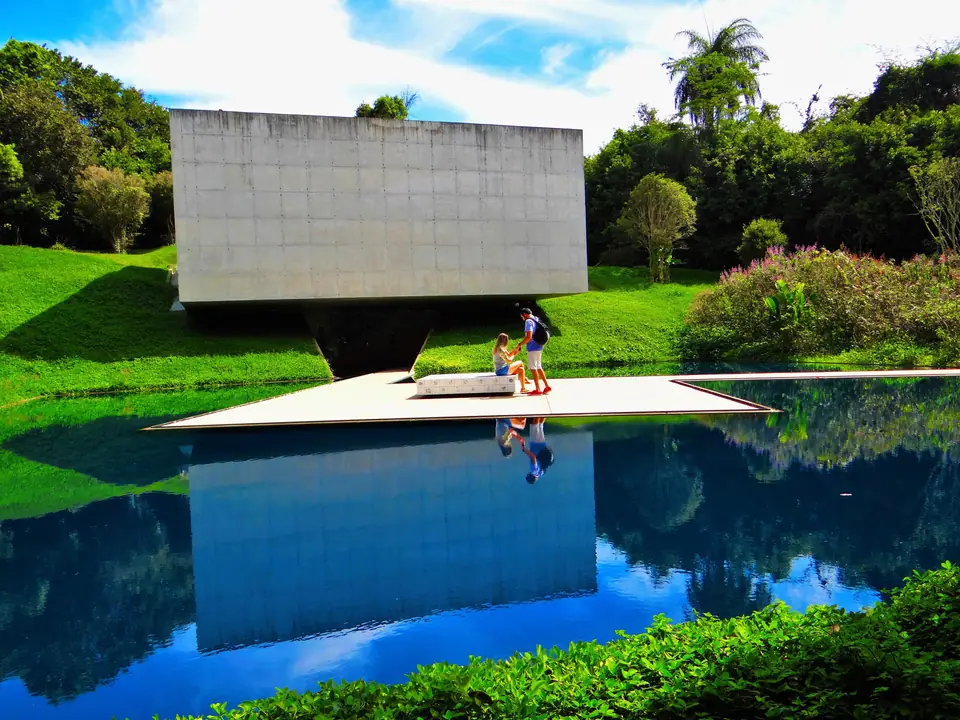
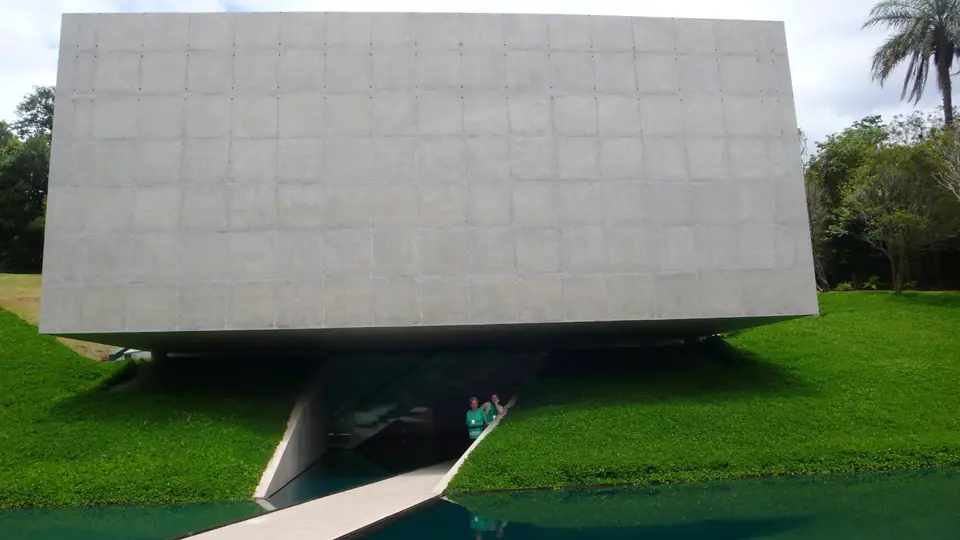
Rather than confining artwork inside a traditional museum hall, Inhotim distributes 24 permanent and temporary pavilions throughout the landscape. Individual artists received bespoke architectural commissions designed to house specific large-scale installations permanently. The Galeria Adriana Varejão, unveiled in 2008, features a dramatic cantilevered concrete block suspended over an emerald pool of aquatic plants. Inside, Varejão addresses colonial history through ceramic wall installations including Celacanto Provoca Maremoto, evoking Portuguese azulejo tiles, and Linda do Rosário.
High on a ridge along the Orange Route sits Doug Aitken's Sonic Pavilion, constructed in 2009. The circular frosted-glass structure shelters a 202-metre-deep borehole drilled directly into the subterranean bedrock. Sensitive geophones lower into the shaft, capturing tectonic groans and subterranean rumblings that transmit directly into the acoustic chamber in real time. Elsewhere, Galeria Cildo Meireles displays the striking monochrome installation Desvio para o Vermelho, where domestic furniture and personal items appear drenched in crimson shades, as well as his shattered-glass labyrinth titled Através.
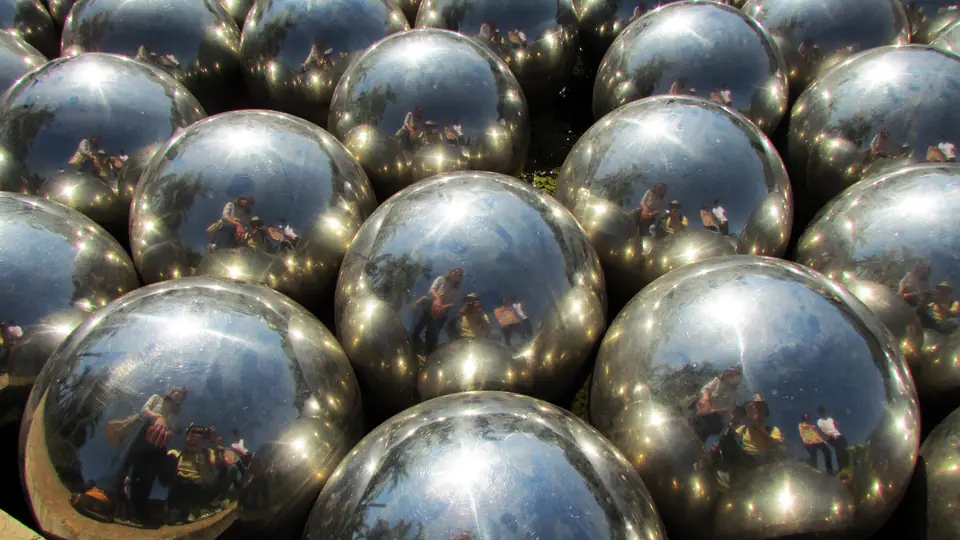
Visitors can also explore the Galeria Claudia Andujar, an expansive brick complex dedicated to her photographic work with the Yanomami people. The Galeria Cosmococa, created by Hélio Oiticica and Neville D'Almeida, invites guests into multi-sensory lounges. Two dedicated spaces for Yayoi Kusama showcase I'm Here, But Nothing and Aftermath of Obliteration of Eternity. Outdoor grounds feature large-scale public sculptures, such as Chris Burden's Beam Drop Inhotim, created by dropping industrial steel beams into wet concrete, and Olafur Eliasson's reflective Viewing Machine.
Botanical Heritage and Plant Collections
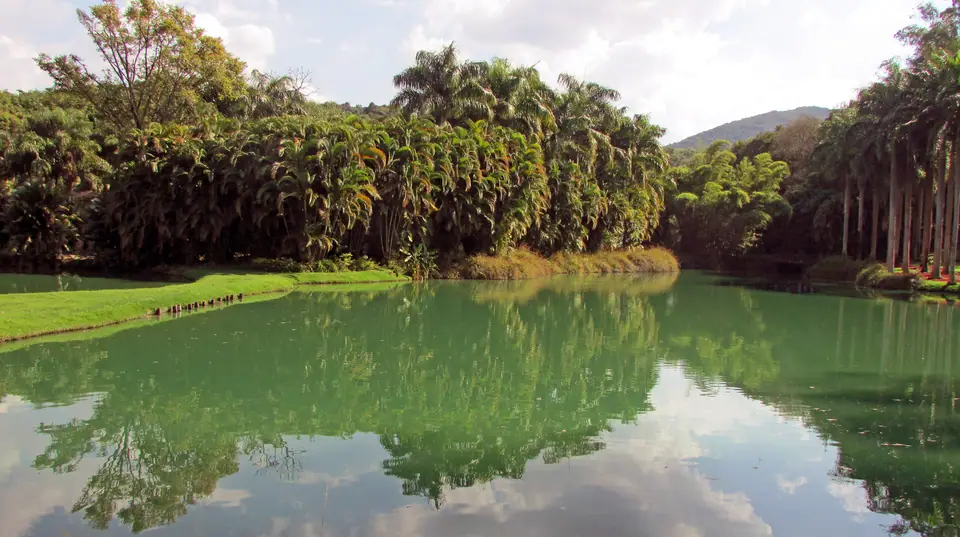
Recognised as an official Botanical Garden in 2010, the grounds maintain over 4,300 catalogued plant species. Curators have assembled one of the premier botanical living archives on earth, anchored by an exceptional collection of Araceae and palm trees exceeding 1,000 species. Towering native trees blend seamlessly with exotic flora across manicured lawns, secondary Atlantic Forest slopes, and marshy hollows. Aquatic gardens display the massive floating pads of the Amazonian water lily, known as Victoria amazonica.
The vegetation provides vital shade and environmental continuity between dispersed galleries. Walking routes weave through shaded bamboo groves, past palm collections, and around tranquil artificial lakes. The interplay between raw topography and deliberate landscaping ensures that the transit between architectural pavilions remains an integral part of the aesthetic experience.
Route Circuits and Navigation Strategy
Navigating 140 hectares requires realistic planning, especially for first-time visitors travelling on a day trip. Inhotim divides its extensive grounds into three primary colour-coded routes: the Orange Route, the Yellow Route, and the Pink Route. Internal transport vehicles operate along designated circuits for visitors who prefer not to walk the entire distance across steep inclines.
| Circuit Axis | Key Architectural Pavilions | Landscape and Botanical Highlights | Terrain Character |
|---|---|---|---|
| Orange Route | Doug Aitken Sonic Pavilion, Galeria True Rouge, Galeria Psicoativa Tunga | Uphill forest ridges, native Cerrado transition zones | Steep elevated climbs, shaded forest paths |
| Yellow Route | Galeria Adriana Varejão, Galeria Cildo Meireles, Galeria Yayoi Kusama | Central lakes, water lily gardens, dense palm groves | Rolling pathways, paved lakeside flats |
| Pink Route | Galeria Claudia Andujar, Galeria Cosmococa, Galeria Miguel Rio Branco | Araceae collections, expansive botanical clearings | Gradual inclines, wide garden trails |
Attempting to inspect every single pavilion in a single day is physically exhausting. We recommend focusing on two routes during a standard day excursion, or allocating two consecutive days to absorb both art and botany at a reasonable pace. If your schedule permits a multi-day itinerary in Minas Gerais, combining Inhotim with historical excursions like the Ouro Preto UNESCO Baroque day trip offers a rewarding balance of colonial heritage and contemporary culture.
Transit and Journey Coordination from Belo Horizonte
Inhotim sits 60 kilometres from the urban centre of the state capital. Driving by rental car, private transfer, or rideshare from central neighbourhoods such as Savassi or Lourdes takes approximately 1 hour 15 minutes to 1 hour 30 minutes, depending on traffic conditions on highway BR-381 or BR-040. Public executive buses run regularly from the central bus terminal in Belo Horizonte directly to the entrance pavilion in Brumadinho. Readers should check the official operator site for current ticket prices, seasonal departure schedules, and advance reservation requirements.
For urban logistics, travellers can consult our guide on where to stay in Belo Horizonte when selecting a base near highway exits. If you are organising your wider regional itinerary, pair your excursion with an architectural walk through the Praça da Liberdade Cultural Circuit to understand how modern art and heritage coexist in Minas Gerais.
Climate Normals and Seasonal Preparation
Because Inhotim involves several hours of outdoor walking along exposed paths, seasonal weather plays a major role in your visit. Summer months bring warm temperatures and heavy rainfall. January averages a daytime high of 28.9°C with 112mm of rain over 16 wet days, while December sees 28.1°C with 126mm across 18 wet days. February and March remain warm, averaging 29.3°C and 28.6°C respectively, with 84mm of rain and 12 wet days each. Thunderstorms often develop during late afternoons in these months, so pack sturdy umbrellas and waterproof footwear.
Winter offers dry, sunny conditions well-suited for long garden treks. June and July record average daily highs around 24.7°C and 24.6°C, accompanied by crisp overnight lows of 14.2°C and 13.8°C, with only 14mm of precipitation across 2 wet days each. August stays dry with 26.2°C and 14mm of rain, while September begins warming to 27.7°C with 28mm over 4 wet days. Bring sun protection, a refillable water bottle, and light layers regardless of the season, as hilltop pavilions like Doug Aitken's installation catch steady breezes throughout the year.
Where it is
- 1Instituto Inhotim
- Tancredo Neves International Airport (CNF) · about 61 km from here in a straight line
- Directions in Google Maps
Stations and taxi ranks: OpenStreetMap. Airports: OurAirports. Distances are in a straight line.
Traveller tips
Real advice from people who have been to Belo Horizonte. Every tip is read by our team before it goes live.
No tips yet. Been here? Yours could be the first.
Thank you! Your tip will appear here after a quick review.
More in Belo Horizonte
Continue exploring Belo Horizonte with related neighbourhood, food, and planning guides
Best Time to Visit Belo Horizonte: Climate Normals and Seasonal Guide
Belo Horizonte, Brazil
Where to Stay in Belo Horizonte: Savassi, Lourdes and Pampulha
Belo Horizonte, Brazil
3 Days in Belo Horizonte Itinerary: Liberdade, Pampulha, Inhotim & Ouro Preto
Belo Horizonte, Brazil

What to Eat in Belo Horizonte: Cozinha Mineira, Canastra Cheese & Boteco Classics
Belo Horizonte, Brazil
