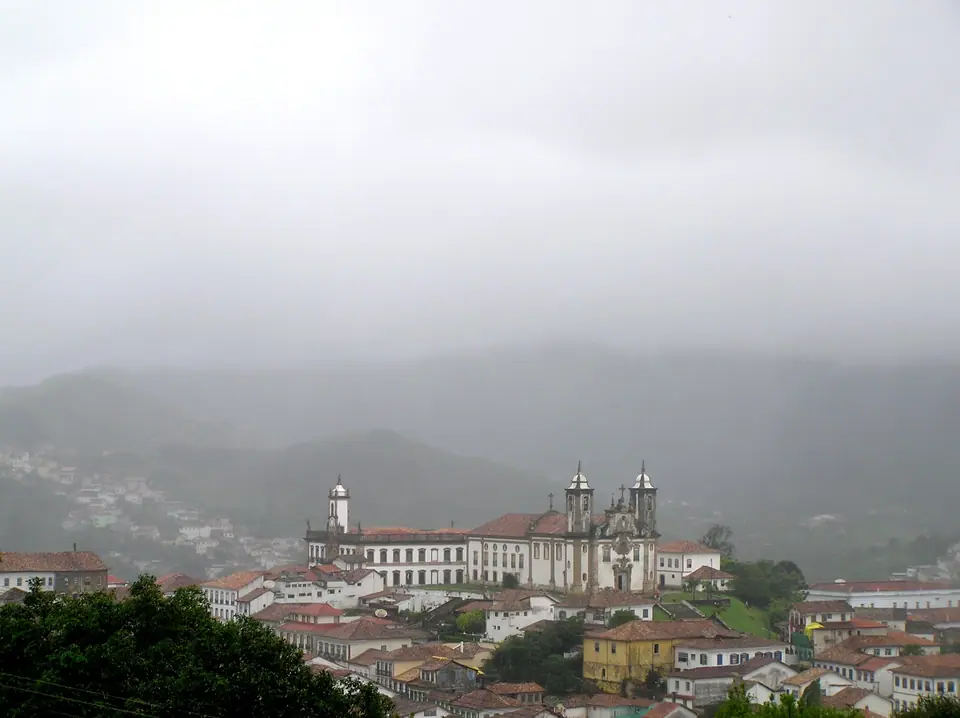
Ouro Preto Day Trip from Belo Horizonte: UNESCO Baroque Architecture and Gold Rush Heritage
Plan an independent day trip from Belo Horizonte to UNESCO-listed Ouro Preto with transport logistics, Aleijadinho soapstone art, and historic gold mine visits.
One hundred kilometres southeast of the state capital, along the mountain curves of the Estrada Real on highway BR-356, the historic gold-rush town of Ouro Preto rises across steep ravines beneath the rocky crest of Pico do Itacolomi at 1,772 metres. Founded around 1698 as Vila Rica after prospectors found dark gold-bearing pebbles in the Tripuí stream, this settlement funded the imperial architecture of eighteenth-century Portugal. It served as the birthplace of the 1789 Inconfidência Mineira independence conspiracy led by Joaquim José da Silva Xavier, known as Tiradentes. In 1980, Ouro Preto became the very first location in Brazil inscribed on the UNESCO World Heritage List under Reference 124. For travellers planning a 3 Days in Belo Horizonte Itinerary, setting aside an entire day for this colonial mountain hub provides an essential counterweight to modern city architecture.
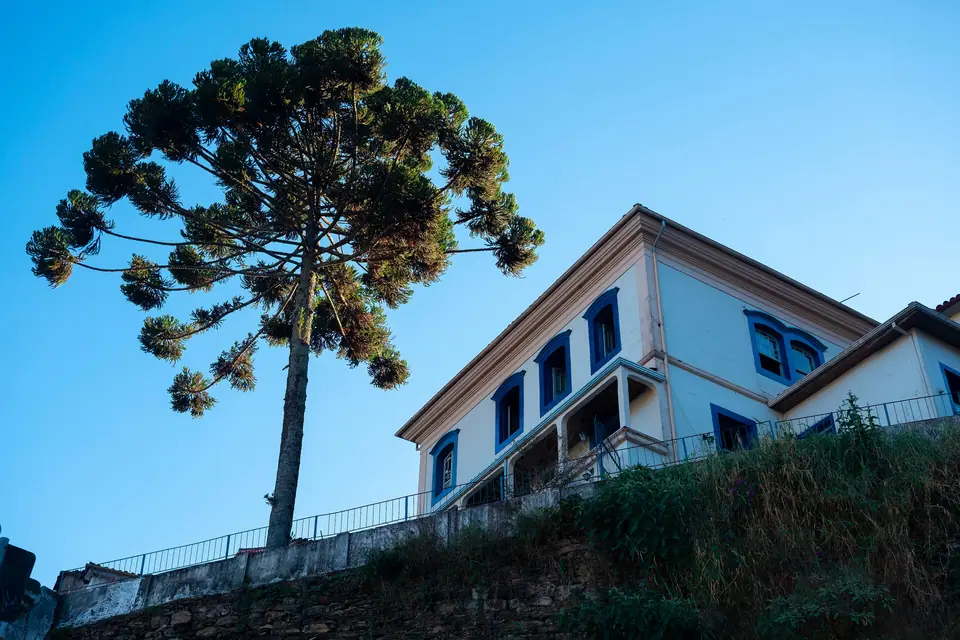
Transport Logistics from Central Belo Horizonte along the Estrada Real
Reaching Ouro Preto from central Belo Horizonte takes approximately two hours under normal traffic conditions. The primary public transport connection operates out of the central Rodoviária bus station in downtown Belo Horizonte. Long-distance coach operator Pássaro Verde runs frequent departures throughout the morning and afternoon, depositing passengers at the Terminal Rodoviário de Ouro Preto on the edge of the historic quarter. Travellers arriving in the state capital can consult our transit breakdown in How to Get to Belo Horizonte for connections between the regional airports and the bus terminal. If you choose to hire a car, the drive follows the winding BR-356, where heavy mineral haulage trucks navigate hairpin turns. The historic centre bans heavy vehicular traffic on multiple corridors, and the polished quartzite cobblestone streets present steep inclines that demand sturdy footwear with exceptional grip.
| Transport Method | Departure Hub | Transit Time | Practical Considerations |
|---|---|---|---|
| Intercity Coach (Pássaro Verde) | Rodoviária de Belo Horizonte | 2 hours | Drops passengers at Ouro Preto bus station, requiring a local taxi or steep walk into the core. |
| Rental Car via BR-356 | Belo Horizonte city centre | 2 hours | Demands cautious mountain driving among mining lorries; street parking is restricted in historic alleys. |
| Organised Day Excursion | Central hotel pick-up | 2 hours each way | Provides direct vehicle drop-offs close to high ridgeline churches without navigation worries. |
| Trem da Vale Connection | Estação Ouro Preto | 18 km route to Mariana | Scenic passenger rail through the Carmo gorge, connecting Ouro Preto to neighbouring Mariana. |
Aleijadinho and Mestre Ataíde at the Church of São Francisco de Assis
Descending the cobblestones from the central square leads to the crowning monument of Brazilian Rococo design, the Igreja de São Francisco de Assis, constructed between 1766 and 1794. The sanctuary represents an unmatched artistic partnership between two Minas Gerais masters. Antônio Francisco Lisboa, universally celebrated as Aleijadinho, was born in 1738 and died in 1814. He designed the building, curved its rounded twin bell towers, and sculpted its circular soapstone portal showing Saint Francis receiving the stigmata on Mount La Verna. Inside the nave, Aleijadinho carved the pair of elevated soapstone pulpits and the high-altar woodwork with astonishing precision.
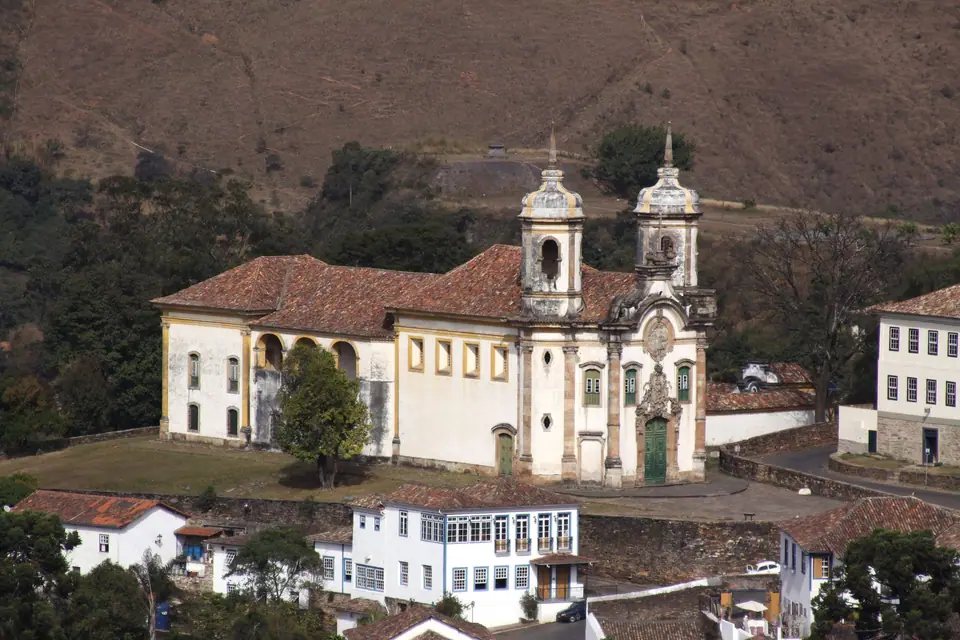
Looking up toward the wooden ceiling reveals the trompe-l'oeil perspective painting executed by Manuel da Costa Ataíde between 1801 and 1812. Mestre Ataíde rejected European porcelain conventions by painting a brown-skinned Virgin Mary ascending into a sky-blue heaven, encircled by Afro-Brazilian cherubs playing classical musical instruments. Directly across the square from the church steps, the open-air Feira de Pedra-Sabão market hosts local artisans chiselling soapstone cookware, mortars, and decorative chess sets. This craft culture shares deep roots with the regional dining traditions explored in What to Eat in Belo Horizonte, where heavy soapstone cauldrons slowly simmer rich stews.
The Golden Splendour of Basílica Menor de Nossa Senhora do Pilar
At the western base of the town stands the Basílica Menor de Nossa Senhora do Pilar, built between 1711 and 1733. While the exterior displays relatively modest lime-washed walls, the decagonal nave contains one of the most extravagant baroque interiors on the South American continent. Colonial guilds lined the cedarwood carvings with more than 400 kilograms of gold leaf and hundreds of carved wooden cherubs, angels, and lions. The high altar, attributed to master woodcarver Francisco Xavier de Brito, frames tiered canopies that focus natural light directly onto the central tabernacle. Because opening hours for worship and tourist visits vary throughout the liturgical calendar, check the parish noticeboards or the municipal tourism office before arranging your walking sequence.
Praça Tiradentes, Museu da Inconfidência, and Historic Gold Mines
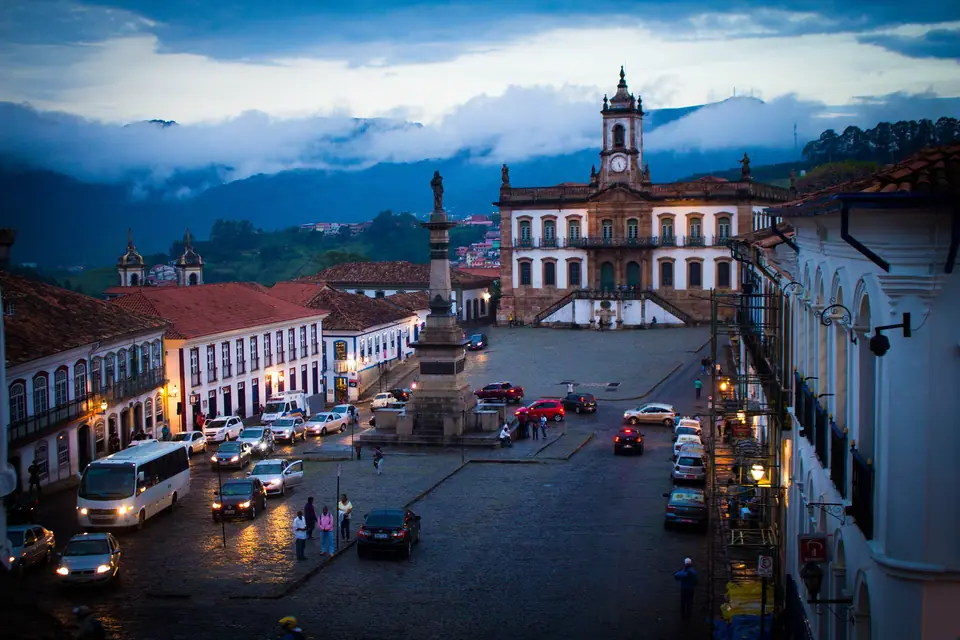
The geographic and civic heart of Ouro Preto is Praça Tiradentes, a vast stone-paved square commanding sweeping views over colonial roof tiles. At the southern end stands the monumental Casa de Câmara e Cadeia, built in 1785. The fortress-like building once held political prisoners and now houses the Museu da Inconfidência. The museum displays the original timber gallows components, personal effects, and stone tombs of the rebels who revolted against the Portuguese Crown's gold taxes in 1789. At the opposite end of the square sits the former Governor's Palace, now the School of Mines, perched over steep cliffs.
Beyond religious architecture, Ouro Preto preserves underground industrial history. At Mina do Chico Rei and Mina da Passagem, located along the road toward Mariana, visitors descend into hand-cut eighteenth-century shafts where enslaved African miners extracted tonnes of gold ore from quartz veins. At Mina da Passagem, a vintage funicular cart transports visitors down a wet tunnel to a flooded subterranean lake. The nearby town of Mariana, founded in 1696 as the first capital of Minas Gerais, connects to Ouro Preto via an 18-kilometre scenic route through the Carmo River gorge, housing a rare 1701 Arp Schnitger pipe organ inside the Sé Cathedral.
Seasonal Weather Patterns and Packing Advice
Ouro Preto sits at higher elevations than Belo Horizonte, producing cooler evenings and brisk mountain winds. Open-Meteo long-term data for the region indicates a clear division between seasons. The winter dry window runs from May to August, with average daytime highs around 24.6°C to 26.2°C and nighttime lows dropping to 13.8°C to 15.4°C. Rainfall during these mid-year months remains low, averaging only 14 to 28 millimetres across 2 to 4 wet days each month, ensuring dry stone streets for safe walking. Conversely, the summer rainy season peaks between November and January, when monthly rainfall climbs from 105 to 126 millimetres across 15 to 18 wet days. Wet weather makes the polished cobblestone alleys extremely slippery, so bring rubber-soled trekking shoes and an umbrella if visiting during summer.
Where it is
- 1Ouro Preto Day Trip from Belo Horizonte
- Tancredo Neves International Airport (CNF) · about 96 km from here in a straight line
- Directions in Google Maps
Stations and taxi ranks: OpenStreetMap. Airports: OurAirports. Distances are in a straight line.
Traveller tips
Real advice from people who have been to Belo Horizonte. Every tip is read by our team before it goes live.
No tips yet. Been here? Yours could be the first.
Thank you! Your tip will appear here after a quick review.
More in Belo Horizonte
Continue exploring Belo Horizonte with related neighbourhood, food, and planning guides
Instituto Inhotim Guide: Contemporary Art and Botanical Gardens in Brumadinho
Belo Horizonte, Brazil
Serra do Curral, Parque das Mangabeiras and Praça do Papa Guide
Belo Horizonte, Brazil
Savassi, Lourdes and Santa Tereza: Belo Horizonte Neighbourhood Guide
Belo Horizonte, Brazil
Mineirão Stadium, Parque Municipal & Historic Centro Guide, Belo Horizonte
Belo Horizonte, Brazil
