3 Days in Cairo: Giza and GEM, Royal Mummies, and Historic Islamic Cairo
A three-day Cairo itinerary balancing the Giza Plateau, the Grand Egyptian Museum, Coptic Cairo, royal mummies, and Islamic Cairo across geographic zones.
A successful three-day visit to Cairo depends on grouping sights strictly by their position relative to the River Nile. The metropolitan area spans vast distances, so attempting to zigzag between riverbanks squanders hours in heavy traffic. We structure this route into three geographic zones: Day 1 focuses entirely on the West Bank monuments in Giza, Day 2 explores the southern and central East Bank districts, and Day 3 uncovers the medieval quarters of UNESCO-listed Historic Cairo.
By respecting these geographic boundaries, you minimise transit delays and align your visits with optimal daylight and cooler temperatures. Always verify seasonal opening times and reserve admission tickets in advance on the official Ministry of Tourism and Antiquities portal.
Day 1: Giza Plateau Pyramids, the Great Sphinx, and the Grand Egyptian Museum
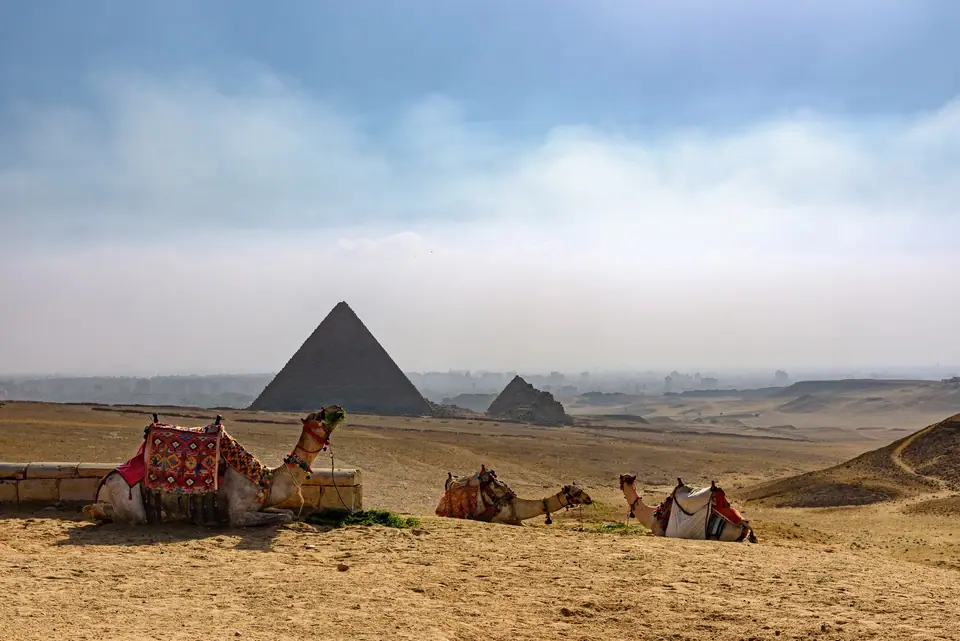
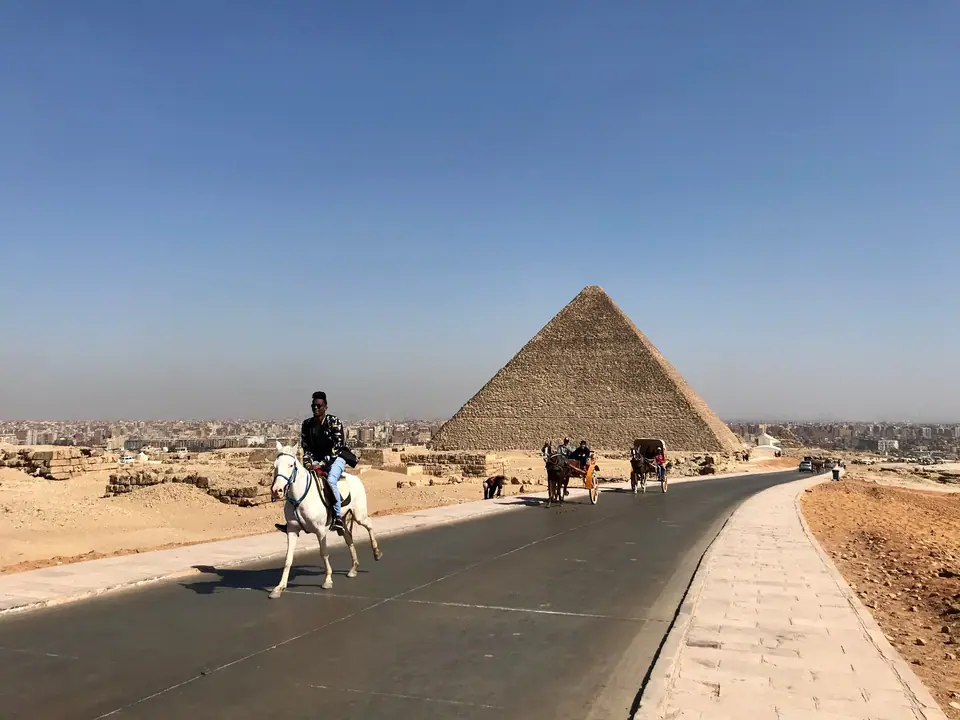
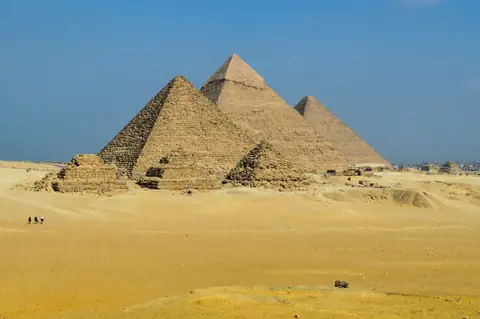
Begin early on the West Bank at the Giza Plateau to explore the Fourth Dynasty funerary complex before desert heat peaks. Enter through the Mena House gate or the Sphinx gate to stand before the Great Pyramid of Khufu, constructed around 2560 BCE. Walk up the desert escarpment past the limestone-capped Pyramid of Khafre and the granite-sheathed Pyramid of Menkaure. Continue south-west towards Panorama Point for a sweeping perspective across the three royal tombs set against the open Western Desert.
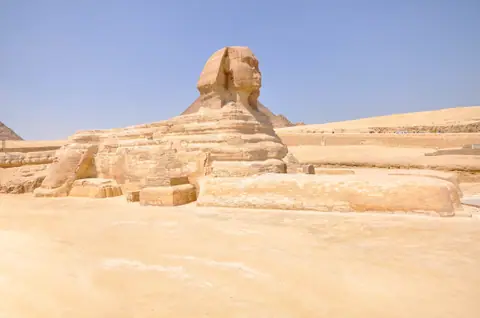
From Panorama Point, follow the ancient causeway down to the eastern terrace to examine the megalithic limestone blocks of the Valley Temple. Exit directly beside the Great Sphinx, carved out of living bedrock with the head of a king and the body of a lion. For in-depth touring strategies and site navigation, consult our dedicated Giza Pyramids and Great Sphinx guide.
After finishing on the plateau, travel two kilometres north-west to the Grand Egyptian Museum. Here, visitors encounter the Hanging Obelisk plaza, the colossal granite statue of Ramesses II in the atrium, and the tiered Grand Staircase lined with monumental Old, Middle, and New Kingdom statuary. Travellers prioritising early dynastic architecture can substitute the museum visit by heading south to the Step Pyramid of Djoser at Saqqara.
Day 2: Coptic Cairo, the Royal Mummies at NMEC, and Tahrir Square
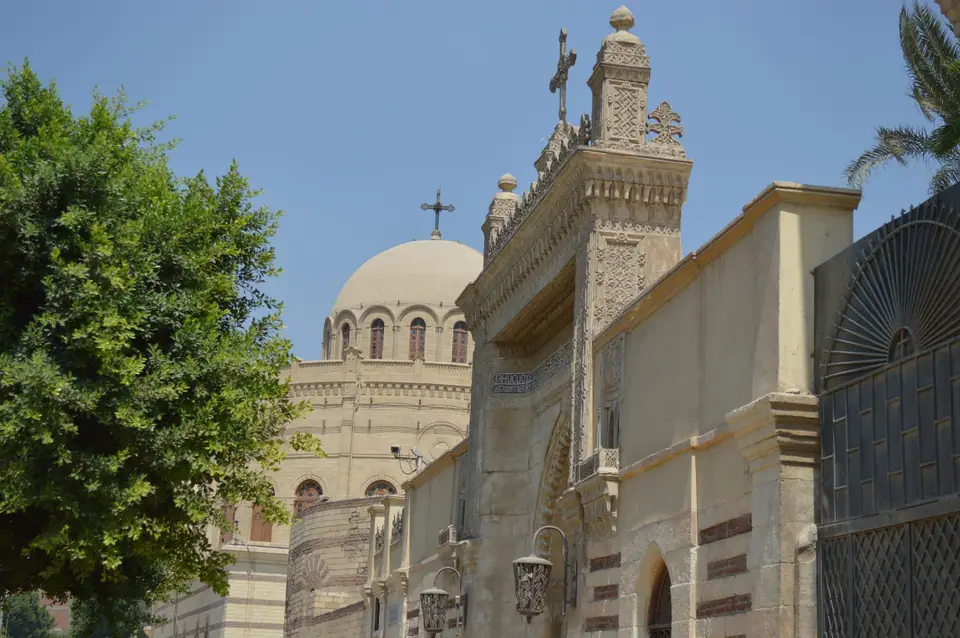
Dedicate the second morning to the enclosed religious enclave of Old Cairo, located directly outside the Mar Girgis underground station. This district occupies the site of the Roman Babylon Fortress. Enter the Hanging Church, suspended over the southern gatehouse bastions, to admire its vaulted timber roof modelled on Noah's Ark. Continue through the pedestrian alleyways to the Church of Abu Serga, which houses the subterranean crypt associated with the Holy Family. Within the same perimeter, visit the Coptic Museum to inspect early Christian textiles and stone reliefs, then proceed to the Ben Ezra Synagogue and the nearby Mosque of Amr ibn al-As, founded in 641 CE. Learn more about the district in our guide to Coptic Cairo and the Babylon Fortress.
Travel by car a short distance east into historic Fustat to the National Museum of Egyptian Civilization. The centrepiece of this modern institution is the Royal Mummies Hall, designed to resemble subterranean tombs in the Valley of the Kings. Twenty kings and queens, including Hatshepsut and Ramesses II, rest in climate-controlled preservation chambers.
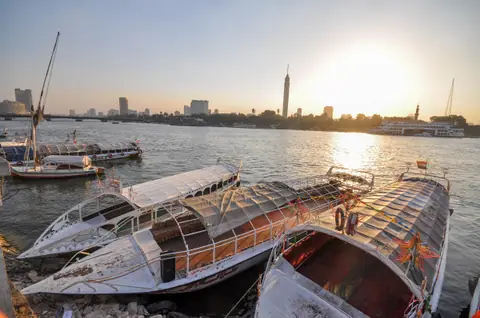
Conclude the daylight hours by travelling north to Tahrir Square. Walk through the neo-classical galleries of the 1902 Egyptian Museum to view its celebrated collection of gilded masterworks, Middle Kingdom sarcophagi, and the Yuya and Thuya funerary treasures. At dusk, head to the riverfront docks near Garden City or Zamalek to hire a wooden felucca for an hour of quiet sailing along the Nile currents.
Day 3: The Saladin Citadel, Sultan Hassan, Al-Muizz Street, and Khan el-Khalili
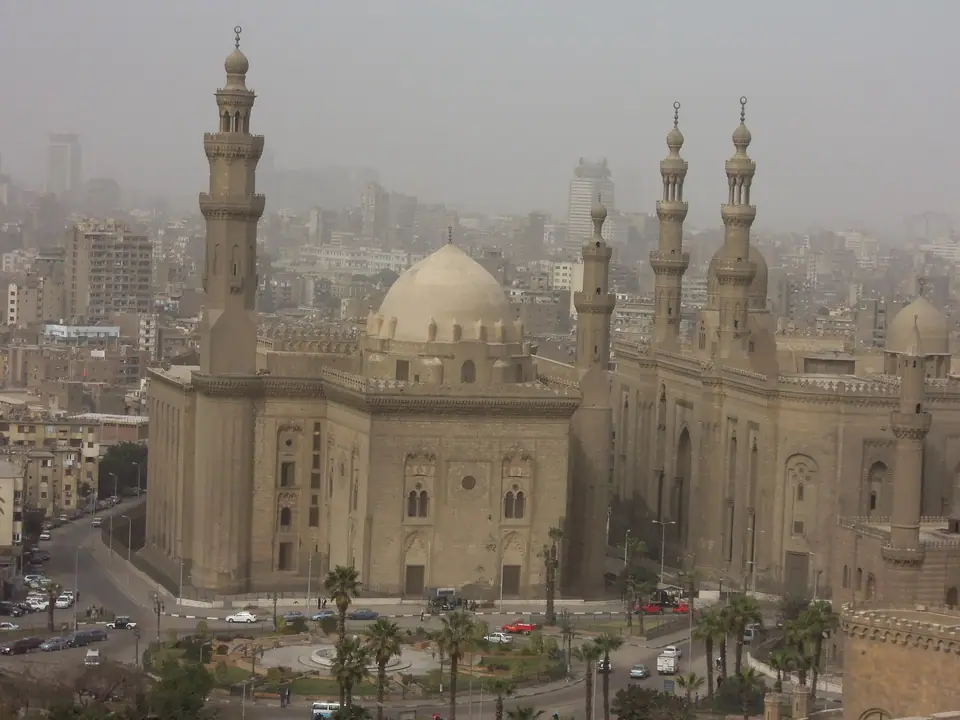
Spend your final day inside medieval Cairo. Start on the limestone spur of the Saladin Citadel, founded during the twelfth century to repel crusader armies. Within the fortified enclosure, tour the nineteenth-century Mosque of Muhammad Ali, distinguished by its high alabaster-clad walls, cascading domes, and twin pencil minarets overlooking the urban expanse. Descend the citadel slopes to Midan Salah ad-Din to inspect the towering four-iwan gateway of the 1356 Mosque-Madrasa of Sultan Hassan, directly opposite the early twentieth-century Al-Rifai Mosque. The complex offers monumental Mamluk stone carving and vast prayer halls; read our complete breakdown in the Saladin Citadel and Sultan Hassan guide.
In the afternoon, travel to the northern fortification wall of Fatimid Cairo. Walk through the monumental archway of Bab al-Futuh, completed in 1087, and begin your journey down Al-Muizz li-Din Allah Street. Follow this pedestrian artery past the courtyard of the Al-Hakim Mosque, the Ottoman domestic rooms of Bayt al-Suhaymi, and the complex of Sultan al-Mansur Qalawun. Turn east into the stone-vaulted alleys of Khan el-Khalili to observe traditional metalworkers and spice merchants. For a comprehensive street circuit, review our Islamic Cairo walking route. End the day at Al-Azhar Park, admiring views of hundreds of historic minarets as the evening call to prayer echoes across the city.
Three-Day Cairo Itinerary Overview and Logistics
The following table summarises the geographic arrangement, principal monuments, and transit strategy across all three touring days.
| Itinerary Day | Geographic Sector | Primary Monuments and Sights | Recommended Transport Mode |
|---|---|---|---|
| Day 1 | West Bank (Giza) | Giza Plateau, Great Sphinx, Grand Egyptian Museum or Saqqara | App-based taxi, private driver, or tour vehicle |
| Day 2 | Southern and Central East Bank | Babylon Fortress, NMEC Mummies, 1902 Museum, Nile felucca | Cairo Metro to Mar Girgis, short app-based taxi hops |
| Day 3 | Historic Islamic Cairo | Citadel, Sultan Hassan, Bab al-Futuh, Al-Muizz, Khan el-Khalili | App-based taxi between sectors, on-foot exploration within gates |
Practical Seasonal Considerations for Three Days in Cairo
Climate varies markedly across the calendar year. Winter months from December to February bring pleasant midday highs between 19°C and 21°C beside cooler night lows around 10°C or 11°C, with only one or two wet days per month. These mild conditions make extended outdoor walking through the Giza Plateau and Al-Muizz Street comfortable throughout the day.
During summer from June to August, daytime temperatures routinely reach 35°C, with zero precipitation and intense solar exposure. During warmer periods, complete the desert plateau and exposed citadel battlements early in the morning. Reserve the midday hours for air-conditioned galleries at the Grand Egyptian Museum and the National Museum of Egyptian Civilization.
Where it is
- 1Cairo
- Cairo International Airport (CAI) · about 17 km from Cairo in a straight line
- Directions in Google Maps
Stations and taxi ranks: OpenStreetMap. Airports: OurAirports. Distances are in a straight line.
Traveller tips
Real advice from people who have been to Cairo. Every tip is read by our team before it goes live.
No tips yet. Been here? Yours could be the first.
Thank you! Your tip will appear here after a quick review.
More in Cairo
Continue exploring Cairo with related neighbourhood, food, and planning guides
Cairo: Nile Geography, Giza Plateau and Historic Districts
Cairo, Egypt
12 Essential Landmarks and Experiences Across Cairo and Giza
Cairo, Egypt
Arriving in Cairo: Airports, Visas, Transfers and Rail Connections
Cairo, Egypt
Best Time to Visit Cairo: Winter Desert Sunshine, Khamsin Winds and Ramadan Nights
Cairo, Egypt
