Giza Pyramids, Great Sphinx and Valley Temple Guide
Discover how to explore the Giza Plateau, covering Khufu, Khafre, Menkaure, the Valley Temple, the Great Sphinx, entry gates, and seasonal desert weather.
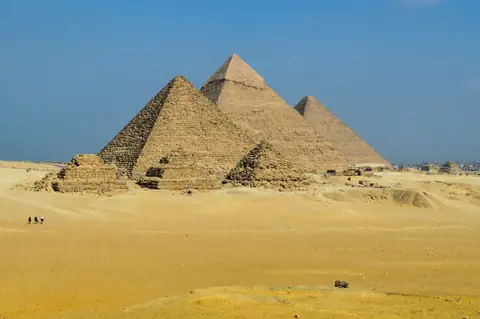
Rising from a desert escarpment fifteen kilometres south-west of central Cairo, the Giza Necropolis preserves the Fourth-Dynasty royal burial monuments built between roughly 2580 and 2510 BCE. Inscribed as a UNESCO World Heritage Site in 1979 under Memphis and its Necropolis, the plateau contains the only surviving structure of the ancient Seven Wonders of the World. Careful planning ensures an orderly visit across the open desert terrain, especially when coordinating travel beside a broader 3 days in Cairo itinerary.
Architecture of the Three Fourth-Dynasty Royal Pyramids
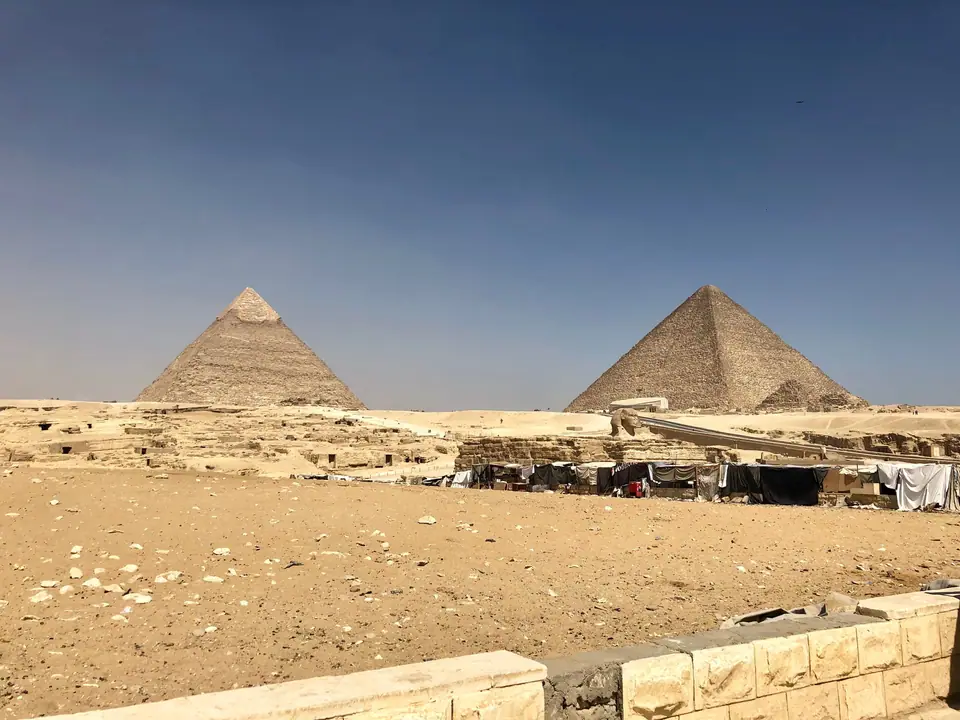
The northernmost monument is the Great Pyramid of Khufu, built around 2560 BCE. It originally rose to 146.6 metres, though erosion and the removal of its fine outer Tura limestone casing have reduced its modern height to 138.5 metres. The monument contains approximately 2.3 million limestone blocks, with heavy red-granite beams transported north from Aswan to span internal burial ceilings. Visitors holding a dedicated interior ticket can ascend the corbelled Grand Gallery to reach the King\'s Chamber. Directly east of Khufu\'s base sit rock-cut boat pits that once sheltered royal wooden barques, beside smaller pyramids constructed for royal consorts.
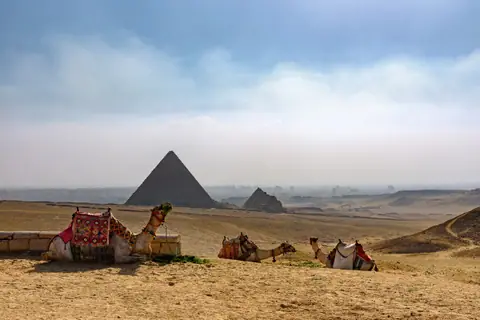
The central monument belonged to Khufu\'s son, Pharaoh Khafre. It stands 136.4 metres high on an elevated shelf of limestone bedrock, giving the optical illusion of greater height than Khufu\'s pyramid. Khafre\'s monument is easily identified across the plateau because it retains its original polished Tura limestone casing stones across the uppermost peak. The interior passages lead downward into a subterranean rock-cut burial chamber.
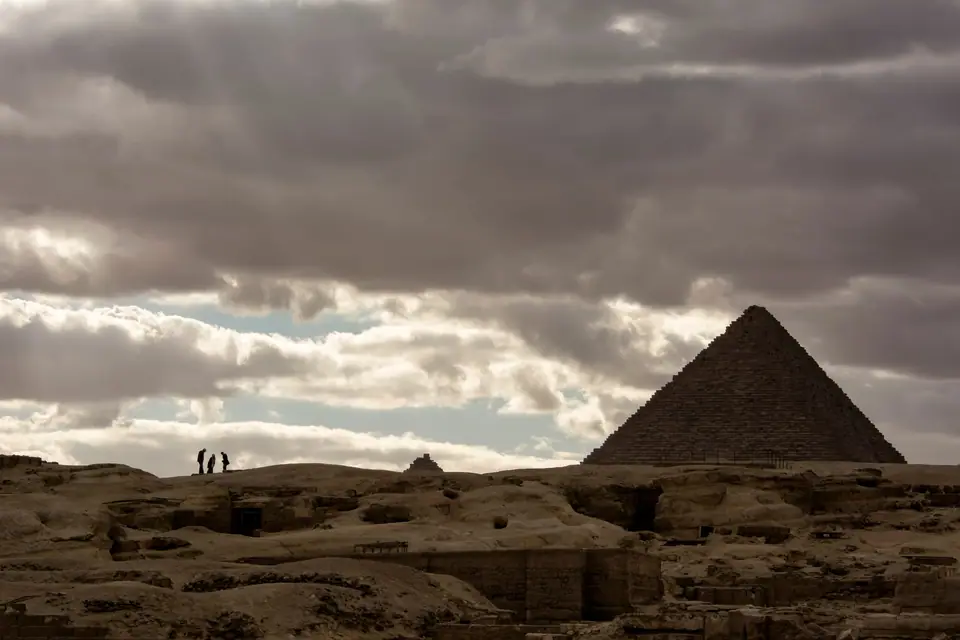
The southernmost monument belongs to Menkaure, measuring 61 metres high. Although Menkaure is significantly smaller than the two northern pyramids, its construction features sixteen lower courses encased in unpolished pink granite blocks brought down the Nile from Aswan. An extensive ancient breach on the northern facade reveals the dense core masonry of the structure.
The Valley Temple of Khafre and the Great Sphinx
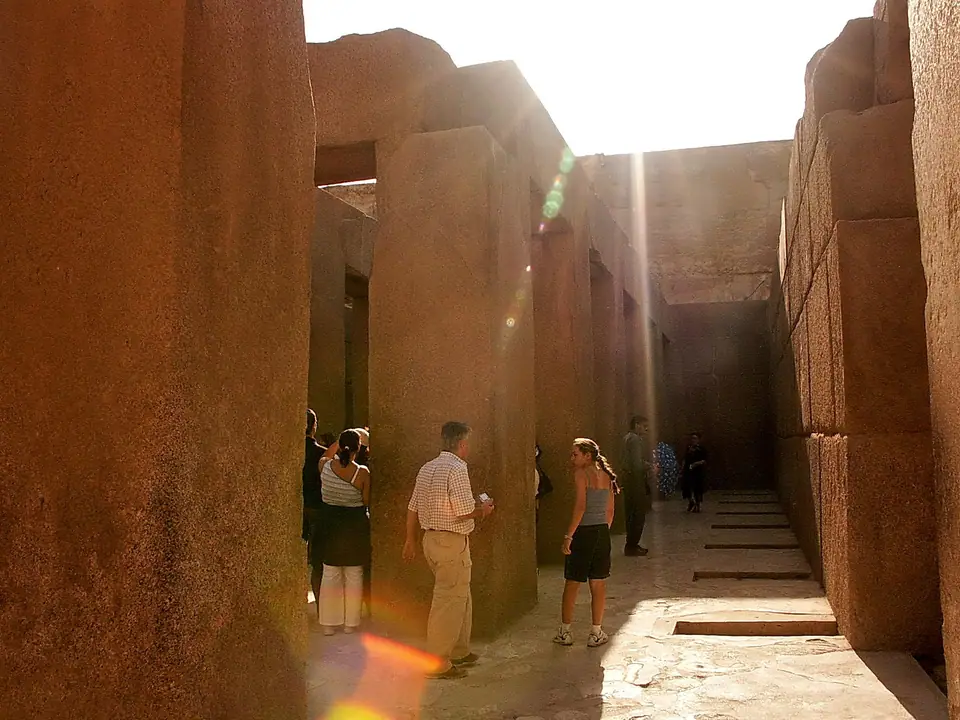
Positioned on the eastern terrace below the main escarpment, the Valley Temple of Khafre served as the ceremonial entrance to the pharaoh\'s mortuary complex. The interior hall features colossal pillars and lintels cut from polished Aswan pink granite, set over an alabaster floor. Sunlight filters through narrow clerestory slits at roof level, illuminating the sockets where diorite statues of the king once stood.
Directly north of the Valley Temple, the Great Sphinx was carved out of a single ridge of soft limestone bedrock. Measuring 73 metres long and 20 metres high, the sculpture portrays a recumbent lion bearing the royal nemes headdress of Pharaoh Khafre. Between the extended front paws rests the Dream Stele of Thutmose IV, installed around 1401 BCE to record a New Kingdom restoration. Visitors observe the Sphinx from an elevated stone causeway connecting the lower valley to the upper plateau temples.
Entrance Gates, Tickets and Plateau Navigation
The Giza Plateau operates two distinct access gates. Choosing the correct gate saves substantial walking time across dusty terrain:
- Northern Gate (Great Pyramid / Mena House Gate): Positioned at the end of Al-Haram Street near the historic Mena House area. This gate enters directly beside the Great Pyramid of Khufu, making it the preferred arrival point if you plan to explore the interior chambers first thing in the morning.
- Eastern Gate (Sphinx Gate): Located in the lower village district of Nazlet el-Semman. This gate places you immediately in front of the Valley Temple of Khafre and the Great Sphinx viewing platform. It serves as a practical exit if you walk downhill across the plateau.
Egypt\'s antiquities authorities operate cashless ticket counters at both entrances, requiring bank cards for all transactions. Visitors can also purchase plateau admission and separate interior pyramid tickets in advance through the official portal at egymonuments.gov.eg. Regulated fixed rates apply for authorized horse and camel rides across the plateau sand tracks leading toward Panorama Point. Negotiate or verify the posted rates at the official government signs before boarding any animal.
| Plateau Monument | Architectural Height | Primary Material | Key Structural Feature |
|---|---|---|---|
| Great Pyramid of Khufu | 138.5 metres (originally 146.6m) | Limestone and Aswan red granite | Corbelled Grand Gallery and King\'s Chamber |
| Pyramid of Khafre | 136.4 metres | Limestone bedrock core and Tura casing | Intact white casing stones at the apex |
| Pyramid of Menkaure | 61 metres | Limestone and Aswan pink granite | Sixteen lower courses of dressed pink granite |
| Valley Temple of Khafre | Megalithic single-storey hall | Aswan granite pillars and alabaster floor | Monolithic pillars and New Kingdom Dream Stele access |
| The Great Sphinx | 20 metres high, 73 metres long | Carved living limestone ridge | Recumbent lion body with royal nemes headdress |
Seasonal Weather and Desert Field Preparation
Open desert conditions create extreme exposure across the plateau, where natural shade is virtually nonexistent. Long-term climate data from Open-Meteo between 2015 and 2024 reveals distinct seasonal patterns across the Cairo region. Winter months provide mild walking conditions. January and February record daytime highs of 19°C to 21°C, nighttime lows of 10°C to 11°C, and roughly two wet days per month with 14 millimetres of rainfall. March through April see daytime temperatures climb from 24°C to 28°C, with only one monthly wet day and 7 millimetres of precipitation. Reviewing the best time to visit Cairo helps travellers prepare for occasional springtime desert dust storms.
Summer brings intense heat from May through October. Highs stay consistently between 32°C and 35°C, while overnight lows range from 20°C to 24°C under dry skies with zero rainfall. Early arrivals allow you to complete the uphill walk to Panorama Point before midday radiant heat reflects off the limestone bedrock. Practical desert preparation requires closed-toe shoes with thick soles to handle gravel tracks, a wide-brimmed hat, sunglasses, and adequate drinking water. Consult our guide on what to wear in Cairo for appropriate modest desert garments that protect your skin from intense UV reflection.
Where it is
- 1Giza Pyramids, Great Sphinx and Valley Temple
- Cairo International Airport (CAI) · about 29 km from here in a straight line
- Directions in Google Maps
Stations and taxi ranks: OpenStreetMap. Airports: OurAirports. Distances are in a straight line.
Traveller tips
Real advice from people who have been to Cairo. Every tip is read by our team before it goes live.
No tips yet. Been here? Yours could be the first.
Thank you! Your tip will appear here after a quick review.
More in Cairo
Continue exploring Cairo with related neighbourhood, food, and planning guides
Best Time to Visit Cairo: Winter Desert Sunshine, Khamsin Winds and Ramadan Nights
Cairo, Egypt
What to Wear in Cairo: Mosque Etiquette, Desert Footwear and Seasonal Packing
Cairo, Egypt
Where to Stay in Cairo: Zamalek, Garden City, Downtown and Giza
Cairo, Egypt
3 Days in Cairo: Giza and GEM, Royal Mummies, and Historic Islamic Cairo
Cairo, Egypt
