Best Time to Visit Dubai
Dubai's climate month by month, the case for a winter visit, how to handle summer heat, and planning around Ramadan.
Short answer: visit between November and March if you want to spend most of your day outdoors. Those months bring warm days, mild nights and almost no rain, and they are when seasonal attractions such as Global Village are open. From May to September the heat is extreme, and a trip works best when you plan it around air-conditioned places. In any season, check the security situation and your airline before you book, as our Dubai travel guide explains.
What the numbers say
The climate table on our Dubai page uses Open-Meteo historical weather data, averaged over 2015 to 2024. It shows why the calendar matters so much here. January has average highs of 24.4°C and lows of 15.8°C, and February has highs of 26.2°C. By May the average high reaches 38.6°C. In July and August it rises to 42.1°C and 41.9°C, and even the nights stay above 31°C. The long-term averages published by the World Meteorological Organization tell the same story, with mean highs of 24.0°C in January and 40.6°C in July at the city's weather station.
Rain is rare and falls mostly in winter. Humidity is the other factor that numbers alone do not show. Along the coast, damp air in late summer makes the heat feel heavier than the thermometer suggests. The wettest months in the Open-Meteo data are January, February and December, with around 14 to 18 mm each and roughly two wet days a month. From May to October rainfall is close to zero. When rain does come, it can arrive as heavy downpours, so keep an eye on local forecasts in winter.
November to March: the outdoor season
This is the period most visitors choose, and for clear reasons. Average highs sit between about 24°C and 30°C, which makes walking in Al Fahidi, crossing the Creek by abra and sitting on a beach comfortable for most of the day. Evenings in the desert can feel cool, so bring a layer for a sunset trip to the conservation reserve.
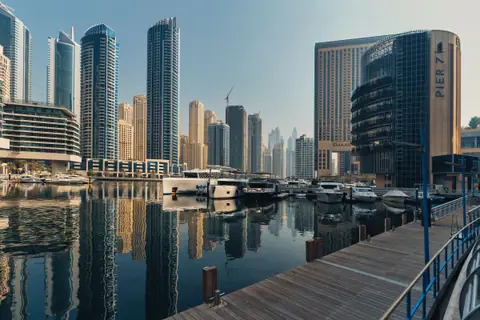
Seasonal attractions follow the cooler weather. Global Village, the open-air park of national pavilions and food stalls, opens its Season 31 on 14 October 2026 and runs until May 2027. Outdoor dining terraces, waterfront walks at the Marina and evening visits to the Dubai Fountain are also at their best now. The trade-off is demand. Winter is high season, so hotels cost more and timed tickets for the Burj Khalifa and the Museum of the Future sell out sooner; book them as soon as your dates are firm. Our Downtown Dubai guide explains which slots to choose.
April and October: shoulder months
These months sit between the two seasons. In the Open-Meteo averages, April reaches 34.1°C and October 35.6°C, with very little rain. Mornings and evenings are still pleasant for walking, while the middle of the day already feels hot. They suit travellers who mainly want pools and beaches, and who are happy to plan sightseeing early and late. Hotel prices are usually lower than in midwinter, though you should compare rates for your own dates.
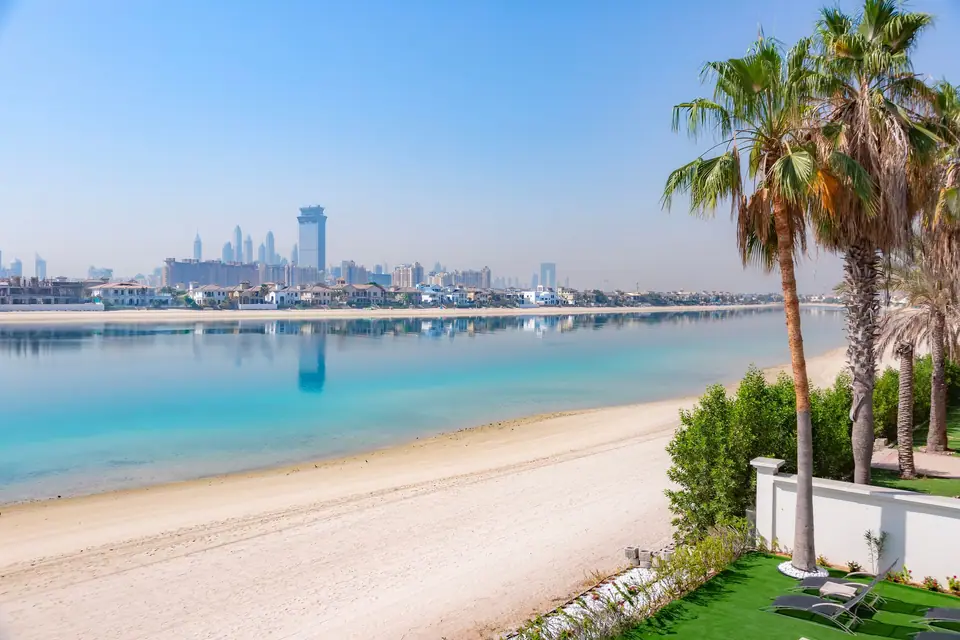
The sea is part of the appeal in these months. The Gulf stays warm enough for swimming well into autumn, and beach clubs and hotel pools are in full use. If your trip is mainly about rest by the water, a shoulder month can be a smart compromise between comfortable temperatures and lower demand.
May to September: planning around the heat
Summer in Dubai is a different trip. With average highs above 38°C and warm, humid nights, walking outdoors in the middle of the day is uncomfortable and can be risky. Life moves inside, to malls, museums, indoor attractions and hotel pools, and outdoor plans shift to early morning or after dark.
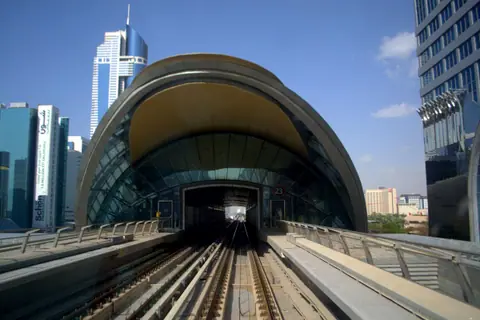
If summer is your sole option, a few habits help. Schedule the Creek and Al Fahidi for the early hours after sunrise. Use the Metro, where stations and trains are air-conditioned, rather than walking between stops. Save the Burj Khalifa, the Dubai Mall and the Museum of the Future for the afternoon. Drink water often, but remember that eating and drinking are not allowed inside Metro cabins. Our what to wear guide covers light clothing that still meets local dress norms.
Ramadan
Ramadan follows the Islamic lunar calendar, so it arrives about 11 days earlier each year on the Gregorian calendar. Its exact start is set by moon sighting, and the UAE announces it shortly beforehand. Check the dates for your year before you book.
Visiting during Ramadan can be rewarding. Non-Muslims are not required to fast, and the UAE government notes that restaurants and food courts provide designated areas away from those who are fasting. Some restaurants adjust their daytime hours and then open fully at Iftar, the meal that breaks the fast at sunset. Evenings become the social heart of the day. The UK government's guidance advises visitors that eating, drinking, smoking or chewing gum in public during daylight may cause offence, including in a car. Working hours are shorter during the month, so some offices and services keep reduced hours.
Ramadan ends with Eid al-Fitr, a holiday of several days when families gather, malls hold events and many residents travel. Flights and hotels can be busier around Eid, so book early if your dates overlap. Eid al-Adha, later in the Islamic year, is another public holiday period with a similar effect on demand.
Other things that affect your dates
Beyond the weather, three factors deserve a look before you choose dates. The security situation is the main one in 2026, and it can change faster than any forecast. Major events and public holidays fill hotels and raise prices, so check the city's events calendar for your dates. School holidays in the UAE, Europe and India also shift demand, especially around the winter break. A flexible booking lets you adjust if any of these changes.
Put together, the calendar is simple. Come in winter for outdoor Dubai, in the shoulder months for value and pool time, and in summer with an indoor plan. Our three-day itinerary includes notes on adapting each day to the heat.
Weather by month
Dubai is warmest in July, with average highs around 42°C, and coldest in January, when nights drop to about 16°C. February is the wettest month by rainfall (18 mm), with rain on about 2 days.
| Month | Low | Range | High | Rain | Rainy days |
|---|---|---|---|---|---|
| Jan | 16°C | 24°C | 16 mm | 2 d | |
| Feb | 17°C | 26°C | 18 mm | 2 d | |
| Mar | 20°C | 30°C | 14 mm | 2 d | |
| Apr | 23°C | 34°C | 6 mm | 1 d | |
| May | 27°C | 39°C | 1 mm | 0 d | |
| Jun | 30°C | 41°C | 0 mm | 0 d | |
| Jul | 32°C | 42°C | 1 mm | 0 d | |
| Aug | 32°C | 42°C | 1 mm | 0 d | |
| Sep | 29°C | 39°C | 0 mm | 0 d | |
| Oct | 25°C | 36°C | 2 mm | 0 d | |
| Nov | 21°C | 31°C | 8 mm | 1 d | |
| Dec | 18°C | 26°C | 14 mm | 2 d |
Averages of daily values from 2015 to 2024. Rainy days are days with at least 1 mm of rain. Source: Open-Meteo · Compare destinations by month.
Where it is
- 1Dubai
- Dubai International Airport (DXB) · about 11 km from Dubai in a straight line
- Directions in Google Maps
Stations and taxi ranks: OpenStreetMap. Airports: OurAirports. Distances are in a straight line.
Traveller tips
Real advice from people who have been to Dubai. Every tip is read by our team before it goes live.
No tips yet. Been here? Yours could be the first.
Thank you! Your tip will appear here after a quick review.
More in Dubai
Continue exploring Dubai with related neighbourhood, food, and planning guides